Doctrine

Characteristics of Reformed Christology

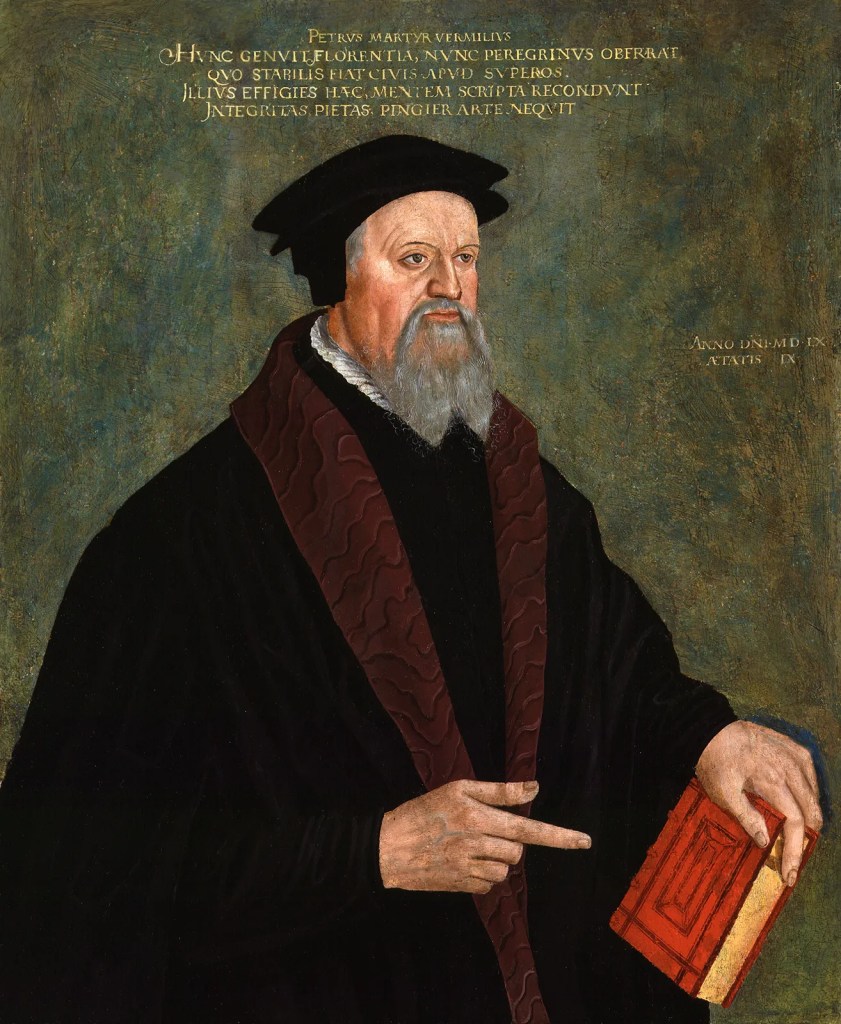
I’m currently making my way through Davenant Hall’s translation of Peter Martyr Vermigli’s Dialogue on the Two Natures in Christ, written to combat the Lutheran Christology of Johannes Brenz, who had published his short On the Personal Union of the Two Natures in Christ shortly before. The history of Christological reflection in the Protestant tradition is truly a wonderful and formative one, which causes the careful reader to balk at those loud voices who claim that the early Protestant theologians were departing in some fundamental (as in, non-Christian or non-“catholic”) way from the tradition of reflection that came before the Reformation began. These men (on both sides) knew the Scriptures, and fought for their peoples and congregations, thereby making them pastors as well as theologians (i.e., the best sort of theologians). The best theological insights come from pastors who are concerned with the spiritual health of their flocks.

In my last post, I illustrated two diagrams, relating what I take to be the general contours of the Lutheran and Reformed understandings of the communication of attributes. The Lutheran understanding of the person of Christ (driven by a commitment to a corporeal sacramental presence) can be understood in reference to their doctrine of the genus majesticum, that divine attributes natural to the divine nature are communicated to the human nature at the moment of the union. Bruce McCormack writes on this point, “Their interest — given the requirements of their eucharistic theology — was to understand how the human nature of Christ might obtain a share in the divine attributes of omnipotence, omniscience, and — most importantly where the question of the real presence is concerned — omnipresence.”[1] The Reformed, in contrast, rejected the genus majesticum and argued that if divine attributes like omnipotence, omnipresence, and omniscience were genuinely communicated to it the human nature of Christ would cease to be really and genuinely human, and so would only concede communication to the human nature those attributes which would keep Christ’s humanity intact (things like “divine life,” power, etc.).

These theological decisions were made from diverse commitments to understandings of the human, and the appropriate conditions for a Christian doctrine of the God-world relation (the “ontological divide”). Interestingly, each side ascribed to the other ancient heretical labels, the Reformed being labelled Nestorian because of their rigid separation of the natures, and the Lutheran being labelled Eutychian because of their supposed confusion of the natures. What each side rejected, even as the Reformed (also) rejected the majesticum, was what is called the genus tapenoticum. The tapenoticum claims that, just as the majesticum teaches the attributes natural to the divine nature are communicated to the human, likewise, the attributes natural to the human are communicated to the divine. Nobody saw this as desirable or even approximating an orthodox rendering of divinity (characterized by simplicity, immutability, and the like).


What I find so interesting in reading Vermigli is that he exposes a richer (which is really the more traditional) way to conceive of the differences between the Reformed and the Lutheran. For me, as for many young theologians who grew up in the (broadly) Reformed camp—which is the de facto reality if you are in any denomination that is non-Roman or non-Lutheran—I could probably tell you that the theological differences between the Reformed and Lutheran had to do with something involving predestination and the real presence. Now, these are true differences, worthy to be noted and discussed. Yet, these differences are less fundamental than the differences between the camps regarding their understanding of the person of Christ. As noted above, you don’t have something like the Lutheran real presence without a concomitant commitment to a doctrine of Christ that ontologically makes possible what is claimed in their sacramentology.

But this recognition of the difference in understanding is not a betrayal of the thought that these were two different Christs under discussion. The Christian (Scriptural) Christ was always the res towards which each side’s doctrine was pointing, but the language adopted and deployed—the distinct spiritualities and hermeneutical tendencies of these groups which nonetheless belonged to the same Scriptural family—led each side to vehemently fight the other. As I meditate on their differences, both between each other and in comparison to the late medieval Roman Church, I am led to the conclusion that the Reformed were the more “radical” in regards to their self-differentiation from Rome. The Lutheran camp seems to me closer in continuity to the thought-forms of the medieval fathers.

So, what are the distinct “characteristics of Reformed Christology”?

Here are a few that come to mind:

  • A commitment to locality: for a created nature to persist as a created nature, it must have a physical, definable location, shape, and size. Any fluctuation here and you have compromised the definition of created. This is of course what led to the extra Calvinisticum, that Christ’s body dwells, physically, in the empyreal realm, or highest heaven, which is (in some fuzzy way) a place that can be occupied.
  • A commitment to a distinction between the dimensions of reality (the different “realms of natures”). A created nature does not stop being a created nature when an uncreated nature is housed in (or hypostatizes) it. Similarly, an uncreated nature is not at all changed or effected when it joins itself to an uncreated nature. It is the language of “two natures unimpaired” I am getting at here.
  • A language pattern that corresponds to “composite Christology.” It is the God-Man, always in a sort of dialectical tension, that seems to be the reality towards whom the Reformed are pointing.

Each of these points seem to me upheld in those churches which claim(ed) the title “Reformed.” It is up to Reformed theologians today to maintain these inherent tendencies of the Reformed tradition, if indeed they are derived from the Scriptures.

Soli Deo Gloria


[1] Bruce McCormack, “Christology,” in The Cambridge Companion to Reformed Theology, ed. by Paul T. Nimmo and David A.S. Ferguson, Cambridge, UK: Cambridge University Press, 2016, 65.
Uncategorized

The Church Dogmatics, So Far

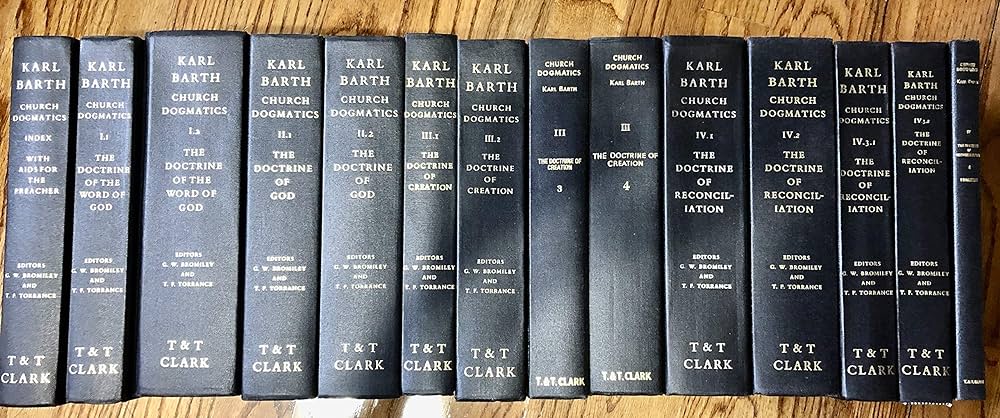
I just recently began reading the full-bodied, printed version of the Church Dogmatics (not a selection or reader, but the real thing). I decided to begin with 1/1 to get a better feel for Barth’s “prolegomena,” which is really a quite bad word for it – a word Barth himself spills a good bit of ink rejecting. In a way, however, it acts as the prolegomena in, at the very least, introducing the paths of language he will end up taking and the “objects” around which he will encircle throughout the rest of his programme. I heard it said once that Barth’s theology is like a diamond: each part contains the whole and the whole is a sum of all its parts. I am finding that to be true, because although his “object” is the Word of God – 1/1 is titled “The Doctrine of the Word of God” – he is equally concerned with Christology, Trinitarian theology, soteriology, and the theological task itself, each of which have a volume dedicated to it.

I have particularly been struck by Barth’s great mystery. As one more inclined to continental-sounding language – with its sometimes mind-bogglingly long and complex sentences – I am finding the literary style of Barth to itself be a Theo-logical extension or feature of his dogmatic affirmations (I cringe at the thought of using the word “system” here). He is quite the simultaneously joyful yet somberly-critical theologian, one concerned to give no beachheads to the anthropomorphizing thought of men. He himself makes it perfectly clear that, at the end of the day, his own theologizing is imperfect, flawed, limited as he is limited. This consistent emphasis of his gives the reader a helpful sense of the characteristic humanness of the theological task, one initiated and called forth by God but one which man must seek to fulfill because of that divine call (regardless of its ultimate futility as a human project of “listening” and “waiting” on the Word of God).

I don’t plan on slogging through the Dogmatics volume-by-volume, but skipping around his corpus based on my own theological interests at the moment. In step with this, next I plan on reading 2/1, arguably the most infamous of the volumes for its controversial reformulation of the Reformed doctrine of election. Although I am undoubtedly excited to get a more full-fledged hashing out of Barth’s election doctrine – I have read large portions of it included in the various Barth readers – I am honestly more interested in the Trinitarian theology I know is so intimately wrapped up in such a discussion on election, and the doctrine of God “generally” (Barth doesn’t like that word, either).

To end, some enriching quotes from my 1/1 reading so far:

“We have it [the Word of God] because it gives itself. Thus it is the object of proclamation in a different way from all possible objects of metaphysics or psychology… Real proclamation thus means God’s Word preached, and God’s Word preached means, in this second circle, man’s language about God on the basis of God’s self-objectification which is neither present nor predictable nor relatable to any design, but is real solely in the freedom of His grace, in virtue of which from time to time He wills to be the object of this language, and is so according to His own good pleasure.”[1]

“The man, the Church, the Church proclamation, the dogmatics which claimed to be able to work with the Word and with faith as with a capital sum standing at their disposal, would simply prove thereby that they possessed neither the Word nor faith. Where there is possession of them, we simply do not take it for granted as such, we strain after it hungering and thirsting, the only way of blessedness… This event, grace, and in and along with grace, faith, must come first. In confession, in connecting ourselves with the grace already proclaimed to us, already received by us, there results an affirmation of the possibility given to man of knowing the Word of God.”[2]

Soli Deo Gloria


[1] Karl Barth, Church Dogmatics 1/1: The Doctrine of the Word of God, G.T. Thomson trans. (Edinburgh, T & T Clark: 1963), 102-103.

[2] Karl Barth, Church Dogmatics 1/1: The Doctrine of the Word of God, G.T. Thomson trans. (Edinburgh, T & T Clark: 1963), 258.

Uncategorized

The Reformed Branch of the Reformation: An Exercise in Tradition Interpretation

There were many powerful insights to arise out of the theological crises and reflections of the Reformation period. Liturgically, theologically, and morally, the Reformation is rightly so called a reform-ation of the Western Christian churches of the Late Medieval period. During the period, the Roman Catholic Church was split asunder as groups within it began perceiving the Roman Church’s priestly abuses and theological missteps. A return to the biblical text, to the Fathers, and to a robust liturgy took place which would forever change the face of the Christian West. The two largest branches to arise out of the Reformation period – the Lutherans and the Reformed – nonetheless stood at odds with each other and fought amongst themselves.

The Reformed branch ended up taking the most ground, since the influence it garnered throughout England, Switzerland, the Dutch lands, and eventually North America (where the early evangelicals fled to from England) bequeathed to it major theological sway over the Western world. Many contemporary evangelical denominations of the Presbyterian and Baptist veins owe their heritage to the thoroughly-Reformed Puritans who split from the hierarchical Church of England in the seventeenth and eighteenth centuries. The Church of England itself was influenced heavily by the theological emphases espoused by the Continental Reformed churches. Their figureheads, however, John Calvin and Ulrich Zwingli, did not themselves agree on much and even functioned within largely different liturgical situations. Calvin, in Geneva, largely stayed put, expending his efforts on pastoral, theological, and biblical matters, while Zwingli utilized the authority he gained to wage a bloody war on the surrounding Roman groups which bordered his territory.

As time went on and the Reformed Protestants after Calvin and Zwingli died were tasked with maintaining their Reformed churches, certain further interpretations of their young tradition took place. Roughly one hundred years after the death of Calvin, Reformed theologians of the English churches and the Dutch churches met separately to systematize the work and theology of their respective branches, leaning heavily on the theological writings of their mutual forefather John Calvin. The first document, the Canons of Dort, was written by the Dutch Reformed theologians in the years 1618-19. The second – and much more popular document in the Western world – was the Westminster Catechism, written by the English Reformed theologians in 1646-47. Each document centers its theology on matters like Divine Providence and Election, and makes the enmity between God and Man (and particularly the enmity they believe exists in God towards Man) a focal point of their “theological system.” For the purposes of this post, I will refer to this branch of the Reformed churches – i.e., the branch I am conjoining because of their mutually-agreed-upon foci – as the “Westminster” branch.

*To be transparent, I take my historical-interpretive lead here from theologians like Barth and Torrance, and contemporary theologians like Athanasian Reformed (growrag.wordpress.com).*

I have found that there is another way to be Reformed, however. See, other, better tradition-interpretations took place within just this last century by theologians who were much more in tune with the patristic consensus of the Ancient Catholic Church (to which all orthodox Christians today are heirs). Something which must be emphatically pushed: it is not, not, not a commendable thing to consciously understand one’s Christian faith as consisting of something fundamentally different from that of those Christians living before the time of the Reformation period. So many contemporary Christians today are almost proud of how much more “biblical” their current expression of the faith is compared to those living before Martin Luther, as if the Reformation was only and exclusively some pure renewal movement, as if the Reformation was some divine thing. *For more on this thought, read Jackson Shepard’s new Mere Orthodoxy article.*

The theologian who most influences me in this regard, towards seeing a continuity between the Ancient Catholic Church and contemporary Christian churches of all veins (within the bounds of Nicaea, of course), but particularly of the Reformed tradition, is Thomas F. Torrance. In his lecture, “The Distinctive Character of the Reformed Tradition,” Torrance lays out a better way to interpret and utilize the history of the Reformed tradition and Calvin’s writings, a way which decidedly departs from the branch that developed into the Westminster theology.

Torrance writes:

“Built into the foundations of the Reformed tradition, of course, was the primacy given to the Word of God, which was regarded not as some communication about God detached from God but as God himself speaking to us personally. God is known only through God, on the actual ground of God’s self-revelation and gracious activity toward us, for it is only through Christ and the Spirit that we have access to God… For Calvin the primary question became, Who is God? Who is the One who acts in this merciful and loving way toward us in Jesus Christ and the Holy Spirit? This is not a question in which the essence and the existence of God are held apart from one another, but one in which God is allowed to disclose who he is in actual relation toward us, and one in which we are cast wholly upon God’s own reality in presenting himself to be known by us.”[1]

The “distinctly Reformed” character of the tradition is the infinite qualitative distinction between God and Man, where God is recognized as the always-initiator of the union between God and Man. The central feature of the Reformed tradition, parallel to Torrance’s description of God’s initiative, is rightly summarized by Francois Wendel:

“No theology is Christian and in conformity with the Scriptures but in the degree to which it respects the infinite distance separating God from his creature and gives up all confusion, all ‘mixing’ that might tend to efface the radical distinction between the Divine and the human.”[2]

I.e., Barth’s term of God as “wholly other.”

Torrance then distinguishes what he categorizes as a patristically-informed version of the Reformed tradition (“Athanasian Reformed,” see the website above) from the Westminster Reformed:

“Thus predestination is not to be understood in terms of some timeless decree in God, but as the electing activity of God providentially and savingly at work in what Calvin called ‘the history of redemption’… This identity of eternal election and divine providence in Jesus Christ generated in the Reformed tradition its well-known conjunction of repose in God and active obedience to God in the service of Christ’s kingdom. However, if that repose in God is referred, as has happened only too often in the history of Reformed churches, to an inertial ground in the eternal being of God, then there opens up a split in people’s understanding between predestination and the saving activity of Christ in space and time, e.g., in the notion of election as ‘antecedent to grace.’ That would seem to be the source of a tendency toward a Nestorian view of Christ that keeps cropping up in Calvinist theology. This is very evident in misguided attempts to construe a ‘pre’ in ‘predestination’ in a logical, causal, or temporal way, and then to project it back into an absolute decree behind the back of Jesus and thus to introduce a division into the very person of Christ. It is one of Karl Barth’s prime contributions to Reformed theology that he has decisively exposed and rejected such a damaging way of thought.”[3]

The problem with the Westminster theologians, Torrance notes, is that in their attempts to uphold their prized elucidations of the doctrines of Predestination and Election, they so conceptualize that “‘pre’ in ‘predestination'” as something which is fundamentally detached and hidden “behind the back of Jesus,” i.e., as something not ontologically related to Jesus Christ who is the Son of God (the Son within Triune formula of Father-Son-Spirit), and as something they posit exists in the pre-creation planning of God as some choice of some over others without any reference to Christ’s all-encompassing work. Torrance’s chief critique, then, is that the Westminster theologians introduce a hidden element within the life and revelation of God, which in turn means God does not actually or authentically reveal Himself in Christ, but maintains a separation from humanity such that His lofty holiness is untouched by humanity’s filthy lowness. Such a hidden element then adequately qualifies the God “revealed” by Christ as sharing a fundamental similarity of detachment from humanity with the absolute-power deity espoused as the Muslim god, Allah, the god who is decidedly separate from and unknowable by humanity. To Torrance, any god so conceptualized has no claim to true revealing-of-Self as claimed taking place in Christ by the historic Church catholic. If there is no revealing-of-Self, humanity has no authentic claim to be united to God’s inner, Triune life. The Westminster formulation of Predestination then undermines the entire divine program as acted out, embodied, and completed in Jesus Christ.

Any cursory familiarity with the theological language of Westminster theologians (epitomized in theologians like the late R.C. Sproul and in contemporary pop-theology like the Five Points) makes their prized conception of God’s hiddenness from humanity plain. The sort of put-you-in-your-place theological aggression exemplified by Westminsters is remarkably similar to what you see in the innumerable videos of doctrinally-orthodox Muslim apologists whose primary strategy is intimidation and recourse to the sinfulness of the human race.

Tied to all this is the problem that Westminster theology tends to locate that transcendence of God mentioned earlier (Barth’s “wholly other”) in the moral uprightness and justice of God rather than in His factual ontological status as qualitatively other or categorically different than creation. There is this underlying current in Westminster theology, too, that the reason for the Son’s enflesh-ment has to do primarily with satisfying the anger and wrath God harbors against humanity, and nothing else, as if the life and active obedience of Christ is some means to a further end rather than the means and end of the whole Divine program (i.e., an ontological rather than a moral end). Torrance is on to this when he remarks, finally, that:

“For us to be in Christ or for Christ to be in us has to be understood in an ontological way, and not just in a figurative or spiritual way. It is through a real union with Christ in his vicarious humanity that all that Christ has done for us in himself becomes ours and we are made to share together what Christ is. That was Calvin’s doctrine of the ‘blessed exchange,’ which he took over from the Greek Fathers. It was in that incarnational and atoning way that justification has to be understood, not just in terms of imputed righteousness but in terms of a participation in the righteousness of Christ which is transferred to us through union with him.”[4]

Soli Deo Gloria


[1] Thomas F. Torrance, “The Distinctive Character of the Reformed Tradition,” The Donnell Lecture delivered at the University of Dubuque Theological Seminary, October 6, 1988, pgs. 5-6. 

[2] François Wendel, Calvin: Origins and Development of His Religious Thought, trans. Philip Mairet (London, UK: Collins, 1965), 151. 

[3] Thomas F. Torrance, “The Distinctive Character of the Reformed Tradition,” The Donnell Lecture delivered at the University of Dubuque Theological Seminary, October 6, 1988, pgs 6-7.

[4] Thomas F. Torrance, “The Distinctive Character of the Reformed Tradition,” The Donnell Lecture delivered at the University of Dubuque Theological Seminary, October 6, 1988, pg 10.