–
–
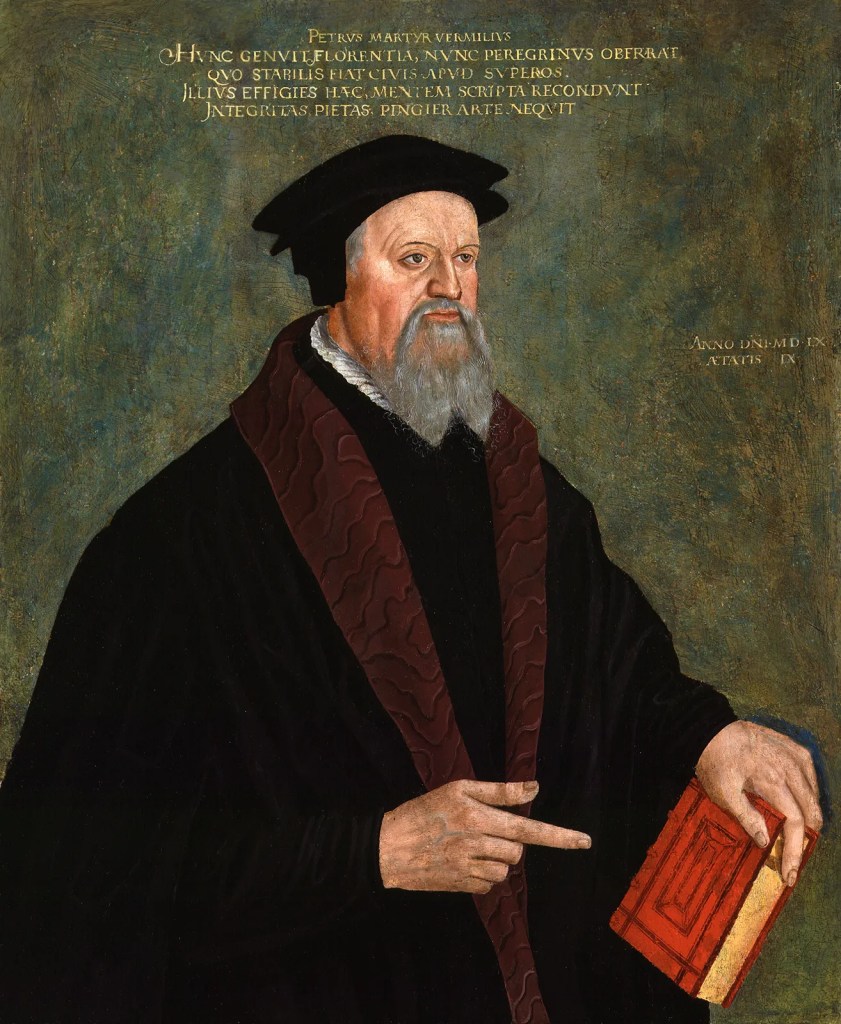
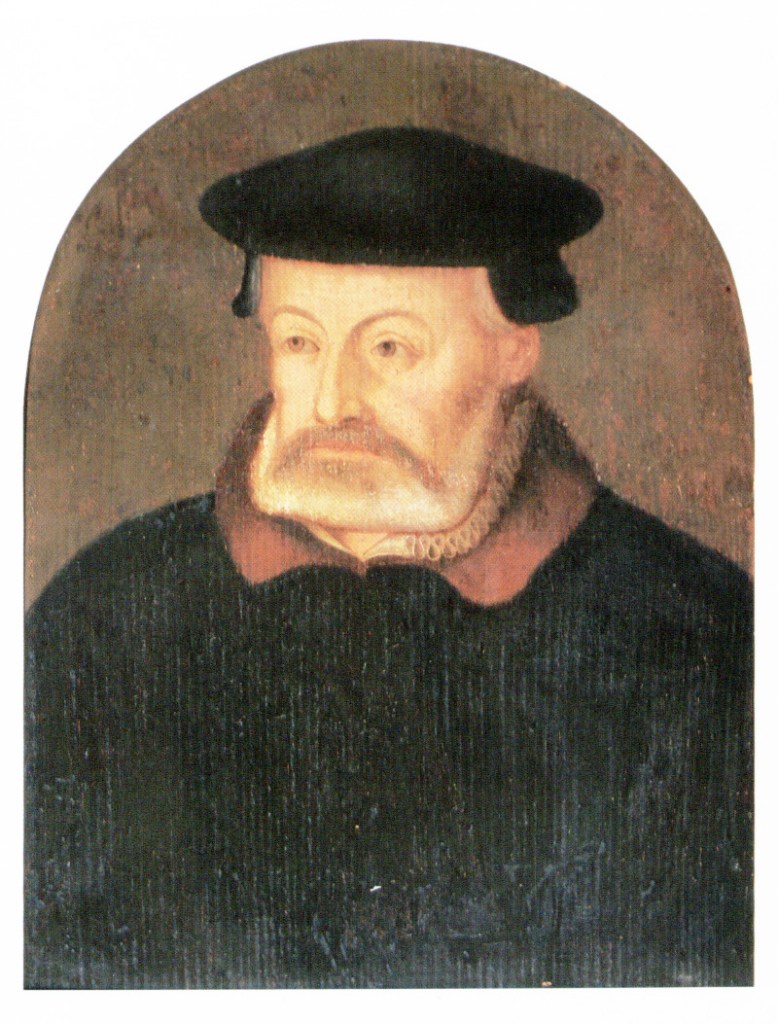
I’m currently making my way through Davenant Hall’s translation of Peter Martyr Vermigli’s Dialogue on the Two Natures in Christ, written to combat the Lutheran Christology of Johannes Brenz, who had published his short On the Personal Union of the Two Natures in Christ shortly before. The history of Christological reflection in the Protestant tradition is truly a wonderful and formative one, which causes the careful reader to balk at those loud voices who claim that the early Protestant theologians were departing in some fundamental (as in, non-Christian or non-“catholic”) way from the tradition of reflection that came before the Reformation began. These men (on both sides) knew the Scriptures, and fought for their peoples and congregations, thereby making them pastors as well as theologians (i.e., the best sort of theologians). The best theological insights come from pastors who are concerned with the spiritual health of their flocks.
In my last post, I illustrated two diagrams, relating what I take to be the general contours of the Lutheran and Reformed understandings of the communication of attributes. The Lutheran understanding of the person of Christ (driven by a commitment to a corporeal sacramental presence) can be understood in reference to their doctrine of the genus majesticum, that divine attributes natural to the divine nature are communicated to the human nature at the moment of the union. Bruce McCormack writes on this point, “Their interest — given the requirements of their eucharistic theology — was to understand how the human nature of Christ might obtain a share in the divine attributes of omnipotence, omniscience, and — most importantly where the question of the real presence is concerned — omnipresence.”[1] The Reformed, in contrast, rejected the genus majesticum and argued that if divine attributes like omnipotence, omnipresence, and omniscience were genuinely communicated to it the human nature of Christ would cease to be really and genuinely human, and so would only concede communication to the human nature those attributes which would keep Christ’s humanity intact (things like “divine life,” power, etc.).
These theological decisions were made from diverse commitments to understandings of the human, and the appropriate conditions for a Christian doctrine of the God-world relation (the “ontological divide”). Interestingly, each side ascribed to the other ancient heretical labels, the Reformed being labelled Nestorian because of their rigid separation of the natures, and the Lutheran being labelled Eutychian because of their supposed confusion of the natures. What each side rejected, even as the Reformed (also) rejected the majesticum, was what is called the genus tapenoticum. The tapenoticum claims that, just as the majesticum teaches the attributes natural to the divine nature are communicated to the human, likewise, the attributes natural to the human are communicated to the divine. Nobody saw this as desirable or even approximating an orthodox rendering of divinity (characterized by simplicity, immutability, and the like).
What I find so interesting in reading Vermigli is that he exposes a richer (which is really the more traditional) way to conceive of the differences between the Reformed and the Lutheran. For me, as for many young theologians who grew up in the (broadly) Reformed camp—which is the de facto reality if you are in any denomination that is non-Roman or non-Lutheran—I could probably tell you that the theological differences between the Reformed and Lutheran had to do with something involving predestination and the real presence. Now, these are true differences, worthy to be noted and discussed. Yet, these differences are less fundamental than the differences between the camps regarding their understanding of the person of Christ. As noted above, you don’t have something like the Lutheran real presence without a concomitant commitment to a doctrine of Christ that ontologically makes possible what is claimed in their sacramentology.
But this recognition of the difference in understanding is not a betrayal of the thought that these were two different Christs under discussion. The Christian (Scriptural) Christ was always the res towards which each side’s doctrine was pointing, but the language adopted and deployed—the distinct spiritualities and hermeneutical tendencies of these groups which nonetheless belonged to the same Scriptural family—led each side to vehemently fight the other. As I meditate on their differences, both between each other and in comparison to the late medieval Roman Church, I am led to the conclusion that the Reformed were the more “radical” in regards to their self-differentiation from Rome. The Lutheran camp seems to me closer in continuity to the thought-forms of the medieval fathers.
So, what are the distinct “characteristics of Reformed Christology”?
Here are a few that come to mind:
- A commitment to locality: for a created nature to persist as a created nature, it must have a physical, definable location, shape, and size. Any fluctuation here and you have compromised the definition of created. This is of course what led to the extra Calvinisticum, that Christ’s body dwells, physically, in the empyreal realm, or highest heaven, which is (in some fuzzy way) a place that can be occupied.
- A commitment to a distinction between the dimensions of reality (the different “realms of natures”). A created nature does not stop being a created nature when an uncreated nature is housed in (or hypostatizes) it. Similarly, an uncreated nature is not at all changed or effected when it joins itself to an uncreated nature. It is the language of “two natures unimpaired” I am getting at here.
- A language pattern that corresponds to “composite Christology.” It is the God-Man, always in a sort of dialectical tension, that seems to be the reality towards whom the Reformed are pointing.
Each of these points seem to me upheld in those churches which claim(ed) the title “Reformed.” It is up to Reformed theologians today to maintain these inherent tendencies of the Reformed tradition, if indeed they are derived from the Scriptures.
Soli Deo Gloria
[1] Bruce McCormack, “Christology,” in The Cambridge Companion to Reformed Theology, ed. by Paul T. Nimmo and David A.S. Ferguson, Cambridge, UK: Cambridge University Press, 2016, 65.