Close Reading

Robert Jenson’s Systematic Theology: The (New) Triune Relations

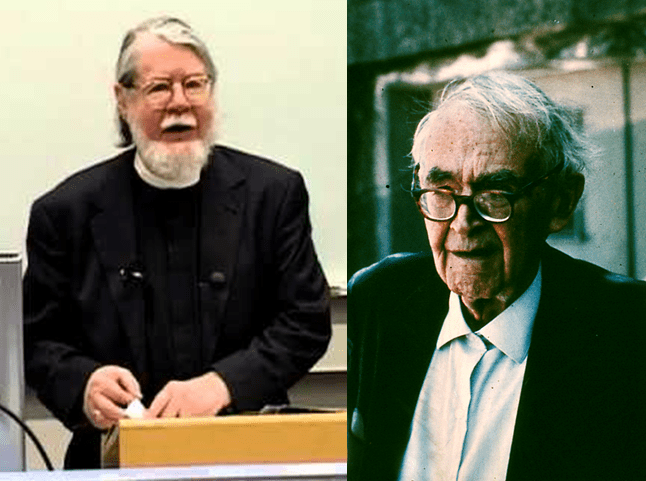
Robert Jenson is known for many things: his emphasis on the sacraments, his theological creativity, his reliance on Hegel, his reliance on Barth, his ability to speak theology concisely, and the list goes on. One aspect of his theology I have not seen touched on as much, however, are the new relations he posits the Church should consider as helpful descriptors for how to conceptualize the Triune Life. He affirms quite joyfully the traditional relations – generation, spiration, origination, procession – but proposes that not-before-seen reciprocal relations be recognized as constituting the Spirit’s dynamic contribution to God’s ontology.

ST: The Spirit as Liberator and Reconciler

Jenson introduces the new relation of liberation into the life of the Trinity. He does this so as to heed Hegel’s (and Buber’s) thoughts concerning what constitutes a healthy I-Thou relation. For Jenson and these thinkers, within the isolated person-to-person relationship there can only be a form of obsessive relational domination. If there are only two partners of relation, there can only be a subject-object and hence a master-slave dynamic as the only possible dynamic. This can be plainly seen in the obsession with which abusive partners find others – all others, friends of the beloved perhaps primarily – as threats to the lover’s enjoyment and satisfaction of the beloved. Inversely, the lover whose enjoyment of the beloved because of or alongside of the friends and companions surrounding the beloved is said to be a healthy, relationally-balanced individual. Jenson and Hegel would wholeheartedly agree. The only way the two partners can be freed for their love and enjoyment of one another, they argue, is if a third party opens up the two partners for their mutual love for one another. The Holy Spirit fulfills this function for the Father and the Son, and in so doing is rightly characterized, like Augustine said, as the love-bond of the Trinity.

Jenson writes: “If you and I are to be free for one another, each of us must be both subject and object in our converse. If I am present in our converse as myself, I am a subject who have you as my object. But if I am not also an object for you as subject, if I in some way or degree evade reciprocal availability to you as one whom you in your turn can locate and deal with, I enslave you, no matter with what otherwise good disposition I intend you.”[1]

In other words, if Father and Son are not reciprocally available for each-other as Father and as Son in the bond of their Spirit-love, there is no Triune God like the Tradition says. Without the Spirit, there is no true bond or relational openness as constitutive of God’s being, and therefore no true bond between the Son – who simply is the Lord Jesus Christ – and the Father He has been sent from. Jenson is convinced that previous theological missteps were taken in the history of doctrine because of a pre-existing blindness to this relational dynamic of the Spirit. To name a recent example, Jenson thinks that most of what should be criticized in his theological grandfather, Karl Barth, has to do with Barth’s malnourished (and possibly nonexistent) doctrine of the Holy Spirit. He goes so far as to say that, when it comes to the Church Dogmatics, Barth proposes what looks much more like a “binity” than a Trinity.

He further elaborates: “So we must learn to think: the Spirit is indeed the love between two personal lovers, the Father and the Son, but he can be this just in that he is antecedently himself. He is another who in his own intention liberates Father and Son to love each other. The Father begets the Son, but it is the Spirit who presents this Son to his Father as an object of the love that begot him, that is, to be actively loved. The Son adores the Father, but it is the Spirit who shows the Father to the Son not merely as ineffable Source but as the available and lovable Father.”[2]

It is in being the glue of the Father and Son that the Holy Spirit exists as the Tradition’s third hypostasis. “The Spirit is himself the one who intends love, who thus liberates and glorifies those on whom he ‘rests’; and therefore the immediate objects of his intention, the Father and the Son, love each other, with a love that is identical with the Spirit’s gift of himself to each of them.”[3] This sort of change to Augustine’s initial thesis does what Augustine arguably did not do, which was to recognize the personal element in the Holy Spirit’s procession from the Father and the Son. It is not simply as some thing called “the love between Father and Son” that the Spirit acts; such a conception is what led to the plumb line of the West’s depersonalization of the Spirit. It is as the one who, in proceeding from Father and Son, acts to blossom the generation and paternity of Father and Son for each other that the Spirit is a subsisting relation, i.e., as the subsisting relation of openness and freedom.

To conclude:

“The Father begets the Son and freely breathes his Spirit; the Spirit liberates the Father for the Son and the Son from and for the Father; the Son is begotten and liberated, and so reconciles the Father with the future his Spirit is. Neat geometry is lost, but life is not geometrical.”[4]

Soli Deo Gloria


[1] Robert Jenson, Systematic Theology, Vol. I: The Triune God (Oxford, UK: Oxford University Press, 1997), 155.

[2] Robert Jenson, Systematic Theology, Vol. I: The Triune God (Oxford, UK: Oxford University Press, 1997), 156.

[3] Robert Jenson, Systematic Theology, Vol. I: The Triune God (Oxford, UK: Oxford University Press, 1997), 158.

[4] Robert Jenson, Systematic Theology, Vol. I: The Triune God (Oxford, UK: Oxford University Press, 1997), 161.
Close Reading

Robert Jenson’s Systematic Theology: Eschatology as the Triune Unity

Robert Jenson was a masterful theologian who sought to think within the bounds of theologia and, within those bounds, to receive the Christian tradition in fresh if unorthodox ways. He writes this awesome statement: “This is sometimes the way of theology: to take a plain phenomenon of the gospel’s narrative that causes difficulty in certain conceptual connections and remove the difficulties by adjusting not the narrative but the connections.”[1] That was Jenson’s tendency: to adjust the form, not the content, of the Christian gospel, and so make it intelligible to contemporary ears.

My last post on Robert Jenson went over Jenson’s problems with the ancient ontological foundations of classical Christian doctrine. In his writings, he sought to overturn these foundations by substituting their Aristotelian or platonic makeup with that of Hegel. This substitution led him to criticize the ancient way of understanding divinity as simple, timeless and changeless, and to uphold a doctrine of divinity where God’s being is nothing other than event. The function of God’s being-as-event is to disallow any speech about God where God can be identified with anyone other than the God revealed and acted out as Jesus Christ, His Father, and His Spirit. For something or someone to be God means that He is this event: this biblical, Triune God-event.

For God’s being-as-event to be the interplay of Jesus, the Father, and the Spirit is for ontology itself to be constituted by eventfulness, and not by the prior abstracted reality of “being.” This poses obvious problems for the classical doctrine of simplicity. If God is not simple, and ontology is eventfulness, then how can the three – Father, Son, Spirit – be said to be “one God”? This is where my claim that Jenson’s explications nevertheless retain the content, if not the form, of Christian doctrine is proved true.

ST: The Oneness of the Three

Jenson writes, “Since the Lord’s self-identity is constituted in dramatic coherence, it is established not from the beginning but from the end, not at birth but at death, not in persistence but in anticipation. The biblical God is not eternally himself in that he persistently instantiates a beginning in which he already is all he ever will be; he is eternally himself in that he unrestrictedly anticipates an end in which he will be all he ever could be.”[2]

Here, Jenson is functioning on a definition of eternity as a time-bound reality. Eternity is not, as the classical thinkers say, a separate realm in which God lives in his essence. Eternity is rather that happening, that “dramatic coherence” Jenson calls it, where all that is theologically united lives, moves, and has its being. Eternity is that time where God and man live in harmonious ekstasis. In other words, eternity is that time where Father, Son, and Holy Spirit live as one God. How Jenson grounds these concepts, like I said, is not in some “before-ness,” some realm that is prior to the actual happening of God’s-being-one, but in “after-ness,” in the eternal realm of “anticipation,” where Father, Son, and Holy Spirit will be fully and completely the Triune God of Scripture in the unity of the Eschaton. It is the Eschaton that provides the glue that holds the whole scriptural reality – including the God at the center of that reality – together.

Jenson continues, “The triune God’s eternity is precisely the infinity of the life that the Son, who is Jesus the Christ, lives with his Father in their Spirit… About how God could as the same God have been other than Jesus the Son and his Father and their Spirit, or about what that would have been like, we can know or guess nothing whatsoever.”[3]

The Christian is not to think of eternity as a timeless void separated from the goings-on of this world, but as the flesh-and-blood life of Jesus Christ, the Hebrew preacher of first century Palestine, who, in calling the God of Israel his Father, was the Son spoken about in the Spirit-inspired Scriptures. This is what it means for God to be Trinity.

ST: The Spirit of the Future

For the Eschaton to be the place of God’s unity is for the Holy Spirit to so make it. The eschatological glue that holds things in God together, according to Jenson, can really be posited as a function of the Holy Spirit’s economia. It is the Spirit’s function to make true the reality that Jesus Christ and His Father are the one God of Scripture. It is the Spirit’s role to make true that which is believed by faith, that the Father, Son, and Spirit are one God.

Here is Jenson again: “The Spirit is the Liveliness of the divine life because he is the Power of the divine future. He is the one who, when he in time gives a ‘down payment’ on the Kingdom, gives precisely himself.”[4] The Spirit and the Eschaton, to Jenson, are never to be thought about as separated from each other precisely because as the agent of the future, the Spirit is. It is when the Church participates in the Eschaton – which, to Jenson probably amounts to what happens during the Sunday liturgy – that the Spirit is truly and fully present as the Spirit of the Lord Jesus Christ and His Father.

We will end this post with one last quote:

“The biblical God’s eternity is his temporal infinity… What he transcends is not the having of beginnings and goals and reconciliations, but any personal limitation in having form… The true God is not eternal because he lacks time, but because he takes time… God is not eternal in that he adamantly remains as he began, but in that he always creatively opens to what he will be; not in that he hands on, but in that he gives and receives; not in that he perfectly persists, but in that he perfectly anticipates… The dominating theological enterprise of the century, Karl Barth’s Kirkliche Dogmatik, has thus at its heart the drastic proposition with which we began: ‘God’s deity, into its furthest depths, consists therein… that it is event… The fundamental statement of God’s being is therefore: God is what happens between Jesus and his Father in their Spirit.”[5]

Soli Deo Gloria


[1] Robert Jenson, Systematic Theology, Vol. I: The Triune God (Oxford, UK: Oxford University Press, 1997), 124.

[2] Robert Jenson, Systematic Theology, Vol. I: The Triune God (Oxford, UK: Oxford University Press, 1997), 66.

[3] Robert Jenson, Systematic Theology, Vol. I: The Triune God (Oxford, UK: Oxford University Press, 1997), 141.

[4] Robert Jenson, Systematic Theology, Vol. I: The Triune God (Oxford, UK: Oxford University Press, 1997), 157.

[5] Robert Jenson, Systematic Theology, Vol. I: The Triune God (Oxford, UK: Oxford University Press, 1997), 217-221.

Quotation

Robert Jenson on Protology and the Futility of Free-Floating Interpretation

Robert Jenson’s Systematic Theology Vol. I is a treasure trove of beautiful doctrinal insights. Near the end of his first section, he comments on what is needed to engage with the theological tradition in an honest way. Just like Webster argues in his magisterial Holy Scripture, Jenson posits that the only way a coherent doctrine of Scripture can be formulated and maintained is one grounded in the self-presentation of the God who is Trinity; i.e., the one who Jesus reveals in the Spirit by calling Him Father.

Here are two block quotes from Jenson sure to bless your soul and mind.

First, on Scripture:

“Whenever someone has tried to construe the unity of Scripture otherwise than by the identity of this God the book has fragmented, first into Hebrew Scripture and New Testament and thereupon into traditions and genres and redactions within each. And when communities other than the church – in modernity, the communities of various ideologies and particularly the surreptitious such community of supposedly autonomous scholars – try to appropriate the Bible for their own purposes, the book falls into mere shards – to which, of course, anyone is welcome… The modern attempt to interpret scripture ‘historically’ has been intrinsically self-defeating and has now defeated itself, since it has curiously supposed that to interpret the Bible historically we must abstract from the history for whose attestation the church assembled this collection in the first place, the Incarnation and Resurrection of Christ.”[1]

The free-floating scholars out there, who claim to represent the rational person’s engagement with the biblical material, fall into meaninglessness. This is rooted in the Modernist’s blindness to his own placement in a history and a community; it would be better, I suspect Jenson would say, if the independent scholar would fly the banner of Atheistic Fragmentation as the community from which he wrestles with the material instead of the banner of View from Nowhere. Then, the presuppositional commitments the interpreter truly does hold would come to conscious explication, and wouldn’t be hidden beneath the false belief in one’s own prescient objectivity over and above the text.

Then, protology. Here is where Jenson sets forth his (self-avowed) revisionist theological agenda, one in the vein of Barth’s methodology but one that also decisively breaks with Barth at important points. He writes:

“God is not only identified by Exodus and Resurrection; he is identified with them. Thus we may state the point of this chapter yet one more time: the God to be interpreted in this work is the triune God. For the doctrine of the Trinity is but a conceptually developed and sustained insistence that God himself is identified by and with the particular plotted sequence of events that make the narrative of Israel and her Christ. The primal systematic function of trinitarian teaching is to identify the theos in ‘theology’… For if a systematically developed discourse about God precedes the exposition of Trinity, there is danger that a nontrinitarian identification of God may be hidden in that discouse, to confuse all that follows. Western theology’s late-medieval and modern tradition has tended to treat first of God simply as he is God and only thereafter of his Trinity; the temptations posed by this ordering have recently been much discussed. The extent to which any particular theologian may actually have fallen to these temptations is doubtless often arguable. The present work seeks to avoid the temptation altogether, by breaking with this aspect of the tradition.”[2]

This point is one famously highlighted by Barth about the way in which to approach the theological task. Jenson and Barth argue that, instead of tripping up himself at the beginning of the race by forcibly inserting the God of ancient Hellenism into his doctrinal engagement with the Word of God, the theologian should instead consciously set out to exegete the Scriptures in a Christian way (i.e., in a Trinitarian way). The God of “general” Theism has no place here.

I am not finished with Jenson’s ST just yet. As I plow through it, however, I am struck by the way in which Jenson’s philosophical commitments alter his approach, sometimes in very strange color schemes. Nonetheless, his dependence on Barth shines through in some of the best possible ways… not least in his emphasis on the centrality of God as Trinity.

Soli Deo Gloria


[1] Robert Jenson, Systematic Theology, Vol. I: The Triune God (New York, NY: Oxford University Press, 1997), 59.

[2] Robert Jenson, Systematic Theology, Vol. I: The Triune God (New York, NY: Oxford University Press, 1997), 60.

Uncategorized

The Onto-Relational Trinity: Why Your Trinity Diagrams Don’t Tell the Truth About Who God Is

“One Substance, Three Persons.”

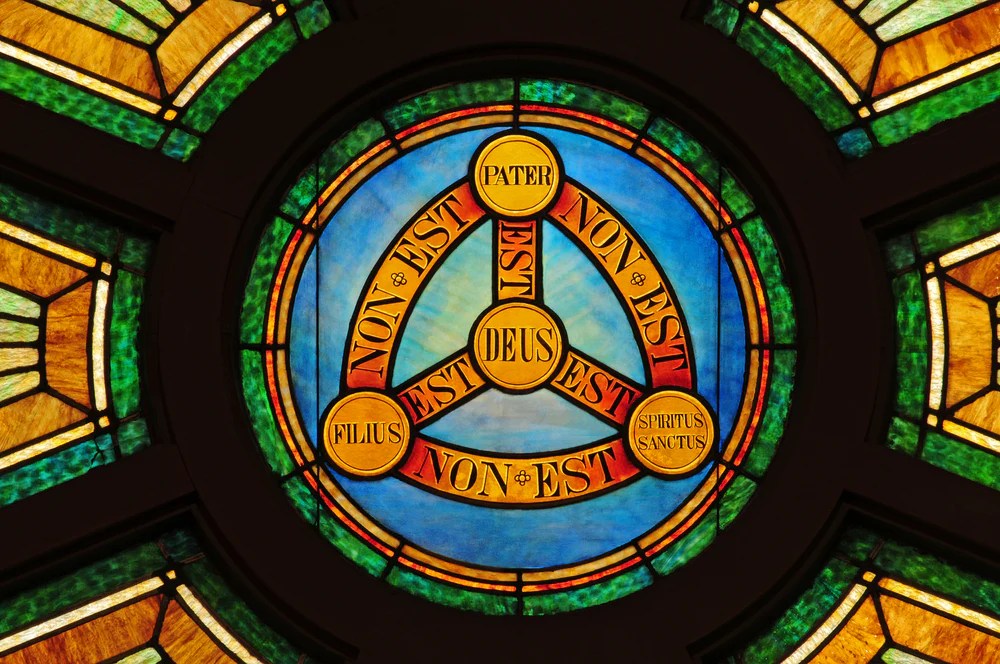
Such is the mantra used virtually across the board in many Western churches when tasked with describing the ontological makeup of God. Purportedly, the Christian God is Trinity: He is one God made up of Father, Son, and Spirit. How this is the case is usually chalked up to “mystery” and “unknowability” (two helpful terms to be sure but usually used as cop outs from further theological reflection). Queue the diagram which supposedly helps with the comprehension of such a mysterious reality:

Pictured are three circles, each titled with the name of one of the Divine Persons, positioned around a fourth circle entitled “God.” Touching each circle are lines labeled “Is Not” connected at both ends between each person, and between each person and the “God” circle in the middle are lines labeled “Is.”

This diagram is not helpful, and here’s why.

Late theologian John Zizioulas, in his landmark book on Patristic theology and Personhood called Being as Communion, writes:

“The idea took shape in Western theology that that which constitutes the unity of God is the one divine substance, the one divinity; this is, as it were, the ontological ‘principle’ of God. But this interpretation represents a misinterpretation of the Patristic theology of the Trinity. Among the Greek Fathers the unity of God, the one God, and the ontological ‘principle’ or ’cause’ of the being and life of God does not consist in the one substance of God but in the hypostasis, that is, the person of the Father. The one God is not the one substance but the Father, who is the ’cause’ both of the generation of the Son and of the procession of the Spirit. Consequently, the ontological ‘principle’ of God is traced back, once again, to the person.”[1]

What Zizioulas does here, remarkably, is point out that in the theology of the Cappadocian Fathers – the most significant theologians of the Trinity other than Athanasius – the Person acts as the center of God’s substance, and not the idea of “substance” or “Being” as applied to God. In other words, instead of Being holding priority in Trinitarian language – as it did in the Western Church, over time – it should in fact be the Person-in-relation that holds priority, particularly the Person of the Father (who is the Ground, the Unoriginate Originator of the Son and Spirit). There is no fourth circle labeled “God” in God; there is no fourth thing in God in which the three participate. Such a conception – which is exactly what the diagram above is relating – makes Greek ontology, rather than the God revealed in Jesus Christ, prior in Trinitarian thinking. Remarkably, what this correction reaps for Christian theology is that it means Being in God is relational.

God cannot be conceived, the Fathers tell us, except as Being-in-relation, and, hence, Being-in-relation is who the God revealed in Jesus Christ is. There is no such “supreme being” in existence other than the one that Jesus Christ reveals, a claim contrary to the mountain of literature on Western monotheism’s supposed overlapping belief systems. There is no unmoved Mover who can comfortably be ascribed as the God and Father of our Lord Jesus Christ. That God is the God of the philosophers, but not the Christian God. The Christian God finds His Being in the Person of the Father, who in eternity begets His Son and spirates His Holy Spirit. The Being of the Son and the Spirit, therefore, live as derived-Being, as Being-from, not as Originator-of like the Father. Yet, the Father, too, is Being-in-relation; there was never a time when the Father was not with His Son and His Spirit. The Father, though underived in His Being, is still Being-in-relation and not exclusively Being-in-Himself. All of this lends itself to what Torrance calls a “dynamic” conception of God’s ontology (which is really the biblical conception) rather than a “static” formula as attributed to the West’s thinking following Augustine.

Zizioulas continues, a few pages later:

“The manner in which God exercises His ontological freedom, that precisely which makes Him ontologically free, is the way in which He transcends and abolishes the ontological necessity of the substance by being God as Father, that is, as He who ‘begets’ the Son and ‘brings forth’ the Spirit… For this communion is a product of freedom as a result not of the substance of God but of a person, the Father–observe why this doctrinal detail is so important–who is Trinity not because the divine nature is ecstatic but because the Father as a person freely wills this communion.”[2]

Exactly, sir! Here here! In other words, we must look to the Father as the “fountainhead” – a title the Fathers gave Him – of divinity, the one Paul calls “God” (θεοs) explicitly in all of His Trinitarian introductions. The sense this makes of Paul’s statements cannot be clearer:

“Grace to you and peace from God our Father and the Lord Jesus Christ” (1 Cor. 1:3)
“Grace and peace to you from God our Father and the Lord Jesus Christ” (Gal. 1:3)
“Grace and peace to you from God our Father and from the Lord Jesus Christ” (Rom. 1:7b)

Like Zizioulas argues, Paul always gives the Father the title “God,” not because (as the Arians believe) He is the only truly Divine Person but because Divinity rightly originates in Him. Jesus Christ is labelled “Lord” and the Holy Spirit “Holy” because of their rightful placement on the God-side of the God-world divide, but within that God-side there exist definite two-way relations which constitute God as Trinity: namely Origination (from the Father to the Son and the Spirit, received by the Son and Spirit), Generation (from the Father to the Son, received by the Son), and Procession (from the Father… to the Spirit, received by the Spirit).

The last significant thing Zizioulas writes in relation to this discussion he writes on page 46:

“The expression ‘God is love’ (1 John 4:16) signifies that God ‘subsists’ as Trinity, that is, as person and not as substance. Love is not an emanation or ‘property’ of the substance of God–this detail is significant in the light of what I have said so far–but is constitutive of His substance, i.e., it is that which makes God what He is, the one God. Thus love ceases to be a qualifying–i.e., secondary–property of being and becomes the supreme ontological predicate. Love as God’s mode of existence ‘hypostatizes’ God, constitutes His being.”[3]

Boom. Zizioulas here articulates what I have found so hard to find the language for: that John’s statement about God as love is not some fluffy though true affirmation of God’s character, but Love is Who He is. Seen in the light of this discussion on God’s relations, John’s statement makes all the more sense. In other words, “God is love” means “God is Trinity.” Therefore, the core nugget of truth at the heart of the Apostolic Christian Tradition – and hence the Gospel – is that God is relational in his very Being of Being, Zizioulas argues, and in Jesus Christ and by the Holy Spirit we are brought into that very relational heart of God, bid by the Father to become united to the Lord Jesus Christ by faith affected in us by His Spirit. May our theologizing, our communal experience as “eucharistic communities” (his term), and our very lives be shaped by the relational heart of the God revealed in Jesus Christ, who is Trinity.

Soli Deo Gloria


[1] John D. Zizioulas, Being as Communion: Studies in Personhood and the Church (Crestwood, NY: St. Vladimir’s Seminary Press, 1985), 40-41.

[2] John D. Zizioulas, Being as Communion: Studies in Personhood and the Church (Crestwood, NY: St. Vladimir’s Seminary Press, 1985), 44.

[3] John D. Zizioulas, Being as Communion: Studies in Personhood and the Church (Crestwood, NY: St. Vladimir’s Seminary Press, 1985), 46.

Uncategorized

The Trinity Solves Everything: John Webster On Hermeneutics and Theology

The late John Webster was a shining example of a well-informed, biblical, and unashamedly Protestant theologian whose integration of Karl Barth’s theological emphases with patristic and Reformational insights made him one of the few theologians (after Torrance) whose writings are actually worth reading. I have only read one other book by Webster, which was his commentary on and summary of one of Barth’s lesser-known Lutheran mentees, Eberhard Jüngel. That is a fun and fascinating book in its own right. Never had I read a full-fledged treatise of his, however; but boy am I glad I did.

Webster’s Holy Scripture: A Dogmatic Sketch deserves to sit on the shelves of every serious-minded Christian theologian today. Though some might think it distasteful for its obvious Barthian influence, it does a fantastic job of putting forth a rock solid doctrine of Holy Scripture as grounded in and permeatingly-informed by the telos and centre of all Christian theology: the Christian doctrine of the Triune God. In the first chapter, Webster writes:

“In thesis form, the argument to be set out here may be stated thus: revelation is the self-presentation of the triune God, the free work of sovereign mercy in which God wills, establishes and perfects saving fellowship with himself in which humankind comes to know, love and fear him above all things.”[1]

Since Holy Scripture is the locus of God’s self-revelation, the doctrine of revelation is synonymous with (or, perhaps, goes alongside) the doctrine of Holy Scripture. Every doctrine, though, must flow from and return to the doctrine of God’s Triune Being. Webster’s point throughout his little treatise is to say what Barth says at the beginning of 2/I: that the God referred to in the biblical witness is never separated out and generalized from the uniquely-acting God in Jesus Christ and the history of Israel. In other words, there is no acting or revealing of God apart from His Being in Jesus Christ, i.e., apart from the Being of the Triune God. There is no biblical God apart from the Triune God.

He continues,

“Revelation, therefore is identical with God’s triune being in it’s active self-presence. As Father, God is the personal will or origin of this self-presence; as Son, God actualises his self-presence, upholding it and establishing it against all opposition; as Holy Spirit, God perfects that self-presence by making it real and effective to and in the history of humankind.”[2]

Then:

“The argument so far can be summed up by saying that a Christian theology of revelation becomes dysfunctional when its bonds to the doctrine of the Trinity disintegrate; consequently, that rebuilding a doctrine of revelation is inseparable from attention to the properly Christian doctrine of God.”[3]

Webster spends a significant amount of space in Holy Scripture performing two simultaneous movements. The first is the positive construction of his argument outlined above: that the doctrine of the Trinity is inseparable from any truly Christian doctrine of revelation, Holy Scripture, and the hermeneutical task. The second is the analysis and criticism of the ways in which Modernist thought has crept into the Church’s thinking concerning how we are to engage with Holy Scripture. The reason why this book was written – the reason Webster felt the need to reintegrate or reinstate the doctrine of the Trinity as the central theological paradigm – is that it was his perception that Modernist hermeneutics was hampering the Church’s ability to deal rightly (i.e., Christianly) with its own inspired Text. Such a theological instinct he shared with Barth.

Webster takes the scalpel right to the wart:

“For – to put the matter at its simplest – the tendency of modern intellectual culture to bifurcate [a word Torrance loved to use] the transcendent reality of God and the creaturely texts of the Bible can only be countered by appeal to a Christian doctrine of the trinitarian works of God… Such Christological-pneumatological considerations help prevent the theology of Scripture from being overwhelmed by a burden which has sorely afflicted the intellectual conscience of modern Western divinity (especially Protestant divinity), which continues to haunt us, and for which there has emerged no commonly agreed resolution.”[4]

Webster’s solution? Bring it back to the Trinity. Such has been the Tradition’s answer, and such should our answer be. If we read, like our forefathers in the faith, Holy Scripture as God’s Trinitarian self-revelation – nothing more or less than that – then we will put both the doctrine of revelation and the doctrine of the Trinity in their proper places in regard to our theological speaking.

Soli Deo Gloria


[1] John Webster, Holy Scripture: A Dogmatic Sketch (Cambridge, UK: Cambridge University Press, 2003), 13.

[2] John Webster, Holy Scripture: A Dogmatic Sketch (Cambridge, UK: Cambridge University Press, 2003), 14.

[3] John Webster, Holy Scripture: A Dogmatic Sketch (Cambridge, UK: Cambridge University Press, 2003), 17.

[4] John Webster, Holy Scripture: A Dogmatic Sketch (Cambridge, UK: Cambridge University Press, 2003), 18.