Quotation

Karl Barth’s Pastoral Encouragements and Warnings in Two of His Later Letters

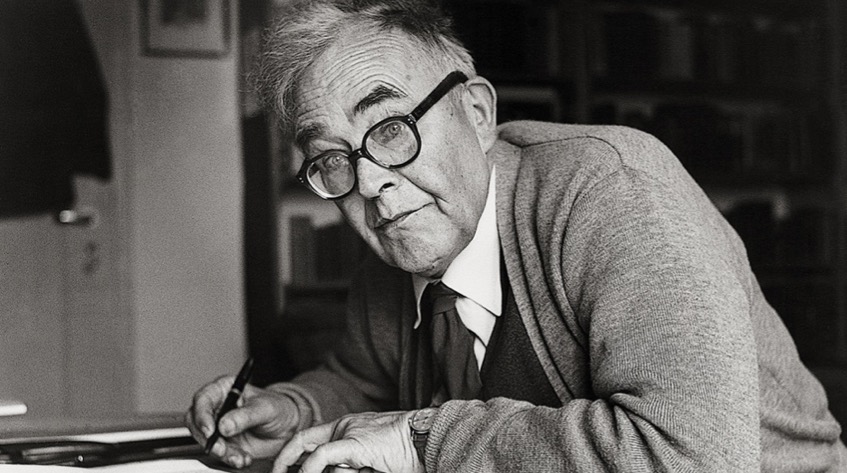
Recently I finished reading a compendium of letters written by Barth during the last seven years of his life. The collection is filled with insider information on Barth’s dealings and correspondences, and it gives the reader rather interesting access to all of his personal and theological preoccupations leading up to his death. For example, I did not know that he was virtually absorbed in the developments of the Second Vatican Council, which was transpiring in the mid-60s; the theologians who were a part of that council, furthermore, were highly influenced by – or at least aware of – Barth’s theology, and sent him an invitation to be an outside observer to the council’s proceedings.

For the purposes of this post, I saw fit to lay before you two letters, both pastoral in nature, which Barth sent to two troubled individuals who had reached out to him about two very different problems.

The first letter was written in late December of 1961, and is a response to a German prisoner whom Barth was fairly sure was contemplating taking his own life. The pastoral counsel Barth offers is a balm to the heart. It reads:

“Dear N.N.,
Your letter of the thirteenth reached me yesterday and moved me greatly. Partly because you refer to my good friend Gertrud Staewen but above all because Christmas is upon us, I hasten to make at least a short reply.
Since you obviously want something from me, you cannot be serious in expecting me to judge you harshly. But can I give you any supporting counsel?
You say you plunge deeply into the Bible in vain. You say you also pray in vain. You are clearly thinking of a ‘final step’ but you shrink back from it. Have I understood you correctly?
First regarding your prayers. How do you know they are in vain? God has His own time and He may well know the right moment to lift the double shadow that now lies over your life. Therefore, do not stop praying. 
It could also be that He will answer you in a very different way from what you have in mind in your prayers. Hold unshakably fast to one thing. He loves you even now as the one you now are… And listen closely: it might well be that He will not lift this shadow from you, possibly will never do so your whole life, just because from all eternity He has appointed you to be His friend as He is yours, just because He wants you as the man whose only option it is to love Him in return and give Him alone the glory there in the depths from which He will not raise you.
Get me right: I am not saying that this has to be so, that the shadows cannot disperse. But I see and know that there are shadows in the lives of all of us, not the same as those under which you sigh, but in their way oppressive ones too, which will not disperse, and which perhaps in God’s will must not disperse, so that we may be held in the place where, as those who are loved by God, we can only love Him back and praise Him.
Thus, even if this is His mind and will for you, in no case must you think of that final step. May your hope not be a tiny flame but a big and strong one, even then, I say, and perhaps precisely then; no, not perhaps but certainly, for what God chooses for us children of men is always the best.
Can you follow me? Perhaps you can if you read the Christmas story in Luke’s Gospel, not deeply but very simply, with the thought that every word there, and every word in the Twenty-Third Psalm too, is meant for you too, and especially for you.

With friendly greetings and all good wishes,

Yours,
KARL BARTH.”[1]

The second letter was written five years later, in early December, in response to a German pastor (who was also a former student) who was prompting Barth to be more responsive and appreciative of certain ecclesiastical-political goings-on. The shift changes in this one. Gentle, comforting Barth has been put away and, in his place, the reprimanding, disapproving, fatherly Barth now comes to the fore. It reads:

“Dear Pastor,

            Your urgent letter of 2 November still lies unanswered in front of me and so (for the last week) does your fiery poem ‘Germany’s Path,’ which points in the same direction. I thank you for them. Excuse me if I am brief. I am no longer able to draw up longer statements.

            This brings me at once to your wish, which you have even presented to me in the form of a citation to appear before the judgment seat of the Lord of the church. Amidst all the speaking and shouting in Germany, loud enough as it is, you want me to issue a kind of roar of the lion of Judah in the style of certain utterances at the beginning of the thirties. Dear pastor, you are not going to hear this roar. ‘For everything there is a season and a time.’ That I am not at one with Bultmann and his followers I have shown publicly and clearly not only in my booklet Ein Versuch, ihn zu verstehen but also in the whole C.D., especially the last volumes. And C.D. is in fact being read quietly much more, and more attentively, than you seem to realize. And since the good Lord, in spite of reports to the contrary, is not dead, I am not concerned, let alone do I feel constrained, to act as the defender of his cause in a confessional movement… For one thing I have other and more useful things to do. 
            This brings me to the second thing concerning yourself. As you tell me, you have just come from three months of persistent depression in the hospital, and you have already had other periods like it. After this ‘down’ you are not in an ‘up.’ Good, thank God for it, but see that worse does not befall you. It is not thanking God, nor is it good therapy, to use this ‘up’ to proclaim the status confessionis hodie, to imitate Luther at Worms or Luther against Erasmus, to compose thoughtlessly generalizing articles and paltry battle-songs, to write me (and assuredly not only me) such fiery letters, to pour suspicion on all who do not rant with you, indeed, to punish them in advance with your scorn, etc. Instead you should be watching and praying and working at the place where you have been called and set, you should be reading holy scripture and the hymn-book, you should be studying carefully with a pencil in your hand the theological growth springing up around you to see whether there might not be some good grain among the tares. Lighting your pipe and not letting it go out, but refilling and rekindling it, you should not constantly orient yourself only to the enemy – e.g., to seninely simplistic statements such as those recently made bt the great man of Marburg in the Spiegel – but to the matter in relation to which there seem to be friends and enemies. Then in the modesty in which is true power… you should preach good sermons in X, give good confirmation lessons, do good pastoral work – as good as God wills in giving you the Holy Spirit and as well as you yourself can achieve with heart and mind and mouth. Do you not see that this little stone is the one thing you are charged with, but it is a solid stone in the wall against which the waves or bubbles of the modern mode will break just as surely as in other forms in the history of theology and the church they have always broken sooner or later? Dear pastor, if you will not accept and practice this, then you yourself will become the preacher of another Gospel for which I can take no responsibility. You will accomplish nothing with it except to make martyrs of your anger those people who do not deserve to be taken seriously in this bloodthirsty fashion and whom you cannot help with your ‘Here I stand, I can do no other.’ With the modesty indicated, be there for these people instead of against them in this most unprofitable style and effort. In this way, and in this way alone, will you thank God for your healing. In this way, and in this way alone, can you help to prevent new depression overtaking you tomorrow or the day after. 

            This is what I want to say to you as your old teacher, who also has real knowledge of the ups and downs in the outer and inner life of man even to this very day, but who knows how to greet in friendly fashion the remedy which there is for them.

            With sincere greetings, which I ask you to convey also to your wife and sister-in-law,

                                                                                                Yours,

                                                                                                KARL BARTH.”[2]

This last one in particular struck me, as it sounds like something a former version of myself would have done well to listen to.

Soli Deo Gloria


[1] Karl Barth, “19: To a Prisoner in Germany,” in Karl Barth Letters: 1961-1968, ed. by Jürgen Fangmeier and Hinrich Stoevesandt, ed. and trans. by Geoffrey W. Bromiley (Grand Rapids, MI: Eerdmans Publishing Company, 1981), 27-28.

[2] Karl Barth, “237: To a Pastor in Germany,” in Karl Barth Letters: 1961-1968, ed. by Jürgen Fangmeier and Hinrich Stoevesandt, ed. and trans. by Geoffrey W. Bromiley (Grand Rapids, MI: Eerdmans Publishing Company, 1981), 229-231.

Close Reading

Robert Jenson’s Systematic Theology: The (New) Triune Relations

Robert Jenson is known for many things: his emphasis on the sacraments, his theological creativity, his reliance on Hegel, his reliance on Barth, his ability to speak theology concisely, and the list goes on. One aspect of his theology I have not seen touched on as much, however, are the new relations he posits the Church should consider as helpful descriptors for how to conceptualize the Triune Life. He affirms quite joyfully the traditional relations – generation, spiration, origination, procession – but proposes that not-before-seen reciprocal relations be recognized as constituting the Spirit’s dynamic contribution to God’s ontology.

ST: The Spirit as Liberator and Reconciler

Jenson introduces the new relation of liberation into the life of the Trinity. He does this so as to heed Hegel’s (and Buber’s) thoughts concerning what constitutes a healthy I-Thou relation. For Jenson and these thinkers, within the isolated person-to-person relationship there can only be a form of obsessive relational domination. If there are only two partners of relation, there can only be a subject-object and hence a master-slave dynamic as the only possible dynamic. This can be plainly seen in the obsession with which abusive partners find others – all others, friends of the beloved perhaps primarily – as threats to the lover’s enjoyment and satisfaction of the beloved. Inversely, the lover whose enjoyment of the beloved because of or alongside of the friends and companions surrounding the beloved is said to be a healthy, relationally-balanced individual. Jenson and Hegel would wholeheartedly agree. The only way the two partners can be freed for their love and enjoyment of one another, they argue, is if a third party opens up the two partners for their mutual love for one another. The Holy Spirit fulfills this function for the Father and the Son, and in so doing is rightly characterized, like Augustine said, as the love-bond of the Trinity.

Jenson writes: “If you and I are to be free for one another, each of us must be both subject and object in our converse. If I am present in our converse as myself, I am a subject who have you as my object. But if I am not also an object for you as subject, if I in some way or degree evade reciprocal availability to you as one whom you in your turn can locate and deal with, I enslave you, no matter with what otherwise good disposition I intend you.”[1]

In other words, if Father and Son are not reciprocally available for each-other as Father and as Son in the bond of their Spirit-love, there is no Triune God like the Tradition says. Without the Spirit, there is no true bond or relational openness as constitutive of God’s being, and therefore no true bond between the Son – who simply is the Lord Jesus Christ – and the Father He has been sent from. Jenson is convinced that previous theological missteps were taken in the history of doctrine because of a pre-existing blindness to this relational dynamic of the Spirit. To name a recent example, Jenson thinks that most of what should be criticized in his theological grandfather, Karl Barth, has to do with Barth’s malnourished (and possibly nonexistent) doctrine of the Holy Spirit. He goes so far as to say that, when it comes to the Church Dogmatics, Barth proposes what looks much more like a “binity” than a Trinity.

He further elaborates: “So we must learn to think: the Spirit is indeed the love between two personal lovers, the Father and the Son, but he can be this just in that he is antecedently himself. He is another who in his own intention liberates Father and Son to love each other. The Father begets the Son, but it is the Spirit who presents this Son to his Father as an object of the love that begot him, that is, to be actively loved. The Son adores the Father, but it is the Spirit who shows the Father to the Son not merely as ineffable Source but as the available and lovable Father.”[2]

It is in being the glue of the Father and Son that the Holy Spirit exists as the Tradition’s third hypostasis. “The Spirit is himself the one who intends love, who thus liberates and glorifies those on whom he ‘rests’; and therefore the immediate objects of his intention, the Father and the Son, love each other, with a love that is identical with the Spirit’s gift of himself to each of them.”[3] This sort of change to Augustine’s initial thesis does what Augustine arguably did not do, which was to recognize the personal element in the Holy Spirit’s procession from the Father and the Son. It is not simply as some thing called “the love between Father and Son” that the Spirit acts; such a conception is what led to the plumb line of the West’s depersonalization of the Spirit. It is as the one who, in proceeding from Father and Son, acts to blossom the generation and paternity of Father and Son for each other that the Spirit is a subsisting relation, i.e., as the subsisting relation of openness and freedom.

To conclude:

“The Father begets the Son and freely breathes his Spirit; the Spirit liberates the Father for the Son and the Son from and for the Father; the Son is begotten and liberated, and so reconciles the Father with the future his Spirit is. Neat geometry is lost, but life is not geometrical.”[4]

Soli Deo Gloria


[1] Robert Jenson, Systematic Theology, Vol. I: The Triune God (Oxford, UK: Oxford University Press, 1997), 155.

[2] Robert Jenson, Systematic Theology, Vol. I: The Triune God (Oxford, UK: Oxford University Press, 1997), 156.

[3] Robert Jenson, Systematic Theology, Vol. I: The Triune God (Oxford, UK: Oxford University Press, 1997), 158.

[4] Robert Jenson, Systematic Theology, Vol. I: The Triune God (Oxford, UK: Oxford University Press, 1997), 161.

Uncategorized

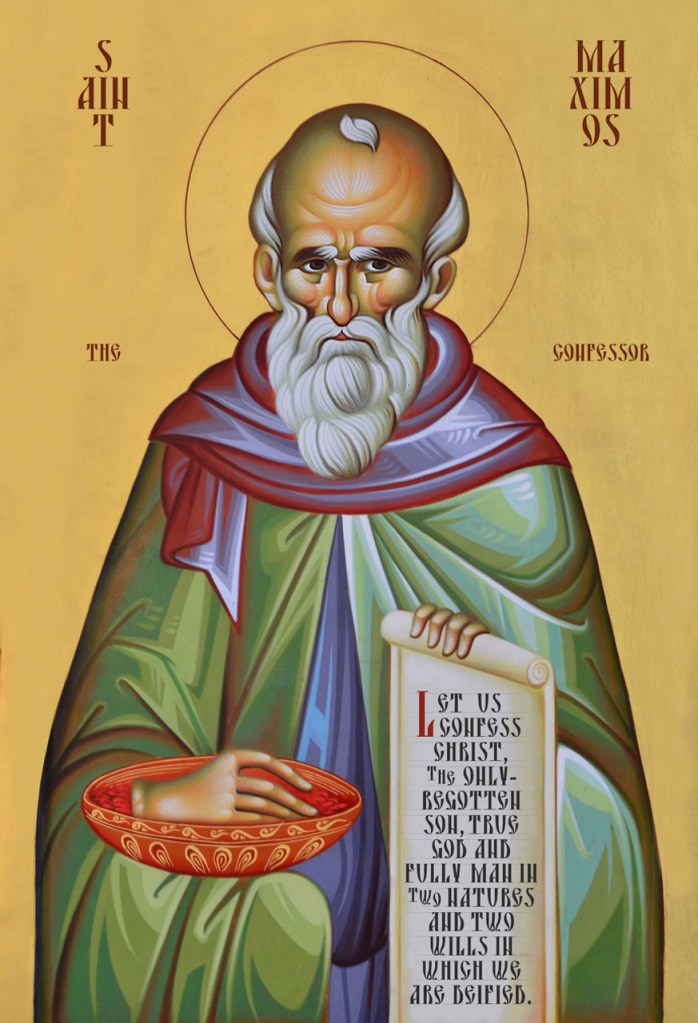
The Centrality of the Great Exchange in Maximus the Confessor’s Ambigua 1-4

Maximus the Confessor is known as the greatest seventh-century defender of a logically-consistent Chalcedonianism. As the “Confessor” part of his title indicates, Maximus held to the Apostolic Faith at a time when the entire empire opposed it (even if the empire did so unknowingly, which my reading of the history would tend to posit). His greatest contribution to the life-world of the Tradition was his staunch opposition to the notion of one will in Christ and his hard-line advocacy of diathelitism: that Christ, though a single hypostasis, contains two wills in accordance with His two natures. Maximus posited the diathelite position as what he saw as the absolutely essential outflow of an appropriate affirmation of a two natures Christology, and spoke to his interlocutors accordingly.

So, as one would expect, readers of Maximus’s works, particularly his Ambigua, cannot understand Maximus without understanding the theological controversies he considered so central to a living faith. In particular, Maximus is unintelligible without at least a cursory understanding of the doctrine of the Hypostatic Union: that Jesus Christ is both God and Man in mysterious union, as one, indivisible subject. In engaging with this doctrine, however, the responsible reader will note how Maximus – just like all the greatest of theologians – posits the hypostatic union as a reality quite non-static, as instead a glorious, living, active reality which has real and primary import for people living in this fallen world. Central to this doctrinal livingness is what has been termed the “Great Exchange,” that, as Maximus quotes Gregory Nazienzen writing, “He [the Son] receives an alien form, bearing the whole of me in Himself, along with all that is mine, so that He may consume within Himself the meaner element, as fire consumes wax or the sun earthly mist, and so that I may share in what is His through the intermingling.”[1]

This paradigm is quite literally everywhere in Maximus’s writings. For the purposes of this post, I will simply focus on his Ambigua 1-4 in his Ambigua to Thomas.

Maximus defines the Union thus, in #3:

“‘He who is now human was in composite’ and simple both in His nature and hypostasis, for He was ‘solely God,’ naked ‘of the body and all that belongs to the body.’ Now, however, through His assumption of human flesh possessing intellectual soul, He became the very thing ‘that He was not,’ that is, composite in His hypostasis, ‘remaining’ exactly ‘what He was,’ that is, simple in nature, in order to save mankind… It was, then, the Word Himself, who strictly without change emptied Himself to the limit of our passible nature.”[2]

Maximus defines the Eternal Son as “simple” in “both… nature and hypostasis,” which allows Him the divine freedom to act upon the creation without in turn being affected (i.e., the fathers assumption about the simplicity and aseity of divine being). From this position of freedom (a term I am taking from Barth), He then “became the very thing ‘that He was not,'” i.e., humanity, so that humanity could subsequently be taken up in Himself. Maximus ends this paragraph by tying this Great Exchange of divinity with humanity to the latter’s divinization. Here we see where the patristic mind like the one held by Maximus depart from contemporary accounts of soteriology and divine being. Bruce McCormack and the Post-Barthians would read Maximus here as beholden to a definition of divine being and salvation alien to the life-world of the Christian Scriptures. To McCormack, salvation can appropriately be spoken of as union with Christ (in line with his Reformed commitments), but the paradigm of deification brings along with it a whole host of doctrinal baggage concerning God’s nature (like God’s impassibility and simplicity) which he deems problematic. My first instinct is to want to agree with McCormack, but then I see how Maximus places Christ at the center of salvation – in an even more profound and scriptural way than even the Reformed – and I can’t help but exclaim with Maximus: “Yes! The Son did take on my nature, even though simple and impassible Himself!” There must be a stronger man in order for the strong man to be bound.

I am always pleasantly surprised and excited whenever I read in the Fathers some doctrinal point that a contemporary theologian takes such pains to prove or posit as if it had not been argued before in the history of theological reflection. Such is how I felt when, upon reading Ambiguum 4, Maximus claims – just like Barth! – that the location of our knowledge that God is good, that God loves humanity, and that God works to redeem humanity, cannot be found except where God makes those attributes plain: in Christ! Maximus writes:

“If, then, He emptied Himself and assumed ‘the form of a slave’ (that is, if He became man), and if in ‘coming down to our level He received an alien form’ (that is, if He became man, passible by nature), it follows that in His ‘self-emptying’ and ‘condescension’ He is revealed as the one who is good and loves mankind, for His self-emptying indicates that He truly became man, and His condescension demonstrates that He truly became man passible by nature.”[3]

God is the one whose nature is read off the skin of Jesus. God is the one who, in “‘coming down to our level'” and “‘ [receiving] an alien form'” showed Himself to be the good God who loves his created ones, and whose desire is to see them re-united with Him in perfect harmony. Not only that, but this God, “having absolved our penalty in Himself… gave us a share in divine power, which brings about immutability of soul and incorruptibility of body through the identification of the will with what is naturally good in those who struggle to honor this grace by their deeds.”[4]

Lastly, let us consider one final point Maximus makes at the end of his 4th Ambiguum. He writes:

“In doing lordly things in the manner of a slave, that is, the things of God by means of the flesh, He intimates His ineffable self-emptying, which through passible flesh divinized all humanity, fallen to the ground through corruption. For in the exchange of the divinity and the flesh He clearly confirmed the presence of the two natures of which He Himself was the hypostasis, along with their essential energies, that is, their motions, of which He Himself was the unconfused union.”[5]

The profundity of Maximus’s argument here lies in what he claims is shown forth “by means of the flesh.” Maximus’s claim that Christ “intimates His ineffable self-emptying” means that Jesus Christ proved Himself to be God in the manner in which He acted out his obedient ministry among men and towards the Father. He is proved to be God-taken-on-flesh, Maximus claims, in the en-flesh-ment itself, in God acting as Man and Man acting as God. It is the Man-acting-as-God half of that equation that takes the cake here for Maximus, and displays Maximus’s dialectical tendency to – also, similar to Barth – switch his foci between Son of Man and Son of God in one continuous, repetitive emphasis. Further, it is in the “exchange of the divinity and the flesh” that “He clearly confirmed the presence of the two natures of which He Himself was the hypostasis.”

When I read contemporary theologians complain of a tendency in the Church Fathers (that undoubtedly exist in some) to present theological realities as static, scientific things whose complexities must be analyzed, I look to Maximus the Confessor and those like him. Theologians like Maximus tear apart the notion some historians of doctrine give to the history of theological reflection that it is some dry, doxology-less, humdrum activity, and show it to be what it is meant to be: a beautiful, worshipful meditation on the reality of God as shown forth in Christ. Maximus writes, to end: “How great and truly awesome is the mystery of our salvation!”[6]

Soli Deo Gloria


[1] Gregory the Theologian, Or. 30.6 (SC 250:236, ll. 5-20).

[2] Maximus the Confessor, On Difficulties in the Church Fathers: The Ambigua, Vol. I, ed. and trans. by Nicholas Constas (Cambridge, MA: Harvard University Press, 2014), 19. 

[3] Maximus the Confessor, On Difficulties in the Church Fathers: The Ambigua, Vol. I, ed. and trans. by Nicholas Constas (Cambridge, MA: Harvard University Press, 2014), 25.

[4] Maximus the Confessor, On Difficulties in the Church Fathers: The Ambigua, Vol. I, ed. and trans. by Nicholas Constas (Cambridge, MA: Harvard University Press, 2014), 25.

[5] Maximus the Confessor, On Difficulties in the Church Fathers: The Ambigua, Vol. I, ed. and trans. by Nicholas Constas (Cambridge, MA: Harvard University Press, 2014), 27-29.

[6] Maximus the Confessor, On Difficulties in the Church Fathers: The Ambigua, Vol. I, ed. and trans. by Nicholas Constas (Cambridge, MA: Harvard University Press, 2014), 31.

Uncategorized

The Onto-Relational Trinity: Why Your Trinity Diagrams Don’t Tell the Truth About Who God Is

“One Substance, Three Persons.”

Such is the mantra used virtually across the board in many Western churches when tasked with describing the ontological makeup of God. Purportedly, the Christian God is Trinity: He is one God made up of Father, Son, and Spirit. How this is the case is usually chalked up to “mystery” and “unknowability” (two helpful terms to be sure but usually used as cop outs from further theological reflection). Queue the diagram which supposedly helps with the comprehension of such a mysterious reality:

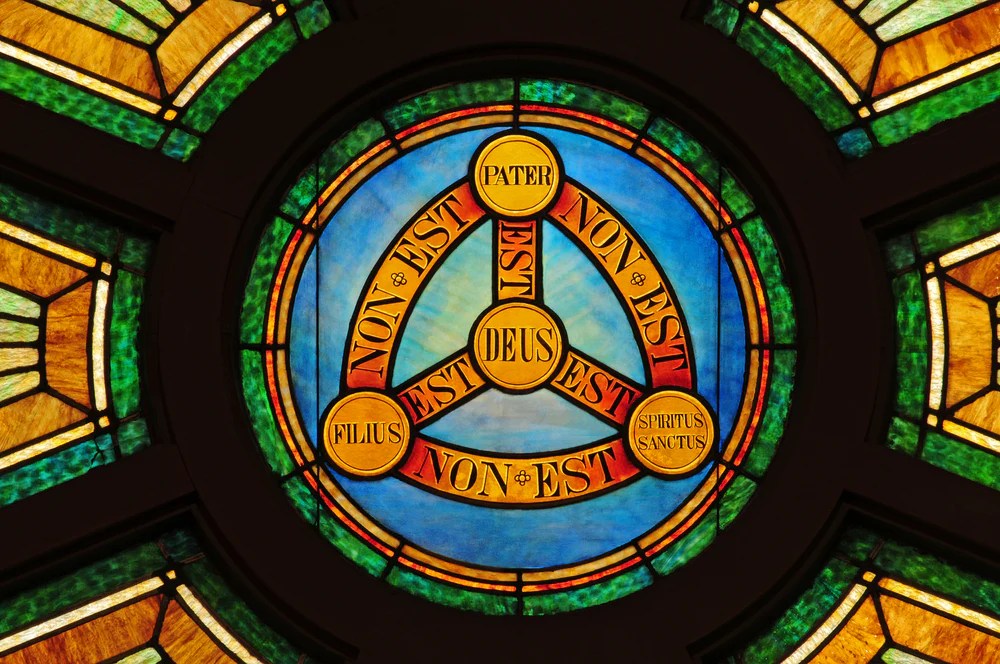
Pictured are three circles, each titled with the name of one of the Divine Persons, positioned around a fourth circle entitled “God.” Touching each circle are lines labeled “Is Not” connected at both ends between each person, and between each person and the “God” circle in the middle are lines labeled “Is.”

This diagram is not helpful, and here’s why.

Late theologian John Zizioulas, in his landmark book on Patristic theology and Personhood called Being as Communion, writes:

“The idea took shape in Western theology that that which constitutes the unity of God is the one divine substance, the one divinity; this is, as it were, the ontological ‘principle’ of God. But this interpretation represents a misinterpretation of the Patristic theology of the Trinity. Among the Greek Fathers the unity of God, the one God, and the ontological ‘principle’ or ’cause’ of the being and life of God does not consist in the one substance of God but in the hypostasis, that is, the person of the Father. The one God is not the one substance but the Father, who is the ’cause’ both of the generation of the Son and of the procession of the Spirit. Consequently, the ontological ‘principle’ of God is traced back, once again, to the person.”[1]

What Zizioulas does here, remarkably, is point out that in the theology of the Cappadocian Fathers – the most significant theologians of the Trinity other than Athanasius – the Person acts as the center of God’s substance, and not the idea of “substance” or “Being” as applied to God. In other words, instead of Being holding priority in Trinitarian language – as it did in the Western Church, over time – it should in fact be the Person-in-relation that holds priority, particularly the Person of the Father (who is the Ground, the Unoriginate Originator of the Son and Spirit). There is no fourth circle labeled “God” in God; there is no fourth thing in God in which the three participate. Such a conception – which is exactly what the diagram above is relating – makes Greek ontology, rather than the God revealed in Jesus Christ, prior in Trinitarian thinking. Remarkably, what this correction reaps for Christian theology is that it means Being in God is relational.

God cannot be conceived, the Fathers tell us, except as Being-in-relation, and, hence, Being-in-relation is who the God revealed in Jesus Christ is. There is no such “supreme being” in existence other than the one that Jesus Christ reveals, a claim contrary to the mountain of literature on Western monotheism’s supposed overlapping belief systems. There is no unmoved Mover who can comfortably be ascribed as the God and Father of our Lord Jesus Christ. That God is the God of the philosophers, but not the Christian God. The Christian God finds His Being in the Person of the Father, who in eternity begets His Son and spirates His Holy Spirit. The Being of the Son and the Spirit, therefore, live as derived-Being, as Being-from, not as Originator-of like the Father. Yet, the Father, too, is Being-in-relation; there was never a time when the Father was not with His Son and His Spirit. The Father, though underived in His Being, is still Being-in-relation and not exclusively Being-in-Himself. All of this lends itself to what Torrance calls a “dynamic” conception of God’s ontology (which is really the biblical conception) rather than a “static” formula as attributed to the West’s thinking following Augustine.

Zizioulas continues, a few pages later:

“The manner in which God exercises His ontological freedom, that precisely which makes Him ontologically free, is the way in which He transcends and abolishes the ontological necessity of the substance by being God as Father, that is, as He who ‘begets’ the Son and ‘brings forth’ the Spirit… For this communion is a product of freedom as a result not of the substance of God but of a person, the Father–observe why this doctrinal detail is so important–who is Trinity not because the divine nature is ecstatic but because the Father as a person freely wills this communion.”[2]

Exactly, sir! Here here! In other words, we must look to the Father as the “fountainhead” – a title the Fathers gave Him – of divinity, the one Paul calls “God” (θεοs) explicitly in all of His Trinitarian introductions. The sense this makes of Paul’s statements cannot be clearer:

“Grace to you and peace from God our Father and the Lord Jesus Christ” (1 Cor. 1:3)
“Grace and peace to you from God our Father and the Lord Jesus Christ” (Gal. 1:3)
“Grace and peace to you from God our Father and from the Lord Jesus Christ” (Rom. 1:7b)

Like Zizioulas argues, Paul always gives the Father the title “God,” not because (as the Arians believe) He is the only truly Divine Person but because Divinity rightly originates in Him. Jesus Christ is labelled “Lord” and the Holy Spirit “Holy” because of their rightful placement on the God-side of the God-world divide, but within that God-side there exist definite two-way relations which constitute God as Trinity: namely Origination (from the Father to the Son and the Spirit, received by the Son and Spirit), Generation (from the Father to the Son, received by the Son), and Procession (from the Father… to the Spirit, received by the Spirit).

The last significant thing Zizioulas writes in relation to this discussion he writes on page 46:

“The expression ‘God is love’ (1 John 4:16) signifies that God ‘subsists’ as Trinity, that is, as person and not as substance. Love is not an emanation or ‘property’ of the substance of God–this detail is significant in the light of what I have said so far–but is constitutive of His substance, i.e., it is that which makes God what He is, the one God. Thus love ceases to be a qualifying–i.e., secondary–property of being and becomes the supreme ontological predicate. Love as God’s mode of existence ‘hypostatizes’ God, constitutes His being.”[3]

Boom. Zizioulas here articulates what I have found so hard to find the language for: that John’s statement about God as love is not some fluffy though true affirmation of God’s character, but Love is Who He is. Seen in the light of this discussion on God’s relations, John’s statement makes all the more sense. In other words, “God is love” means “God is Trinity.” Therefore, the core nugget of truth at the heart of the Apostolic Christian Tradition – and hence the Gospel – is that God is relational in his very Being of Being, Zizioulas argues, and in Jesus Christ and by the Holy Spirit we are brought into that very relational heart of God, bid by the Father to become united to the Lord Jesus Christ by faith affected in us by His Spirit. May our theologizing, our communal experience as “eucharistic communities” (his term), and our very lives be shaped by the relational heart of the God revealed in Jesus Christ, who is Trinity.

Soli Deo Gloria


[1] John D. Zizioulas, Being as Communion: Studies in Personhood and the Church (Crestwood, NY: St. Vladimir’s Seminary Press, 1985), 40-41.

[2] John D. Zizioulas, Being as Communion: Studies in Personhood and the Church (Crestwood, NY: St. Vladimir’s Seminary Press, 1985), 44.

[3] John D. Zizioulas, Being as Communion: Studies in Personhood and the Church (Crestwood, NY: St. Vladimir’s Seminary Press, 1985), 46.

Uncategorized

“Language,” a Free Form Poem

On my old Wix blog, I would post poems I had written every once in a while. Well, my journal has seen an uptick in the amount of poems written in it for the last few weeks so I felt I would share one here.

—-

Language, words, are a railroaded track of
love, comfort, or terror,
Harboring or harvesting the mind’s thick-bodied stores,
Able to glorify, magnify, fright, or infiltrate,
and balm, bleed, bore, or blaze
our beings-in-the-world.
I give myself wholeheartedly to the
Word in the beginning.
To lay down those tracks make you a skilled or lazy wizard,
a spinner of speaking whose products can be handed out to heal
the rough and tumble of a life spent sorrowing.
But to be a skilled forger of phrases can paint the pretty leaves purple again;
as in, reimbue life with a radiant raising of religious roofing.

Soli Deo Gloria

Uncategorized

The Theologian as Church Grammarian

In evangelical-theological literature right now, the idea that theologians are “church grammarians” is a hot one. The theologian, this literature says, is one who actively seeks to test, challenge, and refine the Christian church’s language about God so as to bring it in conformity with God’s being as revealed in Jesus Christ. Especially among those evangelical theologians open to the thought-world of figurehead theological thinkers like Barth, Torrance, Webster, et al., this idea holds a central prominence (for good reason). To me, this idea seems thoroughly helpful and downright correct.

See, after Karl Barth, the idea of the theologian as church grammarian has taken on a special role. What Barth did was bring this definition into clearer focus and consideration: to him, theologians of the past understood their task as something more akin to philosophical speculation, rather than as the construction and refinement of theological terminology that served the church’s mission to upbuild the saints and evangelize the world. At the end of the day, the theologian must not think either too little or too much of their task, since they are both 1) unable to speak univocally (i.e., completely in line with the reality) of God, and 2) commissioned by God with doing what point number one rightly claims is impossible: to speak rightly and truly (and humanly) about God as God has so revealed himself to humanity. For Barth, the theologian accomplishes his task when he so conforms Christian language to the God revealed in Jesus Christ that the church is able to rightly understand herself and her mission in light of God’s speech about her. In other words, the theologian is a good theologian when he conforms the church’s speech about God with God’s own speech about himself.

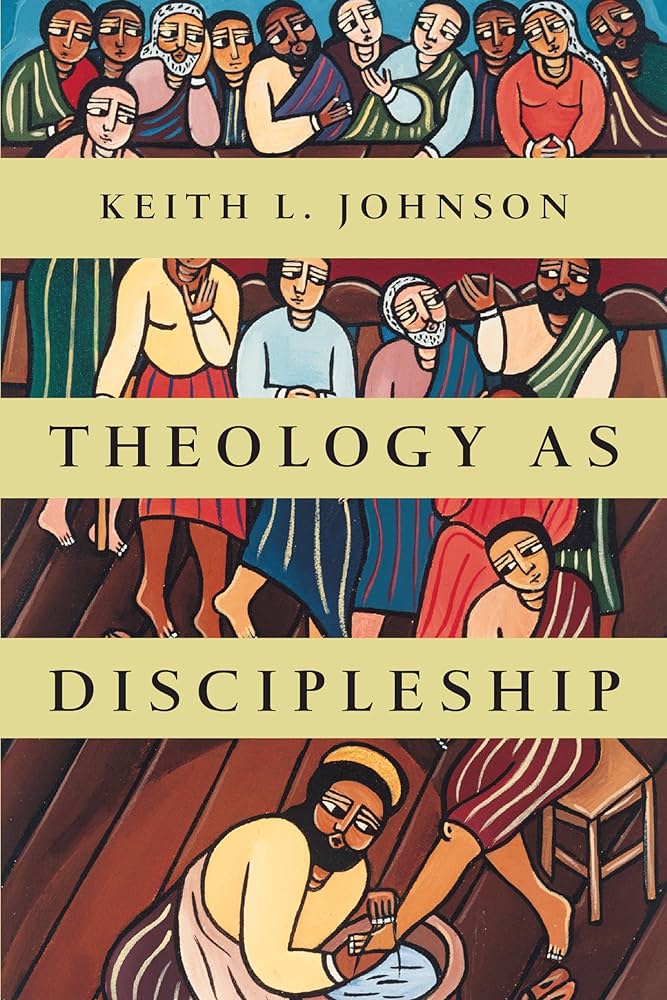
Keith L. Johnson, in his marvelous book about these very issues, writes:

“God himself must show us how to use [our theological language] rightly, and he does so in and through Jesus Christ…. Even as we know the truth about God, we always do so on God’s terms… We can rightly apply [our words about God] to God as long as we do so in line with the way God has done so in Christ. Our thinking and speaking about God will be true if our words correspond to who Christ is, what he has done and what he continues to do within created history. This means that our primary task as theologians is to bring the meaning of the words we use for God into conformity to Christ. We measure each one by his being, actions, teaching and promises… Our task as theologians is to apply the same treatment to every single word we use for God. Doing so is part of the way we ‘take every thought captive to obey Christ’ (2 Cor. 10:5)… As Barth puts it, by guiding our theological language, ‘Jesus Christ himself sees to it that in him and by him we are not outside by inside… He sees to it that what is true in him in the height is and remains true in our depth.’”[1]

Boom. The theologian is the one who takes the scrappily-taped-together wordage of the spiritual soldiers on the ministerial frontlines and fixes it, helping those same ministers see the benefit and coherence of Jesus Christ anew, in the words of scripture, tradition, and contemporary theological insights. May the theologian use herself for the glory of God and the upbuilding of her sisters and brothers.

Soli Deo Gloria


[1] Keith L. Johnson, Theology as Discipleship (Downer’s Grove, IL: InterVarsity Press, 2015), 80-83.

Uncategorized

The Centrality of the Eucharist in the Christian Liturgy: A Reflection

My wife and I recently began our move over to the Anglican Communion from the low-church Baptist world.

This move was informed by numerous changes in conviction on a myriad of faith matters. The two primary channels through which I, personally, foresaw this move had to do with what I was reading in the Fathers and how I was viewing worship – particularly the elements of worship that made up my wife’s and my liturgical experience at the time. In other words, how I came to view the act of communal worship was out of step with how we were worshipping in our Baptist church. Rising above all the different layers of conviction-change taking place in us, the sacrament of the Eucharist had affected in us the most passionate response.

The Fathers are virtually unanimous in their assertion that what makes a liturgy a Christian liturgy is the inclusion of two elements: the Word and the Sacrament. Without either of these elements – otherwise explained as the preaching of the Bible and the administration of the Eucharist – a gathering of Christians together for communal worship is less than truly and fully Christian worship.

Why are both necessary? As a (former?) Baptist, I’m tempted to place a heavier importance on the Word than on the Sacrament; and in a way, this is right. Philosophically speaking, without the Word – the way in which the Sacrament’s intelligibility is disclosed – the Sacrament is not “brought home” to the congregation’s hearts and minds. Without the Word, the Sacrament is incomprehensible: the bread and the wine are not recognized for their unifying, soul-nourishing affects without a minister explaining that such is the case. Liturgically speaking, the Word is also very important: the homily or exposition on Scripture (determined either in step with the liturgical calendar or an expositional sermon series) is vital to hear what the Triune God has to say to His people.

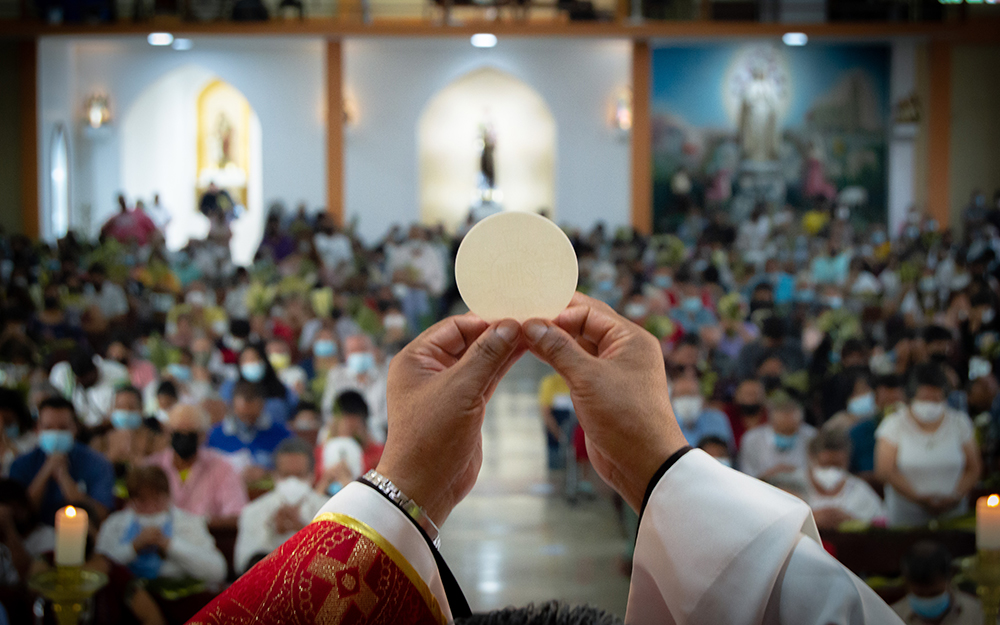
All of these very true things are unbalanced, however, if the Sacrament is not celebrated. And here is why: the unity of the Church, as explicated by the Fathers, is not around the priest but around the Sacrament. Furthermore, the Eucharist is the location whereby God so acts upon His people so as to affect their spiritual nourishment through the Body and Blood of our Lord. The Eucharist is the foretaste of the “marriage supper of the lamb,” and hence the meal that brings the family of God together. Yet, it is also the food that comes down from heaven, the means of grace whereby God Himself spoonfeeds His children through His appointed priestly agents of grace. When the earliest Christian theologians spoke about the unity of the Church and the location of God’s constant acting-upon to nourish His loved ones, they spoke about the Eucharist (and the Bishop, but that’s another blog post).

Commenting on the theological milieu of the 20th century Catholic theologian Henri De Lubac, Sacramental theologian Hans Boersma remarks:

“He [De Lubac] maintains that when, by faith, we share in the one eucharistic body, the Spirit makes us one ecclesial body… the Eucharist makes the church… De Lubac [says]… You focus so much on what makes a legitimate Eucharist, and you zero in so unilaterally on the eucharistic body, that you forget that the sacramental purpose of the eucharistic body is to create the ecclesial body.”[1]

Then, on the next page, Boersma continues:

“The goal of the celebration of the sacrament was the unity or communion of the church…. For the medieval tradition, it was not an either/or option. Communion of holy things – meaning, communion with the body and blood of Christ – was related to the communion of saints. The one caused the other and was related to it in a sacramental manner.”[2]

So. The Word is indeed an integral piece of the Christian liturgy. In the Anglican tradition (along with the Catholic, Orthodox, Lutheran, Methodist, etc.), the practice of responsive Lesson-readings makes it so that the Word of God is rhythmically-placed throughout the service. Put these alongside the homily (also included in the above traditions) and the Christian liturgy is indeed Word-saturated. Without the Eucharist as the climax of the liturgy, though, the service becomes much more about what we (or, in this case, the pastor) do/does, rather than about how God is coming to meet us and unite Himself to us in these humble elements of bread and wine. The Eucharist is rightly central to the Christian liturgy in that it places the primary emphasis on how God is ministering/has ministered to us in Christ, rather than on how we ourselves are ascending to God through our liturgical (or expositional) prowess.

The Church is not only the people of God, but a hospital for sinners. Every hospital has consistent, particular medicines administered to the patients throughout the days, weeks, and months of their stay. The Sacraments are the medicine of the people of God during their stay in this sinfilled reality: the means whereby God imparts the grace of our Lord Jesus Christ to us, and in so doing affects their New Being in Him. In the words of Augustine (?), the Sacraments are the visible means of an invisible grace.

Take your medicine!

Soli Deo Gloria


[1] Hans Boersma, Heavenly Participation: The Weaving of a Sacramental Tapestry (Grand Rapids, MI: William B. Eerdmans Publishing Co., 2011), 114.

[2] Hans Boersma, Heavenly Participation: The Weaving of a Sacramental Tapestry (Grand Rapids, MI: William B. Eerdmans Publishing Co., 2011), 115.

Uncategorized

Maximus the Confessor on The Lord’s Prayer

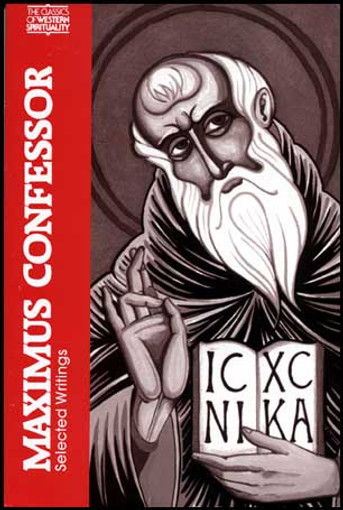
Maximus the Confessor’s commentary on the Lord’s Prayer is a short, edifying, worshipful read. The preeminent eastern theologian’s interaction with what is going on theo-logically in the words of The Lord’s Prayer is illuminating of the pre-Modern outlook concerning the Son’s salvific incarnation and our subsequent participation in the Trinity’s life. He writes,

“Indeed this prayer contains in outline, mysteriously hidden, or to speak more properly, openly proclaimed for those whose understanding is strong enough, the whole scope of what the words deal with. For the words of the prayer make request for whatever the Word of God himself wrought through the flesh in his self-abasement. It teaches us to strive for those goods of which only God the Father through the natural mediation of the Son in the Holy Spirit is in all truth the bestower, since according to the divine Apostle the Lord Jesus is ‘mediator between God and men’: Through his flesh he made manifest to men the Father whom they did not know, and through the Spirit he leads the men whom he reconciled in himself to the Father. For them and on their account, he became man without any change and he himself worked and taught many new mysteries whose number and dimension the mind can in no way grasp or measure.”[1]

Maximus’s insistence that “the words of the prayer make request for whatever the Word of God himself wrought through the flesh in his self-abasement” is the most profound statement in this small passage here, since it remarkably proclaims that the Lord’s Prayer’s telos goes beyond merely providing a structure for prayer but is itself a proclamation of the fulfillment of the Son’s economic workings. In other words, the Lord’s Prayer is itself a sort of gospel proclamation which tells of Jesus Christ’s working out within himself of the perfection of humanity through his own human life, death, and resurrection. Glory to God for such a wonderful insight.

Maximus continues, outlining the meet response to such reflection on God’s gracious salvation:

“He gives adoption by giving through the Spirit a supernatural birth from on high in grace, of which divine birth the guardian and preserver is the free will of those who are thus born. By a sincere disposition it cherishes the grace bestowed and by a careful observance of the commandments it adorns the beauty given by grace. By the humbling of the passions it takes on divinity in the same measure that the Word of God willed to empty himself in the incarnation of his own unmixed glory in becoming genuinely human.”[2]

Our response, fueled and given by the grace of God through the working of Jesus Christ and the Spirit, is one of worship and obedience. In worshipping and obeying, the human Christian ascends to greater levels of participated divinity in a reverse manner to how Christ condescends from the heights of his divinity down to his finite humanity. Thus is the whole Christian life: one of deifying ascent from one glory to the next, fulfilling our purpose as little Christs.

May we each individually become an εικον of our Lord: the divine and human God-Man.


[1] George C. Berthold, Trans., Maximus Confessor: Selected Writings (New York, NY: Paulist Press, 1985), 102.

[2] George C. Berthold, Trans., Maximus Confessor: Selected Writings (New York, NY: Paulist Press, 1985), 103.