Uncategorized

The Atonement as Encompassing All of Christ’s Life for Us

What has taken place in the event of Jesus Christ – the in-carnat-ion, the en-flesh-ment, the Son of God taking upon Himself the flesh of humanity – is the redeeming of humanity by God Himself. In God’s program of salvation, God is both the initiator and receiver of that Man-to-Godward movement and God-to-Manward movement. In Himself, Christ is both God and Man, and satisfies the necessary requirements for union and communion from both sides, on God’s side as the perfect imago of the Father (and therefore the Triune God) and on Man’s side as the perfectly obedient priest unto God and revealer to humanity of the true nature of God’s inner heart and life, in whose flesh we now share. The incarnation, then, is itself salvific. Now, when I claim that the incarnation is salvific, what do I mean?

In my last post I made a point to distinguish two branches of the Reformed Christian tradition which both derive their theological heritage from the writings of John Calvin and the western, non-German Continental Reformation tradition generally. On the one side, I marked out the “Westminster” tradition as that Reformed tradition deriving its theological language from confessional documents Westminster and Dort. On the other hand, following the lead of theologians like Barth, Torrance, and others, I recognized the other Reformed tradition which sought to find fundamental continuities between the early Reformed tradition and the Ancient Catholic tradition, the wellspring from which all Christians following the Great Schism derive their spiritual heritage. How I differentiated the two streams’s theological language was by contrasting the Westminster tradition’s underlying Nestorian tendencies which lead to “theologies of glory,” so called, with the “Athanasian Reformed” tradition’s methodology of grounding all Theo-logic in the life-sphere of Scripture, which is itself Jesus Christ.

Perhaps the greatest thing I had to critique in the Westminster Reformed branch was its almost-conscious affirmation of something like the classical Arian formula of salvation: that God, who harbors a damning wrath towards humanity, must propitiate his justice and anger upon a third-party mediator in order to secure the forgiveness of the human race, with Jesus acting out such a mediatorial role. In such a formula, the taking-on-of-humanity by Christ becomes a means to the end of the fulfillment of some anger-principle within God which must be satiated, instead of being itself a healing and atoning work which springs forth from the deepest bowels of God’s inner Triune heart and life. The way many in the Westminster Reformed camp use their theological language would seem to lay out such a Nestorian-leaning plan of God’s, where although the ancient creeds are affirmed and the divinity of Christ is firmly proclaimed from the pulpit, the other theological language which many Westminsters feel compelled to utter sways them towards using language where the hypostatic union of Christ is something really only done to scurry Christ to the cross. In other words, all that matters is the cross and the mediatorial role in which it functions in this larger theological-linguistic paradigm of sin-wrath-satiety.

TF Torrance, and the Ancient Church, provide a wonderful antidote to such a harmful theological-linguistic system. For Torrance and the Ancient Church, the Incarnation was rightly so called salvific not just for the fact that the cross happened by and against the enfleshed Son of God but also because Atonement rightly characterizes the entirety of Christ’s life as a human. In other words, the Atonement is not something so exclusively tied to the event of the cross as to render the rest of Christ’s pre-cross human life as somehow un-atoning. No, our idea of Atonement should extend to the entirety of Christ’s human life which he lived (and lives) for our sakes. The entire life of Christ is an atonement, not just his life while up on the cross.

Torrance writes,

“All through his life and ministry, from the baptism to the cross, he was at work in holy atonement, bearing the sins of the world on his spirit, and through the Spirit offering himself in sacrifice to God: that is forgiving and healing only as he bowed himself to receive the just judgment upon our human sin and fuilt, the just for the unjust. In this way we see that the whole of his life was an atoning sacrifice, although it is on the cross that at last all the sin of humanity is finally laid upon him, and there that through the eternal Spirit he offered himself once and for all in complete and final expiation for the sin of mankind.”[1]

The whole life of Christ is atonement. If you take a simple analysis of the term itself, “at-one-ment,” you will see that the whole Christian faith proclaims that Christ’s life was, in its acting-out, death, and final-consummation, an “at-one-ing” between Man and God, where God, as Man, destroyed the barriers that separated Man and God (i.e., Man’s sinful guilt and isolation and desecration) and restored the union and communion of God to Man and Man back to God.

In case you think I am putting down the special and unique nature of the cross, I rebut that I agree with Torrance when he says,

“We sum up this consideration of Christ’s compassionate ministry as the shepherd priest by saying that he came to enter into complete solidarity with sinners in order to redeem them by taking their burdens upon himself. That is what the epistle to the Hebrews describes by the words which speak of Christ as made perfect through suffering and so qualified to be our high priest and the author of our salvation. The ‘making perfect’ refers to his ordeal of consecration when before the cross he entered more and more into compassionate and sympathetic solidarity with lost and guilty sinners, bringing his relation of solidarity with them to its purposed end or completion on the cross. ‘Making perfect’ does not mean some process of moral perfecting in Jesus, but the completing or perfecting of a process into which he solemnly entered at his baptismal consecration and which continued in his relations with those he came to save. That he learned obedience does not mean his act of perfecting obedience to the Father so far as he himself was concerned, but his entering more and more fully into the actual practice and experience of what his obedience was as Son of God among sinners until his obedience was crowned in his suffering and death on the cross. Then he became at once the author and perfector of faith – that is, he carried through to its very end the whole course of faith, his life of faithfulness toward God and his life of faithfulness toward man. Thus the whole movement of entering into solidarity with sinners, and his obedience within that to the Father, reached its end or completion on the cross (emphasis added).”[2]

All of Christ’s life for us is rightly called atonement, for by being our obedient high priest unto God Christ so fulfills the requirements for right relationship with God which we consistently reject and put aside out of our own self-made pursuits, and he finally fulfills such a life of perfect Man-to-Godward and God-to-Manward relations so as to affect our union with God forevermore. In Christ, we are at-one with God; for Christ is Man and God united in perfect harmony.

Soli Deo Gloria


[1] Thomas F. Torrance, Incarnation: The Person and Life of Christ (Downers Grove, IL: InterVarsity Press, 2007), 136.

[2] Thomas F. Torrance, Incarnation: The Person and Life of Christ (Downers Grove, IL: InterVarsity Press, 2007), 137-138.

Uncategorized

The Reformed Branch of the Reformation: An Exercise in Tradition Interpretation

There were many powerful insights to arise out of the theological crises and reflections of the Reformation period. Liturgically, theologically, and morally, the Reformation is rightly so called a reform-ation of the Western Christian churches of the Late Medieval period. During the period, the Roman Catholic Church was split asunder as groups within it began perceiving the Roman Church’s priestly abuses and theological missteps. A return to the biblical text, to the Fathers, and to a robust liturgy took place which would forever change the face of the Christian West. The two largest branches to arise out of the Reformation period – the Lutherans and the Reformed – nonetheless stood at odds with each other and fought amongst themselves.

The Reformed branch ended up taking the most ground, since the influence it garnered throughout England, Switzerland, the Dutch lands, and eventually North America (where the early evangelicals fled to from England) bequeathed to it major theological sway over the Western world. Many contemporary evangelical denominations of the Presbyterian and Baptist veins owe their heritage to the thoroughly-Reformed Puritans who split from the hierarchical Church of England in the seventeenth and eighteenth centuries. The Church of England itself was influenced heavily by the theological emphases espoused by the Continental Reformed churches. Their figureheads, however, John Calvin and Ulrich Zwingli, did not themselves agree on much and even functioned within largely different liturgical situations. Calvin, in Geneva, largely stayed put, expending his efforts on pastoral, theological, and biblical matters, while Zwingli utilized the authority he gained to wage a bloody war on the surrounding Roman groups which bordered his territory.

As time went on and the Reformed Protestants after Calvin and Zwingli died were tasked with maintaining their Reformed churches, certain further interpretations of their young tradition took place. Roughly one hundred years after the death of Calvin, Reformed theologians of the English churches and the Dutch churches met separately to systematize the work and theology of their respective branches, leaning heavily on the theological writings of their mutual forefather John Calvin. The first document, the Canons of Dort, was written by the Dutch Reformed theologians in the years 1618-19. The second – and much more popular document in the Western world – was the Westminster Catechism, written by the English Reformed theologians in 1646-47. Each document centers its theology on matters like Divine Providence and Election, and makes the enmity between God and Man (and particularly the enmity they believe exists in God towards Man) a focal point of their “theological system.” For the purposes of this post, I will refer to this branch of the Reformed churches – i.e., the branch I am conjoining because of their mutually-agreed-upon foci – as the “Westminster” branch.

*To be transparent, I take my historical-interpretive lead here from theologians like Barth and Torrance, and contemporary theologians like Athanasian Reformed (growrag.wordpress.com).*

I have found that there is another way to be Reformed, however. See, other, better tradition-interpretations took place within just this last century by theologians who were much more in tune with the patristic consensus of the Ancient Catholic Church (to which all orthodox Christians today are heirs). Something which must be emphatically pushed: it is not, not, not a commendable thing to consciously understand one’s Christian faith as consisting of something fundamentally different from that of those Christians living before the time of the Reformation period. So many contemporary Christians today are almost proud of how much more “biblical” their current expression of the faith is compared to those living before Martin Luther, as if the Reformation was only and exclusively some pure renewal movement, as if the Reformation was some divine thing. *For more on this thought, read Jackson Shepard’s new Mere Orthodoxy article.*

The theologian who most influences me in this regard, towards seeing a continuity between the Ancient Catholic Church and contemporary Christian churches of all veins (within the bounds of Nicaea, of course), but particularly of the Reformed tradition, is Thomas F. Torrance. In his lecture, “The Distinctive Character of the Reformed Tradition,” Torrance lays out a better way to interpret and utilize the history of the Reformed tradition and Calvin’s writings, a way which decidedly departs from the branch that developed into the Westminster theology.

Torrance writes:

“Built into the foundations of the Reformed tradition, of course, was the primacy given to the Word of God, which was regarded not as some communication about God detached from God but as God himself speaking to us personally. God is known only through God, on the actual ground of God’s self-revelation and gracious activity toward us, for it is only through Christ and the Spirit that we have access to God… For Calvin the primary question became, Who is God? Who is the One who acts in this merciful and loving way toward us in Jesus Christ and the Holy Spirit? This is not a question in which the essence and the existence of God are held apart from one another, but one in which God is allowed to disclose who he is in actual relation toward us, and one in which we are cast wholly upon God’s own reality in presenting himself to be known by us.”[1]

The “distinctly Reformed” character of the tradition is the infinite qualitative distinction between God and Man, where God is recognized as the always-initiator of the union between God and Man. The central feature of the Reformed tradition, parallel to Torrance’s description of God’s initiative, is rightly summarized by Francois Wendel:

“No theology is Christian and in conformity with the Scriptures but in the degree to which it respects the infinite distance separating God from his creature and gives up all confusion, all ‘mixing’ that might tend to efface the radical distinction between the Divine and the human.”[2]

I.e., Barth’s term of God as “wholly other.”

Torrance then distinguishes what he categorizes as a patristically-informed version of the Reformed tradition (“Athanasian Reformed,” see the website above) from the Westminster Reformed:

“Thus predestination is not to be understood in terms of some timeless decree in God, but as the electing activity of God providentially and savingly at work in what Calvin called ‘the history of redemption’… This identity of eternal election and divine providence in Jesus Christ generated in the Reformed tradition its well-known conjunction of repose in God and active obedience to God in the service of Christ’s kingdom. However, if that repose in God is referred, as has happened only too often in the history of Reformed churches, to an inertial ground in the eternal being of God, then there opens up a split in people’s understanding between predestination and the saving activity of Christ in space and time, e.g., in the notion of election as ‘antecedent to grace.’ That would seem to be the source of a tendency toward a Nestorian view of Christ that keeps cropping up in Calvinist theology. This is very evident in misguided attempts to construe a ‘pre’ in ‘predestination’ in a logical, causal, or temporal way, and then to project it back into an absolute decree behind the back of Jesus and thus to introduce a division into the very person of Christ. It is one of Karl Barth’s prime contributions to Reformed theology that he has decisively exposed and rejected such a damaging way of thought.”[3]

The problem with the Westminster theologians, Torrance notes, is that in their attempts to uphold their prized elucidations of the doctrines of Predestination and Election, they so conceptualize that “‘pre’ in ‘predestination'” as something which is fundamentally detached and hidden “behind the back of Jesus,” i.e., as something not ontologically related to Jesus Christ who is the Son of God (the Son within Triune formula of Father-Son-Spirit), and as something they posit exists in the pre-creation planning of God as some choice of some over others without any reference to Christ’s all-encompassing work. Torrance’s chief critique, then, is that the Westminster theologians introduce a hidden element within the life and revelation of God, which in turn means God does not actually or authentically reveal Himself in Christ, but maintains a separation from humanity such that His lofty holiness is untouched by humanity’s filthy lowness. Such a hidden element then adequately qualifies the God “revealed” by Christ as sharing a fundamental similarity of detachment from humanity with the absolute-power deity espoused as the Muslim god, Allah, the god who is decidedly separate from and unknowable by humanity. To Torrance, any god so conceptualized has no claim to true revealing-of-Self as claimed taking place in Christ by the historic Church catholic. If there is no revealing-of-Self, humanity has no authentic claim to be united to God’s inner, Triune life. The Westminster formulation of Predestination then undermines the entire divine program as acted out, embodied, and completed in Jesus Christ.

Any cursory familiarity with the theological language of Westminster theologians (epitomized in theologians like the late R.C. Sproul and in contemporary pop-theology like the Five Points) makes their prized conception of God’s hiddenness from humanity plain. The sort of put-you-in-your-place theological aggression exemplified by Westminsters is remarkably similar to what you see in the innumerable videos of doctrinally-orthodox Muslim apologists whose primary strategy is intimidation and recourse to the sinfulness of the human race.

Tied to all this is the problem that Westminster theology tends to locate that transcendence of God mentioned earlier (Barth’s “wholly other”) in the moral uprightness and justice of God rather than in His factual ontological status as qualitatively other or categorically different than creation. There is this underlying current in Westminster theology, too, that the reason for the Son’s enflesh-ment has to do primarily with satisfying the anger and wrath God harbors against humanity, and nothing else, as if the life and active obedience of Christ is some means to a further end rather than the means and end of the whole Divine program (i.e., an ontological rather than a moral end). Torrance is on to this when he remarks, finally, that:

“For us to be in Christ or for Christ to be in us has to be understood in an ontological way, and not just in a figurative or spiritual way. It is through a real union with Christ in his vicarious humanity that all that Christ has done for us in himself becomes ours and we are made to share together what Christ is. That was Calvin’s doctrine of the ‘blessed exchange,’ which he took over from the Greek Fathers. It was in that incarnational and atoning way that justification has to be understood, not just in terms of imputed righteousness but in terms of a participation in the righteousness of Christ which is transferred to us through union with him.”[4]

Soli Deo Gloria


[1] Thomas F. Torrance, “The Distinctive Character of the Reformed Tradition,” The Donnell Lecture delivered at the University of Dubuque Theological Seminary, October 6, 1988, pgs. 5-6. 

[2] François Wendel, Calvin: Origins and Development of His Religious Thought, trans. Philip Mairet (London, UK: Collins, 1965), 151. 

[3] Thomas F. Torrance, “The Distinctive Character of the Reformed Tradition,” The Donnell Lecture delivered at the University of Dubuque Theological Seminary, October 6, 1988, pgs 6-7.

[4] Thomas F. Torrance, “The Distinctive Character of the Reformed Tradition,” The Donnell Lecture delivered at the University of Dubuque Theological Seminary, October 6, 1988, pg 10.

Uncategorized

Theological Knowledge as Originating in God’s Initiative in Karl Barth’s Dogmatics in Outline

Karl Barth’s Dogmatics in Outline is an imperfect summarizing of his more layered, theologically-structured work, the Church Dogmatics. The Outline, made up of 24 chapters each covering a portion of the Apostle’s Creed, is a formidable introduction for the Barth-curious. More than a simple introduction, however, Dogmatics in Outline is a rich theological-devotional meditation which Barth gave in the form of a series of lectures immediately following the end of the Second World War. Along with his Evangelical Theology (also a series of lectures he gave, but in America), the Outline is a shiny jewel in the myriad-ly colorful theological crown of Karl Barth. There are too many sizable nuggets of theological goodness to cover here, but chapters 5-10 are especially enriching.

At the beginning of chapter five, Barth begins an offensive against the unnamed specter of his theologically liberal forefather Friedrich Schleiermacher. He contrasts the faith found in the Apostles Creed with that espoused by the preeminent theological Romantic, who represents (still, sadly) much of modern hermeneutics and biblical theology of both “liberal” and “conservative” veins. He starts:

“In the sense of Christian faith, God is not to be found in the series of gods. He is not to be found in the pantheon of human piety and religious inventive skill. So it is not that there is in humanity something like a universal natural disposition, a general concept of the divine, which at some particular point involves the thing which we Christians call God and as such believe in and confess; so that Christian faith would be one among many, an instance within a general rule… The God of the Christian Confession is, in distinction from all gods, not a found or invented God or one at last and at the end discovered by man; He is not a fulfillment, perhaps the last, supreme and best fulfillment, of what man was in course of seeking and finding.”[1]

In other words, the classical method of “proving God’s existence,” of analyzing God just as one would analyze the theological pronouncements of any other deity originating in the sinful creativity of mankind, is a fools errand; it does not and cannot get you to the God revealed and disclosed in the Christian Scriptures. Further, God is not something which can be, has been, or will ever be “found out” by man, period. Man, in his lowly and corrupted estate, is incapable of finding his way to the God who is, and all attempts have ended up creating language structures and conceptions of a god which are in fundamental disagreement with who God tells us He is in such Scriptures (and the Tradition which interprets those Scriptures). The only way in which such a God-to-Man relationship can be established is if God breaks forth into our limited reality and establishes such a relationship. Theologically and existentially, we are in need of God’s help.

“What is involved [i.e., revealed in the Apostles Creed] is man’s meeting with the Reality which he has never of himself sought out or first of all discovered. ‘What no eye hath seen nor ear heard, what hath not entered into the heart of any man, God hath given to those who love Him’… God in the sense of the Christian Confession is and exists in a completely different way from that which is elsewhere called divine.”[2]

So. Barth has helped us establish that the “infinite qualitative distinction” which Christian history has affirmed of the ontological divide between God and creation is indeed true, and is the sword which splits in two every idea of divinity originating in Man’s mind. How, then, is theology established? How is it that humanity can speak of God (which is an ability Barth must believe we now have, however that works out, since he has written what he has written), if humanity cannot then “ascend” to true knowledge of God?

As he gives his answer about how theology is allowed, he also sets out to distinguish his theological project from most “systematic” theologians of the past five centuries or so. He writes:

“It is this God in the highest who has turned as such to man, given Himself to man, made Himself knowable to him… God in the highest, in the sense of the Christian Confession, means He who from on high has condescended to us, has come to us, has become ours… By this definition something fundamentally different is taking place from what would happen, if I should try and set before you conceptually arranged ideas of an infinite, supreme Being. In such a case I would be speculating. But I am not inviting you to speculate. I maintain that this is a radically wrong road which can never lead to God, but to a reality called so only in a false sense… When our talk is of Him and we speak of Him as about a familiar entity, who is more familiar and real than any other reality and who is nearer us than we are to ourselves, it is not because there may have been particularly pious people who were successful in investigating this Being, but because He who was hidden from us has disclosed Himself.”[3]

Theology can only be established on the foundation of God’s initiative to reveal Himself to Man. Without such a divine initiative, Man is doomed (but also revels in being doomed) to forever theorize and imagine a god who fits Man’s fancies and passions. Ten times out of ten, Man creates idols of the world he exists in, and without divine illumination is stuck in such a degrading, self-chosen pattern of destruction. Though his doctrine of the Word of God is be similar yet distinct from mine, Barth’s focus on Jesus Christ as the center of that divine initiative on the part of God to break through Man’s faulty thought-world is summed up well when Barth writes,

“The whole work of God lives and moves in this one Person. He who says God in the sense of Holy Scripture will necessarily have to say Jesus Christ over and over again… From this work we must make no abstractions, if we would know God’s nature and existence. Here, in this work, God is the Person who expounds Himself, and is thus the subject of this work.”[4]

Jesus Christ is the place where God breaks through to us and screams, smiling, “Here I am!”

Soli Deo Gloria


[1] Karl Barth, Dogmatics in Outline (New York, NY: Harper & Row Publishers, 1959), 36.

[2] Karl Barth, Dogmatics in Outline (New York, NY: Harper & Row Publishers, 1959), 36.

[3] Karl Barth, Dogmatics in Outline (New York, NY: Harper & Row Publishers, 1959), 37-38.

[4] Karl Barth, Dogmatics in Outline (New York, NY: Harper & Row Publishers, 1959), 39.

Uncategorized

The Incarnation of Christ as True Union with Fallen Humanity (and Some Mariological Sidebars) in T.F. Torrance

One of the few essential patristic principles which we receive from our older brothers and sisters in the historic Church catholic is the principle that “What has not been assumed [by Christ, in the incarnation] has not been healed.” Such was the implicit assumption of Sts. Athanasius and Cyril of Alexandria, and such was the explicit argument of St. Gregory of Nazianzen, against whom all of the myriad voices who would contradict and drown out the Chalcedonian, Nicene faith that had been handed down by the Apostles to the subsequent spiritual offspring of the One-Springing-Triad God were casting their stones. In a very real sense, an attack on the Christological principle of His assumption of all that is human is an attack on the core of the Christian faith, a fact the fathers rightly and consistently perceived (but one which unfortunately leaves many Christians today, particularly evangelicals, scratching their heads). What does such a principle say, and why is it central (“essential”) to the whole of the Divine Program?

The Apollarian heresy, named after its chief proponent – a common feature of historic heresies – Apollinaris, claimed that Jesus Christ’s incarnation consisted of God the Son taking on all of what was human, a body and a soul, except the mind of a human. In simpler words, Christ became physically a man, but retained his divine mind in such a way as to “leave out” the assumption of a human mind. To Apollinaris, Jesus wore the body of a man but left out the mind; i.e., Jesus was less than truly and fully human. After an examination of such a position, contemporaries of Apollinaris began to contend that such an incarnational formula was out of step with the Nicene faith. To many of the Nicene/orthodox bishops, Apollinaris was spreading lies about what Christ accomplished for humanity in His incarnation.

Queue the Christological principle mentioned before: What has not been assumed has not been healed. The reason why these orthodox bishops rejected Apollinaris’s argument was because if Christ had not truly and completely become all that we are in our humanity, Christ was not redeeming us by uniting himself to humanity, but only “part” of us (in this case the fleshly part), i.e., only a part of what we are is redeemed. You can start to see the problem here. Such a conception of the incarnation puts down a major roadblock against much of the theological language we inherit from the historic Church catholic; we can no longer say with St. John that “The Word became flesh and dwelt among us” if he did not truly “become flesh.”

Let’s turn to T.F. Torrance’s Incarnation: The Person and Life of Christ. Torrance writes:

“In becoming flesh the Word penetrated into hostile territory, into our human alienation and estrangement from God. When the Word became flesh, he became all that we are in our opposition to God in our bondage under law – that is the amazing act of gracious condescension in the incarnation, that God the Son should assume our flesh, should enter a human existence under divine judgment, enter into the situation where the psalmist cried Eli, Eli, lama sabachthani, so that the Word or Son of God himself gave out the same cry when overwhelmed with the divine judgment upon our flesh… He was made in the likeness of sinful flesh, and was even made a curse for us.”[1]

Here, Torrance expounds on just the same topic. However, his further claim that “he became all that we are in our opposition to God in our bondage under the law” deserves to be specially treated, since there are many whose main beef with Torrance on this point is that they don’t deem it appropriate to claim that Christ assumed “sinful flesh”; to them, for Christ to assume sinful flesh implicates a corrupting sinfulness on behalf of the Son of God who assumes that flesh. Although I won’t say these critics are outright heretics, it is interesting that in their attempt to safeguard some aspect of the Son’s holiness and uprightness (arguably the exact motivation of Apollinaris and many other heretics of the same vein) they put a limit on what Christ assumed in his assumption of our human nature.

Torrance goes on, meeting these critics’ claims:

“One thing should be abundantly clear, that if Jesus Christ did not assume our fallen flesh, our fallen humanity, then our fallen humanity is untouched by his work – for ‘the unassumed is the unredeemed’, as Gregory Nazianzen put it. Patristic theology, especially as we see it expounded by the great Athanasius, makes a great deal of the fact that he who knew no sin became sin for us, exchanging his riches for our poverty, his perfection for our imperfection, his incorruption for our corruption, his eternal life for our mortality.”[2]

And then:

“If the Word of God did not really come into our fallen existence, if the Son of God did not actually come where we are, and join himself to us and range himself with us where we are in sin and under judgment, how could it be said that Christ really took our place, took our cause upon himself in order to redeem us? What could we then have to do with him? We stand before God as flesh of sin under God’s judgment, and it is into this concrete form of our sin-laden, corruptible and mortal humanity in which we are damned and lost that Christ came, without ceasing to be the holy Son of God. He entered into complete solidarity with us in our sinful existence in order to save us, without becoming himself a sinner [emphasis added].”[3]

Torrance makes his point well. See, much of theological history in the past millennium has tended to argue that – although it is completely true that Christ assumed all that we are – Christ took on a humanity that in a very real sense was already healed, especially if such humanity was bestowed on him by being birthed from the Mother of God, the Theotokos, whom many theologians consider to have been conceived in an “immaculate” way as well. Well, if the Mother of God holds a humanity which is already cleansed, then what Christ assumes by being born of the Theotokos is a humanity which is foreign to the rest of us, right? This seems, to me, to be an impasse at which a Mariology or Christology which disallows any talk of Christ or Mary holding sinful flesh (not that they themselves are sinful or engage in any sort of sin) contradicts the patristic principle we receive from the historic Church catholic. What do we do about this?

Well, as someone who holds a high reverence for the Theotokos and who even affirms (with the fathers) that she very well can be said to be sinless, I think the way forward for all catholic Christians is to hold to a sort of dual affirmation: that, just as Torrance emphasizes, Christ (and Mary) are completely sinless and spotless but in order to be in step with the Christological principle that “all that is unashamed is unredeemed” we must also say that Christ (and Mary) had corrupted flesh, at least in their earthly, pre-ascension, salvific lives.

Such it seems to me. Torrance ends, saying:

“Christ the Word did not sin. He did not become flesh of our flesh in a sinful way, by sinning in the flesh. If God the Word became flesh, God the Word is the subject of the incarnation, and how could God sin? How could God deny God, be against himself, divest himself of his holiness and purity?… By remaining holy and sinless in our flesh, he condemned sin in the flesh he assumed and judged it by his very sinlessness.”[4]

Our Lord Jesus Christ assumed all that we are in order that we may be all that he is in his restored, redeemed, ascended humanity. We truly do not have a great high priest who is unable to sympathize with our weaknesses.

Soli Deo Gloria


[1] Thomas F. Torrance, Incarnation: The Person and Life of Christ (Downers Grove, IL: InterVarsity Press, 2008), 61.

[2] Thomas F. Torrance, Incarnation: The Person and Life of Christ (Downers Grove, IL: InterVarsity Press, 2008), 62.

[3] Thomas F. Torrance, Incarnation: The Person and Life of Christ (Downers Grove, IL: InterVarsity Press, 2008), 62.

[4] Thomas F. Torrance, Incarnation: The Person and Life of Christ (Downers Grove, IL: InterVarsity Press, 2008), 63.

Uncategorized

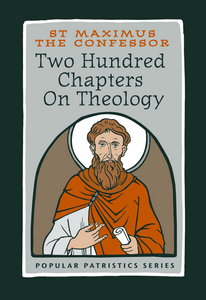
Maximus the Confessor on Deification in His Two Hundred Chapters on Theology

Maximus the Confessor is quickly becoming one of my favorite historical theologians. His characteristic Christocentrism, his healthy balance of apophatic and kataphatic theology, and his descriptions of the Christian life all lift up the soul to heights of love and peace which few contemporary Christian paperbacks have the ability to do. I am reminded of C.S. Lewis’s insistence, in his famous preface to Athanasius’s On the Incarnation, that, nine times out of ten it is the time-tested, ancient theological treatises which offer more spiritual encouragement than anything coming out in print today (with a few exceptions). I find the same to be true when reading Maximus; you can tell the man loved God, loved people, and found much growth in the contemplation of divine things. I myself benefit by allowing my soul to be lifted up by his theological movements.

When my wife and I were perusing the humungous Oxford book store, Blackwells, I came across a Patristics section which took up most of my time that day. While there, I purchased SVS Press’s copy of Maximus’s Two Hundred Chapters on Theology. It is turning out, in only the first few pages, to be enormously rich and spiritually and theologically precious to me. There is much gold to be dug up, here.

Maximus begins his work by setting up a few guard rails about God’s absolute otherness, using terms I have only ever read Dionysius use (i.e., “super-substantial” and “absolutely above/beyond essence or substance”). He then goes on to describe the inner life of the one whose spiritual/thought life is continually disciplined to draw itself up to God:

1.13 He who has dazzled the intellect with divine thoughts, and has accustomed his rationality unceasingly to celebrate the creator with divine hymns, and has hallowed his sensory perception with unadulterated mental representations – such a one has added to the natural beauty in accordance with the image, the deliberate good in accordance with the likeness.”[1]

You can see here the patristic conception of image/likeness in Maximus, as well as a definition of deification as a mystical union or sharing, an unutterable love-relationship which God and Man continually keep up with one another (based on both God’s and Man’s dual initiative). Reading 1.13 reminded me of a similar statement of Maximus’s in his Ambiguum, where his explanation of mystical union revolves around something like the idea of being fully encompassed by the Other. To Maximus, our union with Christ is a full-encompassing, where, though we keep our essential humanity intact, we are known and are seeking to be more known only in line with those characteristics and particularities as filtered through God’s gifting of them. In other words, we refuse to be known or encompassed apart from our own total-identification and encompassing by Christ. Glorious.

Three “chapters” later, Maximus illustrates a provocative picture of salvation which further attempts an elucidation of deification. He writes,

“And he who has been purified, is illuminated; and he who has been illuminated is made worthy to lie with the bridegroom Word in the chamber of the mysteries.”[2]

Maximus chooses to relate our union with God to the sexual union which a husband and wife share on their wedding night. He caveats that image, though, with the “mysteries” as the place wherein that sexual union takes place. Now, by “mysteries” he means the sacraments of the Church: the Eucharist and Baptism. So, the sacramental mysteries are the means through which God unites himself, continually, to his people. Without a consistent participation on the part of the Bride (the Church) in the mysteries (the Eucharist), the Bride and Groom (the Word, Christ) are not in full union and their relationship is not initiated or brought to completion. Again, glorious.

In case you thought Maximus the Pelagian, however, he insists, later on in the first forty or so chapters, that:

1.31 Never can a soul reach out towards the knowledge of God if God himself does not, having condescended, lay hold of it and lead it up to himself. For a human mind is not strong enough to ascend such a distance – as if to seize for its part some divine illumination, if God himself did not draw it upward, as far as is possible for a human mind to be drawn upward, and enlighten it with divine radiances.”[3]

Such union, mediated to the Bride in the mysteries, is more rightly said to be initiated and brought to its end by the Groom, i.e., Christ. It is Christ who reaches toward the Christian and pulls him up to union with Himself. Christ gets the credit and the glory for the Triune work he completes in us, using the mysteries, to do such work.

Amen, amen, and amen!

For those who want a deep spiritual nourishment beyond the steady flow of contemporary, popular Christian literature (much of which misses the point), turn to the ancient fathers for the golden honey of biblical wisdom. Turn to the Tradition, and be satiated.


[1] St. Maximus the Confessor, Two Hundred Chapters on Theology (Yonkers, NY: SVS Press, 2015), 51.

[2] St. Maximus the Confessor, Two Hundred Chapters on Theology (Yonkers, NY: SVS Press, 2015), 53.

[3] St. Maximus the Confessor, Two Hundred Chapters on Theology (Yonkers, NY: SVS Press, 2015), 61.

Uncategorized

Dionysius the Areopagite on the Most Holy Trinity

St. Dionysius the Areopagite, also known as “Pseudo-Dionysius” in more scholarly circles due to the fact that he was almost definitely not the Dionysius mentioned in Scripture as the disciple of the Apostle Paul, is a Christian theologian who garnered massive subsequent theological influence in both Western and Eastern theology. His treatise On the Divine Names is a meditative Trinitarian exposition on the central doctrine of the Christian faith, the Trinity. While the language Dionysius uses to describe human participation in the Triune God can be, at times, oddly-phrased, his theologizing stands as a cornerstone of later theological thinking and by itself serves to bring the reading Christian into further contemplative union with his God, who is Father, Son, and Spirit.

The second chapter, subtitled “Letter to Titus: Concerning common and distinctive theology, and what is the Divine Union and distinction” is uniquely worshipful, and offers us some theological meat to chew on. A feature of Dionysius’s theological vocabulary here which most excites reverence for his project in me is the frequent use he makes of what I call “super” terms. Since, for Dionysius (and the rest of the Christian Tradition), God is “beyond being” – i.e., beyond existence and non-existence, being and non-being – God can therefore rightly be called “superessential” or “supersubstantial.” God is “super essential,” then, because he is “above essence” or “substance-above-substance.” Substances or essences for Dionysius constitutes all that exists in the creaturely realm, i.e., everything that is not God; since God is not a creature and therefore not a part of the “substantial” or “essential realm,” he is therefore “super substantial.” I have yet to hear a contemporary theologian use such a term, but I believe terms like these – which make quick work of the Creator-creature distinction once its meaning is explicated – can help explain in concise ways God’s wholly otherness.

Before beginning his explication of the Trinitarian-ontological relations, he prefaces in section II,

“By taking thence the Divine revelations, as a most excellent canon of truth, we strive the guard the things lying there, in their native simplicity and integrity and identity – being ourselves guarded in our guard of the Oracles [Scriptures], and from these receiving strength to guard those who guard them.”[1]

By thus beginning, Dionysius tells his readers that the Trinitarian dogma he will then go on to describe has their foundation and source in the “Oracles” themselves. The Trinity and the Bible are inseparable.

In case anyone thought he only relied on an individualistic reading of the Oracles, he begins his explication in section IV by writing that his chronicles function within the Tradition which he inherited, stating,

“The sacred instructors of our theological tradition call the ‘Divine Unions’ the hidden and unrevealed sublimities of the super-unutterable and super-unknown Isolation; but the ‘distinctions,’ the goodly progressions and manifestations of the Godhead; and, following the sacred Oracles, they mention also properties of the aforesaid ‘Union’; and again of the distinction, that there are certain specific unions and distinctions… there is kindred and common to the One-springing Triad… the Oneness above source of one.”[2]

There is such richness packed into this portion I couldn’t possibly cover it all, but his theological vocabulary continues to arrest me. The Triune being, he argues from the Tradition, is “constituted” by a “super-unknown Isolation” and also by “goodly progressions and manifestations of the Godhead.” Translated into later Trinitarian parlance, God is Father who generates forth the Son and spirates the Spirit. The monarchy of God, i.e., the Father, is the “One” who is “springing” within that life of the “Triad”; but that springing forth is a “Oneness above source of one,” i.e., in unutterable and unspeakable (apophatic) generation within God’s ontology.

He clarifies in section V:

“But there is a distinction in the superessential nomenclature of God, not only that which I have mentioned, namely, that each of the One-springing Persons is fixed in the union itself, unmingled and unconfused; but also that the properties of the superessential Divine Production are not convertible in regard to one another. The Father is sole Fountain of the superessential Deity, since the Father is not Son, nor the Son, Father; since the hymns reverently guard their own characteristics for each of the supremely Divine Persons.”[3]

Let us not forget the distinctions within the Godhead, Dionysius reminds us. The Father does not stand alone as a unitary monad without inner distinction, but is eternally the Father-issuing-forth-both-Son-and-Spirit; neither the divine ontology nor any of the Christian theological pronouncements makes any sense without such inner-life distinctions between Father, Son, and Spirit. The Christian faith rests on such distinctions. “How these things are,” though, Dionysius says, “is neither possible to say, nor to conceive.”[4] Don’t think about it; shut up and worship the God who is Father, Son, and Spirit!

Dionysius finishes his second chapter by clarifying one final point: that though the Names of God exclusively apply to each “distinct” – a word I hesitate to use – Divine Person, the attributes of divinity can be rightly said to apply to each: Father, Son, and Spirit. He writes,

“These, the mutual and common distinctions, or rather the goodly progressions of the whole Deity, we will endeavor to the best of our ability to celebrate from the Names of God, which make them known in the Oracles;-first, having laid down, as we have said, that every beneficent Name of God, to whichever of the supremely Divine Persons it may be applied, is to be understood with reference to the whole Supremely Divine wholeness unreservedly.”[5]

Glory be to our Triune, unity-in-diversity God for all His manifold graces.


[1] Dionysius the Areopagite, The Collective Works: St. Dionysius the Areopagite, Trans. Rev. John Parker (Neptic Fathers Publications, 2023), 12.

[2] Dionysius the Areopagite, The Collective Works: St. Dionysius the Areopagite, Trans. Rev. John Parker (Neptic Fathers Publications, 2023), 13. 

[3] Dionysius the Areopagite, The Collective Works: St. Dionysius the Areopagite, Trans. Rev. John Parker (Neptic Fathers Publications, 2023), 14. 

[4] Dionysius the Areopagite, The Collective Works: St. Dionysius the Areopagite, Trans. Rev. John Parker (Neptic Fathers Publications, 2023), 16.

[5] Dionysius the Areopagite, The Collective Works: St. Dionysius the Areopagite, Trans. Rev. John Parker (Neptic Fathers Publications, 2023), 19.

Uncategorized

Maximus the Confessor on The Lord’s Prayer

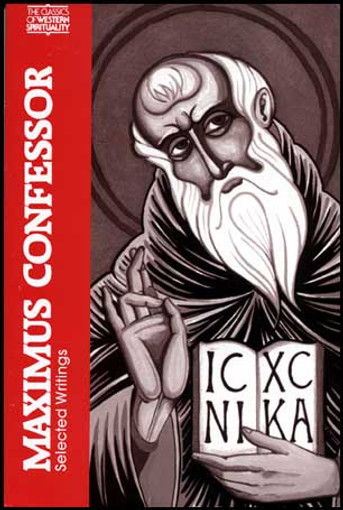
Maximus the Confessor’s commentary on the Lord’s Prayer is a short, edifying, worshipful read. The preeminent eastern theologian’s interaction with what is going on theo-logically in the words of The Lord’s Prayer is illuminating of the pre-Modern outlook concerning the Son’s salvific incarnation and our subsequent participation in the Trinity’s life. He writes,

“Indeed this prayer contains in outline, mysteriously hidden, or to speak more properly, openly proclaimed for those whose understanding is strong enough, the whole scope of what the words deal with. For the words of the prayer make request for whatever the Word of God himself wrought through the flesh in his self-abasement. It teaches us to strive for those goods of which only God the Father through the natural mediation of the Son in the Holy Spirit is in all truth the bestower, since according to the divine Apostle the Lord Jesus is ‘mediator between God and men’: Through his flesh he made manifest to men the Father whom they did not know, and through the Spirit he leads the men whom he reconciled in himself to the Father. For them and on their account, he became man without any change and he himself worked and taught many new mysteries whose number and dimension the mind can in no way grasp or measure.”[1]

Maximus’s insistence that “the words of the prayer make request for whatever the Word of God himself wrought through the flesh in his self-abasement” is the most profound statement in this small passage here, since it remarkably proclaims that the Lord’s Prayer’s telos goes beyond merely providing a structure for prayer but is itself a proclamation of the fulfillment of the Son’s economic workings. In other words, the Lord’s Prayer is itself a sort of gospel proclamation which tells of Jesus Christ’s working out within himself of the perfection of humanity through his own human life, death, and resurrection. Glory to God for such a wonderful insight.

Maximus continues, outlining the meet response to such reflection on God’s gracious salvation:

“He gives adoption by giving through the Spirit a supernatural birth from on high in grace, of which divine birth the guardian and preserver is the free will of those who are thus born. By a sincere disposition it cherishes the grace bestowed and by a careful observance of the commandments it adorns the beauty given by grace. By the humbling of the passions it takes on divinity in the same measure that the Word of God willed to empty himself in the incarnation of his own unmixed glory in becoming genuinely human.”[2]

Our response, fueled and given by the grace of God through the working of Jesus Christ and the Spirit, is one of worship and obedience. In worshipping and obeying, the human Christian ascends to greater levels of participated divinity in a reverse manner to how Christ condescends from the heights of his divinity down to his finite humanity. Thus is the whole Christian life: one of deifying ascent from one glory to the next, fulfilling our purpose as little Christs.

May we each individually become an εικον of our Lord: the divine and human God-Man.


[1] George C. Berthold, Trans., Maximus Confessor: Selected Writings (New York, NY: Paulist Press, 1985), 102.

[2] George C. Berthold, Trans., Maximus Confessor: Selected Writings (New York, NY: Paulist Press, 1985), 103.

Uncategorized

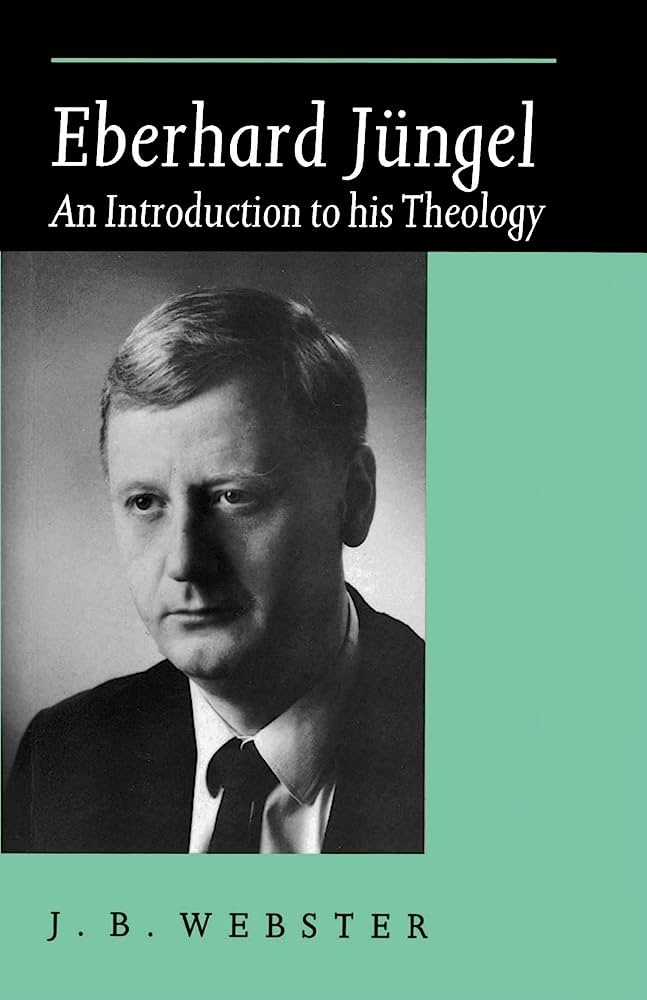
Eberhard Jüngel on Theology, Language, and God

I recently purchased John Webster’s Eberhard Jüngel: An Introduction to his Theology, and have been wildly pleased with what I have found and read there. Amidst my daily perusing of the best anthology of Barth’s work in English today – The Essential Karl Barth by Keith Johnson – I find that reading Webster’s intro on Jüngel is a helpful supplement for illuminating certain points of Barth and for understanding how those after him built upon and developed his theology. Jüngel, in my opinion, functions as a sort of theological son to Barth: he builds upon his good points, elucidates emphases of Barth’s which aren’t totally clear in Barth’s writings, and critiques Barth when he thinks he is in error. I find many aspects of Jüngel’s life and work exciting, too. Both of Jüngel’s mentors, for example, Karl Barth and Martin Heidegger, have inspired much of my own life, language, and thought. Martin Heidegger’s Being and Time, though I have only read portions of it, has solidified certain convictions I was playing around with when meditating on the relationship between human subjectivity, hermeneutics, and theological method. Needless to say, too, Barth’s writings have had a similar yet greater effect on me.

I found much to appreciate in the opening chapters of the book. Webster writes, commenting on a few core ideas of Jüngels’,

“The essence of God is nothing other than the essence of the one who works and reveals… The history of the man Jesus constitutes nothing less than the inner life of God, the very place where God’s trinitarian relatedness is played out before the world… God’s way of being himself is by being God for us. It is this which lies behind the concept of ‘correspondence’ (Entsprechung) which Jüngel uses to describe the inseparability of God’s immanent life from his economic operations. For if God ‘corresponds with himself’ in the event of revelation, then his revealed being pro nobis is nothing other than his immanent being pro se.”[1]

Jüngel emphasizes, then, the same point put forward by Barth, Rahner, and the Nicene theologians, that who we receive by faith in the person of the Lord Jesus Christ is none other than the Eternal Son of the Trinity. If we want to say that the Lord Jesus is truly “in the form of God” (Phil. 2:6) as we meet him by faith, then who God is in His economy (i.e., in Jesus) is who He must be in His ontology (i.e., in His Triune life). If “Rahner’s Rule,” that who God is in His life (i.e., who He really and truly is within Himself) is who He is in His activity or workings towards us, is to be upholded and maintained then we must affirm Jüngel’s point here: “The history of the man Jesus constitutes… the very place where God’s trinitarian relatedness is played out before the world.” The theological implications of this simple formula are tremendous. Furthermore, the statement that “God’s way of being himself is by being God for us” finds deep soil in Barth’s same case: who God has chosen to be in His act of love by uniting Himself with humanity in Jesus Christ is “God-with-humanity.” In other words, God’s incarnation in Jesus is the point at which God chose to forever be united with humanity in intimate union. God will never again be Himself without being God-with-humanity.

Going on to illuminate more of Jüngel’s core ideas, Webster discusses Jüngel’s elucidation of revelation from a different yet similar angle. Jüngel seeks to answer the question, in a truly post-metaphysical vein (with heavy overtones of Heideggerian ontology language): How is it that humans can speak of God “as object”? Jüngel’s contention with “traditional,” metaphysical accounts of God are that they subject God to metaphysical categories foreign to the subject itself (i.e., God) and inevitably treat God as an object to be analyzed. As a theologian of the inductive vein, convinced that theology can only proceed and take its cues from the nature of the divine subject in question rather than from general principles applied to the subject, Jüngel proposes that the only way humans can speak of God’s being-as-object is through the utter and total subjection of theology’s speech about God to the ways in which God has already allowed Himself to be spoken of. Webster includes a quotation I think should be given here in full (from Jüngel’s seminal work God’s Being is in Becoming):

“God’s being-as-object is his being-revealed. God is thus the object of knowledge insofar as he has interpreted himself. And insofar as God has interpreted himself in his revelation and so made himself the object of knowledge of God, he has also made man into the subject of the knowledge of God… That means… that God’s being-as-object is not the result of human objectification of God… He is only objective as the one who has made himself objective.”[2]

Moving on to Jüngel’s position on theological language, which I thought was particularly illuminating, Webster lays out the centrality of the idea of metaphor in the theology of Jüngel. Following Heidegger, Jüngel argues that the literalistic boundaries which Western thought has placed on the conception of truth has stifled theological language and theologians’ understanding of just what can be rightly said concerning God. However, theological language is not therefore transcendent of human speech. Theological language is and can only be decidedly human. Webster comments,

“Jüngel insists that language about God must be authentically human language. Of course, he is firm in the conviction that language about God is only possible on the basis of God’s revelatory utterance, and that such language does not take its rise from within human language since it is demanded of man from beyond the horizons of worldly discourse. But he affirms with equal conviction that language about God is not the suspension of human language or its devaluation. Language about God is certainly not immanent within the structures of ordinary human speech. Yet it does not so transcend those structures as to lose its human character. Language about God is a demand which goes against the grain of man’s natural linguistic resources; yet it is not thereby less but more human than ‘ordinary’ discourse.”[3]

Theological language is human language in the highest and most true sense.

I highly recommend the works of Jüngel, and this small introduction, to you. Along with the rest of the dialectical theologians, Jüngel stands as a voice which points a way forward (albeit imperfectly) for future theological speaking in this post-metaphysical moment.


[1] John Webster, Eberhard Jüngel: An Introduction to his Theology (Cambridge, UK: Cambridge University Press), 17-18.

[2] Eberhard Jüngel, The Doctrine of the Trinity: God’s Being is in Becoming (Edinburgh: T&T Clark, 2014), 57.

[3] John Webster, Eberhard Jüngel: An Introduction to his Theology (Cambridge, UK: Cambridge University Press), 40.

Uncategorized

Paul Tillich, Faith, and Theological Reflection

The end of my last post includes a quotation from Paul Tillich’s Biblical Religion and the Search for Ultimate Reality which puts forth Tillich’s position on the compatibility between philosophy and theology. The central thesis of this little book is that philosophy and theology can, in fact, coexist, and are, even further, codependent on each other’s relevance and success as human thought projects. As a lay evangelical theologian, I went into reading his work with a cautious skepticism (which I was right to do), but nevertheless found some insights – about both philosophical investigation and theological speaking – which I thought would best be to throw out there and discuss.

A personal note: later this summer, I plan on flying up to Wisconsin to complete an audited class on the patristic doctrine of Participation at an Anglican seminary. My interest in the patristic vision, generally, stirred my interest in this, and so you can imagine that when I got to Tillich’s section on Participation (and our current age’s rejection of the participatory outlook) my interest piqued. He writes,

“In terms of the history of philosophy, it is a nominalistic ontology which has determined philosophical empiricism from the high Middle Ages to the present moment. Being, according to this vision of reality, is characterized by individualization and not by participation. All individual things, including men and their minds, stand alongside each other, looking at each other and at the whole of reality, trying to penetrate step by step from the periphery toward the center, but having no immediate approach to it, no direct participation in other individuals and in the universal power of being which makes for individualization… one thing must be emphasized. It is a view of reality as a whole.”[1]

Indeed, Tillich! While I have serious reservations about the attempts by many contemporary theologians (most of whom stem from high-church backgrounds) to revive the sort of participatory outlook so-long espoused by the Christian tradition, Tillich does a great job here of outlining the general philosophical air we breathe now: one which chokes us on our own scientistic individualism.

In the next chapter, Tillich displays his presuppositions concerning the nature of religion (Christianity including), but says some thought-provoking things that have real theological implications. He writes, concerning man’s tendency to anthropomorphize:

“There is no type of religion which does not personify the holy which is encountered by man in his religious experience… In the moment in which something took on this [sanctified] role, it also received a personal face. Even tools and stones and categories became personal in the religious encounter, the encounter with the holy. Persona, like the Greek prosopon, points to the individual and at the same time universally meaningful character of the actor on the stage. For person is more than individuality. ‘Person’ is individuality on the human level, with self-relatedness and world-relatedness and therefore with rationality, freedom, and responsibility. It is established in the encounter of an ego-self with another self, often called the ‘I-Thou’ relationship, and it exists only in community with other persons.”[2]

What struck me about this section of the reading is the utter truthfulness of his argument. As one who places himself (generally) within the Reformed theological camp, I place a high value on the proposition that humans, when left to their own devices, will 100% of the time fashion idols for themselves. Calvin’s whole “The heart is an idol factory” meets me with a hearty Amen. Humanity does not and cannot go on long without worshipping anything and everything as long as it is not the God revealed in Jesus Christ. We fashion ideological, material, and emotional gods for ourselves like hotcakes: it is our basic function as corrupted beings. Yet, the Eternal Son’s incarnation as Jesus Christ proclaims an insane and wonderful truth to us, that neither does God seek to be an impersonal God to us; in matter of fact, humanity cannot even come to know or understand a God who does not condescend to our human ways of knowing, thinking, speaking, and being. There is a double edged sword brought out by reflection on Paul Tillich’s assertions here: humanity both cannot understand a God who would require them to either transcend or escape their humanity (since there literally is no way for us to know or be known except in ways appropriate to our mode of being), yet humanity continually and doggedly insists on making created puppet-gods who conform to who we believe god should be (which ends, every time, in an anthropomorphized idol).

While there are numerous other sections of the book that I could comment on, I think his page-long discussion of the nature of faith presents some good, final theological-meat to chew on:

“Faith, in the biblical view, is an act of the whole personality. Will, knowledge, and emotion participate in it. It is an act of self-surrender, of obedience, of assent. Each of these elements must be present. Emotional surrender without assent and obedience would by-pass the personal center. It would be a compulsion and not a decision. Intellectual assent without emotional participation distorts religious existence into a nonpersonal, cognitive act. Obedience of the will without assent and emotion leads into a depersonalizing slavery. Faith unites and transcends the special functions of the human mind; it is the most personal act of the person… Biblical faith is the faith of a community, a nation, or a church. He who participates in this faith participates in its sumbolic and ritual expressions. The community unavoidably formulates its own foundations in statements which reveal its difference from other groups and protext it against distortions. He who joins the community of faith must accept the statements of faith, the creed of the community. He must assent before he can be received.”[3]

Perhaps this sort of definition of faith is at the heart of my insistence that the center of all theological language be Jesus Christ; it is why I am an avid reader of theologians like Karl Barth, Thomas F. Torrance, St. Athanasius, and the Cappadocian Fathers. Faith, says these figures, is real faith when it is a movement of the Christian’s being, when the intellectual assent which comes through prolonged theological reflection has a purpose and a mission. When simply joined to the ever-lethargic-and-hardly-ever-for-a-noble-purpose school of (in the end, anthropomorphizing) philosophy, theology becomes corrupted by the boundaries of the theologians’ study, the place which should be the locus of ministry and outreach. When evangelicals are lambasted by other sections of the Church on the grounds of some form of anti-intellectualism, I almost want to shout back “Because we have seen how y’all do it, hold’ up in your studies while the widows starve in your pews!” I will proudly wear the badge of anti-intellectual if it means my theologizing must always, always, always have practical ministry application, which is exactly what an absolute Christocentrism will accomplish for the ministry-minded theologian.

Ironically, Tillich realizes the problem that biblical (Christian) theologians have with philosophical speculation’s attempt to wed itself to the theological task. He writes,

“The Bible often criticizes philosophy, not because it uses reason, but because it uses unregenerated reason for the knowledge of God.”[4]


[1] Paul Tillich, Biblical Religion and the Search for Ultimate Reality (Chicago, IL: The University of Chicago Press, 1955), 17.

[2] Ibid., 22-23.

[3] Ibid., 53-54.

[4] Ibid., 56. 

Uncategorized

Baptists, Barth, and Holding to Your Tradition

Karl Barth, if you couldn’t tell, has played a monumental role in the recent refining of my theological speech concerning God and man. Yet, Barth has also helped me think through a special difficulty I perceive many young, low-church Christian men are also wrestling with: a pull towards the high churches (Anglicanism, Eastern Orthodoxy, etc.). In my own experience, this (primarily liturgical) pull originated after I dove headfirst into the theological writings of many of the patristic figureheads like Athanasius of Alexandria, Cyril of Alexandria, the Cappadocian Fathers, etc. Learning about the patristic theological vision (centered around things like theosis, a robust Trinitarian theology, a deep sacramentology, etc.) pushed me to rethink the tradition in which I have functioned as a Christian, since what I was hearing from the pulpit was not (wholly) what I was reading in the Fathers.

This crisis event led me to seriously consider (and almost act on) a decision to split with the Baptists. However, as time went on, and my theological readings continued and widened (all while sweating over a decision to leave), I further clarified my stances on certain issues concerning the sacraments, the Trinity, and Christian spirituality generally; surprising to myself, I didn’t come out as someone who would be completely out of place among the Baptist fold. Instead of giving in to the pressure of many higher church apologists today – who ruthlessly pursue young men of other Christian folds in order to usher them into their own “true” church – I decided to meditate further on the implications of discontinuity of belief and practice across Christian history. I also found other Baptists who were wrestling with the doctrinal dizziness of the historic Church, Baptists who were trying to appropriate richer, less-dismissive practices within the wider Baptist culture, and (yes!) Baptists who held a similar love and sympathy for theologians like Barth and Torrance.

Back to Barth. As a theologian constantly exposed to traditions different from his own (as an out-of-place, theologically Reformed instructor in primarily Lutheran universities throughout Germany), Barth was forced to deal with the central claims and distinctives of his own tradition of which he had been previously ignorant. Today, many young men who begin to wrestle with the claims of their own tradition, while simultaneously meditating on the doctrine of the Church past, see jumping overboard to another ship as the only valid option (because of numerous factors like the general rootlessness which young people feel, a quick-and-ready choosiness available to anyone and everyone, and a decidedly individualistic American spirit). For Barth, however, who was daily brought up against the looming Lutheran giants around him, the option of switching traditions was an inconceivable option. Barth, for all the allurements which the traditions surrounding him presented, remained decidedly Reformed. Over time, though, he began to tweak his own tradition’s understandings of its distinctives as he garnered more and more due influence across theological circles, and was criticized for it. Now, I don’t mean to compare myself with Barth as some theological pioneer or hero, but I take comfort in his story which has certain similarities with my own. Barth took the hard way: he stuck with those who had nurtured him in the faith and sought to influence the Reformed church according to problems he perceived needed fixing.

Contemporary (American) Baptists have many theological, ministerial, and liturgical problems. They are by no means guiltless when it comes to their annoying confusion over the significance of central doctrines of the faith (the Hypostatic Union, the Trinity) and their subsequent appropriation of those doctrines for the sole end of holding up their prized elucidation of penal substitution. They have an almost offensive disregard for and ignorant misunderstanding of traditional liturgical forms (although this is changing), and a biblicism that gets much of their language in trouble, especially when its mixed with isolated rural settings in which no one holds them accountable for their theological speaking. Baptists also have a tendency to idolize their leaders, and pastor-worship is by no means a small problem.

On the other hand, Baptists are virtually undisputed in regards to their evangelistic fervor, their love for the poor and the downcast, and their rigid and unflinching passion for the truthfulness of the Bible. As far as ministerial problems go, I would rather have an overdose of these issues than a mediocrity in any one of them. Perhaps the greatest lesson which Barth has imparted to me – other than doctrinal language I have found to be indispensable to a robust and informed theology – is embodied in his acceptance and appropriation of his own tradition. I’ll end with a quotation from the CD which Baptists, for all of their blemishes, firmly hold to heart:

“For who really knows what grace is until he has seen it at work here: as the grace which is for man when, because man is wholly and utterly a sinner before God, it can only be against him, and when in fact, even while it is for him, it is also a plaintiff and judge against him, showing him to be incapable of satisfying either God or himself? And looking back once again, it is the grace of God as mercy pure and simple, as a sheer Yes and Nevertheless, which reveals, and by which we have to measure, how it stands with the man to whom it is granted. It is not independent reflection on the part of man, or an abstract law, but grace which shows incontrovertibly that man has forfeited his salvation and in so doing fatally jeopardized his creaturely being – which reveals his sin and the misery which is its consequence. From the redemption which takes place here we can father from what it is that man is redeemed; from the pure fact of the salvation which comes to man without and in spite of his own deserts we may know the brute fact which he for his part dares to set against God. Because the ‘God with us’ at the heart of the Christian message has to do with that pure fact of the divine mercy, we must not fail to recognize but acknowledge without reserve that we, and those for whom God is according to this message, are those who have nothing to bring Him but a confession of this brute fact: ‘Father, I have sinned.’”[1]


[1] Karl Barth, Church Dogmatics IV/1 (Edinburgh: T&T Clark, 1956), 6-16.