Doctrine

The Scriptural Christ is the True Christ

There are many Jesus Christs that roam this world. There is the Muslim Christ – the one who did not die on the cross, who paved the way for Muhammad, who taught profoundly of a god; there is the Buddhist Christ, the person whose teachings pointed to the self-negation at the heart of true wisdom; there is the Republican Christ, the Christ whose sole passion is for the rights of individuals to forge their own path in life, who looks with favor on the American capitalist state and its democratic structures; there is the Liberal Christ, whose definition of love is something like self-actualization, self-care, self-liberation. There is even the Modernist Christ, the first-century Jewish man whose perfect God-consciousness helped the rest of humanity cultivate their own God-consciousnesses. This one even changed the face of the political, social, and economic state of the ancient world, and was a great moral teacher.

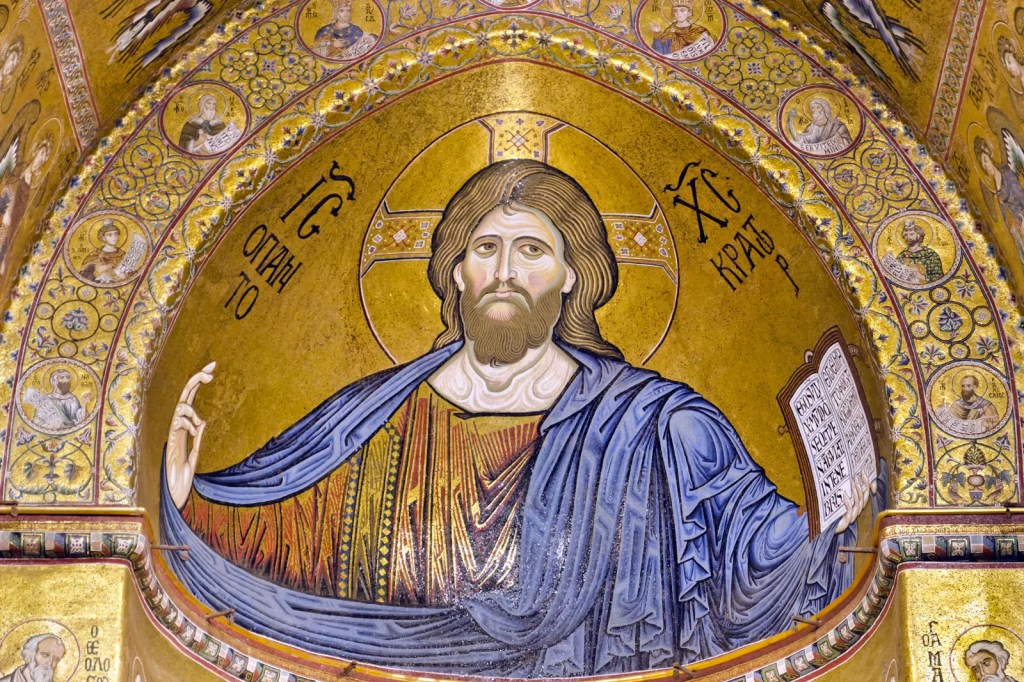
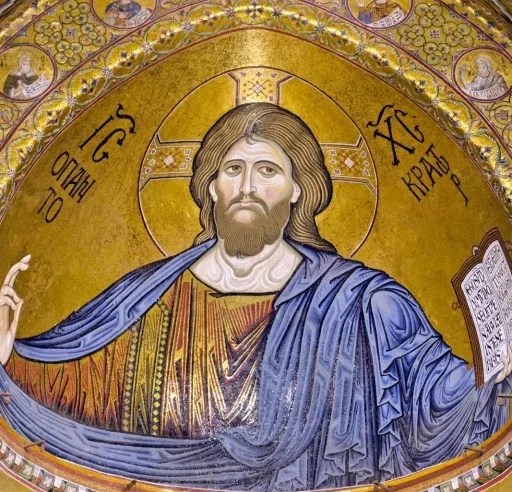
And then there is the Scriptural Christ. Or, in other words, the biblical Christ, the one whom the Christian Church worships. This Christ is the one for whom and through whom all exists (Col. 1), the Word made flesh who dwelt among us, who was God and was with God in the beginning (John 1), the one whose Spirit cries out “Abba, Father” within the hearts of Christians and groans with groans too deep for words (Rom. 8), the one whose sorrowful Passion propitiated the sins of the entire world (Isa. 53), the one who fulfills his own teachings about Blessedness with perfect consistency (Matt. 5), the one whose righteousness justifies and unites us with Himself by faith (Rom. 5-6), the one who is love (1 John), the one whose flesh and blood men and women must eat in order to have eternal life (John 6), the one who chose to empty himself and take on the form of a servant, forfeiting his privilege as the Son of God (Phil. 2), the one who entered the world alongside the Spirit to form the world from the waters of chaos (Gen. 1), and the one who has made peace by the blood of his cross (Col. 1).

The Scriptural Christ is the Person at the heart of the Old and New Testaments, the hermeneutical key to unlock its infinitely-deep structures. He is the one Christians meet when, in faith and in the Church, they read the Scriptures with the eyes the Scriptures themselves bestow. The logic the Bible invites its readers to inhabit and live within is a Christ-logic. There is no thinking about or with the Bible or its many sayings – across the wide variety of its genres and metaphors and imageries – without an inhabiting of this Christ-logic. The Scriptures will always be read in error when this Christ-logic is forsook for the latest philosophical or hermeneutical lens (which, to be fair, are many of the times interesting, well-thought-out lenses, but just not Christian lenses). To read the Bible correctly, says the history of the Church, you have to both start with and end with the Scriptural Christ.

Theologian John Behr teaches us this when he writes, in The Way to Nicaea, “Read in the light of what God has wrought in Christ, the Scriptures provided the terms and images, the context, within which the apostles made sense of what happened, and with which they explained it and preached it, so justifying the claim that Christ died and rose ‘according to the Scriptures.’ It is important to note that it is Christ who is being explained through the medium of Scripture, not Scripture itself that is being exegeted; the object is not to understand the ‘original meaning’ of an ancient text, as in modern historical-critical scholarship, but to understand Christ, who, by being explained ‘according to the Scriptures,’ becomes the sole subject of Scripture throughout… Christ, the Word of God, is often said to be the key to Scripture.”[1]

May the Church’s reading of Scripture not fall prey to the kind of scriptural interpretation that would approach its Book like any other ancient text, but may she read and interpret it as the locus of revelation, the place wherein her Lord may be seen, kissed, and loved.

Soli Deo Gloria


[1] John Behr, The Way to Nicaea: Formation of Christian Theology Vol. 1 (Crestwood, NY: St. Vladimir’s Seminary Press, 2001), 27-29.

Quotation

The Self-Understanding of the Theologian in Karl Barth’s The Christian Life

There is a blessed chapter in the Classics of Western Spirituality volume on Barth, called Karl Barth: Spiritual Writings, where Barth is talking about the concept of wonder in relation to the discipline of theology. After claiming that Jesus Christ is the event that causes continuous wonder in the theologian, he turns to speaking about how, in response to Christ-centered wonder, the theologian is then forced to understand himself. He writes:

“The astonishment of the individual carries with it the fact that no one can become and remain a theologian unless he is compelled again and again to be astonished at himself… Whatever, however, and whoever I may be in other respects, I have finally and profoundly become a man made to wonder at himself by this wonder of God… This confrontation occurs in even the most timid and untalented attempt to take seriously the subject in which I have become involved or to work theologically at all, whether in the field of exegesis, Church history, dogmatics, or ethics… In one way or another I am obliged to consider the question of the wonder of God. I may perhaps attempt to steal away from the confrontation and preoccupation with this wonder. But I can no longer be released from this confrontation. Theology undoubtedly gives the man who is concern with it something like a character indelebilis, an indelible quality. Whoever has eyes to see will recognize even at a distance the man who has been afflicted and irreparably wounded by theology and the Word of God. He will be recognizable by a certain earnestness and humor, whether genuine or spurious, real or only pretended. But the process and the way in which it was possible for him to become such a man will always be hidden, even from the theologian himself. This process will remain a deeply wondrous enigma and mystery. I no doubt know and recognize myself quite possibly in all my other opinions and inclinations, in all my other real or fancied or desired possibilities. By birth and nature we are indeed all rationalists, empiricists, or romanticists in some osrt of mixture, and we have no occasion to be astonished at ourselves in this respect. All that is simply a fact. But I become, am, and remain something unknown, a different person, a stranger, when I am counted worthy to be permitted and required to wonder with respect to the wonder of God. And this is what happens when I become concerned with theology. How could my existence with this permission and demand to wonder ever become an everyday, familiar, and trite fact? How could this attribute of my existence ever become transparent to me?”[1]

Soli Deo Gloria


[1] Barth, Karl. 2022. Karl Barth: Spiritual Writings. Edited by Ashley Cocksworth and W. Travis McMaken. Mahwah, NJ: Paulist Press. 199-200.

Quotation

Karl Barth’s Pastoral Encouragements and Warnings in Two of His Later Letters

Recently I finished reading a compendium of letters written by Barth during the last seven years of his life. The collection is filled with insider information on Barth’s dealings and correspondences, and it gives the reader rather interesting access to all of his personal and theological preoccupations leading up to his death. For example, I did not know that he was virtually absorbed in the developments of the Second Vatican Council, which was transpiring in the mid-60s; the theologians who were a part of that council, furthermore, were highly influenced by – or at least aware of – Barth’s theology, and sent him an invitation to be an outside observer to the council’s proceedings.

For the purposes of this post, I saw fit to lay before you two letters, both pastoral in nature, which Barth sent to two troubled individuals who had reached out to him about two very different problems.

The first letter was written in late December of 1961, and is a response to a German prisoner whom Barth was fairly sure was contemplating taking his own life. The pastoral counsel Barth offers is a balm to the heart. It reads:

“Dear N.N.,
Your letter of the thirteenth reached me yesterday and moved me greatly. Partly because you refer to my good friend Gertrud Staewen but above all because Christmas is upon us, I hasten to make at least a short reply.
Since you obviously want something from me, you cannot be serious in expecting me to judge you harshly. But can I give you any supporting counsel?
You say you plunge deeply into the Bible in vain. You say you also pray in vain. You are clearly thinking of a ‘final step’ but you shrink back from it. Have I understood you correctly?
First regarding your prayers. How do you know they are in vain? God has His own time and He may well know the right moment to lift the double shadow that now lies over your life. Therefore, do not stop praying. 
It could also be that He will answer you in a very different way from what you have in mind in your prayers. Hold unshakably fast to one thing. He loves you even now as the one you now are… And listen closely: it might well be that He will not lift this shadow from you, possibly will never do so your whole life, just because from all eternity He has appointed you to be His friend as He is yours, just because He wants you as the man whose only option it is to love Him in return and give Him alone the glory there in the depths from which He will not raise you.
Get me right: I am not saying that this has to be so, that the shadows cannot disperse. But I see and know that there are shadows in the lives of all of us, not the same as those under which you sigh, but in their way oppressive ones too, which will not disperse, and which perhaps in God’s will must not disperse, so that we may be held in the place where, as those who are loved by God, we can only love Him back and praise Him.
Thus, even if this is His mind and will for you, in no case must you think of that final step. May your hope not be a tiny flame but a big and strong one, even then, I say, and perhaps precisely then; no, not perhaps but certainly, for what God chooses for us children of men is always the best.
Can you follow me? Perhaps you can if you read the Christmas story in Luke’s Gospel, not deeply but very simply, with the thought that every word there, and every word in the Twenty-Third Psalm too, is meant for you too, and especially for you.

With friendly greetings and all good wishes,

Yours,
KARL BARTH.”[1]

The second letter was written five years later, in early December, in response to a German pastor (who was also a former student) who was prompting Barth to be more responsive and appreciative of certain ecclesiastical-political goings-on. The shift changes in this one. Gentle, comforting Barth has been put away and, in his place, the reprimanding, disapproving, fatherly Barth now comes to the fore. It reads:

“Dear Pastor,

            Your urgent letter of 2 November still lies unanswered in front of me and so (for the last week) does your fiery poem ‘Germany’s Path,’ which points in the same direction. I thank you for them. Excuse me if I am brief. I am no longer able to draw up longer statements.

            This brings me at once to your wish, which you have even presented to me in the form of a citation to appear before the judgment seat of the Lord of the church. Amidst all the speaking and shouting in Germany, loud enough as it is, you want me to issue a kind of roar of the lion of Judah in the style of certain utterances at the beginning of the thirties. Dear pastor, you are not going to hear this roar. ‘For everything there is a season and a time.’ That I am not at one with Bultmann and his followers I have shown publicly and clearly not only in my booklet Ein Versuch, ihn zu verstehen but also in the whole C.D., especially the last volumes. And C.D. is in fact being read quietly much more, and more attentively, than you seem to realize. And since the good Lord, in spite of reports to the contrary, is not dead, I am not concerned, let alone do I feel constrained, to act as the defender of his cause in a confessional movement… For one thing I have other and more useful things to do. 
            This brings me to the second thing concerning yourself. As you tell me, you have just come from three months of persistent depression in the hospital, and you have already had other periods like it. After this ‘down’ you are not in an ‘up.’ Good, thank God for it, but see that worse does not befall you. It is not thanking God, nor is it good therapy, to use this ‘up’ to proclaim the status confessionis hodie, to imitate Luther at Worms or Luther against Erasmus, to compose thoughtlessly generalizing articles and paltry battle-songs, to write me (and assuredly not only me) such fiery letters, to pour suspicion on all who do not rant with you, indeed, to punish them in advance with your scorn, etc. Instead you should be watching and praying and working at the place where you have been called and set, you should be reading holy scripture and the hymn-book, you should be studying carefully with a pencil in your hand the theological growth springing up around you to see whether there might not be some good grain among the tares. Lighting your pipe and not letting it go out, but refilling and rekindling it, you should not constantly orient yourself only to the enemy – e.g., to seninely simplistic statements such as those recently made bt the great man of Marburg in the Spiegel – but to the matter in relation to which there seem to be friends and enemies. Then in the modesty in which is true power… you should preach good sermons in X, give good confirmation lessons, do good pastoral work – as good as God wills in giving you the Holy Spirit and as well as you yourself can achieve with heart and mind and mouth. Do you not see that this little stone is the one thing you are charged with, but it is a solid stone in the wall against which the waves or bubbles of the modern mode will break just as surely as in other forms in the history of theology and the church they have always broken sooner or later? Dear pastor, if you will not accept and practice this, then you yourself will become the preacher of another Gospel for which I can take no responsibility. You will accomplish nothing with it except to make martyrs of your anger those people who do not deserve to be taken seriously in this bloodthirsty fashion and whom you cannot help with your ‘Here I stand, I can do no other.’ With the modesty indicated, be there for these people instead of against them in this most unprofitable style and effort. In this way, and in this way alone, will you thank God for your healing. In this way, and in this way alone, can you help to prevent new depression overtaking you tomorrow or the day after. 

            This is what I want to say to you as your old teacher, who also has real knowledge of the ups and downs in the outer and inner life of man even to this very day, but who knows how to greet in friendly fashion the remedy which there is for them.

            With sincere greetings, which I ask you to convey also to your wife and sister-in-law,

                                                                                                Yours,

                                                                                                KARL BARTH.”[2]

This last one in particular struck me, as it sounds like something a former version of myself would have done well to listen to.

Soli Deo Gloria


[1] Karl Barth, “19: To a Prisoner in Germany,” in Karl Barth Letters: 1961-1968, ed. by Jürgen Fangmeier and Hinrich Stoevesandt, ed. and trans. by Geoffrey W. Bromiley (Grand Rapids, MI: Eerdmans Publishing Company, 1981), 27-28.

[2] Karl Barth, “237: To a Pastor in Germany,” in Karl Barth Letters: 1961-1968, ed. by Jürgen Fangmeier and Hinrich Stoevesandt, ed. and trans. by Geoffrey W. Bromiley (Grand Rapids, MI: Eerdmans Publishing Company, 1981), 229-231.

Close Reading

Robert Jenson’s Systematic Theology: The (New) Triune Relations

Robert Jenson is known for many things: his emphasis on the sacraments, his theological creativity, his reliance on Hegel, his reliance on Barth, his ability to speak theology concisely, and the list goes on. One aspect of his theology I have not seen touched on as much, however, are the new relations he posits the Church should consider as helpful descriptors for how to conceptualize the Triune Life. He affirms quite joyfully the traditional relations – generation, spiration, origination, procession – but proposes that not-before-seen reciprocal relations be recognized as constituting the Spirit’s dynamic contribution to God’s ontology.

ST: The Spirit as Liberator and Reconciler

Jenson introduces the new relation of liberation into the life of the Trinity. He does this so as to heed Hegel’s (and Buber’s) thoughts concerning what constitutes a healthy I-Thou relation. For Jenson and these thinkers, within the isolated person-to-person relationship there can only be a form of obsessive relational domination. If there are only two partners of relation, there can only be a subject-object and hence a master-slave dynamic as the only possible dynamic. This can be plainly seen in the obsession with which abusive partners find others – all others, friends of the beloved perhaps primarily – as threats to the lover’s enjoyment and satisfaction of the beloved. Inversely, the lover whose enjoyment of the beloved because of or alongside of the friends and companions surrounding the beloved is said to be a healthy, relationally-balanced individual. Jenson and Hegel would wholeheartedly agree. The only way the two partners can be freed for their love and enjoyment of one another, they argue, is if a third party opens up the two partners for their mutual love for one another. The Holy Spirit fulfills this function for the Father and the Son, and in so doing is rightly characterized, like Augustine said, as the love-bond of the Trinity.

Jenson writes: “If you and I are to be free for one another, each of us must be both subject and object in our converse. If I am present in our converse as myself, I am a subject who have you as my object. But if I am not also an object for you as subject, if I in some way or degree evade reciprocal availability to you as one whom you in your turn can locate and deal with, I enslave you, no matter with what otherwise good disposition I intend you.”[1]

In other words, if Father and Son are not reciprocally available for each-other as Father and as Son in the bond of their Spirit-love, there is no Triune God like the Tradition says. Without the Spirit, there is no true bond or relational openness as constitutive of God’s being, and therefore no true bond between the Son – who simply is the Lord Jesus Christ – and the Father He has been sent from. Jenson is convinced that previous theological missteps were taken in the history of doctrine because of a pre-existing blindness to this relational dynamic of the Spirit. To name a recent example, Jenson thinks that most of what should be criticized in his theological grandfather, Karl Barth, has to do with Barth’s malnourished (and possibly nonexistent) doctrine of the Holy Spirit. He goes so far as to say that, when it comes to the Church Dogmatics, Barth proposes what looks much more like a “binity” than a Trinity.

He further elaborates: “So we must learn to think: the Spirit is indeed the love between two personal lovers, the Father and the Son, but he can be this just in that he is antecedently himself. He is another who in his own intention liberates Father and Son to love each other. The Father begets the Son, but it is the Spirit who presents this Son to his Father as an object of the love that begot him, that is, to be actively loved. The Son adores the Father, but it is the Spirit who shows the Father to the Son not merely as ineffable Source but as the available and lovable Father.”[2]

It is in being the glue of the Father and Son that the Holy Spirit exists as the Tradition’s third hypostasis. “The Spirit is himself the one who intends love, who thus liberates and glorifies those on whom he ‘rests’; and therefore the immediate objects of his intention, the Father and the Son, love each other, with a love that is identical with the Spirit’s gift of himself to each of them.”[3] This sort of change to Augustine’s initial thesis does what Augustine arguably did not do, which was to recognize the personal element in the Holy Spirit’s procession from the Father and the Son. It is not simply as some thing called “the love between Father and Son” that the Spirit acts; such a conception is what led to the plumb line of the West’s depersonalization of the Spirit. It is as the one who, in proceeding from Father and Son, acts to blossom the generation and paternity of Father and Son for each other that the Spirit is a subsisting relation, i.e., as the subsisting relation of openness and freedom.

To conclude:

“The Father begets the Son and freely breathes his Spirit; the Spirit liberates the Father for the Son and the Son from and for the Father; the Son is begotten and liberated, and so reconciles the Father with the future his Spirit is. Neat geometry is lost, but life is not geometrical.”[4]

Soli Deo Gloria


[1] Robert Jenson, Systematic Theology, Vol. I: The Triune God (Oxford, UK: Oxford University Press, 1997), 155.

[2] Robert Jenson, Systematic Theology, Vol. I: The Triune God (Oxford, UK: Oxford University Press, 1997), 156.

[3] Robert Jenson, Systematic Theology, Vol. I: The Triune God (Oxford, UK: Oxford University Press, 1997), 158.

[4] Robert Jenson, Systematic Theology, Vol. I: The Triune God (Oxford, UK: Oxford University Press, 1997), 161.

Close Reading

Robert Jenson’s Systematic Theology: Eschatology as the Triune Unity

Robert Jenson was a masterful theologian who sought to think within the bounds of theologia and, within those bounds, to receive the Christian tradition in fresh if unorthodox ways. He writes this awesome statement: “This is sometimes the way of theology: to take a plain phenomenon of the gospel’s narrative that causes difficulty in certain conceptual connections and remove the difficulties by adjusting not the narrative but the connections.”[1] That was Jenson’s tendency: to adjust the form, not the content, of the Christian gospel, and so make it intelligible to contemporary ears.

My last post on Robert Jenson went over Jenson’s problems with the ancient ontological foundations of classical Christian doctrine. In his writings, he sought to overturn these foundations by substituting their Aristotelian or platonic makeup with that of Hegel. This substitution led him to criticize the ancient way of understanding divinity as simple, timeless and changeless, and to uphold a doctrine of divinity where God’s being is nothing other than event. The function of God’s being-as-event is to disallow any speech about God where God can be identified with anyone other than the God revealed and acted out as Jesus Christ, His Father, and His Spirit. For something or someone to be God means that He is this event: this biblical, Triune God-event.

For God’s being-as-event to be the interplay of Jesus, the Father, and the Spirit is for ontology itself to be constituted by eventfulness, and not by the prior abstracted reality of “being.” This poses obvious problems for the classical doctrine of simplicity. If God is not simple, and ontology is eventfulness, then how can the three – Father, Son, Spirit – be said to be “one God”? This is where my claim that Jenson’s explications nevertheless retain the content, if not the form, of Christian doctrine is proved true.

ST: The Oneness of the Three

Jenson writes, “Since the Lord’s self-identity is constituted in dramatic coherence, it is established not from the beginning but from the end, not at birth but at death, not in persistence but in anticipation. The biblical God is not eternally himself in that he persistently instantiates a beginning in which he already is all he ever will be; he is eternally himself in that he unrestrictedly anticipates an end in which he will be all he ever could be.”[2]

Here, Jenson is functioning on a definition of eternity as a time-bound reality. Eternity is not, as the classical thinkers say, a separate realm in which God lives in his essence. Eternity is rather that happening, that “dramatic coherence” Jenson calls it, where all that is theologically united lives, moves, and has its being. Eternity is that time where God and man live in harmonious ekstasis. In other words, eternity is that time where Father, Son, and Holy Spirit live as one God. How Jenson grounds these concepts, like I said, is not in some “before-ness,” some realm that is prior to the actual happening of God’s-being-one, but in “after-ness,” in the eternal realm of “anticipation,” where Father, Son, and Holy Spirit will be fully and completely the Triune God of Scripture in the unity of the Eschaton. It is the Eschaton that provides the glue that holds the whole scriptural reality – including the God at the center of that reality – together.

Jenson continues, “The triune God’s eternity is precisely the infinity of the life that the Son, who is Jesus the Christ, lives with his Father in their Spirit… About how God could as the same God have been other than Jesus the Son and his Father and their Spirit, or about what that would have been like, we can know or guess nothing whatsoever.”[3]

The Christian is not to think of eternity as a timeless void separated from the goings-on of this world, but as the flesh-and-blood life of Jesus Christ, the Hebrew preacher of first century Palestine, who, in calling the God of Israel his Father, was the Son spoken about in the Spirit-inspired Scriptures. This is what it means for God to be Trinity.

ST: The Spirit of the Future

For the Eschaton to be the place of God’s unity is for the Holy Spirit to so make it. The eschatological glue that holds things in God together, according to Jenson, can really be posited as a function of the Holy Spirit’s economia. It is the Spirit’s function to make true the reality that Jesus Christ and His Father are the one God of Scripture. It is the Spirit’s role to make true that which is believed by faith, that the Father, Son, and Spirit are one God.

Here is Jenson again: “The Spirit is the Liveliness of the divine life because he is the Power of the divine future. He is the one who, when he in time gives a ‘down payment’ on the Kingdom, gives precisely himself.”[4] The Spirit and the Eschaton, to Jenson, are never to be thought about as separated from each other precisely because as the agent of the future, the Spirit is. It is when the Church participates in the Eschaton – which, to Jenson probably amounts to what happens during the Sunday liturgy – that the Spirit is truly and fully present as the Spirit of the Lord Jesus Christ and His Father.

We will end this post with one last quote:

“The biblical God’s eternity is his temporal infinity… What he transcends is not the having of beginnings and goals and reconciliations, but any personal limitation in having form… The true God is not eternal because he lacks time, but because he takes time… God is not eternal in that he adamantly remains as he began, but in that he always creatively opens to what he will be; not in that he hands on, but in that he gives and receives; not in that he perfectly persists, but in that he perfectly anticipates… The dominating theological enterprise of the century, Karl Barth’s Kirkliche Dogmatik, has thus at its heart the drastic proposition with which we began: ‘God’s deity, into its furthest depths, consists therein… that it is event… The fundamental statement of God’s being is therefore: God is what happens between Jesus and his Father in their Spirit.”[5]

Soli Deo Gloria


[1] Robert Jenson, Systematic Theology, Vol. I: The Triune God (Oxford, UK: Oxford University Press, 1997), 124.

[2] Robert Jenson, Systematic Theology, Vol. I: The Triune God (Oxford, UK: Oxford University Press, 1997), 66.

[3] Robert Jenson, Systematic Theology, Vol. I: The Triune God (Oxford, UK: Oxford University Press, 1997), 141.

[4] Robert Jenson, Systematic Theology, Vol. I: The Triune God (Oxford, UK: Oxford University Press, 1997), 157.

[5] Robert Jenson, Systematic Theology, Vol. I: The Triune God (Oxford, UK: Oxford University Press, 1997), 217-221.

Close Reading

Robert Jenson’s Systematic Theology: First Few Big Ideas

I just finished reading Robert Jenson’s magisterial Systematic Theology. It was a frustrating, beautiful, doxological, and blessed read. More than many books I have read over the last few years, this one has stirred my affections for (and questions about) Christ all over again. 

Having read over the summer the logic-laden The Humility of the Eternal Son by Bruce McCormack, who gives the highest praises to Jenson, I was on the lookout for a doctrinal study that encouraged a praise break or two in the midst of its theologizing. Jenson was the perfect for this.

Although in relation to the typical Protestant systematic it is rather tiny, Jenson’s Systematic Theology is deserving of a step-by-step series of blogs on some of its main ideas.

ST: Prolegomena

Jenson’s big idea, developed from Barth, is that God’s being as event disallows any sort of otherworldliness on the part of God. For God to be Himself as Jesus Christ, the Father, and the Spirit, is to be no more and no less than exactly what we receive in the biblical testimony. In other words, to play on a maxim coined by Torrance concerning Barth, there is no God behind the back of the Father, Son, and Holy Spirit as reported about in the Bible. For Jenson, this makes moot any point of ontological speculation concerning God’s being as separated from the narrated events of the life of Jesus Christ. To Jenson, the question What is God? can only be answered by appeal to the specificity of the Lord’s life, growth, crucifixion, resurrection, and ascension. God’s being is nothing other than the event of Christ’s life.

With this, of course, comes a total reversal (and rejection) of classical categories of divine and human being. Jenson writes, “Were God identified by Israel’s Exodus or Jesus’s Resurrection, without being identified with them, the identification would be a revelation ontologically other than God himself. The revealing events would be our clues to God, but would not be God. And this, of course, is the normal pattern of religion: where deity reveals itself is not where it is. At Delphi, one hears Apollo’s voice but does not meet him; indeed, the very notion of meeting Apollo in his own guise would have been oxymoronic.”[1] Jenson is even more of an actualist than Barth. For Jenson, the only true sort of being is actualized, eventful, specific being. The entire tradition’s tendency to posit a God otherwise in existence then how he is specifically existent in Christ, the Father, and the Spirit, and also as precisely that God recorded in Scripture, has been a false trajectory to Jenson. Actualism secures the certainty of God’s identification, and disallows any God-talk separated from his living activity as this biblical God. The Post-Barthians are very adamant on this point. God does not exist except as this event.

He continues, “God is not only identified by Exodus and Resurrection; he is identified with them… For the doctrine of Trinity is but a conceptually developed and sustained insistence that God himself is identified by and with the particular plotted sequence of events that make the narrative of Israel and her Christ… For if a systematically developed discourse about God precedes the exposition of Trinity, there is danger that a nontrinitarian identification of God may be hidden in that discourse, to confuse all that follows. Western theology’s late-medieval and modern tradition has tended to treat first of God simply as he is God and only thereafter of his Trinity.”[2]

Jenson undoubtedly takes Barth a step further from where he himself was willing to go. There is debate on this point, but Barth does still speak about there being room for God to be Himself apart and without a creation. For Jenson, to even entertain the question of what God would be apart from His life with us in Christ is a moot point: God’s being is being-with-us. Period. There is no place to speak about God other than as actual in Christ. Here Jenson follows Barth in another way: by positing the doctrine of the Trinity as not simply the metaphysical makeup of the specific God Christians worship, but as the entire doctrinal matrix within which the whole body of Christian belief finds its intelligibility. Without the organizing principle of the Trinity to bestow meaning on each part of the Christian faith’s interconnected system, the faith becomes exactly what many (Christians and non-Christians alike) are convinced it is: an outdated, intellectually-stagnant group of mythological beliefs about a world and a God that no longer exists.

ST: The Being of God

Jenson’s entire project is geared towards dismantling the Ancient Ontology upon which the doctrines of Christianity have always been based. Jenson sees the reception of Christian doctrine – and centrally the doctrine of the Trinity – as unnecessarily tied to ancient Platonic and Aristotelian ways of philosophizing about the world. In a way, Jenson is completely orthodox: he maintains all of the traditional Christian doctrines “intact” in respect to their intellectual content. Yet, their metaphysical foundation has completely shifted. Now, it is not the ontological picture given by Plato or Aristotle that determines what can or cannot be said about Christ and his being true God from true God, but Hegel and Heidegger. The entire Systematic Theology is devoted to explicating Jenson’s new picture, where God’s being is event.

In support of this, he writes, “The analyses and formulas usually thought of as ‘the’ doctrine of Trinity – for example, ‘three persons of one divine nature’ – were devised during a particular if decisive part of the effort’s historical course: when the gospel’s identification of God had directly to interpret and be interpreted by the antecedent theology of Mediterranean antiquity. Had the mission’s initial history led through a culture other than that schooled by the Greeks, analogous but differently directed enforcements of God’s biblical identity would have had to appear, and the mission continues to require trinitarian reflection that derives from that then carried out more by analogy than by implication.”[3]

And: “‘Being’ is not a biblical concept, or one with which Christian theology must necessarily have been involved, had the gospel’s history been different than it is. If we could abstract from the actual history, we could, of the biblical God, say ‘God is good’ and ‘God is just’ and continue with such propositions at need, without making an issue of the ‘is.’ And the teaching that God is one could remain the simple denial that anyone but JHWH is God. But ‘being’ was a central concept of the theology with which the gospel came into essential conversation in Mediterranean antiquity. Thus the concept has become an inextricable determinant of the actual Christian doctrine of God.”[4]

I am convinced that Jenson proposes what can best be described as a missionary theory of theological language, one I was introduced to in college and which has stuck with me ever since. Jenson sees theological language as necessarily subject to change depending on the people to whom it is directed. The Church stays stagnant when it thinks its task is something other than to contextualize doctrinal statements to fit in to the social, political, and philosophical imaginations of those to whom it speaks the Gospel. This Gospel may and does offend those imaginations, but at the very least it must be comprehensible to the people it seeks to reach, even if, as is often the case, in reaching them it is despised and rejected.

This is probably the benefit I see in Jenson, overall. Although he rejects the philosophical undergirding of the ways Christian doctrine has been taught and understood in the past, he does so not out of a petty hatred for antiquity (that much is out of the question) but out of a concern to reach the people of the modern world. The content stays the same: the God revealed in Jesus Christ is still very much the Triune God of Scripture. It is the dressing in which he is presented that is changed. Yet, is not that exactly what missionaries do, change their language and forms of expression to show forth their God as beautiful to the people to whom they are called to witness?


[1] Robert Jenson, Systematic Theology, Vol. I: The Triune God (Oxford, UK: Oxford University Press, 1997), 59.

[2] Robert Jenson, Systematic Theology, Vol. I: The Triune God (Oxford, UK: Oxford University Press, 1997), 60.

[3] Robert Jenson, Systematic Theology, Vol. I: The Triune God (Oxford, UK: Oxford University Press, 1997), 90.

[4] Robert Jenson, Systematic Theology, Vol. I: The Triune God (Oxford, UK: Oxford University Press, 1997), 207.

Quotation

Robert Jenson on Protology and the Futility of Free-Floating Interpretation

Robert Jenson’s Systematic Theology Vol. I is a treasure trove of beautiful doctrinal insights. Near the end of his first section, he comments on what is needed to engage with the theological tradition in an honest way. Just like Webster argues in his magisterial Holy Scripture, Jenson posits that the only way a coherent doctrine of Scripture can be formulated and maintained is one grounded in the self-presentation of the God who is Trinity; i.e., the one who Jesus reveals in the Spirit by calling Him Father.

Here are two block quotes from Jenson sure to bless your soul and mind.

First, on Scripture:

“Whenever someone has tried to construe the unity of Scripture otherwise than by the identity of this God the book has fragmented, first into Hebrew Scripture and New Testament and thereupon into traditions and genres and redactions within each. And when communities other than the church – in modernity, the communities of various ideologies and particularly the surreptitious such community of supposedly autonomous scholars – try to appropriate the Bible for their own purposes, the book falls into mere shards – to which, of course, anyone is welcome… The modern attempt to interpret scripture ‘historically’ has been intrinsically self-defeating and has now defeated itself, since it has curiously supposed that to interpret the Bible historically we must abstract from the history for whose attestation the church assembled this collection in the first place, the Incarnation and Resurrection of Christ.”[1]

The free-floating scholars out there, who claim to represent the rational person’s engagement with the biblical material, fall into meaninglessness. This is rooted in the Modernist’s blindness to his own placement in a history and a community; it would be better, I suspect Jenson would say, if the independent scholar would fly the banner of Atheistic Fragmentation as the community from which he wrestles with the material instead of the banner of View from Nowhere. Then, the presuppositional commitments the interpreter truly does hold would come to conscious explication, and wouldn’t be hidden beneath the false belief in one’s own prescient objectivity over and above the text.

Then, protology. Here is where Jenson sets forth his (self-avowed) revisionist theological agenda, one in the vein of Barth’s methodology but one that also decisively breaks with Barth at important points. He writes:

“God is not only identified by Exodus and Resurrection; he is identified with them. Thus we may state the point of this chapter yet one more time: the God to be interpreted in this work is the triune God. For the doctrine of the Trinity is but a conceptually developed and sustained insistence that God himself is identified by and with the particular plotted sequence of events that make the narrative of Israel and her Christ. The primal systematic function of trinitarian teaching is to identify the theos in ‘theology’… For if a systematically developed discourse about God precedes the exposition of Trinity, there is danger that a nontrinitarian identification of God may be hidden in that discouse, to confuse all that follows. Western theology’s late-medieval and modern tradition has tended to treat first of God simply as he is God and only thereafter of his Trinity; the temptations posed by this ordering have recently been much discussed. The extent to which any particular theologian may actually have fallen to these temptations is doubtless often arguable. The present work seeks to avoid the temptation altogether, by breaking with this aspect of the tradition.”[2]

This point is one famously highlighted by Barth about the way in which to approach the theological task. Jenson and Barth argue that, instead of tripping up himself at the beginning of the race by forcibly inserting the God of ancient Hellenism into his doctrinal engagement with the Word of God, the theologian should instead consciously set out to exegete the Scriptures in a Christian way (i.e., in a Trinitarian way). The God of “general” Theism has no place here.

I am not finished with Jenson’s ST just yet. As I plow through it, however, I am struck by the way in which Jenson’s philosophical commitments alter his approach, sometimes in very strange color schemes. Nonetheless, his dependence on Barth shines through in some of the best possible ways… not least in his emphasis on the centrality of God as Trinity.

Soli Deo Gloria


[1] Robert Jenson, Systematic Theology, Vol. I: The Triune God (New York, NY: Oxford University Press, 1997), 59.

[2] Robert Jenson, Systematic Theology, Vol. I: The Triune God (New York, NY: Oxford University Press, 1997), 60.

Quotation

“To Be Wholly Embraced”: θεωσιS in Maximus the Confessor’s Ambiguum 7

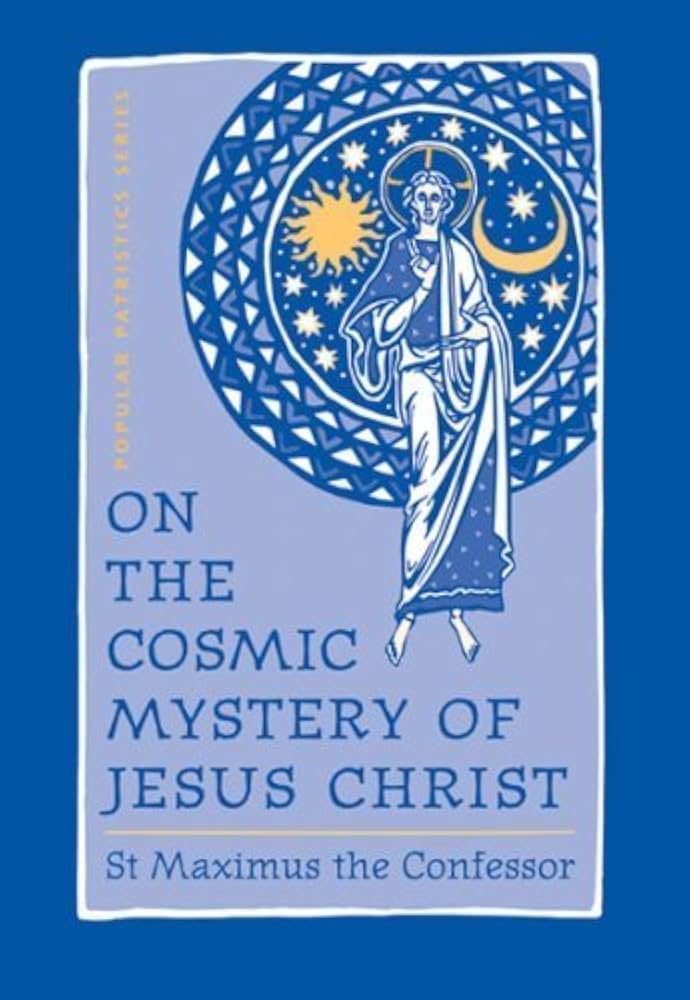
Maximus the Confessor, in Ambiguum 7, writes:

“If it perceives, it certainly loves what it perceives. If it loves, it certainly experiences ecstasy [εκστασιs] over what is loved. If it experiences ecstasy, it presses on eagerly, and if it presses on eagerly it intensifies its motion; if its motion is intensified, it does not come to rest until it is embraced wholly by the object of its desire. It no longer wants anything from itself, for it knows itself to be wholly embraced, and intentionally and by choice it wholly receives the life-giving delimitation. When it is wholly embraced it no longer wishes to be embraced at all by itself but is suffused by that which embraces it. In the same way air is illuminated by light and iron is wholly inflamed by fire, as is the case with other things of this sort.”[1]

I have commented on passages of this sort by Maximus before. I will just let it sit here as a reminder of the nature of your salvation in Christ: to receive the full-embrace, the full “delimitation” of being united to the Trinity in the humanity of Christ the Son.

Soli Deo Gloria


[1] Maximus the Confessor, On the Cosmic Mystery of Jesus Christ: Selected Writings from St. Maximus the Confessor (Crestwood, NY: St. Vladimir’s Seminary Press, 2003), 51.

Uncategorized

The Centrality of the Great Exchange in Maximus the Confessor’s Ambigua 1-4

Maximus the Confessor is known as the greatest seventh-century defender of a logically-consistent Chalcedonianism. As the “Confessor” part of his title indicates, Maximus held to the Apostolic Faith at a time when the entire empire opposed it (even if the empire did so unknowingly, which my reading of the history would tend to posit). His greatest contribution to the life-world of the Tradition was his staunch opposition to the notion of one will in Christ and his hard-line advocacy of diathelitism: that Christ, though a single hypostasis, contains two wills in accordance with His two natures. Maximus posited the diathelite position as what he saw as the absolutely essential outflow of an appropriate affirmation of a two natures Christology, and spoke to his interlocutors accordingly.

So, as one would expect, readers of Maximus’s works, particularly his Ambigua, cannot understand Maximus without understanding the theological controversies he considered so central to a living faith. In particular, Maximus is unintelligible without at least a cursory understanding of the doctrine of the Hypostatic Union: that Jesus Christ is both God and Man in mysterious union, as one, indivisible subject. In engaging with this doctrine, however, the responsible reader will note how Maximus – just like all the greatest of theologians – posits the hypostatic union as a reality quite non-static, as instead a glorious, living, active reality which has real and primary import for people living in this fallen world. Central to this doctrinal livingness is what has been termed the “Great Exchange,” that, as Maximus quotes Gregory Nazienzen writing, “He [the Son] receives an alien form, bearing the whole of me in Himself, along with all that is mine, so that He may consume within Himself the meaner element, as fire consumes wax or the sun earthly mist, and so that I may share in what is His through the intermingling.”[1]

This paradigm is quite literally everywhere in Maximus’s writings. For the purposes of this post, I will simply focus on his Ambigua 1-4 in his Ambigua to Thomas.

Maximus defines the Union thus, in #3:

“‘He who is now human was in composite’ and simple both in His nature and hypostasis, for He was ‘solely God,’ naked ‘of the body and all that belongs to the body.’ Now, however, through His assumption of human flesh possessing intellectual soul, He became the very thing ‘that He was not,’ that is, composite in His hypostasis, ‘remaining’ exactly ‘what He was,’ that is, simple in nature, in order to save mankind… It was, then, the Word Himself, who strictly without change emptied Himself to the limit of our passible nature.”[2]

Maximus defines the Eternal Son as “simple” in “both… nature and hypostasis,” which allows Him the divine freedom to act upon the creation without in turn being affected (i.e., the fathers assumption about the simplicity and aseity of divine being). From this position of freedom (a term I am taking from Barth), He then “became the very thing ‘that He was not,'” i.e., humanity, so that humanity could subsequently be taken up in Himself. Maximus ends this paragraph by tying this Great Exchange of divinity with humanity to the latter’s divinization. Here we see where the patristic mind like the one held by Maximus depart from contemporary accounts of soteriology and divine being. Bruce McCormack and the Post-Barthians would read Maximus here as beholden to a definition of divine being and salvation alien to the life-world of the Christian Scriptures. To McCormack, salvation can appropriately be spoken of as union with Christ (in line with his Reformed commitments), but the paradigm of deification brings along with it a whole host of doctrinal baggage concerning God’s nature (like God’s impassibility and simplicity) which he deems problematic. My first instinct is to want to agree with McCormack, but then I see how Maximus places Christ at the center of salvation – in an even more profound and scriptural way than even the Reformed – and I can’t help but exclaim with Maximus: “Yes! The Son did take on my nature, even though simple and impassible Himself!” There must be a stronger man in order for the strong man to be bound.

I am always pleasantly surprised and excited whenever I read in the Fathers some doctrinal point that a contemporary theologian takes such pains to prove or posit as if it had not been argued before in the history of theological reflection. Such is how I felt when, upon reading Ambiguum 4, Maximus claims – just like Barth! – that the location of our knowledge that God is good, that God loves humanity, and that God works to redeem humanity, cannot be found except where God makes those attributes plain: in Christ! Maximus writes:

“If, then, He emptied Himself and assumed ‘the form of a slave’ (that is, if He became man), and if in ‘coming down to our level He received an alien form’ (that is, if He became man, passible by nature), it follows that in His ‘self-emptying’ and ‘condescension’ He is revealed as the one who is good and loves mankind, for His self-emptying indicates that He truly became man, and His condescension demonstrates that He truly became man passible by nature.”[3]

God is the one whose nature is read off the skin of Jesus. God is the one who, in “‘coming down to our level'” and “‘ [receiving] an alien form'” showed Himself to be the good God who loves his created ones, and whose desire is to see them re-united with Him in perfect harmony. Not only that, but this God, “having absolved our penalty in Himself… gave us a share in divine power, which brings about immutability of soul and incorruptibility of body through the identification of the will with what is naturally good in those who struggle to honor this grace by their deeds.”[4]

Lastly, let us consider one final point Maximus makes at the end of his 4th Ambiguum. He writes:

“In doing lordly things in the manner of a slave, that is, the things of God by means of the flesh, He intimates His ineffable self-emptying, which through passible flesh divinized all humanity, fallen to the ground through corruption. For in the exchange of the divinity and the flesh He clearly confirmed the presence of the two natures of which He Himself was the hypostasis, along with their essential energies, that is, their motions, of which He Himself was the unconfused union.”[5]

The profundity of Maximus’s argument here lies in what he claims is shown forth “by means of the flesh.” Maximus’s claim that Christ “intimates His ineffable self-emptying” means that Jesus Christ proved Himself to be God in the manner in which He acted out his obedient ministry among men and towards the Father. He is proved to be God-taken-on-flesh, Maximus claims, in the en-flesh-ment itself, in God acting as Man and Man acting as God. It is the Man-acting-as-God half of that equation that takes the cake here for Maximus, and displays Maximus’s dialectical tendency to – also, similar to Barth – switch his foci between Son of Man and Son of God in one continuous, repetitive emphasis. Further, it is in the “exchange of the divinity and the flesh” that “He clearly confirmed the presence of the two natures of which He Himself was the hypostasis.”

When I read contemporary theologians complain of a tendency in the Church Fathers (that undoubtedly exist in some) to present theological realities as static, scientific things whose complexities must be analyzed, I look to Maximus the Confessor and those like him. Theologians like Maximus tear apart the notion some historians of doctrine give to the history of theological reflection that it is some dry, doxology-less, humdrum activity, and show it to be what it is meant to be: a beautiful, worshipful meditation on the reality of God as shown forth in Christ. Maximus writes, to end: “How great and truly awesome is the mystery of our salvation!”[6]

Soli Deo Gloria


[1] Gregory the Theologian, Or. 30.6 (SC 250:236, ll. 5-20).

[2] Maximus the Confessor, On Difficulties in the Church Fathers: The Ambigua, Vol. I, ed. and trans. by Nicholas Constas (Cambridge, MA: Harvard University Press, 2014), 19. 

[3] Maximus the Confessor, On Difficulties in the Church Fathers: The Ambigua, Vol. I, ed. and trans. by Nicholas Constas (Cambridge, MA: Harvard University Press, 2014), 25.

[4] Maximus the Confessor, On Difficulties in the Church Fathers: The Ambigua, Vol. I, ed. and trans. by Nicholas Constas (Cambridge, MA: Harvard University Press, 2014), 25.

[5] Maximus the Confessor, On Difficulties in the Church Fathers: The Ambigua, Vol. I, ed. and trans. by Nicholas Constas (Cambridge, MA: Harvard University Press, 2014), 27-29.

[6] Maximus the Confessor, On Difficulties in the Church Fathers: The Ambigua, Vol. I, ed. and trans. by Nicholas Constas (Cambridge, MA: Harvard University Press, 2014), 31.

Uncategorized

Bruce McCormack’s The Humility of the Eternal Son: Some Quotes and Thoughts

I am much too late to the game with Bruce McCormack’s study on Christology, The Humility of the Eternal Son. I am thankful to be done with it finally so that I can share a few quotes from the book and comment on the overall experience. The quotes I will be pulling from are from the very last chapter where he is summarizing his argument and responding to practical rebuttals to what he is proposing.

McCormack here, as hinted at in the subtitle, attempts a “repair” of the Chalcedonian Definition; as a faulty statement, he claims, about the full truth regarding Jesus Christ’s ontological makeup as both God and human, the Chalcedonian Definition has at its core a “logical aporia” (his term). By “logical aporia” he means a contradiction in the Definition which ultimately only pays lip service to the “side” of Jesus Christ that is fully human. McCormack explains this by writing that the Definition is funded by “Cyrilline” presuppositions concerning divine being. The fault in the Definition, grounded in these presuppositions, is that it claims the reality of Jesus is constituted by the Eternal Logos’s instrumentalization of human flesh. Although the orthodox theologians affirmed that – against Apollinaris – the Logos had taken on the entire reality that is human nature, in function they refused to concede that the Eternal Logos was affected by the union like the human nature was affected in being assumed by the Logos. The problem, ultimately, for McCormack, is how to situate the Christological subject. What constitutes, ontologically, the reality that is Jesus Christ? To McCormack, if the Logos is not affected by Jesus as Jesus is affected by the Logos, then the Definition’s claim that it safeguards the integrities of both natures is empty and groundless. This is so because “the attributes of both ‘natures’ must be ‘communicated’ to the Logos is he is to be the single Christological subject.”[1]

When I read the first chapter of this book, I felt both perplexed and excited. McCormack is telling his reader he aims to wade through the history of theological reflection, attempt a thorough investigation into a foundational doctrine of the Church, and then propose an essential reformulation of it. As someone interested in the history of theology, I was thrilled to slug through this book even though I had reservations about the prospects of its success. I get the sense that McCormack strays left of me, so to speak, in regards to his reverence for the Tradition. I will temper that claim, though, with an insightful remark of his:

“My point is this: we must be more ‘Chalcedonian’ than many of today’s defenders of Chalcedon are. We must not rest content with repeating words whose significance we have only dimly understood. We must do our Christology in the light of an appreciation for both the promise of Chalcedon and its limitations – and in that way, be truly ‘guided’ by it.”[2]

Amen and amen.

Perhaps the primary thought I came away with when reading this book – which is also how I have felt after putting down books by Torrance, Webster, et al. – is that this is an example of a theologian who has learned well from his master in the field, the inimitable Karl Barth. In McCormack’s (and Webster’s) case theirs wasn’t a direct, personal influence, but they nonetheless have been schooled in the fruitful halls of Barth’s post-metaphysical thought. Theological reflection, in the Barthian mode, is one I have always been convinced is creatively receptive. Theology is all the better for it.

What follows are a few quotes from his last chapter which do the work of appropriate theological speech:

“In the place of two discreet (substantially conceived) ‘natures’ subsisting in one and the same ‘person,’ I am going to posit the existence of a single composite hypostasis, constituted in time by means of what I will call the ‘ontological receptivity’ of the eternal Son to the ‘act of being’ proper to the human Jesus as human. ‘Ontological receptivity,’ it seems to me, is the most apt phrase for describing the precise nature of the relationship of the ‘Son’ to Jesus of Nazareth as witnessed to in the biblical texts we treated. I am going to argue further that it is the Son’s ‘ontological receptivity’ that makes an eternal act of ‘identification’ on the part of the Logos with the human Jesus to be constitutive of his identity as the second ‘person’ of the Trinity even before the actual uniting occurs. This is what I believe to have been missing in Jüngel and Jenson. The ‘Son’ has as ‘Son’ an eternal determination for incarnation and, therefore, for uniting through ‘receptivity.’ He is, in himself, ‘receptive.’”[3]

“Divine power, then, should never be understood in abstraction from what God actually does. It should be understood as the ability to accomplish all of that which God wills to do in the way God wills to do it – and nothing more. ‘Metaphysical compliments’ are excluded where the triune ‘being’ of God is understood to be constituted in purpose-driven trinitarian processions.”[4]

“The love that God is, is not love in general but a highly concrete and very specific kind of love. It is a self-giving, self-donating, self-emptying love. And it is the eschatological being of the Christian in Christ that they are called, even now, to imitate, to live from and towards, in their daily lives.”[5]

And finally:

“For what God is, God’s ‘essence’ is to be found in God’s livingness and nowhere else. Where God is concerned, we may not begin with the question of what God is or even with the question of who God is. We must begin with the question of the place of God’s livingness. Only there can we learn the answers to the questions of who and what God is.”[6]

Soli Deo Gloria


[1] Bruce McCormack, The Humility of the Eternal Son: Reformed Kenoticism and the Repair of Chalcedon (Cambridge, UK: Cambridge University Press, 2021), 52.

[2] Bruce McCormack, The Humility of the Eternal Son: Reformed Kenoticism and the Repair of Chalcedon (Cambridge, UK: Cambridge University Press, 2021), 29.

[3] Bruce McCormack, The Humility of the Eternal Son: Reformed Kenoticism and the Repair of Chalcedon (Cambridge, UK: Cambridge University Press, 2021), 252.

[4] Bruce McCormack, The Humility of the Eternal Son: Reformed Kenoticism and the Repair of Chalcedon (Cambridge, UK: Cambridge University Press, 2021), 267.

[5] Bruce McCormack, The Humility of the Eternal Son: Reformed Kenoticism and the Repair of Chalcedon (Cambridge, UK: Cambridge University Press, 2021), 276.

[6] Bruce McCormack, The Humility of the Eternal Son: Reformed Kenoticism and the Repair of Chalcedon (Cambridge, UK: Cambridge University Press, 2021), 296.