Uncategorized

A Layperson’s Perception of the Dangers of Theological Retrieval

The evangelical world is in the midst of a largely positive, in my opinion, “retrieval” movement. Evangelical theologians, in other words, are making wholesale returns – or, some would argue, discoveries – of the theology of the historic Church catholic. Medieval and Patristic theology-related dissertations and Medieval and Patristic literature written by evangelicals is increasingly on the rise. Today, one is much more likely to hear a quote or two from some historic theologian in the local pastor’s sermon than compared to even fifteen years ago. Perhaps because of the cultural climate, perhaps because of the rise of the endlessly-changing and distracting technological world we live in, the Fathers of the Church are being consulted as bulwarks of unchanging, steady, historic Christian Tradition.

Along with this current of Tradition-related evangelical literature, there exists another movement (one I have written on previously here). This movement consists of young evangelical men who come to discover the theology and traditions of the historic Church catholic. These young men are usually more intellectually-inclined, tend to come from very independent expressions of evangelical fundamentalism, and are converting in droves to what can be considered “Imperial” Christian traditions: the Anglican, Orthodox, and Roman Catholic Churches. I count myself among them. I shouldn’t have to say the obvious, but these two movements are essentially connected: as patristic and medieval literature is flooding the evangelical camps, those within the camps whose faith needs deepening see the claims of the Fathers as the gateway to such a deepening. Not without reason, either.

There exist multiple dangers ingrained in both of these movements, however, dangers ignored by many of the leading scholars/figureheads of these trends. The primary danger I perceive is the view that the historic Church should be “accepted” or appropriated in its entirety. Many young theologians who discover church history come to hold an honestly ignorant principle in their survey of church history: that whatever is old is good and true, and whatever is contemporary (or is perceived to be contemporary) is evil and changing. Putting aside the hopefully-obvious philosophically problematic understanding that this presents, such a principle is just plain theologically dangerous and can be avoided by commitment to a definite confessional Christian expression.

This danger I have seen played out in numerous ways. For one, some evangelical figureheads in these movements have insisted on the thorough theological richness of all periods of Church history. To give one example of mine and put forward a straight-up interpretive claim: the Late Medieval era, outside of the Reformers’ theological programme, is largely a barren wasteland. The Late Medieval Catholic Church before the Reformers came on the scene appears to me inescapably empty in regards to its theological and spiritual vitality, what with its unashamed replacement of properly-mystical theologizing with Aristotelian systematization, and its definition as a spiritually dead time period; its called the Dark Ages for a reason. As Protestant evangelicals, I don’t think we should be overly hasty in embracing the too-generous principle here that the Late Medieval Church (honestly, to widen the scope, in both East and West) has as much to offer our retrieval efforts as does groups like the Nicene-era and Reformation-era Churches. There are differing levels of era-worthiness when it comes to theological retrieval.

Another place I see the principle playing out is among those Christians who have already made the jump to the Traditions mentioned at the beginning. To so many evangelical-turned-Imperial Christians (particularly of the Anglo-Catholic vein), all low-church, less-than-traditionally-liturgical Christian expressions are heterodox, ignorant, and just plain wrong. Now, some of these categories can more rightly be applied to said evangelical expressions than others, but I think the heresy at the heart of this attitude is the extraction of Christ from ecclesiological and systematic theologizing. In the midst of the innumerable discussions amongst these men concerning “natural apostolic succession,” the finely-analyzed rite-practices of East and West, or whatever other minutely-defined points of theology these types of guys like to engage with, Christ – the Lord of glory who deserves these guys’ every allegiance – can take a backseat so much of the time. Furthermore, many of them unfortunately adopt this “me against the world” ideological posture once they have come to understand (most times a very little amount of) church history and its implications for theology and worship. The way this posture then plays out is, again, unfortunately in passive aggressive criticisms “from within,” if they feel they cannot leave their tradition, or straight up jerk moves: openly and loudly proclaiming their righteous departure from their “heterodox” low church tradition they were probably lovingly raised in. Imperial Christians, for all their talk about their ridiculous view of the “one true Church,” leaves Christ’s Bride in the dirt when they come to some newly-minted conviction – which, nine times out of ten isn’t used to serve the actual, localized Bride of Christ right in front of them.

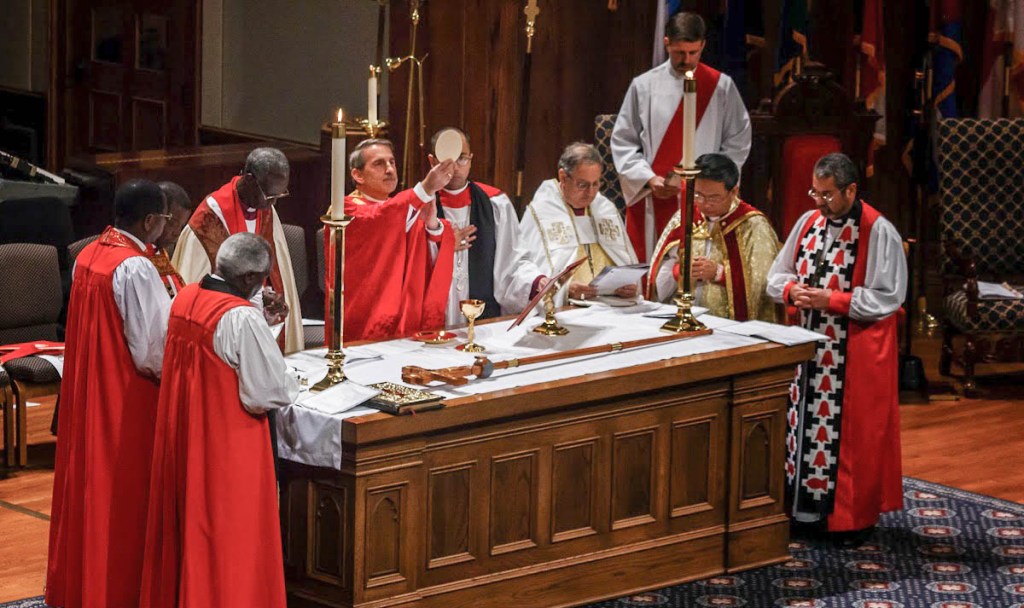
For those who see themselves in either of these movements (within evangelicalism, with a reverence for the Fathers or within the Imperial Traditions): watch out. Archbishop of the ACNA, Foley Beach, recently tweeted something right along the spirit of this post: “Some people are more excited to be an Anglican than they are to be a Christian.”

Soli Deo Gloria

Uncategorized

The Church Dogmatics, So Far

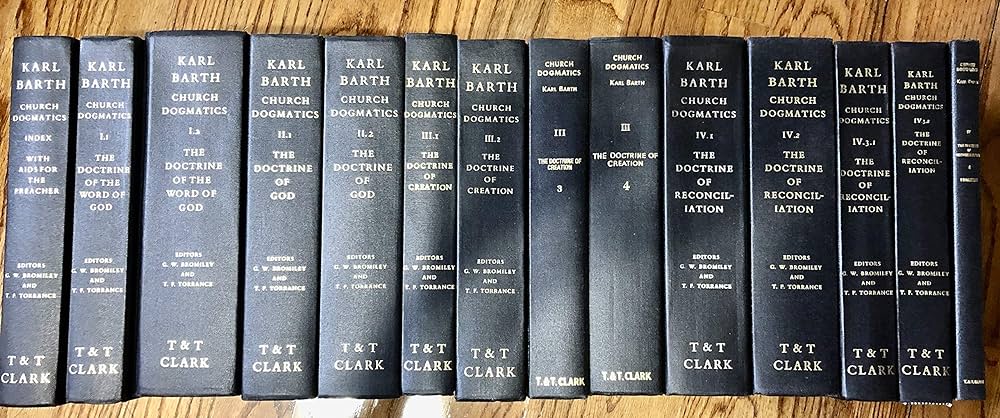
I just recently began reading the full-bodied, printed version of the Church Dogmatics (not a selection or reader, but the real thing). I decided to begin with 1/1 to get a better feel for Barth’s “prolegomena,” which is really a quite bad word for it – a word Barth himself spills a good bit of ink rejecting. In a way, however, it acts as the prolegomena in, at the very least, introducing the paths of language he will end up taking and the “objects” around which he will encircle throughout the rest of his programme. I heard it said once that Barth’s theology is like a diamond: each part contains the whole and the whole is a sum of all its parts. I am finding that to be true, because although his “object” is the Word of God – 1/1 is titled “The Doctrine of the Word of God” – he is equally concerned with Christology, Trinitarian theology, soteriology, and the theological task itself, each of which have a volume dedicated to it.

I have particularly been struck by Barth’s great mystery. As one more inclined to continental-sounding language – with its sometimes mind-bogglingly long and complex sentences – I am finding the literary style of Barth to itself be a Theo-logical extension or feature of his dogmatic affirmations (I cringe at the thought of using the word “system” here). He is quite the simultaneously joyful yet somberly-critical theologian, one concerned to give no beachheads to the anthropomorphizing thought of men. He himself makes it perfectly clear that, at the end of the day, his own theologizing is imperfect, flawed, limited as he is limited. This consistent emphasis of his gives the reader a helpful sense of the characteristic humanness of the theological task, one initiated and called forth by God but one which man must seek to fulfill because of that divine call (regardless of its ultimate futility as a human project of “listening” and “waiting” on the Word of God).

I don’t plan on slogging through the Dogmatics volume-by-volume, but skipping around his corpus based on my own theological interests at the moment. In step with this, next I plan on reading 2/1, arguably the most infamous of the volumes for its controversial reformulation of the Reformed doctrine of election. Although I am undoubtedly excited to get a more full-fledged hashing out of Barth’s election doctrine – I have read large portions of it included in the various Barth readers – I am honestly more interested in the Trinitarian theology I know is so intimately wrapped up in such a discussion on election, and the doctrine of God “generally” (Barth doesn’t like that word, either).

To end, some enriching quotes from my 1/1 reading so far:

“We have it [the Word of God] because it gives itself. Thus it is the object of proclamation in a different way from all possible objects of metaphysics or psychology… Real proclamation thus means God’s Word preached, and God’s Word preached means, in this second circle, man’s language about God on the basis of God’s self-objectification which is neither present nor predictable nor relatable to any design, but is real solely in the freedom of His grace, in virtue of which from time to time He wills to be the object of this language, and is so according to His own good pleasure.”[1]

“The man, the Church, the Church proclamation, the dogmatics which claimed to be able to work with the Word and with faith as with a capital sum standing at their disposal, would simply prove thereby that they possessed neither the Word nor faith. Where there is possession of them, we simply do not take it for granted as such, we strain after it hungering and thirsting, the only way of blessedness… This event, grace, and in and along with grace, faith, must come first. In confession, in connecting ourselves with the grace already proclaimed to us, already received by us, there results an affirmation of the possibility given to man of knowing the Word of God.”[2]

Soli Deo Gloria


[1] Karl Barth, Church Dogmatics 1/1: The Doctrine of the Word of God, G.T. Thomson trans. (Edinburgh, T & T Clark: 1963), 102-103.

[2] Karl Barth, Church Dogmatics 1/1: The Doctrine of the Word of God, G.T. Thomson trans. (Edinburgh, T & T Clark: 1963), 258.

Uncategorized

Language and Liturgy

This post will be a bit out of place in connection with the web of posts I have spun on this blog so far. At the moment, I have three literary stallions in my mental pen: Barth’s Church Dogmatics 1/I, Martin Heidegger’s Being and Time, and Ludwig Wittgenstein’s Philosophical Investigations. These oddly-placed but preeminent texts have a similar inner principle at work throughout each one’s many pages: the centrality and all-encompassing reality of the Word. In Barth, the Word is the Word of God, the sovereign Lord who events Himself in limited human speaking so as to bring human language into itself and allow it to participate in its ontological Truthhood. In Heidegger, the Word is – as his pupil and apostle Hans-Georg Gadamer claims – the always-before-and-evermore-permeating source of Dasein’s being-in-the-world, the being-generating reality. In Wittgenstein, the Word is the system of language games continually, creatively played with and reconfigured and bequeathed at every moment in every community, which also, similar to Heidegger, acts as the reality-encompasser.

Something I have recently been struck by in all three of these thinkers’ texts is that their emphasis on the spoken/written word as the reality-generator of all human experiential/societal being, is that wrapped up in such a world-conception is this rejection of the classical Ancient view (which extended into the Cartesian view) of the “inner-outer” distinction. In Heidegger this is especially seen in his dogged affront against the I-Thou world-picture.

The “inner-outer” conception of human and world ontology can be described roughly by inspecting our Western language surrounding things like the “Mind” versus the “body,” or the “body” and the “soul” distinction. It can further be seen in the subject-object world-conception (what I called the I-Thou world-picture above) in how Western speaking generally tends towards terminology which designates human persons as something like embodied-minds which are unencumbered or uninfluenced or undiscovered in their substantive existence within the world. To the philosophers I have mentioned, such a world-picture is out of step with how language has genuinely been investigated to be. In the course of the development of philosophy of language – i.e., what has preoccupied philosophers for the past few hundred years or so – language has been found, after Kant, to be the fundamental mode of being for (to use Heidegger’s phrase) “Dasein,” i.e., “being-there” (the term Heidegger uses for human persons).

I don’t mean, in this post, to wholeheartedly sign onto and proselytize for Heidegger’s philosophical programme, much of which can be equated with Buddhist thought and language, but to make the distinction I think should rightly be made by contemporary theologians worthy of the name, that: theological inquiry, investigation, and reflection is still very much alive without the ancient house in which it has lived for so long. In other words, to come back to a consistent theme of mine: theology can very much survive on its own without the yoke of ancient ontological categories and pagan-derived world-conceptions. As my friend and I discussed just this past week, the claim made by so many philosophers today about the centrality of language as the all-encompassing, permeating and determining world-creator is by no means contradictory to St. John’s claim (which is frustratingly always associated with Greek philosophical ontology) that Jesus Christ is the Word of God who was “with God in the beginning.” I very much see theologians like Barth, T.F. Torrance, John Webster – and even others like Eberhard Jüngel – as contributing to this new and exciting theological direction.

Why did I name this post “Language and Liturgy,” though? Because, to transition, I see this newfound understanding and appreciation for human speaking as the way in which we can today appropriate genuinely-discovered theological/philosophical insights to best lean into the theological life-world of the Church today. I see one ancient continuity towards this end in the liturgical life of the Church. What I mean is to say that perhaps one of the best things to push today is for a more liturgical expression of the Church’s life so as to combat certain conceptualizations of inner-outer understandings of personhood that has developed into what we see now in what Barth calls “pietistic-rationalistic Modernism”[1] (prevalent in both “conservative” and “liberal” veins of Church expression). Language is the key to overcoming a non-theological, Greek-derived world-picture where the human person is divided in two, instead of mysteriously and wholly united (a central affirmation of the Chalcedonian definition). The spoken word of the liturgy, as our ancient Christian brothers and sisters continually emphasized, is the place in which the communal life of the Church enters into the Person of Christ and is so drawn up into the Triune life so as to fashion us more and more into the Word of the Θεανθροπος.

Soli Deo Gloria


[1] Karl Barth, The Doctrine of the Word of God: Prolegomena to Church Dogmatics, being Vol. I, Part I, trans. G.T. Thomson(Edinburgh, UK: T & T Clark, 1963), 36.

Uncategorized

The Latin Heresy at Play and the Actuality of Our Salvation in Christ

George Hunsinger’s book, How to Read Karl Barth: The Shape of His Theology, is a wonderful summarizing and exploration of Barth’s momentous and huge theological opus, the Church Dogmatics. Recently I decided to take the plunge into the Dogmatics, but thought that before setting off I would benefit by reading a few prefatory works to prepare for the journey. In the past few years, I have read numerous anthologies of the Dogmatics – the best of which was recently published and can be found here – which is how my initial interest in and appreciation for Barth grew.

The blog post I wrote a few weeks ago related to T.F. Torrance and the Latin Heresy outlines Torrance’s (and Barth’s) conviction that the central cancer at the heart of the development of Western theology is what is called the “Latin Heresy.” The Latin Heresy refers to the dualistic, systematic tendency of Western theologians following Augustine to separate the Being and the Work of Christ, relying on NeoPlatonically-derived conceptual schemes to so theologize. How this has materially played out in Western theology in the past few millennia can be seen clearly in groups like the Westminster/Dort Reformed worlds, where, following Calvin (a substantive theological heir of Augustine), theologians have refused to accept the mysterious unity of Christ’s Person and Work as constitutive of and effective for the entirety of the human race and subsequently chosen to stipulate that in the program of salvation each individual person must therefore appropriate Christ’s work (and therefore complete, fulfill, or perfect “it,” i.e., Christ’s work for humanity). Now, at this point we must be careful, lest we ourselves fall into what Torrance is warning against. Our theological instinct, upon hearing such an analysis, is to think, “But doesn’t this lead to universalism? How can Christ’s Person and Work so be conceived so as to render his action and person effective on behalf of all? Does that not betray the Christian faith’s necessary emphatic charge to people to believe? If Christ’s work is effective ‘for all,’ what is the need for faith?” Let us turn, now, to how Hunsinger poses the problem.

He writes,

“Two points above all seemed essential to Barth about salvation. First, what took place in Jesus Christ for our salvation avails for all. Second, no one actively participates in him and therefore in his righteousness apart from faith. The first point constitutes the objective aspect, the second the existential aspect, of salvation… The human act of faith is in no way determinative or creative of salvation, and the divine act of grace is in no way responsive or receptive to some condition external to itself as necessarily imposed upon it by the human creature… Grace therefore confronts the creature as a sheer gift. The human act of faith, moreover, in no way conditions, contributes to, or constitutes the event of salvation. Faith therefore confronts the Savior in sheer gratitude and sheer receptivity (which is not the same as mere passivity), and is itself inexplicable except as a miracle of grace.”[1]

The next portion, however, brings home the point:

“All these were axiomatic and nonnegotiable for Barth, because he took them to be the assured results of exegesis when the Bible was read christocentrically as a unified and differentiated whole… No possible tidier outcome could be achieved except at the expense of hermeneutical adequacy. Any gains in technical consistency at the conceptual or doctrinal level could be had only by suffering unacceptable losses of coherence with the subject matter of scripture. In such cases adequacy was to be regarded as a higher virtue than consistency. The sheer mystery and incomprehensibility of the subject matter (particularism), as attested in and through the biblical text (realism plus actualism), not only imposed important limits on the possibility of achieving technical consistency, but also established the very conditions for the possibility of any intelligibility in theological discourse worthy of the name (rationalism). All doctrinal construction, ordering, and testing, and all assimilation of extrabiblical conceptions, had to be done with a sure and uncompromising sense of the limits to conceptualization imposed by the subject matter. Otherwise the subject matter, whose mysteries as such fell into specifiable patterns, would no longer be comprehended in terms of its own intrinsic and indissoluble incomprehensibility.”[2]

For those readers who have read St. Athanasius’s On the Incarnation: the similarities here with that text cannot be more clearly seen. In the same way that Athanasius pushes forward the salvific union of the Son of God’s sharing in humanity’s fallen flesh as the redemption of the human nature in which all share – i.e., how he unifies the Person and Work of Christ – so here the unity of the two cannot be more similar. Perhaps the biggest point to push here is that the question of the “possibility of universalism” is itself, claims Torrance and Barth, a symptom of the West’s dualistic thought form (which is a cancerous sore on the Western theological face). This is not to say, though, that Barth is positively arguing for the reality and orthodoxy of the idea of universal salvation; it is to say that a consistent reading of scripture yields a salvation picture where the two mysteriously-contradictory images of 1) no one being left out of the restorative union of the Son of God with human nature and 2) the act of miraculous divine grace is absolutely unconditioned and autonomously existent apart from any human’s recognition or appropriation of it, are nonnegotiable and cannot be systematized in such a way where one is given theological precedence and centrality over the other but where both must be held in a creative, mysterious, and simultaneous tension.

I tend to agree with this inherent tension, not because I am a universalist or a Barth fan boy, but because what I have seen in the Tradition would point to an absolutely christocentric picture of salvation, one where the systematic’s mind has no place or ground to theologize. For Barth, and hopefully for all of us, the reaction and form of life we should subsequently adopt upon coming to such a state of “sheer receptivity” towards the Triune God is one of wonder, love, grace, gratitude, and a readiness to tell the world how Christ has already loved it and given itself for it, even before it has come to realize it. The Person and Work of Christ are truly one, united in mysterious, salvific harmony. Jesus Christ is our Θεανθροπος.

Soli Deo Gloria


[1] George Hunsinger, How to Read Karl Barth: The Shape of His Theology (Oxford, UK: Oxford University Press), 106.

[2] George Hunsinger, How to Read Karl Barth: The Shape of His Theology (Oxford, UK: Oxford University Press), 107.

Uncategorized

The Word of God and the Word of Man, Reconsidered

“Jesus Christ is that Truth truthfully communicating himself, and enabling us truthfully to receive him. He is the Truth communicating himself in and through truths, who does not communicate himself apart from truths, and who does not communicate truths apart from himself. It is in this utterly unique way that Jesus Christ constitutes in himself the controlling and justifying Center of reference for all our statements about God, and as such he is the ultimate Judge of their truth or falsity.”[1]

T.F. Torrance’s set of biblical-theological essays touching on the nature of the Bible, the Word of God, and the appropriate place of biblical interpretation and theological reasoning, is titled Reality & Evangelical Theology: The Realism of Christian Revelation. In it, Torrance sets out to clarify his mode of theological reason, his style of writing, and his particular approach to the meditative study of the Scriptures in tandem with his Barth-derived notion of the Word of God. In my continuous study of Barth’s “Word” doctrine, Torrance could not have been a better guide and help.

Torrance’s continual emphasis throughout the set of essays is the divide which exists between God and man, and how when man views his own theological language – much of which could be right in line with how Christians have always spoken and in line with a semi-coherent wrestling with the message of Scripture – as univocally apprehending the (capital T) Truth of God which exists always and evermore before and outside of our linguistically-encapsulated notions of God’s Truth (i.e., in our creaturely realities), man takes his first step down the road to theological inconsistency and revelational emptiness. The divide which Torrance rightly recognizes as existing between God and man functions in his theological programme as a sort of parallel paradigm to the hypostatic union of Jesus Christ, with both human and divine realities existing side by side, yet with the divine side firmly in control of and sovereign over the human side. On the human side is human speech: our language, thought forms, and general speech patterns about God which over time we behave as if speaks univocally of the Truth of God towards which it points. On the divine side is the Truth of God, the ontological reality of God’s separately-existing being (identical with God Himself) which cannot and will never be captured by the limited notions of human thought forms and speech, but which sovereignly decides to so intervene within the partially-true events of human theological speaking to so reveal Himself in Jesus Christ to real people in their spatiotemporal existences.

The way the Barthian notion of the Word of God functions in Torrance’s theology is by both further supporting his other consistent claim that what God reveals is not something outside of Himself but is really and truly Himself and providing an objective referent against which the myriadly-colorful but far too often anarchic warscape of human theological speaking may be judged, analyzed, and sifted. Without some objective Truth to appeal to – apart from some magically-imbued theological power-structure like the Roman church – Torrance believes, our theological speaking becomes even more anarchic and ridiculous than it already tends to be. He backs up his claim, writing:

“It is the Truth itself and not any formulation of the church’s understanding of it that is the canon or criterion of true knowledge. The Truth of God may be known only in accordance with what it is independently in itself and as we on our part submit our understanding to its judgment… Understood in this epistemological way, justification by Grace, or verification through the Truth that Christ himself is, provides theology with the most powerful principle of objectivity, for it cuts away the ground from all our subjective claims and assertions.”[2]

Now, how is Torrance’s idea of the Word of God then apprehended, at all, by human interpreters? Torrance’s answer runs along the lines of the traditionally-conceived debate between faith and reason. Torrance, ever the Barthian, insists that it is only as the human theologian/biblical interpreter – the same thing in Torrance’s (and my) opinion – “submit[s] [his]… understanding to [the Bible’s]… judgment” that the human theologian may wish to utter any correct theological speech at all. It is only through a total dependence on the Reality of God – a hope that that Reality apprehends and encompasses the interpreter – that any human language may hope to participate in the ontological Reality of God by God’s own intervention and eventing of his revealing-of-Self. In Anselm’s classic phrase, “I believe [or, allow myself to be encompassed by God’s reality], therefore I understand.”

All the ways that certain Modern categories about textual authority and truthful correspondence have infiltrated evangelical understandings of the Word of God, I am convinced Torrance presents a solid case here for a unique understanding of these concepts of the Word of God and the Word of Man. Of course, one of Torrance’s other argumentative veins is that his arguments are not new, as he claims Athanasius, Calvin, and others have thought identically. I myself have long been wrestling with issues of biblical-textual coherence, and for all the ways I have reconceptualized my own understanding of biblical authority I have come back to the thought that the Bible is indeed revelatory, wonderfully amazing, and inspired; where that inspiration, authority, and revelation is to be located, however, is purely and completely with the power and control of the God who reveals, authorizes, and inspires the text. When the text itself is imbued with an independent power, as many evangelicals implicitly think of it, it takes on a truly dangerous discursive function and serves the power-moves of those theological speakers who would proof-text their way to the top. Although the “implications” of such a view would seem to some in the conservative evangelical vein to lead to “liberal theology,” I think it does just the opposite: emphatically pushing the claim that the reality of the Bible’s inspiration lies in the sole hands of the God who willed its existence destroys the foundations of contemporary theological leftism. How, I think deserves a whole other blog post. I would, of course, add as a footnote add that such an understanding of the Word of God must always and evermore be supplemented by a constant listening-ear to the word of the Ancient Church Catholic (i.e., the saint’s throughout the ages who have themselves wrestled, better than us, over these issues). Take these thoughts with a grain of salt; I myself am still thinking through them.

Soli Deo Gloria


[1] Thomas F. Torrance, Reality & Evangelical Theology (Eugene, OR: Wipf and Stock Publishers, 1982), 125-6. 

[2] Thomas F. Torrance, Reality & Evangelical Theology (Eugene, OR: Wipf and Stock Publishers, 1982), 123.

Uncategorized

Thomas F. Torrance as the Best of the Barthians

Thomas F. Torrance was a Church of Scotland minister, mentee to the preeminent Karl Barth, and a world-renowned theologian in his own right whose universal appreciation – from all sides of the aisle – points to the man’s formidable theological mind, his heart for people, and a passion for the unity of the twentieth century Church. Personally, I have benefitted enormously from the little amount of meditative reading I have recently done on him, and do not plan to stop reading Torrance until I go to be with the Lord. Along with Barth, he has all but revolutionized my understanding of what Christ has done for the world and how I should subsequently see my place within Christ’s universe; of those I have heard from who have read Torrance with charity, a similar change has taken place in them. Of the Barthians – the term I am using to refer to those theologians which Barth intimately influenced – I think Torrance stands as the most insightful and thought-out theologian, and his evangelistic fervor and obvious concern he had for the pastorate pull on my deepest heartstrings. Eberhard Jüngel, the Lutheran mentee of Barth’s whose place in the hierarchy of those Barth taught falls directly behind Torrance, in my opinion, had a similar but quieter influence on the theological landscape of his day but in mostly Lutheran circles (whereas Torrance was a Reformed man, through and through).

The First Things article titled “T.F. Torrance and the Latin Heresy,” written by a Roman Catholic acquaintance of Torrance’s, presents a clear-cut image and a strong critique of Torrance’s entire theological project. In so many respects like his mentor, Torrance used strongly-worded language when referring to those ideas he perceived to have corrupted the Church’s theological language through the centuries, perhaps the most exciting of which was what Torrance termed the “Latin Heresy.” The Latin Heresy alluded to the Western Church’s continual tendency to adopt theological language which conceptualized God’s relation to humanity in Christ in dualist terms, using ways of speaking which separated being and act, form and content, and, in Torrance’s view, Jesus Christ and God the Father. The Latin Heresy – and the essay Torrance devoted to the development of the idea, titled “Karl Barth and the Latin Heresy” – is what the author of the article, Douglas Farrow, tackles from a Roman Catholic perspective. In what follows I will pull out a few ideas of Farrow’s and Torrance’s and put them in critical conversation, and attempt to work out my own thoughts concerning it all.

As a side note of sorts, I would like to start with a small comment Farrow makes near the middle point of his article. He writes, about Torrance’s value to Christians of other traditions:

“For he [Torrance] is capable, with Barth, of helping Protestants learn how to be critical of Protestantism as well as of Catholicism, and how to enrich themselves with patristic insights and resources. Moreover, Protestants can learn from Torrance something that Barth cannot teach them: a degree of respect for liturgy and sacraments and even for episcopal ministry… Catholics can hardly dismiss Torrance’s critiques as so much Protestant caricature. In Torrance, as in Barth, they are confronted by a Protestant who forces them to think hard about the mediation of Christ in ways they are not accustomed to. On the other hand, in Torrance they can discover points of contact with the hieratic and liturgical dimensions missed by Barth.”[1]

Here Farrow notes something I too have realized about the difference between Barth and Torrance. In many respects, Torrance has a much more patristic flavor than Barth, even considering how heavily Barth leaned on and listened to the Fathers. One can only expect Torrance, then, to have a much higher appreciation for catholic – and here I am very much ready to throw Barth under the rug – sacramental understandings and for the place of structure and order in the Sunday liturgy. The very fact that Torrance’s entire project was constantly emphasized to be founded on the complimentary theologies of Sts. John Calvin and Athanasius of Alexandria points to how highly and explicitly Torrance considered Nicene theology in his approach. Torrance was a thoroughly Nicene theologian, and no one can combat it.

Of course, Farrow then combats it. Before we get to Farrow’s critiques, let us see what Torrance puts forth in thesis form (this is a blog after all) in his essay “Karl Barth and the Latin Heresy.”

To begin with, Torrance outlines Barth’s primary theological input as reminding the Church that “‘God himself is the content of his Revelation,'” as opposed to an instrumentalist or dualist conception of Revelation where God is imparting some thing outside of Himself. He then goes on to lay out theological history as he sees it developing in the West (for the worst):

“What Karl Barth found to be at stake in the twentieth century was nothing less than the downright Godness of God in his revelation, for the Augustinian, Cartesian and Newtonian dualism built into the general framework of Western thought and culture had the effect of cutting back into the preaching and teaching of the Church in such a way as to damage, and sometimes even to sever, the ontological bond between Jesus Christ and God the Father, and thus to introduce an oblique or symbolical relation between the Word of God and God himself. Barth’s struggle for the integrity of divine Revelation opened his eyes to the underlying epistemological problems, not only in Neo-Protestantism and Roman Catholicism, but in Protestant orthodoxy as well. These were bound up with the Western habit of thinking in abstract formal relations, which was greatly reinforced by Descartes in his critico-analytical method, and of thinking in external relations which was accentuated by Kant in his denial of the possibility of knowing things in their internal relations. This is what I have called ‘the Latin heresy,’ for in theology at any rate its roots go back to a form of linguistic and conceptual dualism that prevailed in late patristic and medieval Latin theology.”[2]

Torrance’s primary problem, then, is Western theology’s characteristic tendency to externalize the ontological relations of God in both its doctrine of the Trinity and its doctrine of the Hypostatic Union. Thus, he goes on to say, you see Westminster orthodoxy’s tendency to Nestorian-ize the Hypostatic Union in pursuit of fulfilling their closed doctrinal loop of satieting God’s anger-principle, and, in Roman Catholicism, of constructing an ecclesiology which objectifies God’s grace in an outer-hierarchical-imparted-grace-Church mode. Farrow rightly summarizes,

“Liberal Protestantism… had more or less reduced theology to ethics, and the mediation of Christ to moral influence… In so-called high Calvinism, represented by the Synod of Dort, there had long been a severe instrumentalization of Christ, which both Barth and Torrance spent much energy resisting… British and American Evangelicalism… developed a penal substitution theory of the atonement that has its closest Catholic counterpart in Mel Gibson’s misbegotten The Passion of the Christ.”[3]

Following this critical-historical diagnosis of Western theological thought, Torrance goes on to reveal what he believes is the antidote to the problem. Bringing in St. Athanasius, he further argues:

“My concern here, however, is with the place which Barth, like Athanasius, gave to internal relations in the coherent structure of Christian theology, and of the way in which he exposed and rejected the habit of thinking in terms of external relations which had come to characterize so much of Western theology.”[4]

At the heart of Torrance’s and Barth’s critiques of the West have to do with the primary issue mentioned earlier: for God to truly have said to reveal Himself to mankind, for the Christian faith to be truly unique from the rest of mankind’s self-made religious-expressive landscape, for God to have truly said to have united Himself to humanity in his breaking-forth into our limited, corrupted existence in Jesus Christ, there must really and truly be taking place an authentic, Triune, Self-revealing in the event of the incarnation. The externalism of the West obscures and objectifies what God imparts to us, diminishing this central truth of the Gospel that what we have in salvation is relational, since our “salvation” is truly “reconciliation,” i.e., reconciliation with God Himself and not some external legal thing or some external imparted or mediated “grace.”

*Here, I might footnote that a sacramentology which uses language of “imparted grace” does not necessarily then fall into the externalism under discussion, but, understood rightly, further reinforces this truth of the Gospel-centric presencing of God in, through, and with the sacraments.*

Let’s bring in Farrow’s critique. He remarks, after a lengthy appreciation section on Torrance:

“Barth and Torrance have, in part, misdiagnosed the problem and misconstrued the solution… Barth’s imposition on the doctrine of the Incarnation of an actualist ontology – an ontology that already contains and is soteriology – is seen by Torrance as a breakthrough that enables us to shake off the Latin heresy. But it can also be seen as a kind of theological oversteer that puts Christology into the ditch on the Eutychian side of the road… The first consequence of turning Jesus into a reconciling event, into a divine-human Happening that… is everywhere and always taking place, is that the Church becomes nothing more than a community of witnesses, a community of people who with the eyes of faith see and confess what is everywhere and always the case. The sacraments themselves become mere acts of confession… For if reconciliation is an event strictly internal to the being of Christ, and if Christ is without remainder the reconciliation he achieves, then the Church must be denied any reconciling or mediating function of its own, lest it somehow be confused with Christ. Thus the Eucharist, as traditionally understood both in the Latin and the Greek Churches, is incomprehensible – even idolatrous. And the Church remains something hidden. Even in the Eucharist it cannot be said, ‘Here is the Church.’”[5]

I think Farrow is actually on to something here. Although I would push back with his observation that Torrance’s formulation of the Incarnation is Eutychian (it is one of the healthiest, most balanced treatments I have come across of the Hypostatic Union), his ecclesial and sacramental concerns resonate with me. Undoubtedly, what Farrow has in mind in terms of the “mediating function” he wants imparted to the Church looks like the specifically Roman hierarchical structure of which he is a part, but the sentiment behind it is not necessarily wrong. As I noted in my aside earlier, the language of “imparted grace” does not constrict the Christian theologian to a Roman sacramental or ecclesial understanding. The “authority” of the Church can still wholeheartedly be affirmed, apart from the poles of the Roman magisterium or the pietistic, democratic religion prevalent in lower Evangelicalism.

For sake of space, I will cease the discussion here (for now). Farrow will go on to mention his frustrations over Barth’s and Torrance’s Mariologies and perceived historical ignorances. Perhaps I will do a blog post on how rightly I think Torrance and Barth tackle history.

Farrow gives a critically appreciative final thought, the spirit of which I share:

“For my part, I wish to say in grateful tribute: It was he who began to open me to theology as a discipline, to Barth as its preeminent twentieth-century practitioner, and to critical realism as its appropriate epistemological mode. Like many others, I learned from Torrance how to find in Barth what his many detractors had missed or deliberately overlooked. From Torrance (as from Gunton), I learned to see some things that even Barth had overlooked, and so to think independently of Barth. The twentieth century was a century of great theologians, the likes of which we may not see again for a long while, and Torrance must be numbered among them.”[6]

Thomas F. Torrance is worth your time to read. As a Nicene, Trinitarian, Christological, and Ecumenical theologian, he should rightly go down as a contemporary Church Father.

Soli Deo Gloria


[1] Douglas Farrow, “T.F. Torrance and the Latin Heresy,” First Things, December 2013, pg. 28. 

[2] Thomas F. Torrance, “Karl Barth and the Latin Heresy,” Divine Interpretation: Studies in Medieval and Modern Hermeneutics (Eugene, OR: Pickwick Publications, 2017).

[3] Douglas Farrow, “T.F. Torrance and the Latin Heresy,” First Things, December 2013, pg. 28-9.

[4] Thomas F. Torrance, “Karl Barth and the Latin Heresy,” Divine Interpretation: Studies in Medieval and Modern Hermeneutics (Eugene, OR: Pickwick Publications, 2017).

[5] Douglas Farrow, “T.F. Torrance and the Latin Heresy,” First Things, December 2013, pg. 29-30.

[6] Douglas Farrow, “T.F. Torrance and the Latin Heresy,” First Things, December 2013, pg. 31.
Uncategorized

The Atonement as Encompassing All of Christ’s Life for Us

What has taken place in the event of Jesus Christ – the in-carnat-ion, the en-flesh-ment, the Son of God taking upon Himself the flesh of humanity – is the redeeming of humanity by God Himself. In God’s program of salvation, God is both the initiator and receiver of that Man-to-Godward movement and God-to-Manward movement. In Himself, Christ is both God and Man, and satisfies the necessary requirements for union and communion from both sides, on God’s side as the perfect imago of the Father (and therefore the Triune God) and on Man’s side as the perfectly obedient priest unto God and revealer to humanity of the true nature of God’s inner heart and life, in whose flesh we now share. The incarnation, then, is itself salvific. Now, when I claim that the incarnation is salvific, what do I mean?

In my last post I made a point to distinguish two branches of the Reformed Christian tradition which both derive their theological heritage from the writings of John Calvin and the western, non-German Continental Reformation tradition generally. On the one side, I marked out the “Westminster” tradition as that Reformed tradition deriving its theological language from confessional documents Westminster and Dort. On the other hand, following the lead of theologians like Barth, Torrance, and others, I recognized the other Reformed tradition which sought to find fundamental continuities between the early Reformed tradition and the Ancient Catholic tradition, the wellspring from which all Christians following the Great Schism derive their spiritual heritage. How I differentiated the two streams’s theological language was by contrasting the Westminster tradition’s underlying Nestorian tendencies which lead to “theologies of glory,” so called, with the “Athanasian Reformed” tradition’s methodology of grounding all Theo-logic in the life-sphere of Scripture, which is itself Jesus Christ.

Perhaps the greatest thing I had to critique in the Westminster Reformed branch was its almost-conscious affirmation of something like the classical Arian formula of salvation: that God, who harbors a damning wrath towards humanity, must propitiate his justice and anger upon a third-party mediator in order to secure the forgiveness of the human race, with Jesus acting out such a mediatorial role. In such a formula, the taking-on-of-humanity by Christ becomes a means to the end of the fulfillment of some anger-principle within God which must be satiated, instead of being itself a healing and atoning work which springs forth from the deepest bowels of God’s inner Triune heart and life. The way many in the Westminster Reformed camp use their theological language would seem to lay out such a Nestorian-leaning plan of God’s, where although the ancient creeds are affirmed and the divinity of Christ is firmly proclaimed from the pulpit, the other theological language which many Westminsters feel compelled to utter sways them towards using language where the hypostatic union of Christ is something really only done to scurry Christ to the cross. In other words, all that matters is the cross and the mediatorial role in which it functions in this larger theological-linguistic paradigm of sin-wrath-satiety.

TF Torrance, and the Ancient Church, provide a wonderful antidote to such a harmful theological-linguistic system. For Torrance and the Ancient Church, the Incarnation was rightly so called salvific not just for the fact that the cross happened by and against the enfleshed Son of God but also because Atonement rightly characterizes the entirety of Christ’s life as a human. In other words, the Atonement is not something so exclusively tied to the event of the cross as to render the rest of Christ’s pre-cross human life as somehow un-atoning. No, our idea of Atonement should extend to the entirety of Christ’s human life which he lived (and lives) for our sakes. The entire life of Christ is an atonement, not just his life while up on the cross.

Torrance writes,

“All through his life and ministry, from the baptism to the cross, he was at work in holy atonement, bearing the sins of the world on his spirit, and through the Spirit offering himself in sacrifice to God: that is forgiving and healing only as he bowed himself to receive the just judgment upon our human sin and fuilt, the just for the unjust. In this way we see that the whole of his life was an atoning sacrifice, although it is on the cross that at last all the sin of humanity is finally laid upon him, and there that through the eternal Spirit he offered himself once and for all in complete and final expiation for the sin of mankind.”[1]

The whole life of Christ is atonement. If you take a simple analysis of the term itself, “at-one-ment,” you will see that the whole Christian faith proclaims that Christ’s life was, in its acting-out, death, and final-consummation, an “at-one-ing” between Man and God, where God, as Man, destroyed the barriers that separated Man and God (i.e., Man’s sinful guilt and isolation and desecration) and restored the union and communion of God to Man and Man back to God.

In case you think I am putting down the special and unique nature of the cross, I rebut that I agree with Torrance when he says,

“We sum up this consideration of Christ’s compassionate ministry as the shepherd priest by saying that he came to enter into complete solidarity with sinners in order to redeem them by taking their burdens upon himself. That is what the epistle to the Hebrews describes by the words which speak of Christ as made perfect through suffering and so qualified to be our high priest and the author of our salvation. The ‘making perfect’ refers to his ordeal of consecration when before the cross he entered more and more into compassionate and sympathetic solidarity with lost and guilty sinners, bringing his relation of solidarity with them to its purposed end or completion on the cross. ‘Making perfect’ does not mean some process of moral perfecting in Jesus, but the completing or perfecting of a process into which he solemnly entered at his baptismal consecration and which continued in his relations with those he came to save. That he learned obedience does not mean his act of perfecting obedience to the Father so far as he himself was concerned, but his entering more and more fully into the actual practice and experience of what his obedience was as Son of God among sinners until his obedience was crowned in his suffering and death on the cross. Then he became at once the author and perfector of faith – that is, he carried through to its very end the whole course of faith, his life of faithfulness toward God and his life of faithfulness toward man. Thus the whole movement of entering into solidarity with sinners, and his obedience within that to the Father, reached its end or completion on the cross (emphasis added).”[2]

All of Christ’s life for us is rightly called atonement, for by being our obedient high priest unto God Christ so fulfills the requirements for right relationship with God which we consistently reject and put aside out of our own self-made pursuits, and he finally fulfills such a life of perfect Man-to-Godward and God-to-Manward relations so as to affect our union with God forevermore. In Christ, we are at-one with God; for Christ is Man and God united in perfect harmony.

Soli Deo Gloria


[1] Thomas F. Torrance, Incarnation: The Person and Life of Christ (Downers Grove, IL: InterVarsity Press, 2007), 136.

[2] Thomas F. Torrance, Incarnation: The Person and Life of Christ (Downers Grove, IL: InterVarsity Press, 2007), 137-138.

Uncategorized

Theological Knowledge as Originating in God’s Initiative in Karl Barth’s Dogmatics in Outline

Karl Barth’s Dogmatics in Outline is an imperfect summarizing of his more layered, theologically-structured work, the Church Dogmatics. The Outline, made up of 24 chapters each covering a portion of the Apostle’s Creed, is a formidable introduction for the Barth-curious. More than a simple introduction, however, Dogmatics in Outline is a rich theological-devotional meditation which Barth gave in the form of a series of lectures immediately following the end of the Second World War. Along with his Evangelical Theology (also a series of lectures he gave, but in America), the Outline is a shiny jewel in the myriad-ly colorful theological crown of Karl Barth. There are too many sizable nuggets of theological goodness to cover here, but chapters 5-10 are especially enriching.

At the beginning of chapter five, Barth begins an offensive against the unnamed specter of his theologically liberal forefather Friedrich Schleiermacher. He contrasts the faith found in the Apostles Creed with that espoused by the preeminent theological Romantic, who represents (still, sadly) much of modern hermeneutics and biblical theology of both “liberal” and “conservative” veins. He starts:

“In the sense of Christian faith, God is not to be found in the series of gods. He is not to be found in the pantheon of human piety and religious inventive skill. So it is not that there is in humanity something like a universal natural disposition, a general concept of the divine, which at some particular point involves the thing which we Christians call God and as such believe in and confess; so that Christian faith would be one among many, an instance within a general rule… The God of the Christian Confession is, in distinction from all gods, not a found or invented God or one at last and at the end discovered by man; He is not a fulfillment, perhaps the last, supreme and best fulfillment, of what man was in course of seeking and finding.”[1]

In other words, the classical method of “proving God’s existence,” of analyzing God just as one would analyze the theological pronouncements of any other deity originating in the sinful creativity of mankind, is a fools errand; it does not and cannot get you to the God revealed and disclosed in the Christian Scriptures. Further, God is not something which can be, has been, or will ever be “found out” by man, period. Man, in his lowly and corrupted estate, is incapable of finding his way to the God who is, and all attempts have ended up creating language structures and conceptions of a god which are in fundamental disagreement with who God tells us He is in such Scriptures (and the Tradition which interprets those Scriptures). The only way in which such a God-to-Man relationship can be established is if God breaks forth into our limited reality and establishes such a relationship. Theologically and existentially, we are in need of God’s help.

“What is involved [i.e., revealed in the Apostles Creed] is man’s meeting with the Reality which he has never of himself sought out or first of all discovered. ‘What no eye hath seen nor ear heard, what hath not entered into the heart of any man, God hath given to those who love Him’… God in the sense of the Christian Confession is and exists in a completely different way from that which is elsewhere called divine.”[2]

So. Barth has helped us establish that the “infinite qualitative distinction” which Christian history has affirmed of the ontological divide between God and creation is indeed true, and is the sword which splits in two every idea of divinity originating in Man’s mind. How, then, is theology established? How is it that humanity can speak of God (which is an ability Barth must believe we now have, however that works out, since he has written what he has written), if humanity cannot then “ascend” to true knowledge of God?

As he gives his answer about how theology is allowed, he also sets out to distinguish his theological project from most “systematic” theologians of the past five centuries or so. He writes:

“It is this God in the highest who has turned as such to man, given Himself to man, made Himself knowable to him… God in the highest, in the sense of the Christian Confession, means He who from on high has condescended to us, has come to us, has become ours… By this definition something fundamentally different is taking place from what would happen, if I should try and set before you conceptually arranged ideas of an infinite, supreme Being. In such a case I would be speculating. But I am not inviting you to speculate. I maintain that this is a radically wrong road which can never lead to God, but to a reality called so only in a false sense… When our talk is of Him and we speak of Him as about a familiar entity, who is more familiar and real than any other reality and who is nearer us than we are to ourselves, it is not because there may have been particularly pious people who were successful in investigating this Being, but because He who was hidden from us has disclosed Himself.”[3]

Theology can only be established on the foundation of God’s initiative to reveal Himself to Man. Without such a divine initiative, Man is doomed (but also revels in being doomed) to forever theorize and imagine a god who fits Man’s fancies and passions. Ten times out of ten, Man creates idols of the world he exists in, and without divine illumination is stuck in such a degrading, self-chosen pattern of destruction. Though his doctrine of the Word of God is be similar yet distinct from mine, Barth’s focus on Jesus Christ as the center of that divine initiative on the part of God to break through Man’s faulty thought-world is summed up well when Barth writes,

“The whole work of God lives and moves in this one Person. He who says God in the sense of Holy Scripture will necessarily have to say Jesus Christ over and over again… From this work we must make no abstractions, if we would know God’s nature and existence. Here, in this work, God is the Person who expounds Himself, and is thus the subject of this work.”[4]

Jesus Christ is the place where God breaks through to us and screams, smiling, “Here I am!”

Soli Deo Gloria


[1] Karl Barth, Dogmatics in Outline (New York, NY: Harper & Row Publishers, 1959), 36.

[2] Karl Barth, Dogmatics in Outline (New York, NY: Harper & Row Publishers, 1959), 36.

[3] Karl Barth, Dogmatics in Outline (New York, NY: Harper & Row Publishers, 1959), 37-38.

[4] Karl Barth, Dogmatics in Outline (New York, NY: Harper & Row Publishers, 1959), 39.

Uncategorized

Maximus the Confessor on Deification in His Two Hundred Chapters on Theology

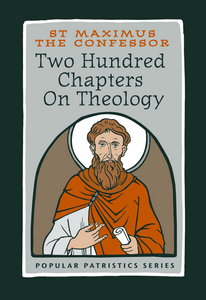
Maximus the Confessor is quickly becoming one of my favorite historical theologians. His characteristic Christocentrism, his healthy balance of apophatic and kataphatic theology, and his descriptions of the Christian life all lift up the soul to heights of love and peace which few contemporary Christian paperbacks have the ability to do. I am reminded of C.S. Lewis’s insistence, in his famous preface to Athanasius’s On the Incarnation, that, nine times out of ten it is the time-tested, ancient theological treatises which offer more spiritual encouragement than anything coming out in print today (with a few exceptions). I find the same to be true when reading Maximus; you can tell the man loved God, loved people, and found much growth in the contemplation of divine things. I myself benefit by allowing my soul to be lifted up by his theological movements.

When my wife and I were perusing the humungous Oxford book store, Blackwells, I came across a Patristics section which took up most of my time that day. While there, I purchased SVS Press’s copy of Maximus’s Two Hundred Chapters on Theology. It is turning out, in only the first few pages, to be enormously rich and spiritually and theologically precious to me. There is much gold to be dug up, here.

Maximus begins his work by setting up a few guard rails about God’s absolute otherness, using terms I have only ever read Dionysius use (i.e., “super-substantial” and “absolutely above/beyond essence or substance”). He then goes on to describe the inner life of the one whose spiritual/thought life is continually disciplined to draw itself up to God:

1.13 He who has dazzled the intellect with divine thoughts, and has accustomed his rationality unceasingly to celebrate the creator with divine hymns, and has hallowed his sensory perception with unadulterated mental representations – such a one has added to the natural beauty in accordance with the image, the deliberate good in accordance with the likeness.”[1]

You can see here the patristic conception of image/likeness in Maximus, as well as a definition of deification as a mystical union or sharing, an unutterable love-relationship which God and Man continually keep up with one another (based on both God’s and Man’s dual initiative). Reading 1.13 reminded me of a similar statement of Maximus’s in his Ambiguum, where his explanation of mystical union revolves around something like the idea of being fully encompassed by the Other. To Maximus, our union with Christ is a full-encompassing, where, though we keep our essential humanity intact, we are known and are seeking to be more known only in line with those characteristics and particularities as filtered through God’s gifting of them. In other words, we refuse to be known or encompassed apart from our own total-identification and encompassing by Christ. Glorious.

Three “chapters” later, Maximus illustrates a provocative picture of salvation which further attempts an elucidation of deification. He writes,

“And he who has been purified, is illuminated; and he who has been illuminated is made worthy to lie with the bridegroom Word in the chamber of the mysteries.”[2]

Maximus chooses to relate our union with God to the sexual union which a husband and wife share on their wedding night. He caveats that image, though, with the “mysteries” as the place wherein that sexual union takes place. Now, by “mysteries” he means the sacraments of the Church: the Eucharist and Baptism. So, the sacramental mysteries are the means through which God unites himself, continually, to his people. Without a consistent participation on the part of the Bride (the Church) in the mysteries (the Eucharist), the Bride and Groom (the Word, Christ) are not in full union and their relationship is not initiated or brought to completion. Again, glorious.

In case you thought Maximus the Pelagian, however, he insists, later on in the first forty or so chapters, that:

1.31 Never can a soul reach out towards the knowledge of God if God himself does not, having condescended, lay hold of it and lead it up to himself. For a human mind is not strong enough to ascend such a distance – as if to seize for its part some divine illumination, if God himself did not draw it upward, as far as is possible for a human mind to be drawn upward, and enlighten it with divine radiances.”[3]

Such union, mediated to the Bride in the mysteries, is more rightly said to be initiated and brought to its end by the Groom, i.e., Christ. It is Christ who reaches toward the Christian and pulls him up to union with Himself. Christ gets the credit and the glory for the Triune work he completes in us, using the mysteries, to do such work.

Amen, amen, and amen!

For those who want a deep spiritual nourishment beyond the steady flow of contemporary, popular Christian literature (much of which misses the point), turn to the ancient fathers for the golden honey of biblical wisdom. Turn to the Tradition, and be satiated.


[1] St. Maximus the Confessor, Two Hundred Chapters on Theology (Yonkers, NY: SVS Press, 2015), 51.

[2] St. Maximus the Confessor, Two Hundred Chapters on Theology (Yonkers, NY: SVS Press, 2015), 53.

[3] St. Maximus the Confessor, Two Hundred Chapters on Theology (Yonkers, NY: SVS Press, 2015), 61.

Uncategorized

Dionysius the Areopagite on the Most Holy Trinity

St. Dionysius the Areopagite, also known as “Pseudo-Dionysius” in more scholarly circles due to the fact that he was almost definitely not the Dionysius mentioned in Scripture as the disciple of the Apostle Paul, is a Christian theologian who garnered massive subsequent theological influence in both Western and Eastern theology. His treatise On the Divine Names is a meditative Trinitarian exposition on the central doctrine of the Christian faith, the Trinity. While the language Dionysius uses to describe human participation in the Triune God can be, at times, oddly-phrased, his theologizing stands as a cornerstone of later theological thinking and by itself serves to bring the reading Christian into further contemplative union with his God, who is Father, Son, and Spirit.

The second chapter, subtitled “Letter to Titus: Concerning common and distinctive theology, and what is the Divine Union and distinction” is uniquely worshipful, and offers us some theological meat to chew on. A feature of Dionysius’s theological vocabulary here which most excites reverence for his project in me is the frequent use he makes of what I call “super” terms. Since, for Dionysius (and the rest of the Christian Tradition), God is “beyond being” – i.e., beyond existence and non-existence, being and non-being – God can therefore rightly be called “superessential” or “supersubstantial.” God is “super essential,” then, because he is “above essence” or “substance-above-substance.” Substances or essences for Dionysius constitutes all that exists in the creaturely realm, i.e., everything that is not God; since God is not a creature and therefore not a part of the “substantial” or “essential realm,” he is therefore “super substantial.” I have yet to hear a contemporary theologian use such a term, but I believe terms like these – which make quick work of the Creator-creature distinction once its meaning is explicated – can help explain in concise ways God’s wholly otherness.

Before beginning his explication of the Trinitarian-ontological relations, he prefaces in section II,

“By taking thence the Divine revelations, as a most excellent canon of truth, we strive the guard the things lying there, in their native simplicity and integrity and identity – being ourselves guarded in our guard of the Oracles [Scriptures], and from these receiving strength to guard those who guard them.”[1]

By thus beginning, Dionysius tells his readers that the Trinitarian dogma he will then go on to describe has their foundation and source in the “Oracles” themselves. The Trinity and the Bible are inseparable.

In case anyone thought he only relied on an individualistic reading of the Oracles, he begins his explication in section IV by writing that his chronicles function within the Tradition which he inherited, stating,

“The sacred instructors of our theological tradition call the ‘Divine Unions’ the hidden and unrevealed sublimities of the super-unutterable and super-unknown Isolation; but the ‘distinctions,’ the goodly progressions and manifestations of the Godhead; and, following the sacred Oracles, they mention also properties of the aforesaid ‘Union’; and again of the distinction, that there are certain specific unions and distinctions… there is kindred and common to the One-springing Triad… the Oneness above source of one.”[2]

There is such richness packed into this portion I couldn’t possibly cover it all, but his theological vocabulary continues to arrest me. The Triune being, he argues from the Tradition, is “constituted” by a “super-unknown Isolation” and also by “goodly progressions and manifestations of the Godhead.” Translated into later Trinitarian parlance, God is Father who generates forth the Son and spirates the Spirit. The monarchy of God, i.e., the Father, is the “One” who is “springing” within that life of the “Triad”; but that springing forth is a “Oneness above source of one,” i.e., in unutterable and unspeakable (apophatic) generation within God’s ontology.

He clarifies in section V:

“But there is a distinction in the superessential nomenclature of God, not only that which I have mentioned, namely, that each of the One-springing Persons is fixed in the union itself, unmingled and unconfused; but also that the properties of the superessential Divine Production are not convertible in regard to one another. The Father is sole Fountain of the superessential Deity, since the Father is not Son, nor the Son, Father; since the hymns reverently guard their own characteristics for each of the supremely Divine Persons.”[3]

Let us not forget the distinctions within the Godhead, Dionysius reminds us. The Father does not stand alone as a unitary monad without inner distinction, but is eternally the Father-issuing-forth-both-Son-and-Spirit; neither the divine ontology nor any of the Christian theological pronouncements makes any sense without such inner-life distinctions between Father, Son, and Spirit. The Christian faith rests on such distinctions. “How these things are,” though, Dionysius says, “is neither possible to say, nor to conceive.”[4] Don’t think about it; shut up and worship the God who is Father, Son, and Spirit!

Dionysius finishes his second chapter by clarifying one final point: that though the Names of God exclusively apply to each “distinct” – a word I hesitate to use – Divine Person, the attributes of divinity can be rightly said to apply to each: Father, Son, and Spirit. He writes,

“These, the mutual and common distinctions, or rather the goodly progressions of the whole Deity, we will endeavor to the best of our ability to celebrate from the Names of God, which make them known in the Oracles;-first, having laid down, as we have said, that every beneficent Name of God, to whichever of the supremely Divine Persons it may be applied, is to be understood with reference to the whole Supremely Divine wholeness unreservedly.”[5]

Glory be to our Triune, unity-in-diversity God for all His manifold graces.


[1] Dionysius the Areopagite, The Collective Works: St. Dionysius the Areopagite, Trans. Rev. John Parker (Neptic Fathers Publications, 2023), 12.

[2] Dionysius the Areopagite, The Collective Works: St. Dionysius the Areopagite, Trans. Rev. John Parker (Neptic Fathers Publications, 2023), 13. 

[3] Dionysius the Areopagite, The Collective Works: St. Dionysius the Areopagite, Trans. Rev. John Parker (Neptic Fathers Publications, 2023), 14. 

[4] Dionysius the Areopagite, The Collective Works: St. Dionysius the Areopagite, Trans. Rev. John Parker (Neptic Fathers Publications, 2023), 16.

[5] Dionysius the Areopagite, The Collective Works: St. Dionysius the Areopagite, Trans. Rev. John Parker (Neptic Fathers Publications, 2023), 19.