Uncategorized

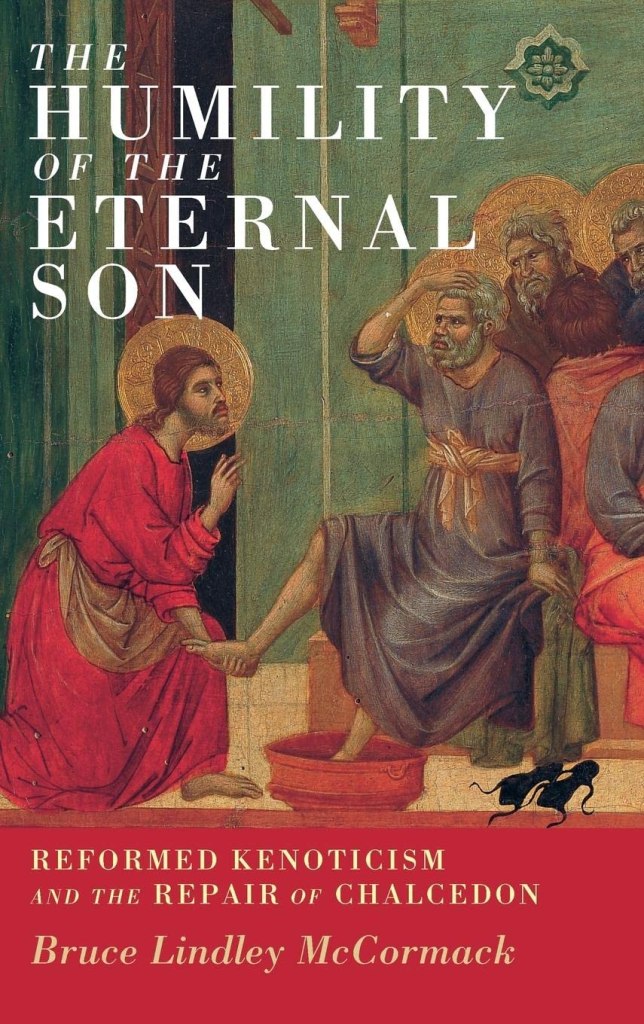
Bruce McCormack’s The Humility of the Eternal Son: Some Quotes and Thoughts

I am much too late to the game with Bruce McCormack’s study on Christology, The Humility of the Eternal Son. I am thankful to be done with it finally so that I can share a few quotes from the book and comment on the overall experience. The quotes I will be pulling from are from the very last chapter where he is summarizing his argument and responding to practical rebuttals to what he is proposing.

McCormack here, as hinted at in the subtitle, attempts a “repair” of the Chalcedonian Definition; as a faulty statement, he claims, about the full truth regarding Jesus Christ’s ontological makeup as both God and human, the Chalcedonian Definition has at its core a “logical aporia” (his term). By “logical aporia” he means a contradiction in the Definition which ultimately only pays lip service to the “side” of Jesus Christ that is fully human. McCormack explains this by writing that the Definition is funded by “Cyrilline” presuppositions concerning divine being. The fault in the Definition, grounded in these presuppositions, is that it claims the reality of Jesus is constituted by the Eternal Logos’s instrumentalization of human flesh. Although the orthodox theologians affirmed that – against Apollinaris – the Logos had taken on the entire reality that is human nature, in function they refused to concede that the Eternal Logos was affected by the union like the human nature was affected in being assumed by the Logos. The problem, ultimately, for McCormack, is how to situate the Christological subject. What constitutes, ontologically, the reality that is Jesus Christ? To McCormack, if the Logos is not affected by Jesus as Jesus is affected by the Logos, then the Definition’s claim that it safeguards the integrities of both natures is empty and groundless. This is so because “the attributes of both ‘natures’ must be ‘communicated’ to the Logos is he is to be the single Christological subject.”[1]

When I read the first chapter of this book, I felt both perplexed and excited. McCormack is telling his reader he aims to wade through the history of theological reflection, attempt a thorough investigation into a foundational doctrine of the Church, and then propose an essential reformulation of it. As someone interested in the history of theology, I was thrilled to slug through this book even though I had reservations about the prospects of its success. I get the sense that McCormack strays left of me, so to speak, in regards to his reverence for the Tradition. I will temper that claim, though, with an insightful remark of his:

“My point is this: we must be more ‘Chalcedonian’ than many of today’s defenders of Chalcedon are. We must not rest content with repeating words whose significance we have only dimly understood. We must do our Christology in the light of an appreciation for both the promise of Chalcedon and its limitations – and in that way, be truly ‘guided’ by it.”[2]

Amen and amen.

Perhaps the primary thought I came away with when reading this book – which is also how I have felt after putting down books by Torrance, Webster, et al. – is that this is an example of a theologian who has learned well from his master in the field, the inimitable Karl Barth. In McCormack’s (and Webster’s) case theirs wasn’t a direct, personal influence, but they nonetheless have been schooled in the fruitful halls of Barth’s post-metaphysical thought. Theological reflection, in the Barthian mode, is one I have always been convinced is creatively receptive. Theology is all the better for it.

What follows are a few quotes from his last chapter which do the work of appropriate theological speech:

“In the place of two discreet (substantially conceived) ‘natures’ subsisting in one and the same ‘person,’ I am going to posit the existence of a single composite hypostasis, constituted in time by means of what I will call the ‘ontological receptivity’ of the eternal Son to the ‘act of being’ proper to the human Jesus as human. ‘Ontological receptivity,’ it seems to me, is the most apt phrase for describing the precise nature of the relationship of the ‘Son’ to Jesus of Nazareth as witnessed to in the biblical texts we treated. I am going to argue further that it is the Son’s ‘ontological receptivity’ that makes an eternal act of ‘identification’ on the part of the Logos with the human Jesus to be constitutive of his identity as the second ‘person’ of the Trinity even before the actual uniting occurs. This is what I believe to have been missing in Jüngel and Jenson. The ‘Son’ has as ‘Son’ an eternal determination for incarnation and, therefore, for uniting through ‘receptivity.’ He is, in himself, ‘receptive.’”[3]

“Divine power, then, should never be understood in abstraction from what God actually does. It should be understood as the ability to accomplish all of that which God wills to do in the way God wills to do it – and nothing more. ‘Metaphysical compliments’ are excluded where the triune ‘being’ of God is understood to be constituted in purpose-driven trinitarian processions.”[4]

“The love that God is, is not love in general but a highly concrete and very specific kind of love. It is a self-giving, self-donating, self-emptying love. And it is the eschatological being of the Christian in Christ that they are called, even now, to imitate, to live from and towards, in their daily lives.”[5]

And finally:

“For what God is, God’s ‘essence’ is to be found in God’s livingness and nowhere else. Where God is concerned, we may not begin with the question of what God is or even with the question of who God is. We must begin with the question of the place of God’s livingness. Only there can we learn the answers to the questions of who and what God is.”[6]

Soli Deo Gloria


[1] Bruce McCormack, The Humility of the Eternal Son: Reformed Kenoticism and the Repair of Chalcedon (Cambridge, UK: Cambridge University Press, 2021), 52.

[2] Bruce McCormack, The Humility of the Eternal Son: Reformed Kenoticism and the Repair of Chalcedon (Cambridge, UK: Cambridge University Press, 2021), 29.

[3] Bruce McCormack, The Humility of the Eternal Son: Reformed Kenoticism and the Repair of Chalcedon (Cambridge, UK: Cambridge University Press, 2021), 252.

[4] Bruce McCormack, The Humility of the Eternal Son: Reformed Kenoticism and the Repair of Chalcedon (Cambridge, UK: Cambridge University Press, 2021), 267.

[5] Bruce McCormack, The Humility of the Eternal Son: Reformed Kenoticism and the Repair of Chalcedon (Cambridge, UK: Cambridge University Press, 2021), 276.

[6] Bruce McCormack, The Humility of the Eternal Son: Reformed Kenoticism and the Repair of Chalcedon (Cambridge, UK: Cambridge University Press, 2021), 296.

Uncategorized

The Onto-Relational Trinity: Why Your Trinity Diagrams Don’t Tell the Truth About Who God Is

“One Substance, Three Persons.”

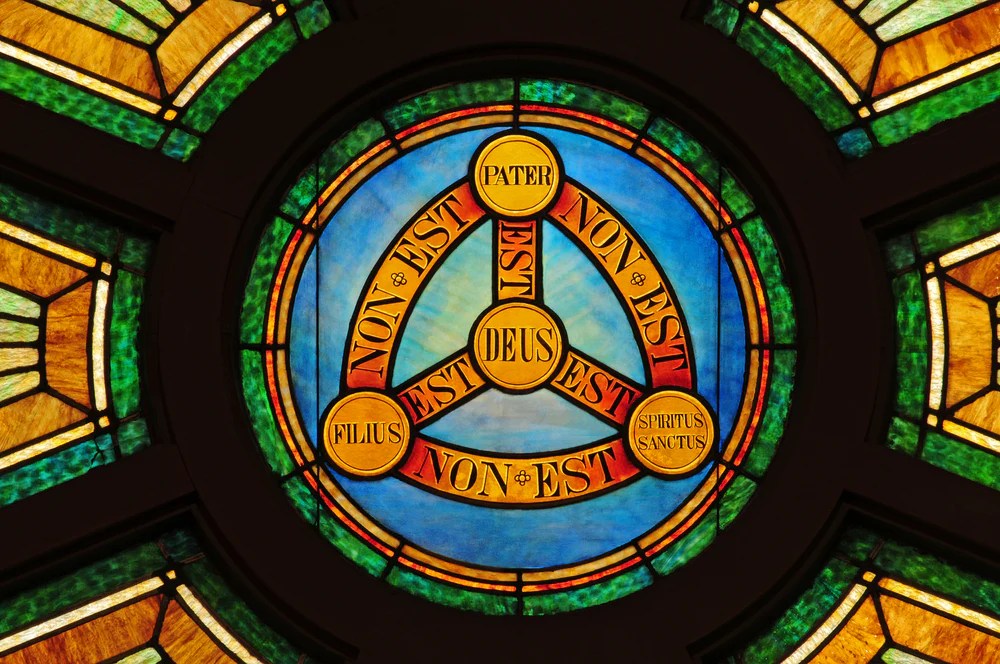
Such is the mantra used virtually across the board in many Western churches when tasked with describing the ontological makeup of God. Purportedly, the Christian God is Trinity: He is one God made up of Father, Son, and Spirit. How this is the case is usually chalked up to “mystery” and “unknowability” (two helpful terms to be sure but usually used as cop outs from further theological reflection). Queue the diagram which supposedly helps with the comprehension of such a mysterious reality:

Pictured are three circles, each titled with the name of one of the Divine Persons, positioned around a fourth circle entitled “God.” Touching each circle are lines labeled “Is Not” connected at both ends between each person, and between each person and the “God” circle in the middle are lines labeled “Is.”

This diagram is not helpful, and here’s why.

Late theologian John Zizioulas, in his landmark book on Patristic theology and Personhood called Being as Communion, writes:

“The idea took shape in Western theology that that which constitutes the unity of God is the one divine substance, the one divinity; this is, as it were, the ontological ‘principle’ of God. But this interpretation represents a misinterpretation of the Patristic theology of the Trinity. Among the Greek Fathers the unity of God, the one God, and the ontological ‘principle’ or ’cause’ of the being and life of God does not consist in the one substance of God but in the hypostasis, that is, the person of the Father. The one God is not the one substance but the Father, who is the ’cause’ both of the generation of the Son and of the procession of the Spirit. Consequently, the ontological ‘principle’ of God is traced back, once again, to the person.”[1]

What Zizioulas does here, remarkably, is point out that in the theology of the Cappadocian Fathers – the most significant theologians of the Trinity other than Athanasius – the Person acts as the center of God’s substance, and not the idea of “substance” or “Being” as applied to God. In other words, instead of Being holding priority in Trinitarian language – as it did in the Western Church, over time – it should in fact be the Person-in-relation that holds priority, particularly the Person of the Father (who is the Ground, the Unoriginate Originator of the Son and Spirit). There is no fourth circle labeled “God” in God; there is no fourth thing in God in which the three participate. Such a conception – which is exactly what the diagram above is relating – makes Greek ontology, rather than the God revealed in Jesus Christ, prior in Trinitarian thinking. Remarkably, what this correction reaps for Christian theology is that it means Being in God is relational.

God cannot be conceived, the Fathers tell us, except as Being-in-relation, and, hence, Being-in-relation is who the God revealed in Jesus Christ is. There is no such “supreme being” in existence other than the one that Jesus Christ reveals, a claim contrary to the mountain of literature on Western monotheism’s supposed overlapping belief systems. There is no unmoved Mover who can comfortably be ascribed as the God and Father of our Lord Jesus Christ. That God is the God of the philosophers, but not the Christian God. The Christian God finds His Being in the Person of the Father, who in eternity begets His Son and spirates His Holy Spirit. The Being of the Son and the Spirit, therefore, live as derived-Being, as Being-from, not as Originator-of like the Father. Yet, the Father, too, is Being-in-relation; there was never a time when the Father was not with His Son and His Spirit. The Father, though underived in His Being, is still Being-in-relation and not exclusively Being-in-Himself. All of this lends itself to what Torrance calls a “dynamic” conception of God’s ontology (which is really the biblical conception) rather than a “static” formula as attributed to the West’s thinking following Augustine.

Zizioulas continues, a few pages later:

“The manner in which God exercises His ontological freedom, that precisely which makes Him ontologically free, is the way in which He transcends and abolishes the ontological necessity of the substance by being God as Father, that is, as He who ‘begets’ the Son and ‘brings forth’ the Spirit… For this communion is a product of freedom as a result not of the substance of God but of a person, the Father–observe why this doctrinal detail is so important–who is Trinity not because the divine nature is ecstatic but because the Father as a person freely wills this communion.”[2]

Exactly, sir! Here here! In other words, we must look to the Father as the “fountainhead” – a title the Fathers gave Him – of divinity, the one Paul calls “God” (θεοs) explicitly in all of His Trinitarian introductions. The sense this makes of Paul’s statements cannot be clearer:

“Grace to you and peace from God our Father and the Lord Jesus Christ” (1 Cor. 1:3)
“Grace and peace to you from God our Father and the Lord Jesus Christ” (Gal. 1:3)
“Grace and peace to you from God our Father and from the Lord Jesus Christ” (Rom. 1:7b)

Like Zizioulas argues, Paul always gives the Father the title “God,” not because (as the Arians believe) He is the only truly Divine Person but because Divinity rightly originates in Him. Jesus Christ is labelled “Lord” and the Holy Spirit “Holy” because of their rightful placement on the God-side of the God-world divide, but within that God-side there exist definite two-way relations which constitute God as Trinity: namely Origination (from the Father to the Son and the Spirit, received by the Son and Spirit), Generation (from the Father to the Son, received by the Son), and Procession (from the Father… to the Spirit, received by the Spirit).

The last significant thing Zizioulas writes in relation to this discussion he writes on page 46:

“The expression ‘God is love’ (1 John 4:16) signifies that God ‘subsists’ as Trinity, that is, as person and not as substance. Love is not an emanation or ‘property’ of the substance of God–this detail is significant in the light of what I have said so far–but is constitutive of His substance, i.e., it is that which makes God what He is, the one God. Thus love ceases to be a qualifying–i.e., secondary–property of being and becomes the supreme ontological predicate. Love as God’s mode of existence ‘hypostatizes’ God, constitutes His being.”[3]

Boom. Zizioulas here articulates what I have found so hard to find the language for: that John’s statement about God as love is not some fluffy though true affirmation of God’s character, but Love is Who He is. Seen in the light of this discussion on God’s relations, John’s statement makes all the more sense. In other words, “God is love” means “God is Trinity.” Therefore, the core nugget of truth at the heart of the Apostolic Christian Tradition – and hence the Gospel – is that God is relational in his very Being of Being, Zizioulas argues, and in Jesus Christ and by the Holy Spirit we are brought into that very relational heart of God, bid by the Father to become united to the Lord Jesus Christ by faith affected in us by His Spirit. May our theologizing, our communal experience as “eucharistic communities” (his term), and our very lives be shaped by the relational heart of the God revealed in Jesus Christ, who is Trinity.

Soli Deo Gloria


[1] John D. Zizioulas, Being as Communion: Studies in Personhood and the Church (Crestwood, NY: St. Vladimir’s Seminary Press, 1985), 40-41.

[2] John D. Zizioulas, Being as Communion: Studies in Personhood and the Church (Crestwood, NY: St. Vladimir’s Seminary Press, 1985), 44.

[3] John D. Zizioulas, Being as Communion: Studies in Personhood and the Church (Crestwood, NY: St. Vladimir’s Seminary Press, 1985), 46.

Uncategorized

The Ox and the Troll: A Poem

A groaning cry doth issue forth
From a young, dumb thinker’s mind hole,
Sputtering from a butter’s worth
Of a troll’s stinky green grass knoll.

Now this troll’s tarts are quite the treat,
Do not think me one to quarrel,
I myself am happy to bleat
And give the troll dogmatic laur’ls.

The boy, though, he needs to be fed
A clear, straighter, cleaner diet,
One not filled with repeating lead,
Or so I said to him, “Try it!”

“Try the one the Latins love well,
It may have a few bumps or boils,
Yet the minty taste just might quell
Your mind’s hard, laborious toils.”

The boy took my advice, he drank,
Sputtering then soothily tame,
At first his smell was putrid, dank,
Then a wafting o’ Turqoise came.

I peered down at his glass, I saw
The outlined shape of an ox,
As the boy stood up straight and tall,
I could see the hem of blue socks.

He marched, with the glass, to the troll,
And told him, starkly, one loud thing:
“Sir, you should just give up control
Of the chaotic style you bring.”

– “The Ox and the Troll” (5/23/24)
(i.e., Aquinas and Barth)

Uncategorized

“Language,” a Free Form Poem

On my old Wix blog, I would post poems I had written every once in a while. Well, my journal has seen an uptick in the amount of poems written in it for the last few weeks so I felt I would share one here.

—-

Language, words, are a railroaded track of
love, comfort, or terror,
Harboring or harvesting the mind’s thick-bodied stores,
Able to glorify, magnify, fright, or infiltrate,
and balm, bleed, bore, or blaze
our beings-in-the-world.
I give myself wholeheartedly to the
Word in the beginning.
To lay down those tracks make you a skilled or lazy wizard,
a spinner of speaking whose products can be handed out to heal
the rough and tumble of a life spent sorrowing.
But to be a skilled forger of phrases can paint the pretty leaves purple again;
as in, reimbue life with a radiant raising of religious roofing.

Soli Deo Gloria

Uncategorized

The Trinity Solves Everything: John Webster On Hermeneutics and Theology

The late John Webster was a shining example of a well-informed, biblical, and unashamedly Protestant theologian whose integration of Karl Barth’s theological emphases with patristic and Reformational insights made him one of the few theologians (after Torrance) whose writings are actually worth reading. I have only read one other book by Webster, which was his commentary on and summary of one of Barth’s lesser-known Lutheran mentees, Eberhard Jüngel. That is a fun and fascinating book in its own right. Never had I read a full-fledged treatise of his, however; but boy am I glad I did.

Webster’s Holy Scripture: A Dogmatic Sketch deserves to sit on the shelves of every serious-minded Christian theologian today. Though some might think it distasteful for its obvious Barthian influence, it does a fantastic job of putting forth a rock solid doctrine of Holy Scripture as grounded in and permeatingly-informed by the telos and centre of all Christian theology: the Christian doctrine of the Triune God. In the first chapter, Webster writes:

“In thesis form, the argument to be set out here may be stated thus: revelation is the self-presentation of the triune God, the free work of sovereign mercy in which God wills, establishes and perfects saving fellowship with himself in which humankind comes to know, love and fear him above all things.”[1]

Since Holy Scripture is the locus of God’s self-revelation, the doctrine of revelation is synonymous with (or, perhaps, goes alongside) the doctrine of Holy Scripture. Every doctrine, though, must flow from and return to the doctrine of God’s Triune Being. Webster’s point throughout his little treatise is to say what Barth says at the beginning of 2/I: that the God referred to in the biblical witness is never separated out and generalized from the uniquely-acting God in Jesus Christ and the history of Israel. In other words, there is no acting or revealing of God apart from His Being in Jesus Christ, i.e., apart from the Being of the Triune God. There is no biblical God apart from the Triune God.

He continues,

“Revelation, therefore is identical with God’s triune being in it’s active self-presence. As Father, God is the personal will or origin of this self-presence; as Son, God actualises his self-presence, upholding it and establishing it against all opposition; as Holy Spirit, God perfects that self-presence by making it real and effective to and in the history of humankind.”[2]

Then:

“The argument so far can be summed up by saying that a Christian theology of revelation becomes dysfunctional when its bonds to the doctrine of the Trinity disintegrate; consequently, that rebuilding a doctrine of revelation is inseparable from attention to the properly Christian doctrine of God.”[3]

Webster spends a significant amount of space in Holy Scripture performing two simultaneous movements. The first is the positive construction of his argument outlined above: that the doctrine of the Trinity is inseparable from any truly Christian doctrine of revelation, Holy Scripture, and the hermeneutical task. The second is the analysis and criticism of the ways in which Modernist thought has crept into the Church’s thinking concerning how we are to engage with Holy Scripture. The reason why this book was written – the reason Webster felt the need to reintegrate or reinstate the doctrine of the Trinity as the central theological paradigm – is that it was his perception that Modernist hermeneutics was hampering the Church’s ability to deal rightly (i.e., Christianly) with its own inspired Text. Such a theological instinct he shared with Barth.

Webster takes the scalpel right to the wart:

“For – to put the matter at its simplest – the tendency of modern intellectual culture to bifurcate [a word Torrance loved to use] the transcendent reality of God and the creaturely texts of the Bible can only be countered by appeal to a Christian doctrine of the trinitarian works of God… Such Christological-pneumatological considerations help prevent the theology of Scripture from being overwhelmed by a burden which has sorely afflicted the intellectual conscience of modern Western divinity (especially Protestant divinity), which continues to haunt us, and for which there has emerged no commonly agreed resolution.”[4]

Webster’s solution? Bring it back to the Trinity. Such has been the Tradition’s answer, and such should our answer be. If we read, like our forefathers in the faith, Holy Scripture as God’s Trinitarian self-revelation – nothing more or less than that – then we will put both the doctrine of revelation and the doctrine of the Trinity in their proper places in regard to our theological speaking.

Soli Deo Gloria


[1] John Webster, Holy Scripture: A Dogmatic Sketch (Cambridge, UK: Cambridge University Press, 2003), 13.

[2] John Webster, Holy Scripture: A Dogmatic Sketch (Cambridge, UK: Cambridge University Press, 2003), 14.

[3] John Webster, Holy Scripture: A Dogmatic Sketch (Cambridge, UK: Cambridge University Press, 2003), 17.

[4] John Webster, Holy Scripture: A Dogmatic Sketch (Cambridge, UK: Cambridge University Press, 2003), 18.

Uncategorized

Church Dogmatics 2/I, The Journey So Far (Pt. 2)

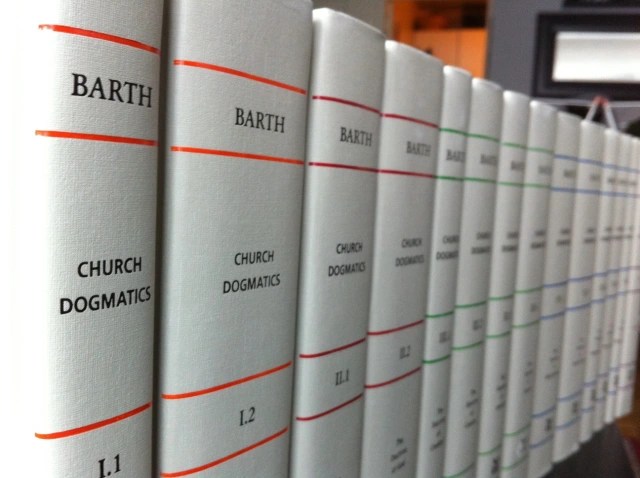
As I’ve written in one of my most recent blog posts, I recently began the long journey towards completing Barth’s Church Dogmatics. I finished reading the first volume, 1/I, a few months ago. Since then, I have tried to supplement my reading with various smaller theological, sociological, and creative works (like John Webster’s Holy Scripture book, the new How to Know A Person by convert David Brooks, and Lewis’s Narnia series), but felt the need to get back on the road I vowed to trek – even if it ends up being a dead one. Since I thought going immediately into 1/II a bore, I thought I would skip to 2/I: the one which supposedly houses Barth’s unique exposition on the Reformed doctrine of election. I have yet to reach that particular part in it yet.

Regardless, I am glad I came back to Barth. The more I think about his writing, the more I ask myself on a daily basis “What would Barth think about this?” Hence, the more I find my view of faith evolving, transforming, and improving, since, in the last analysis, Barth’s own primary question throughout his theological writings is “What would Christ think about this?”, or more accurately, “What gives God the most freedom to be the God He has revealed Himself to be, in Christ, in this?” Such a question is bound to reap good and positive spiritual results in the Christian’s life. Such has been the case with me.

That’s about it right now. No quotes in this one. On a personal note: the steady stream of Word, Sacrament, and Lenten practice taken up by me and my wife has been a satiating stream of spiritual goodness. Whenever I return to Barth – i.e., whenever I return to Barth’s writings on the goodness, glory, and exclusive revealing power of the God revealed in the Christ we have been hearing and partaking of – I am reminded, all over again, of the goodness of the Shepard who leads us.

Soli Deo Gloria

Uncategorized

The Theologian as Church Grammarian

In evangelical-theological literature right now, the idea that theologians are “church grammarians” is a hot one. The theologian, this literature says, is one who actively seeks to test, challenge, and refine the Christian church’s language about God so as to bring it in conformity with God’s being as revealed in Jesus Christ. Especially among those evangelical theologians open to the thought-world of figurehead theological thinkers like Barth, Torrance, Webster, et al., this idea holds a central prominence (for good reason). To me, this idea seems thoroughly helpful and downright correct.

See, after Karl Barth, the idea of the theologian as church grammarian has taken on a special role. What Barth did was bring this definition into clearer focus and consideration: to him, theologians of the past understood their task as something more akin to philosophical speculation, rather than as the construction and refinement of theological terminology that served the church’s mission to upbuild the saints and evangelize the world. At the end of the day, the theologian must not think either too little or too much of their task, since they are both 1) unable to speak univocally (i.e., completely in line with the reality) of God, and 2) commissioned by God with doing what point number one rightly claims is impossible: to speak rightly and truly (and humanly) about God as God has so revealed himself to humanity. For Barth, the theologian accomplishes his task when he so conforms Christian language to the God revealed in Jesus Christ that the church is able to rightly understand herself and her mission in light of God’s speech about her. In other words, the theologian is a good theologian when he conforms the church’s speech about God with God’s own speech about himself.

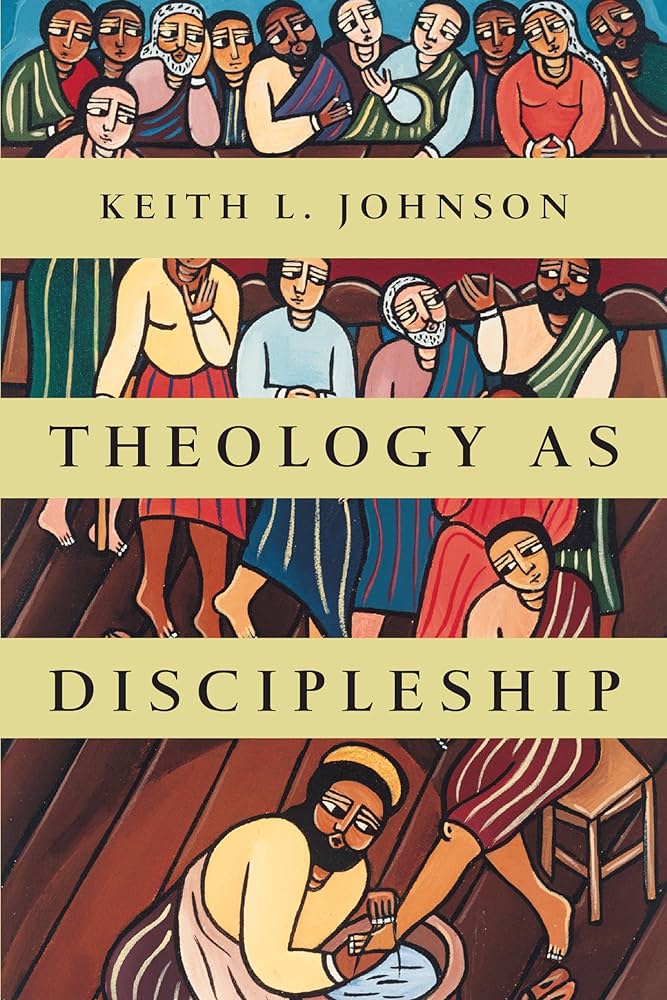
Keith L. Johnson, in his marvelous book about these very issues, writes:

“God himself must show us how to use [our theological language] rightly, and he does so in and through Jesus Christ…. Even as we know the truth about God, we always do so on God’s terms… We can rightly apply [our words about God] to God as long as we do so in line with the way God has done so in Christ. Our thinking and speaking about God will be true if our words correspond to who Christ is, what he has done and what he continues to do within created history. This means that our primary task as theologians is to bring the meaning of the words we use for God into conformity to Christ. We measure each one by his being, actions, teaching and promises… Our task as theologians is to apply the same treatment to every single word we use for God. Doing so is part of the way we ‘take every thought captive to obey Christ’ (2 Cor. 10:5)… As Barth puts it, by guiding our theological language, ‘Jesus Christ himself sees to it that in him and by him we are not outside by inside… He sees to it that what is true in him in the height is and remains true in our depth.’”[1]

Boom. The theologian is the one who takes the scrappily-taped-together wordage of the spiritual soldiers on the ministerial frontlines and fixes it, helping those same ministers see the benefit and coherence of Jesus Christ anew, in the words of scripture, tradition, and contemporary theological insights. May the theologian use herself for the glory of God and the upbuilding of her sisters and brothers.

Soli Deo Gloria


[1] Keith L. Johnson, Theology as Discipleship (Downer’s Grove, IL: InterVarsity Press, 2015), 80-83.

Uncategorized

The Centrality of the Eucharist in the Christian Liturgy: A Reflection

My wife and I recently began our move over to the Anglican Communion from the low-church Baptist world.

This move was informed by numerous changes in conviction on a myriad of faith matters. The two primary channels through which I, personally, foresaw this move had to do with what I was reading in the Fathers and how I was viewing worship – particularly the elements of worship that made up my wife’s and my liturgical experience at the time. In other words, how I came to view the act of communal worship was out of step with how we were worshipping in our Baptist church. Rising above all the different layers of conviction-change taking place in us, the sacrament of the Eucharist had affected in us the most passionate response.

The Fathers are virtually unanimous in their assertion that what makes a liturgy a Christian liturgy is the inclusion of two elements: the Word and the Sacrament. Without either of these elements – otherwise explained as the preaching of the Bible and the administration of the Eucharist – a gathering of Christians together for communal worship is less than truly and fully Christian worship.

Why are both necessary? As a (former?) Baptist, I’m tempted to place a heavier importance on the Word than on the Sacrament; and in a way, this is right. Philosophically speaking, without the Word – the way in which the Sacrament’s intelligibility is disclosed – the Sacrament is not “brought home” to the congregation’s hearts and minds. Without the Word, the Sacrament is incomprehensible: the bread and the wine are not recognized for their unifying, soul-nourishing affects without a minister explaining that such is the case. Liturgically speaking, the Word is also very important: the homily or exposition on Scripture (determined either in step with the liturgical calendar or an expositional sermon series) is vital to hear what the Triune God has to say to His people.

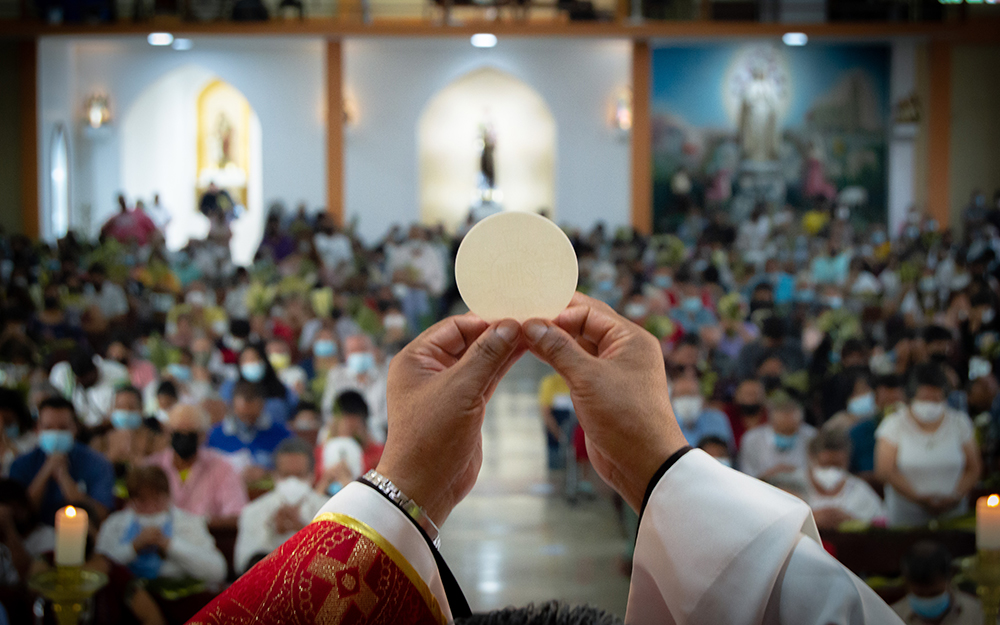
All of these very true things are unbalanced, however, if the Sacrament is not celebrated. And here is why: the unity of the Church, as explicated by the Fathers, is not around the priest but around the Sacrament. Furthermore, the Eucharist is the location whereby God so acts upon His people so as to affect their spiritual nourishment through the Body and Blood of our Lord. The Eucharist is the foretaste of the “marriage supper of the lamb,” and hence the meal that brings the family of God together. Yet, it is also the food that comes down from heaven, the means of grace whereby God Himself spoonfeeds His children through His appointed priestly agents of grace. When the earliest Christian theologians spoke about the unity of the Church and the location of God’s constant acting-upon to nourish His loved ones, they spoke about the Eucharist (and the Bishop, but that’s another blog post).

Commenting on the theological milieu of the 20th century Catholic theologian Henri De Lubac, Sacramental theologian Hans Boersma remarks:

“He [De Lubac] maintains that when, by faith, we share in the one eucharistic body, the Spirit makes us one ecclesial body… the Eucharist makes the church… De Lubac [says]… You focus so much on what makes a legitimate Eucharist, and you zero in so unilaterally on the eucharistic body, that you forget that the sacramental purpose of the eucharistic body is to create the ecclesial body.”[1]

Then, on the next page, Boersma continues:

“The goal of the celebration of the sacrament was the unity or communion of the church…. For the medieval tradition, it was not an either/or option. Communion of holy things – meaning, communion with the body and blood of Christ – was related to the communion of saints. The one caused the other and was related to it in a sacramental manner.”[2]

So. The Word is indeed an integral piece of the Christian liturgy. In the Anglican tradition (along with the Catholic, Orthodox, Lutheran, Methodist, etc.), the practice of responsive Lesson-readings makes it so that the Word of God is rhythmically-placed throughout the service. Put these alongside the homily (also included in the above traditions) and the Christian liturgy is indeed Word-saturated. Without the Eucharist as the climax of the liturgy, though, the service becomes much more about what we (or, in this case, the pastor) do/does, rather than about how God is coming to meet us and unite Himself to us in these humble elements of bread and wine. The Eucharist is rightly central to the Christian liturgy in that it places the primary emphasis on how God is ministering/has ministered to us in Christ, rather than on how we ourselves are ascending to God through our liturgical (or expositional) prowess.

The Church is not only the people of God, but a hospital for sinners. Every hospital has consistent, particular medicines administered to the patients throughout the days, weeks, and months of their stay. The Sacraments are the medicine of the people of God during their stay in this sinfilled reality: the means whereby God imparts the grace of our Lord Jesus Christ to us, and in so doing affects their New Being in Him. In the words of Augustine (?), the Sacraments are the visible means of an invisible grace.

Take your medicine!

Soli Deo Gloria


[1] Hans Boersma, Heavenly Participation: The Weaving of a Sacramental Tapestry (Grand Rapids, MI: William B. Eerdmans Publishing Co., 2011), 114.

[2] Hans Boersma, Heavenly Participation: The Weaving of a Sacramental Tapestry (Grand Rapids, MI: William B. Eerdmans Publishing Co., 2011), 115.

Uncategorized

A Layperson’s Perception of the Dangers of Theological Retrieval

The evangelical world is in the midst of a largely positive, in my opinion, “retrieval” movement. Evangelical theologians, in other words, are making wholesale returns – or, some would argue, discoveries – of the theology of the historic Church catholic. Medieval and Patristic theology-related dissertations and Medieval and Patristic literature written by evangelicals is increasingly on the rise. Today, one is much more likely to hear a quote or two from some historic theologian in the local pastor’s sermon than compared to even fifteen years ago. Perhaps because of the cultural climate, perhaps because of the rise of the endlessly-changing and distracting technological world we live in, the Fathers of the Church are being consulted as bulwarks of unchanging, steady, historic Christian Tradition.

Along with this current of Tradition-related evangelical literature, there exists another movement (one I have written on previously here). This movement consists of young evangelical men who come to discover the theology and traditions of the historic Church catholic. These young men are usually more intellectually-inclined, tend to come from very independent expressions of evangelical fundamentalism, and are converting in droves to what can be considered “Imperial” Christian traditions: the Anglican, Orthodox, and Roman Catholic Churches. I count myself among them. I shouldn’t have to say the obvious, but these two movements are essentially connected: as patristic and medieval literature is flooding the evangelical camps, those within the camps whose faith needs deepening see the claims of the Fathers as the gateway to such a deepening. Not without reason, either.

There exist multiple dangers ingrained in both of these movements, however, dangers ignored by many of the leading scholars/figureheads of these trends. The primary danger I perceive is the view that the historic Church should be “accepted” or appropriated in its entirety. Many young theologians who discover church history come to hold an honestly ignorant principle in their survey of church history: that whatever is old is good and true, and whatever is contemporary (or is perceived to be contemporary) is evil and changing. Putting aside the hopefully-obvious philosophically problematic understanding that this presents, such a principle is just plain theologically dangerous and can be avoided by commitment to a definite confessional Christian expression.

This danger I have seen played out in numerous ways. For one, some evangelical figureheads in these movements have insisted on the thorough theological richness of all periods of Church history. To give one example of mine and put forward a straight-up interpretive claim: the Late Medieval era, outside of the Reformers’ theological programme, is largely a barren wasteland. The Late Medieval Catholic Church before the Reformers came on the scene appears to me inescapably empty in regards to its theological and spiritual vitality, what with its unashamed replacement of properly-mystical theologizing with Aristotelian systematization, and its definition as a spiritually dead time period; its called the Dark Ages for a reason. As Protestant evangelicals, I don’t think we should be overly hasty in embracing the too-generous principle here that the Late Medieval Church (honestly, to widen the scope, in both East and West) has as much to offer our retrieval efforts as does groups like the Nicene-era and Reformation-era Churches. There are differing levels of era-worthiness when it comes to theological retrieval.

Another place I see the principle playing out is among those Christians who have already made the jump to the Traditions mentioned at the beginning. To so many evangelical-turned-Imperial Christians (particularly of the Anglo-Catholic vein), all low-church, less-than-traditionally-liturgical Christian expressions are heterodox, ignorant, and just plain wrong. Now, some of these categories can more rightly be applied to said evangelical expressions than others, but I think the heresy at the heart of this attitude is the extraction of Christ from ecclesiological and systematic theologizing. In the midst of the innumerable discussions amongst these men concerning “natural apostolic succession,” the finely-analyzed rite-practices of East and West, or whatever other minutely-defined points of theology these types of guys like to engage with, Christ – the Lord of glory who deserves these guys’ every allegiance – can take a backseat so much of the time. Furthermore, many of them unfortunately adopt this “me against the world” ideological posture once they have come to understand (most times a very little amount of) church history and its implications for theology and worship. The way this posture then plays out is, again, unfortunately in passive aggressive criticisms “from within,” if they feel they cannot leave their tradition, or straight up jerk moves: openly and loudly proclaiming their righteous departure from their “heterodox” low church tradition they were probably lovingly raised in. Imperial Christians, for all their talk about their ridiculous view of the “one true Church,” leaves Christ’s Bride in the dirt when they come to some newly-minted conviction – which, nine times out of ten isn’t used to serve the actual, localized Bride of Christ right in front of them.

For those who see themselves in either of these movements (within evangelicalism, with a reverence for the Fathers or within the Imperial Traditions): watch out. Archbishop of the ACNA, Foley Beach, recently tweeted something right along the spirit of this post: “Some people are more excited to be an Anglican than they are to be a Christian.”

Soli Deo Gloria

Uncategorized

Rudolf Bultmann: A Surprising Resonance

Rudolf Bultmann is one of contemporary evangelicalism’s boogeymen. There are a number of theologians and biblical scholars who exist scribbled on the evangelical ret-con list, some more deserving of their placement on that list than others. As a dialectical theologian and higher critical New Testament scholar who wholeheartedly accepted the interpretive claims of German historico-critical scholarship in the twentieth century, Bultmann is on the more deserving side of that evangelical judgment. Christian theologians (lay or otherwise) are right to be careful when approaching his writings. The same can be said for theologians like Paul Tillich, who has a blog post or two dedicated to him here. Yet, reading Bultmann’s Jesus and the Word has turned out to be a more edifying endeavor halfway through the work than I thought would be the case when I decided to pick it up. To be sure, every other page or so features a scribbled note in the margin which expresses my constant inner cringing at the bleakness of Bultmann’s conception of my Lord; equally prevalent, though, are notes of mine which praise Bultmann’s obvious exegetical prowess and overall spiritual perception of the claims of Jesus.

I suppose it was inevitable that I would be reading Bultmann some day considering my reverence for Barth and Heidegger, two men who had profound influences on Bultmann as a theologian/scholar. One aspect of Bultmann’s Jesus and the Word which is at the heart of my own appreciation of Bultmann is his emphatic charge that existence and faith, according to Jesus, is not a neutral matter. Immediately, even from the beginning of the preface, Bultmann makes it clear – in true Heideggerian fashion – that the reader is thrust into confrontation with the Traditioned Voice of Jesus, which requires of him the decision of faith or non-faith, the choice to – by one’s will – become the sinner or the saint. In the same preface, he distinguishes his own theological project from others, claiming that real historical work is not simply recovering the facts of a situation or reconstructing some psychological profile (the programme of the liberal theologians), but allowing a reasonable construction of those facts speak to our innermost selves today: that we might be changed through the crisis of confrontation with these historical realities. To Bultmann, we must allow ourselves to be encompassed fully by God’s Word and Will, and in so doing make the concrete choice to be the saint, to will what God wills.

Bultmann goes out of his way to contrast Jesus’s thoroughly Hebraic message with the surrounding Greek dualisms of His day which posit the world in such a way where neutrality is a real option, claiming:

“With the attitude that obedience is subjection to a formal authority to which the self can be subordinated without being essentially obedient, a neutral position is possible. Man is so to speak only accidentally or occasionally claimed by God, and it is possible to suppose that he might not be so claimed, that this demand of God probably sometimes ceases because it is not an essential element of the human self before God… Hence too there are situations in which it is possible for a man to do nothing – neutral situations. And just this Jesus expressly denies… There is therefore no neutral position; obedience is radically conceived and involves the man’s whole being.”[1]

Bultmann continues a few pages after describing the way in which Jesus’s preached message differed from the Hebraic tradition in which He functioned, and even further critiques any sort of “Hellenistic” understanding of Jesus. He writes,

The good is the will of God, not the self-realization of humanity, not man’s endowment. The divergence of Jesus from Judaism is in thinking out the idea of obedience radically to the end, not in setting it aside. His ethic also is strictly opposed to every humanistic ethic and value ethic; it is an ethic of obedience. He sees the meaning of human action not in the development toward an ideal of man which is founded on the human spirit; nor in the realization of an ideal human society through human action… the action as such is obedience or disobedience, thus Jesus has no system of values.”[2]

I quite like this quote; I think it cuts against the grain of so much “theological” literature being produced in leftist-leaning seminaries today, as well as in even those seminaries which see one of the primary tasks of the Christian Church as “diversifying its portfolio” if you will, i.e., as using the cross for social justice purposes (which is of course the latest craze).

I think the greatest strength of Jesus and the Word (so far) is Bultmann’s discourses/commentaries on Jesus’s conception of love as obedience, which is wrapped up in his larger theme of decision as obedience. Bultmann has much to say about the simplistic, modernist view of “love,” and decision more generally, as contrasted to how Jesus charges his listeners to love and charity. He writes,

“You cannot love God; very well, then, love men, for in them you love God. No; on the contrary the chief command is this; love God, bow your own will in obedience to God’s. And this first command defines the meaning of the second – the attitude which I take toward my neighbor is determined by the attitude which I take before God; as obedient to God, setting aside my selfish will, renouncing my own claims, I stand before my neighbor, prepared for sacrifice for my neighbor as for God. And conversely the second command determines the meaning of the first: in loving my neighbor I prove my obedience to God. There is no obedience to God in a vacuum so to speal, no obedience separate from the concrete situation in which I stand as a man among men, no obedience which is directed immediately toward God… the neighbor is not a sort of tool by means of which I practice the love of God, and love of neighbor cannot be practiced with a look aside toward God. Rather, as I can love my neighbor only when I surrender my will completely to God’s will, so I can love God only while I will what He wills, while I really love my neighbor.”[3]

Amen and amen, Bultmann. I couldn’t help but think of how Bultmann’s exposition of Jesus’s message of God-love and neighbor-love contrasts with the programme of a man like John Piper, whose explications of “Christian Hedonism” – i.e., “using your neighbor” for a baptized form of self-fulfillment – stands as such a different picture to this one. And this, written by a man who most definitely did not believe Jesus is God, nor God the Trinity!

The dialectical or crisis theologians have much to teach evangelicals today, even if we would shake our heads and yell “Nein!” at so much of the rest of their claims.

Soli Deo Gloria


[1] Rudolf Bultmann, Jesus and the Word (New York, NY: Scribner’s Library, 1958), 77-78.

[2] Rudolf Bultmann, Jesus and the Word (New York, NY: Scribner’s Library, 1958), 84.

[3] Rudolf Bultmann, Jesus and the Word (New York, NY: Scribner’s Library, 1958), 114-115.