Doctrine

A Paper on Nestorian Christology

*This is a paper I recently submitted for an Analytic Theology class I am currently taking, dealing with the “two-minds view” of the incarnation propounded by the philosophers Thomas Morris and Richard Swinburne. I hope you enjoy!*

A Double-Minded Christ? An Assessment of the “Two-Minds” View of the Hypostatic Union

            The relation of the divine and human natures of Jesus Christ was the locus around which virtually all the Christian ecumenical councils of the first millennium of the Church rotated. The principal question has always been: how is the Eternal Son of God, the Second Divine Person of the Trinity, related to the human man Jesus – and in such a way as to make coherent the biblical narrative and what we know about the nature of divine being? The Reformed Scholastic theologian Francis Turretin describes one particular error–Nestorianism, named after its chief proponent–thus: “He [Nestorius] [believed]… that Christ was not God, but only a man possessed by God… Thus he made two Christs – one of whom was crucified by the Jews; the other… who was not” (1994, 318). The chief error, then, propounded by Nestorius, was the separation of the natures of Christ in such a way as to make what orthodox Christology sees as the one person of the Eternal Son, taken on flesh, as consisting of two persons: one human, one divine. Against this, the orthodox theologians of Chalcedon expounded a model of the hypostatic union that maintained the unity of the singular person whilst insisting that he exists in two different modes: one divine, one human.

Thomas V. Morris, in his book The Logic of God Incarnate, explicates what he calls the “two minds” understanding of the hypostatic union. Such a view, prima facie, seems to emphasize the distinction between the natures rather than their inseparable unity, and could lead some theologians to the conclusion that it bears a resemblance to Nestorian Christology. In fact, this is precisely what has been levelled against the position from theologians such as Eleonore Stump. Morris himself explicitly denies the charge of heresy, listing off and negating all the relevant ancient heresies that might be associated with his position (1986, 103). The question to be considered is: Does Morris’s “two-minds” view of the Incarnation avoid the heresy of Nestorianism?

            First, I will explain the two-minds view and outline Morris’s conceptual groundwork. Then, I will consider the objections from Stump before offering my conclusion about its “orthodoxy-value” – i.e., if it avoids what the Christian Church has shown constitutes a heretical view of Christ.

Morris’s Two-Minds View

Morris sets the stage for his position by eschewing as contradictory what he calls the “reduplicative strategy” for defending the doctrine. This strategy consists of assigning what he considers opposing attributes to the same subject. The problem he mentions goes like this: “as A is and x as B is not N” (1986, 48). The problem, he ends up concluding, is that this strategy assigns and not N to the same subject, which, whatever way you consider it, involves a contradiction (1986, 49). He then goes on to overcome this defensive strategy by reconceiving what counts as essential to human nature, and by reference to a firm distinction between “common properties” and “kind-essences” (1986, 72). Stump summarizes his eventual conclusion: “Morris argues that there is no reason for Christians to count as essential human properties any properties common to human beings which are incompatible with divine properties” (1989, 220). This then allows orthodox theologians to say that when human properties previously judged to be essential to humanity are shown to be incompatible with divine being, they should be assigned to the category of common properties (1986, 72). The solution? To claim that though Christ was fully human, he was not merely human.

This starting point leads to the need for the construal of the doctrine Morris proposes, what he calls the “two-minds view” of the incarnation. He says, “in the case of God Incarnate, we must recognize something like two distinct ranges of consciousness” (1986, 102). What does this mean? His primary analogy is that of two computer programs: one containing but not contained by the other (1986, 103). The earthly mind of Jesus can be completely open and accessible to the divine mind of the Logos, but the earthly mind of Jesus is only able to make the reverse move when the Logos allows it, and only in a limited capacity (1986, 103). The phrase Morris uses to capture this conceptual mechanism is “asymmetric accessing relation.” The divine and human minds have an asymmetric accessing relation to each other, asymmetric because of the superior and dominant access of the former over the latter. Oliver Crisp aptly describes the relation: “In short, the divine mind contains, but is not contained by, Christ’s human mind” (2009, 158).

            He also appeals to psychology to make the point that it is possible for a singular person to “have different levels or ranges of mentality” (1986, 105). He recognizes that in some cases of multiple personality, there exists an analogous relation to the two-minds view of one dominant overarching personality having full and complete interior access to the subordinate or lesser personality, i.e., as constituted by an asymmetric accessing relation (1986, 106). Such a view, Morris is convinced, helps theologians and philosophers to see that “there seems to be no obstacle in principle to the acceptability of the widespread Christian assumption that it is possible that it is rational to believe Jesus to be God Incarnate” (1986, 204). The two minds view is meant as a philosophical defense of the incarnation and helps us see it as rationally coherent.

Nestorianism, Updated?

            Ascriptions of Nestorianism to Morris’s position come from a variety of directions, only one of which we will deal with here. It is good to note that Morris himself was fully aware of the danger and addressed it (1986, 154-162). We will now consider the charges of Nestorianism labelled against his account from Eleonore Stump, before finally considering if the charge genuinely applies in Morris’s case.

            Stump suggests that Morris’s model necessarily leads to a Nestorian Christology. She writes, “The account Morris gives of the two natures of Christ will seem to some theologians to eviscerate the Chalcedonian doctrine” (1989, 220). What I will now argue, however, is that each of her critiques amounts to a surface level ascription of a bifurcated subject which equally applies to other orthodox teachings on the meaning of the doctrine. Morris says, related to this, that it is no more difficult to deal with the question of two minds in Christ than it is to deal with two natures in Christ (1986, 162). If you have a problem with two minds in Christ, it is likely you also have problems with two natures in Him, too.

            Stump’s critiques of the two-minds model is cutting, to be sure, but none of her critiques amount to a genuine demonstration of a Nestorian Christology. Stump’s questions, “How can there be one person who has two minds? Where there are two minds, won’t there be two persons?” (1989, 221) is surely concerning. Yet, Morris answers such questions roundly. The problem is resolved in his treatment of Aquinas, who demonstrates that not every instantiation of a nature is said to roundly explain the whole reality of which it is a part (1986, 156-157). Morris writes, “Among mere humans, the individuation of two minds at any one time will suffice for the identification of two persons. But this leaves open the possibility that outside that context, there is no such one-one correlation” (1986, 157). The reality of Christ is such an exception; to Morris, when the conjoining of body and soul includes some other mind or reality of which it is part, then those two elements are not enough to individuate a person, per Aquinas’s logic (1986, 157). It is only as within the divine mind – or included in the larger computer program, to use Morris’s metaphor – that the humanity of Jesus – the inferior program – can find its reality. Stump is unimpressed with Morris’s use of Aquinas because the latter relies on “medieval metaphysics about substances” (1989, 221), which she finds unacceptable. A cursory reading of his treatment of Aquinas (1986, 154-158), however, shows that Morris’s utilization of Aquinas does not constitute some break with the metaphysical makeup of the project as a whole. Here Stump appears to commit the genetic fallacy to dismiss the soundness of Morris’s argumentation.

            Stump’s other critique is similar. She asks, “How are the two minds of Christ welded together into one person?” (1989, 221). The same question could be asked of the natures, and the same answer can be given: It is the person that secures the unity of the natures and therefore minds. In Christ there are two natures – with two minds and two wills – existing in a singular person: “For Jesus was the same person as God the Son. Thus, the personal cognitive and causal powers operative in the case of Jesus’ earthly mind were just none other than the cognitive and causal powers of God the Son” (1986, 162). In other words, the human mind of Christ is hypostatically united to the divine mind in a way not shared by other human minds (2009, 158).  The same problem with the ascription of two minds to Christ could equally apply to the ascription of two natures to Christ, something Stump herself realizes though is not convinced by (1989, 221). 

            These questions answered, Morris adequately presents a model of the incarnation that avoids Nestorianism. Correctly understood, Morris’s position may be seen as a fuller elucidation of the thought that the two natures are complete and total considered in themselves, yet really and truly united in the person of Jesus. If the view is taken in the way Morris defines, as positing two analogous modalities in the one person of Christ, then the two-minds view of the hypostatic union is perfectly orthodox. That is, if and only if a mind is not constitutive of the person and the divine Son’s “ownership” of the human mind of Jesus is to be acceptable as a conceptual explanation, then Morris avoids charges of Nestorianism, even if on other counts – like on the charge of Monothelitism – it fails (1990, 146). 

Conclusion

            Morris’s two-minds view of Christ claims that in the person of Jesus there exists two minds, the divine mind of which exists in an asymmetric accessing relation to the human mind. He proposes his view because he finds the traditional Christian strategy of defending the incarnation inadequate, philosophically speaking. His critic, Eleonore Stump, charges him with a Nestorian final picture, which he denies applies to the model he outlines. Stump asks how two minds can exist in one person, and how a singular person can be welded together from two minds. Morris effectively and preemptively provides answers to each question by appeal to Aquinas to show how instantiations of human nature need not constitute personhood in the case of Christ, since though Christ was fully man he was not merely man; and by simple declaration that in the same way two natures exist because of the unity of the person, so do two minds. 

The primary concern over Nestorianism with relation to the two-minds view of Christ has to do with how to understand the relationship between mind and person. His reliance upon medieval metaphysics is beside the point. Morris does an excellent job avoiding a bifurcated Christological subject and securing a model of the incarnation which makes possible the God-Man whom Christians meet in the scriptures and who is put forward by the orthodox Christian tradition. Though Morris’s model may not escape other criticisms – related to his thoughts on the essence of humanity, his assumption that divine and human properties could be incompatible, and his Monothelite descriptions – his work deserves special commendation. A fitting quote from Morris aptly terminates this study: “There is one person with two natures and two ranges of consciousness. He is not the theological equivalent of a centaur, half God and half man. He is fully human, but not merely human. He is also fully divine” (1986, 204). 

Works Cited

Crisp, Oliver. (2009) God Incarnate: Explorations in Christology. London: Bloomsbury Publishing Plc.

Flannery, Kevin L. (1990) “A Critical Note on Thomas Morris’s The Logic of God Incarnate,” in Thomist: A Speculative Quarterly Review 54(1), pp. 141-149.

Morris, Thomas V. (1986) The Logic of God Incarnate. Ithaca: Cornell University Press.

Stump, Eleonore. (1989) “Thomas V. Morris, The Logic of God Incarnate,” in Faith and Philosophy: Journal of the Society of Christian Philosophers 6(2), pp. 218-223.

Turretin, Francis. (1994) Institutes of Elenctic Theology: Volume 2, Eleventh Through Seventeenth Topics. Philipsburg: Presbyterian & Reformed Publishing.

Soli Deo Gloria
Doctrine

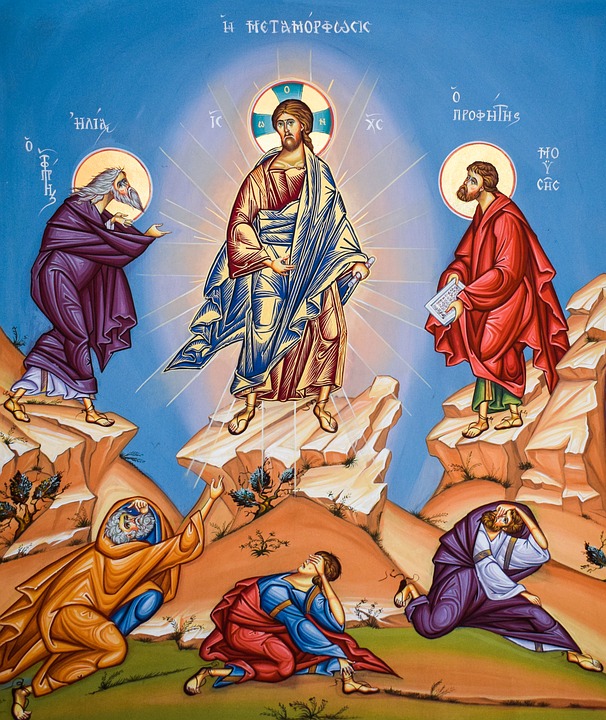
The Transfiguration of Jesus

The transfiguration is one of those odd episodes in the Gospels which seem disjointed as far as its place in the flow of the narratives go. Immediately before each of the Transfiguration accounts – found only in the Synoptics – Jesus proclaims that he will die, and that those who must follow after Him must follow Him in His treatment at the hands of the religious authorities and the world: that whoever wants to gain their lives must lose them. After the episode, it seems as if Jesus picks up where He left off: healing, traveling, preaching. The story comes as a weird break in an otherwise mostly coherent narrative stream.

An icon of the Transfiguration.

The Lukan account reads, “About eight days after Jesus said this, he took Peter, John and James with him and went up onto a mountain to pray. As he was praying, the appearance of his face changed, and his clothes became as bright as a flash of lightning. Two men, Moses and Elijah, appeared in glorious splendor, talking with Jesus. They spoke about his departure, which he was about to bring to fulfillment at Jerusalem. Peter and his companions were very sleepy, but when they became fully awake, they saw his glory and the two men standing with him. As the men were leaving Jesus, Peter said to him, ‘Master, it is good for us to be here. Let us put up three shelters—one for you, one for Moses and one for Elijah.’ (He did not know what he was saying.) While he was speaking, a cloud appeared and covered them, and they were afraid as they entered the cloud. A voice came from the cloud, saying, ‘This is my Son, whom I have chosen; listen to him.’ When the voice had spoken, they found that Jesus was alone. The disciples kept this to themselves and did not tell anyone at that time what they had seen.”

Parallels with Mosaic Narrative

Following this, after Jesus and the disciples descend from this (literal) mountaintop experience, Jesus becomes disgruntled at “this generation” for their lack of faith. What is striking is to note is the parallel movement between this story and the story of Moses’s reception of the Ten Commandments. Both figures ascend to the top of the mountain, where the Word of God and the presence of God are present, surrounded by light and cloud. Then, descending the mountain, they criticize the lack of faith of the people (Moses and the Israelites who have just been worshipping the golden calf and Jesus with the Israelites who are suffering under the weight of their own faithlessness). The presence of Moses alongside Elijah in the transfiguration narrative is striking, too, because he is no longer the protagonist of the story; he is off to the side speaking with the central character Jesus. Jesus is somehow, therefore, a true and better Moses, who is listened to by Moses and Elijah, signaling their inferiority compared to the Christ, to Christ’s mission as central to the fulfillment of the purposes of God.

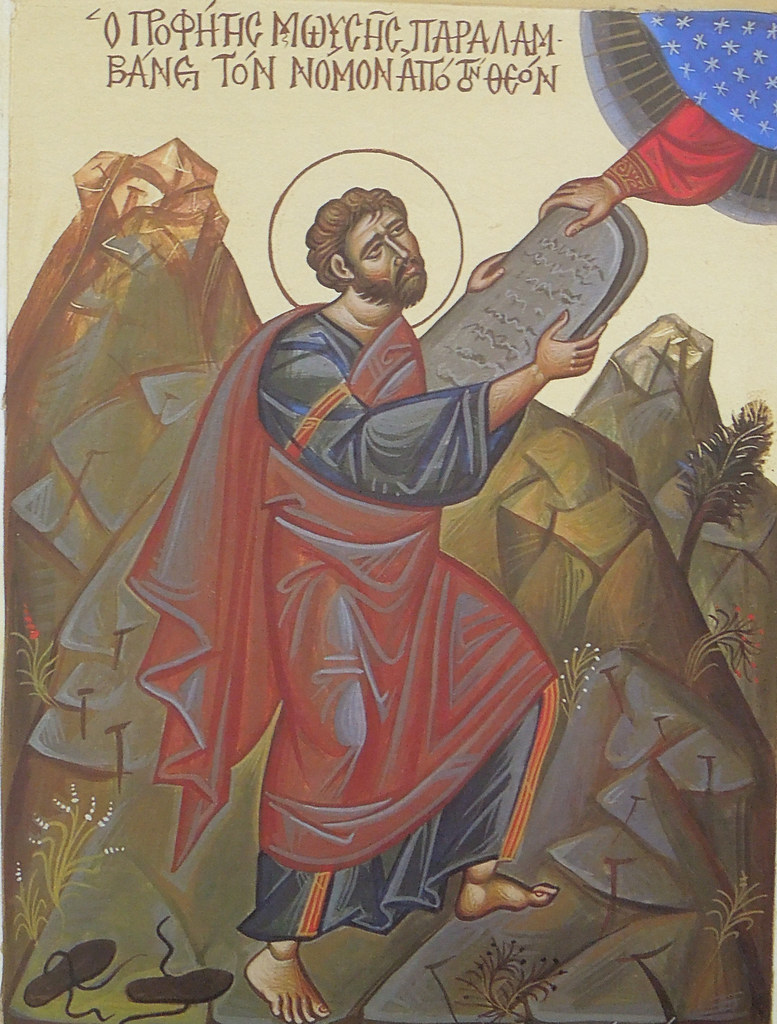
An icon of Moses receiving the Ten Commandments.

It has been noted by other interpreters that one difference between the Decalogue narrative and the Transfiguration narrative is the Light that shines from Christ’s face. When Moses is in the presence of God, his face shines, and it continues to radiate as he descends the mountain to rejoin the people. Notice, however, that with Jesus, the light shining from His face is not a refracted light. It is not reflected from some other source, but radiates from Jesus Himself. It is as if the text were saying, “the Source of the light reflecting from Moses’ face in the Old Testament; here is its source!” The voice of the Father – “This is my Son, listen to Him!” – confirms this as well. Jesus truly is “Light from Light,” receiving all He has from the Father, His glory, infinitude, holiness, and righteousness.

Trinity and Spiritual Blindness

The blindness of the apostles never ceases to give me a disheartening sigh. Nowhere is the inability of man – his utter and total deafness to the Word of God – on clearer display than this scene. The text is clear on what was happening with them: “He did not know what he was saying.” Even during the moment of revelation, the very moment Jesus was shown for who he really was, the apostles did not understand. It is telling, too, that later on, immediately before Christ begins to suffer at the hands of the elders and Romans, Peter – of all people! – attempts to dissuade Jesus from his mission. Peter should have been the first one to have seen that Jesus’s mission culminated and was completed in the suffering he would undergo. It isn’t only that he did not “get it” in the moment of transfiguring on the mountain, its that he misinterpreted who Jesus was after the fact, as well. The text also hints that, just like the Israelites at the foot of Sinai were afraid at the Spirit-cloud (the text says they saw it “as a consuming fire”), so Peter and the disciples were afraid of the cloud and the light: “While he was speaking, a cloud appeared and covered them, and they were afraid as they entered the cloud.”

Notice, too, the similarities to the baptism narrative. Here, again, is the Trinity on full display. The Son, the main character of the story, joined by Elijah (i.e., John the Baptist); the Father’s voice, which, again, points the surrounding listeners to Jesus, displaying His love for and approval of His Only-Begotten; and the Spirit, not in the form of a dove but surrounding the top of the mountain in the form of a cloud, reminiscent of the Spirit-cloud which dwelt on the top of Sinai and which led the Israelites through the wilderness. Here is the Trinity, the fullness of God’s presence. What is man’s response, symbolized by the apostles? Misunderstanding, blindness, and an inability to stay in the presence of God. Adam still cannot stay garden without having to leave it.

We should not be too harsh on the apostles, though. The Bible tells us over and over again that if the Spirit of the Lord does not build the house, the people labor in vain. In other words: no Spirit, no understanding, all the way down. Are we not in the same position as the apostles? Would we have seen – or will we continue to see – Jesus for who He truly is without the intervention of the Spirit, without the Spirit coming to us to open our eyes, to give us the rebirth Jesus says is necessary to enter the kingdom of God? Jesus Himself says, “It is better that I go away, for I am sending to you the One who will call to mind everything I have taught.” Last year I taught theology and church history to groups of ninth and tenth graders. One thing you cannot conclude without surveying the history of the Church is that the Spirit abandoned the Church after Pentecost. There is no activity of the Church – which actually does what is intended, to preach the gospel, to live for others, to see people’s lives changed by Jesus – without the Holy Spirit, because no one can interpret Jesus correctly without the Spirit. Jesus and the Spirit are two peas in a pod; the Spirit’s continual purpose is to point people to Jesus. This then helps us to see this mountain top scene correctly; the apostles do not understand because the Spirit has not given them the eyes to see. Where the Spirit is, there is understanding. If there is no understanding, there is no Spirit.

Revelation of the Son of God

It is not simply the case that the Spirit must flip the switch. We ourselves must also respond. There is still a way in which we are in the position of the apostles. We, like them, can choose to see Him according to the Spirit, or we can choose to see Him according to the flesh. See, the elders, the chief priests, the Romans: they refused to see Jesus according to this picture: the exalted King of Kings who mediates the presence of God and dwells with humanity on the mountain. They could accept that He was a teacher, but they could not accept His claims to be the Son of the Father. They refused to see Him how the Spirit told them to see Him. We are presented with a similar choice.

You see, there are many Jesuses which roam this earth. There is the political Jesus, the profound moral teacher Jesus, the comfortable diet hippie Jesus, the hard-nosed masculine Jesus, and innumerable other Jesuses which are very much worshipped and very much followed. None of these Jesuses are the Jesus to whom the Spirit points. Then, there is the Scriptural Jesus. The Jesus that the Church claims to worship; the One who the Nicene Creed says is “God from God, Light from Light, true God from true God,” the Only-begotten Son of the Father, full of grace and truth. He is the only Way of Life, the Truth, the Bread of Heaven, the Light of the World, the Lamb Who was Slain before the Foundation of the World, the Alpha and the Omega, and the One who claims our allegiance. This is the One the Spirit wants us to see, know, and love. This is the Jesus of the Kingdom of God. This is the Christ on display in the light of the Transfiguration, the self-interpretation that the Scripture is giving us. Karl Barth writes, “The miracles of Jesus are to be taken as ‘signs’ in the sense that they point to what He already was, to the hidden presence of the kingdom of God which would later be unveiled during the forty days in an abiding manifestation, in a tabernacling of the Lord in the midst of His disciples—a disclosure which will become definitive and universal at the end of all time in His coming again.” The Scripture is so smart, it is always communicating more than we think it is. The Scripture is actually amazing in what it is always doing. The Scripture says here, “That guy, in the Old Testament, who was constantly referred to throughout the pentateuch, the psalms, the prophets, the king who proclaims the word of God on the holy hill of Zion, who is the promised Messiah who will come to liberate Israel and through Israel the rest of the world, who embodies the presence of God to people? Oh yeah, this is that guy. And by the way, this guy – who shines forth the light only God can shine – He will suffer and die as a criminal.” This is why Christ says, right before He goes up the mountain with the apostles, that He would die at the hands of men before then saying, “Some of you will not taste death before [you] see the kingdom of God,” pointing directly to what would immediately happen. It is as if He were telling us, “What you will just hear about – my transfiguration on the mountain – you must understand it in light of what will happen later, i.e., my suffering, my passion, my cross.” Barth confirms this interpretation: “The transfiguration is the supreme prefigurement of the resurrection, and its real meaning will not be perceived until the resurrection has taken place.” This is why the Risen Christ who visits the apostles still bears the marks of His cross in His hands, His side, and His feet. Could He not have chosen to rise again with a fully restored body, without His scars from the cross? Of course! But He is telling us something: He does not want us to know Him as the glorious King apart from knowing Him as the Suffering Servant. He is not king without being servant. In fact, they are one role in Him. He bears the truth he taught His disciples – “Whoever wants to be great in the kingdom of God must be the least of all, must be the servant to all” – in His own Person.

This is the Revelation of the kingdom of God. This is the presence of Jesus: self-emptying love, what Phillipians 2 calls “kenosis.” This is the eternal image of God: this self-emptying, outgoing, reconciling love at work from the creation of the world to the establishment of the New Jerusalem, coming out of heaven for man. And this is the charge for us: will we find ourselves in service to the other? Will we empty ourselves so that love can become actual, visceral even, for those in our lives?

Eschatological Element

Throughout the Scriptures, divine glory always invokes the end of days, in that it always calls people to respond with longing for the Day when God and Man will be perfectly reconciled, when Adam and Eve can once again dwell in the garden forever with God on the mountain. In that sense, the transfiguration is a picture of the new creation; what do we see? We see God in His fullness, shining forth with His glory which tells of His benevolence, love, holiness, and righteousness. And we see Man, perfectly reconciled to the will of God and rejoicing in giving Himself out for God. Jesus is both of these in His own Person, what one theologian calls the “Godward movement of Man and the Manward movement of God.” All of it happens on the top of the mountain, reminiscent of the “holy city” of Zion referenced in Revelation: “And he carried me away in the Spirit to a mountain great and high, and showed me the Holy City, Jerusalem, coming down out of heaven from God. It shone with the glory of God, and its brilliance was like that of a very precious jewel, like a jasper, clear as crystal” (Revelation 21: 10-11). The transfiguration reminds us of our final destination: to be in perfect unity with God and people in the New Land He Himself has prepared for us. One commentator writes that “those with attentive ears and eyes can and must see it also—hidden glory—in the earthy ministry of Jesus, in the world of human need and gracious liberation that already exists, beginning right now at the foot of the mountain. Forget the booths, Peter; the Messiah has work to do.”

Indeed. The Messiah has work to do.

Kyrie Eleison

Happy thanksgiving!

Carroll, John T.. Luke : A Commentary, Westminster John Knox Press, 2012. ProQuest Ebook Central, http://ebookcentral.proquest.com/lib/bham/detail.action?docID=3416788.

Barth, Karl. Aids for the Preacher. 1886-1968; edited by Geoffrey William Bromiley, 1915-2009 and Thomas Forsyth Torrance, 1913-2007, in Church Dogmatics (Edinburgh, Scotland: T & T Clark, 1977), 314 page(s).

Close Reading

Karl Barth on “Blessed are the Pure in Heart”

Karl Barth was the son of a pastor. As such, from a very young age he was intimately involved in the life of the church. When he came of age, he decided he wanted to study theology academically, and perhaps then to go into the pastorate like his father. Eventually, this is what he did. His first post, in the small industrial Swiss town of Safenwil, saw many of his most deeply transformative experiences happen to him. After his academic career came to a close he spent much of his time in a pastoral mode once again, visiting the prison nearest the town in which he resided to preach and teach the Gospel.

During his academic teaching career, being granted numerous professorships – throughout Germany and Switzerland – Barth never got rid of his pastor’s heart. In fact, he always wanted his theology (hence the name “Church” Dogmatics) to serve pastors in their attempts to preach the Word of God, administer the Sacraments, and tend the hurting hearts of their congregations. It is in this mode he delivered his sermon, “Make Me Pure of Heart,” an exegesis of the Matthean Beatitudes.

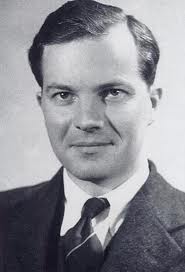
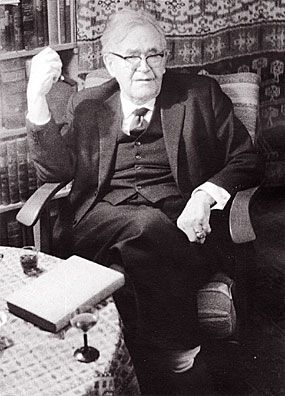
Herr Karl, looking dapper.

Like a true pastor, Barth wants his hearers to understand that, in the end, help comes only from God. Our best attempts, motives, social programs, and ministries, fall utterly short of true spiritual healing.

“Many high-minded persons with pure motives and champions of all that is good and true, venture into the darkness of the times; so many flaming outbreaks of new spirit, perchance, among the youth of a city or region; but the fire does not keep on burning, it does not break through, it does not spread farther. One feels more and more as if a mysterious barrier were thrust before us, as if we stood before a locked door which must first of all be opened from within if our endeavors to help are not to remain idle and meaningless gestures.”[1]

The enthusiasms of many young people have gone into the sorts of movements to which he refers. There are no shortages of them today. Barth then clarifies the purpose of this repeated, hopeless feeling; this proverbial beating of the head against the wall. What does God desire, in the midst of this seemingly endless striving? What is his purpose in it? To bring to a head the salvation of humanity, not from the spiritual heights, but from the depths of darkness.

“Perhaps all the many and wearisome exertions and efforts which we put forth are the last sure proof of our illness; as for example, in severe sickness the fever rises before the crisis; perhaps in the very distress of all these struggles and efforts something very simple, great, and healing for us must, and finally will, break through; a deep, clear, all-embracing knowledge of that which alone helps… The Bible at all events sees things in this light. ‘Immediately after the afflication of those days,’ so Jesus begins the passage in which He speaks of the everlasting help which shall make an end of all the sorrow of time and of the world; help, salvation, and deliverance really are the final end; but days full of affliction, days full of fear will precede this last end. Such was the experience of Jesus. Before the light of Easter stood the cross and the journey to Jerusalem. The place where all things change is not a height, not even a plain, but an abyss. And the greater the changes the greater the depth from which they arise.”[2]

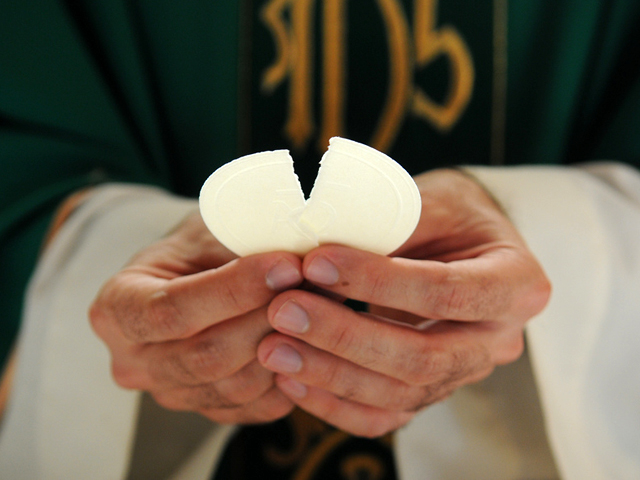
I think of the moment during the eucharistic liturgy where, immediately following the fraction (the “breaking” of Christ’s body), the priest declares, “Christ our passover has been sacrificed for us! Therefore let us keep the feast!” In this moment, the priest lowers the host, breaks it loudly for all to hear, and raises it up again, giving his declaration. Here, the life of God is poured out to the world through the broken body of the Lord. Glory and life is found, not in a pacified trinitarianism, a social program of loveliness, but in the broken body of the God-man. Those who would gain their life must lose it for His sake. Life comes through death. We must commend ourselves to God – we who live in the deep darkness – to be healed.

The fraction

He continues:

“It seems to us to be too simple; and we are still too much distracted, too little gripped and penetrated by the seriousness of our condition to commend ourselves wholly to God as the only efficient helper of our lives. We are still too spiritually rich, too wise, too gifted, not to desire any other knowledge than that God helps. We are still not poor enough, not humble enough to permit this assurance to enrich and exalt us… Gladly would we permit ourselves to be helped in all our suffering and need, but again helped only by something human, by help which we can understand, which comes from us, and which is in accord with us. But just this cannot be.”[3]

We do not realize our condition. We must be brought low to be lifted up again. We must be destroyed to be recreated.

We will finish where Barth does: “He says it and what He says must be true, namely, that at the very place where we see only our affliction and our sins, only misery and death, there and just there we shall see God. This assurance can only hear, we can only believe, we can only wonder at, when it is told us again and again.”[4]

Blessed are the pure in heart, for they shall see God.

Kyrie Eleison


[1] Karl Barth, “Make Me Pure of Heart” (Sermon), in Karl Barth: Spiritual Writings, ed. by Ashley Cocksworth and W. Travis McCracken (New York, NY: Paulist Press, 2022), 202.

[2] Karl Barth, “Make Me Pure of Heart” (Sermon), in Karl Barth: Spiritual Writings, ed. by Ashley Cocksworth and W. Travis McCracken (New York, NY: Paulist Press, 2022), 203. 

[3] Karl Barth, “Make Me Pure of Heart” (Sermon), in Karl Barth: Spiritual Writings, ed. by Ashley Cocksworth and W. Travis McCracken (New York, NY: Paulist Press, 2022), 204-5.

[4] Karl Barth, “Make Me Pure of Heart” (Sermon), in Karl Barth: Spiritual Writings, ed. by Ashley Cocksworth and W. Travis McCracken (New York, NY: Paulist Press, 2022), 207.

Doctrine

Humanae Vitae as (an) Outcome of Trinitarian Theology

The Encyclical

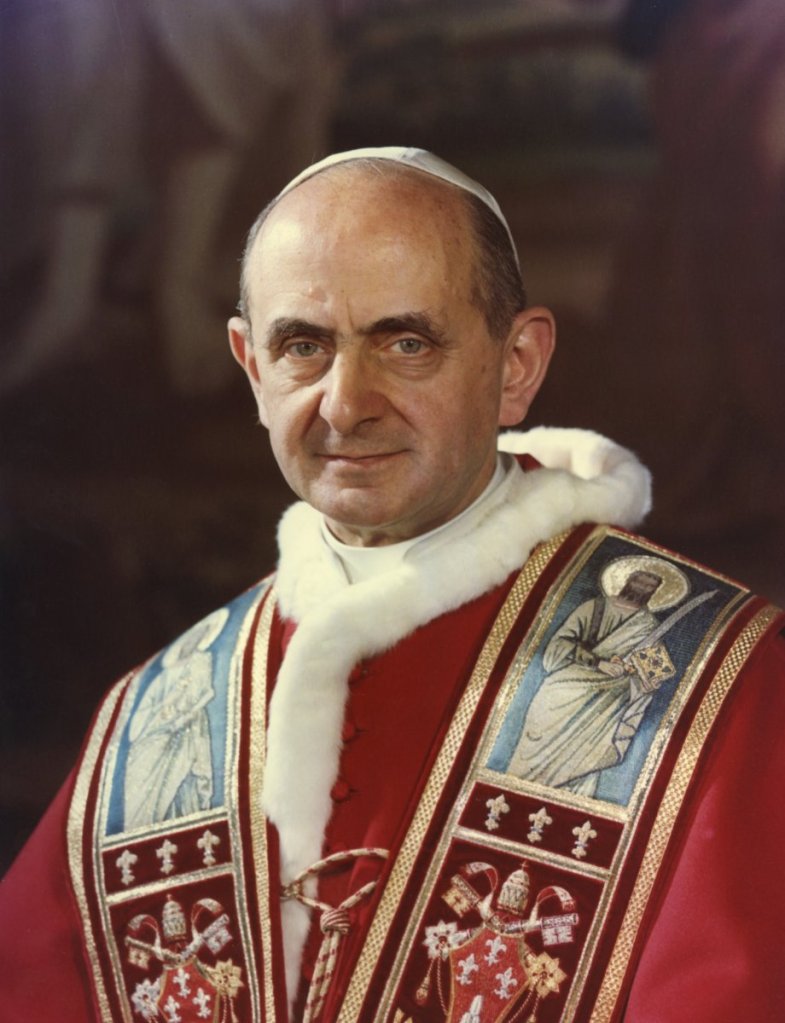
Humanae Vitae is the name of the papal encyclical written by Pope Paul VI in 1968 which addresses issues of the family and birth control. It was written before large amounts of the world decided to make artificial birth control a legalized medical reality, and the heart behind the letter was to call the nations of the world to moral account, to resist the “technical expedients” being made available to people. Technology was expanding its reach into most all areas of human life, and nations were heeding its call with an eery obedience. The technological attitude was spreading its worldwide campaign and the Pope sought to stand against it (or, at the very least, to temper its lust). In many ways Humanae Vitae is an artifact of the titanic theological war that has been waging for centuries between what popular theologians call the “disenchanted world” and the “enchanted world.” Or, antiquity and modernity. Platonism and materialism.

Masterfully, Paul VI calls into question technology’s function within the life of man. Behind all of his theologizing there lurks these palpable questions: What world-concept informs the urge to relegate all of man’s natural faculties to non-human entities? Further, what frame of mind must man hold in order to conclude that he is master of life itself, the belief implicated in the use of artificial birth control? Most importantly, what philosophical worldview is at work in the push to disallow the natural function of reproduction to “follow through” in producing children?

Paul VI’s letter reiterates the Roman Catholic Church’s teaching that artificial birth control runs contrary to the natural shape of Man as designed by God. He writes, “To experience the gift of married love while respecting the laws of conception is to acknowledge that one is not the master of the sources of life but rather the minister of the design established by the Creator.”[1] Further, by its very nature artificial birth control seeks to hijack and suppress the natural workings of the person, holistically conceived. Paul VI writes, “We must accept that there are certain limits, beyond which it is wrong to go, to the power of man over his own body and its natural functions – limits, let it be said, which no one, whether as a private individual or as a public authority, can lawfully exceed. These limits are expressly imposed because of the reverence due to the whole human organism.”[2] Crucially and theologically, for Christians, ABC contradicts the principle by which and through which those who have been baptized into Christ – the Selfless One – are to function: according to life, the divine life of the self-giving Trinity.

To that subject we turn.

The Principle of Livingness

It is the principle of what I call “livingness” which is at work in the Triune Life. We can see this in the simple Christian grammar which affirms – out of the relations of Sonship and Fatherhood – that the Holy Spirit is the Spirit “of Father and Son.” In other words, the Spirit is the Spirit “who is that relation of mutual love” between the two Persons. This “livingness” is the love which is essentially generative. It is productive of something, and, in this case, Someone.

The thing about love’s generativity is that you cannot have the former without the latter. Love, by its nature, is generative, productive of blessing, abundance, goodness. St. John’s famous dictum, “God is love” (1 John 4:8), a statement not simply attributive of the character of “being loving” but descriptive of the very Triune nature of God, gets at this idea. Paul VI describes love thus: “This love is above all fully human, a compound of sense and spirit… It is also, and above all, an act of the free will, whose trust is such that it is meant… to grow, so that husband and wife become in a way one heart and one soul, and together attain their human fulfillment… Whoever really loves his partner loves not only for what he receives, but loves that partner for the partner’s own sake, content to be able to enrich the other with the gift of himself.”[3] Generativity is at the very heart of the Triune Life, seen in the self-giftedness of the Son to the Father, and the Holy Spirit to the Father and the Son. Who God is, at His very base, is productive-loving-livingness. As a corollary to this love-logic, Paul VI concludes, “Marriage and conjugal love are by their nature ordained toward the procreation and education of children. Children are really the supreme gift of marriage and contribute in the highest degree to their parents’ welfare.”[4] Similarly, commenting on the “conjugal act” itself, he writes, “The Church… teaches that each and every marital act must of necessity retain its intrinsic relationship to the proceation of human life [emphasis mine].”[5]

When Christians are baptized into this God of livingness, they share in His life, taking on the contours of their newly given Father, Brother, and Comforter. They become more like the God into whose being they have been initiated, and become “partakers of the divine nature” (2 Peter 1:4). They take on this same livingness, this same generative, productive love-life, and start to mimetically model forth their love-God’s God-love.

Now Paul VI does not explicitly mention the connection between the Triunity of God and the generativity of the marriage relationship in Humanae Vitae. But I’m convinced it is why, at base, Paul VI had to say no to artificial birth control, because its sole purpose is the stifling of life and therefore of love, that love which only the Triune God can truly be. ABC may be comfortable; it may give a certain material stability; but it disallows the springing forth of new life, and therefore cannot be loving. This is because the soil has been poisoned, so to speak; life is not given the freedom to come forth, and life – being always good, always beneficial, always holy – comes directly from God who is life. In the same way Paul can say of the Father, that it is from Him “that every family in heaven and on earth derives its name” (Ephesians 3:15), so life, ζωη, is identified with the Person who is the Generated One (John 14:6), the One who gives His life to the world (John 3).

***Notice the difference here between what I am arguing and what stood at the center of the evangelical controversy surrounding “Eternal Functional Subordination.” The argument is not that the relationship of father-mother-child can be neatly mapped onto the Father-Son-Spirit relations, but that the same generativity that constitutes the dynamic of the God revealed in Christ is at work in the marriage relationship, as well. Of course, not univocally, but by participation and imitation.***

Conclusion

The Pope ends his letter with a series of charges given to the myriad groups affected and affecting the promulgation or use of ABC. Before he turns his attention to the married couple themselves, he describes their mission: “For the Lord has entrusted to them the task of making visible to men and women the holiness and joy of the law which united inseparably their love for one another and the cooperation they give to God’s love, God who is the Author of human life.”[6] Paul VI makes clear here that his mission is not to curmudgingly stifle the fun of married couples, but to uphold the Tradition’s definition of love as it has always been understood: as self-gift, all the way down.

Soli Deo Gloria


[1] Pope Paul VI, Humanae Vitae (Vatican City: Libreria Editrice Vaticana, 1968), 23.

[2] Pope Paul VI, Humanae Vitae (Vatican City: Libreria Editrice Vaticana, 1968), 28-29.

[3] Pope Paul VI, Humanae Vitae (Vatican City: Libreria Editrice Vaticana, 1968), 18-19.

[4] Pope Paul VI, Humanae Vitae (Vatican City: Libreria Editrice Vaticana, 1968), 19.

[5] Pope Paul VI, Humanae Vitae (Vatican City: Libreria Editrice Vaticana, 1968), 21-22.

[6] Pope Paul VI, Humanae Vitae (Vatican City: Libreria Editrice Vaticana, 1968), 36. 

book-review

REVIEW: Byzantine Style and Civilization by Steven Runciman

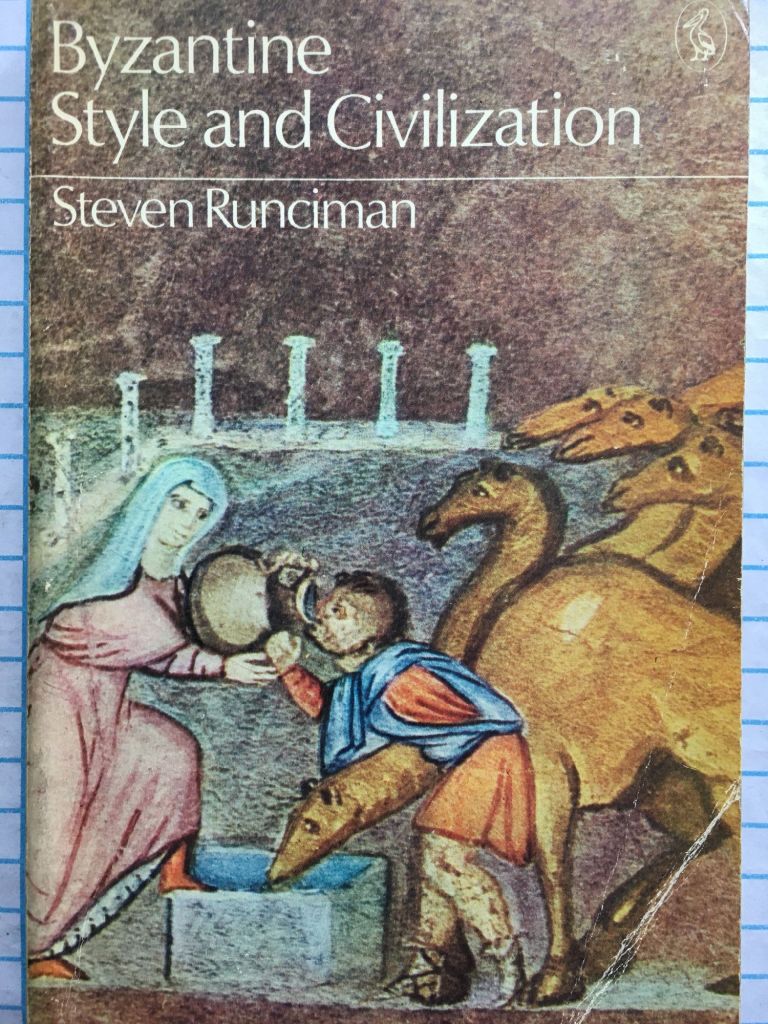
Runciman, Steve. Byzantine Style and Civilization. London, UK: Penguin Books, 1990.

Byzantine Style and Civilization by the late Steve Runciman is hailed as a classic introduction to the field of Byzantine studies. It is a short, fascinating read, which includes in summarized form the various political, theological, and above all artistic flavors of the now-perished Eastern Roman Empire. The value in this book is its ability to plunge the Western reader into the Eastern Christian mind, with its thick decorative ritualism, its steadfast self-understanding as the bearer of the true Christian Tradition, and its enchanting iconography. What I loved most about this book was what it taught me about the Eastern Empire’s function as a sort of partner to and extension of the Church which was housed there. The author spends most of his time focused on the happenings and development of New Rome, Constantinople, and as the pages press on moves through topics like Neoplatonism, the Nicene Empire, and the Ottoman Turks’ slow creep towards domination.

The Theology of the Icon

I have long been a sucker for Byzantine iconography. In the churches, basilicas, and public buildings of Byzantium, images of Christ, Mary, the saints, and biblical scenes lined virtually every wall. Runciman writes, “The new status of Christianity enabled the subject-matter of Christian art to be broadened… Not only did portraits of Christ and the Mother of God multiply, but also pictorial scenes of episodes in the Bible story… [and] each of them contained a deeper significance on which the initiate could ponder.”[1] Everywhere the Byzantine looked, he was reminded of the world of the Scriptures; better yet, the places and art the Empire created incarnated the Scriptural world itself. It was as if the Bible were still being written.

The Byzantines’ artistic ethos did not appear out of a vacuum. Starting around the seventh century, art theory was informed by the Neoplatonic notion of the hierarchy of being as expressed by St. Dionysius the Areopagite. Runciman writes, “According to [Dionysius] the world of the senses mirrors the world of the spirit. ‘The essences and orders which are above us are incorporeal… Our human hierarchy, on the other hand, is filled with the multiplicity of visible symbols, through which we are led up hierarchically and according to our ability to the unity of God.'”[2] In line with the Byzantines’ use of Dionysius’s hierarchical vision, John of Damascus’ iconographic logic also helped undergird how the Romans understood their artistic world: “He based his argument on the Neoplatonist doctrine that the appreciation of visible beauty is a necessary though transitory path towards the appreciation of absolute beauty, which is apprehended only by the soul… The Incarnation provides the necessary path along which human souls reach the true knowledge of God.”[3] The Roman government sought to remind their subjects at every turn of the street or public gathering that they were faced with Beauty, the Beauty which illuminates and structures the world, the Church, and the Empire itself.

What this means is the Byzantines understood reality itself to be liturgical.

Problems

The two problems I have with the book is that the author does not understand the supposed heresy of monophysitism described on page 82, and the pictures – which don around half of the book – do not include color. He writes that monophysites believe that “Christ’s nature was purely divine.” The first problem is very minor though and it is really more of a passing remark he makes, but the second problem is unfortunate considering most of the book’s content includes commentary on Byzantine artistic style (with its high emphasis on color), which would be further enhanced if the readers did not have to look online at the pictures referenced for the full experience of the pieces. Interested in Byzantium but don’t know where to start? This is the place.

Soli Deo Gloria


[1] Steven Runciman, Byzantine Style and Civilization (London, UK: Penguin Books, 1990), 33.

[2] Steven Runciman, Byzantine Style and Civilization (London, UK: Penguin Books, 1990), 81.

[3] Steven Runciman, Byzantine Style and Civilization (London, UK: Penguin Books, 1990), 83.

Quotation

Embodiment, Presence, Modernity: A Selection from Robert Jenson’s “Visible Words”

I don’t think I have read a more prophetic, life-giving, convicting, or true set of sentences in the past year than these written by Robert Jenson in 1978:

“Personal life occurs only in community. Just so, it can fail, according to either of its aspects, spirit or body.

            Were I a fundamentally self-contained entity, I would not be spirit. I might perhaps still be a sort of abstract mind, perceiving reality beyond myself. But since I would not be drawn or shaken by that reality, I would not be drawn or shaken by what is beyond what I at any moment am. I would be changeless – which were I God, would be fine for me and disastrous for all else, and since I am not God, would be irrelevant to all else and disastrous for me. Were I a fundamentally self-contained entity, I would not be self-transcendent in time.

            Insofar as late-modern ambition is that each of us shall be sole subject in his ‘own’ life, the possibility of spirit is attacked, and must be fought for with increasing explicitness and tenacity. To the exact extent that marriage indeed becomes a revocable arrangement between permanently ‘independent’ individuals, religion becomes self-realization, politics retreat to the ‘privacy of the voting booth,’ and in short the consumer ethic generally triumphs, our life is in the most primitive sense dispirited. Simultaneous lethargy and frenzy is the dominant characteristic of all those persons and groups in which late-modern abstract individualism is most consistently achieved. It is our society’s trick to make egocentricity a virtue; but it will not work, for my alienation from you is my alienation also from myself. 

            Our reality as spirit for one another is not self-sustaining. It can fail, regularly has, and now often does. If there is spirit that will not fail, we call such spirit God. God’s presence is the coming of such spirit. 

            Were I a fundamentally self-contained entity, I would not be body. I would undoubtedly be an organism, and subject to Newton’s laws about masses in space. And we would impinge on each other, in the way of the celebrated billiard balls. But I would not be available to you, nor even to myself; there would just be this organic mass, fundamentally interchangeable with any other, and precisely as incomprehensibly and externally identified with a particular mind as Descartes found it. Were I a fundamentally self-contained entity, I would not be available through time. 

            Our reality as bodies also can fail. The progressive disembodiment of late-modern civilization is full or ironies – as that Christianity is routinely attacked for, of all things, enmity against the body, often by persons visibly at war even with the organic condition of their own embodiment. Who devalues the body? Those for whom its gestures make no commitments, or those for whom they can make irrevocable commitment? Those who find freedom in casual nakedness, or those who reserve this most visible word for those to whom they have something extraordinary to say? Our society’s frenzy for the body is precisely frenzy for what we lack. Those who refuse all decisive commitment and so withdraw from availability, who have no grasp on the past, who wear instant clothes and make instant love and eat instant food, who forever are seeking identity, flit as wraiths through time, hungering for embodiment. 

            Body and spirit fail together. Were you pure spirit in my life, you would be nobody in particular, but a nobody who yet gave me orders. That is, you would belong to one of those impersonal but ruling collectives – bureaucratized corporations, militarized government, or the ‘media’ – that do in fact now determine so much of life. Were all others pure spirit in my life, these collectivities would appear to and in me as one and absolute, the dream of totalitarians would be fulfilled – and freedom and spirit too would cease. 

            The obvious outcome of the last paragraph must be the proposition: if there is body that does not fail, we call such body God. Therewith we have the great offense of Christian discourse about God… For indeed, God is a person; and that means that he is Spirit and Body.”[1]


[1] Robert Jenson, Visible Words: The Interpretation and Practice of Christian Sacraments (Philadelphia, PA: Fortress Press, 1978), 23-25.

Quotation

Robert Jenson: The Church is the Presence of Christ

“Plainly, for Paul the concept of personal embodiment is not itself a biological concept. We may discover what sort of concept it then is, and simultaneously declare our own usage, by first recalling our general interpretation that for Paul a person’s embodiment is his or her availability to other persons and thereupon to her or himself and by then again introducing German idealism’s subject-object distinction. That the church is the body of Christ, in Paul’s and our sense, means that she is the object in the world as which the risen Christ is an object for the world, an available something as which Christ is there to be addressed and grasped. Where am I to aim my intention, to intend the risen Christ? The first answer must be: to the assembled church, and if I am in the assembly, to the gathering that surrounds me. Thus the primal posture of Christian prayer is not involution with closed eyes but an open posture, with eyes intent upon those speaking for the gathering. Yet we cannot rest with this first answer. In the New Testament, the church and risen Christ are one but can also be distinguished from each other; thus, for example, the church is the risen Christ’s ‘bride’ so that Christ and the church are joined as a couple. We may not so identify the risen Christ with the church as to be unable to refer distinctly to the one and then to the other. Protestants have for just this reason often feared such language as appears in the previous paragraphs. If we say only that the church is personally identical with Christ, it may seem that the church can never need reform or be open to it… Within the gathering we can intend Christ as the community we are, without self-deification, because we jointly intend the identical Christ as the sacramental elements in our midst, which are other than us. Yet again invoking the distinction between community and association, we may say that the church as community is the object-Christ for the world and her own members severally, in that the church as association is objectively confronted within herself by the same Christ… But now a question can no longer be repressed: Why must Christ be embodied for us at all? Why is not a ‘spirital’ – in the vulgar sense – communion enough? That is, why is it not enough privately to think and feel Christ’s presence and to know that others in their privacies do the same? Why do I need to live in the assembled church? Or indeed why is it not enough that the bread and cup move me to inward awareness of the risen Christ and to a deeper feeling of communion with him – as is the understanding of most Protestants and not a few Catholics, whatever the official teaching of their churches? Why must we say the bread and cup are his objective intrusion, his body? Few have probed this question with such passion as Martin Luther. Were Christ’s presence in the assembly disembodied, it would be his presence as God but not his presence as a human, for as a human he is a risen body. And to the posit of Christ’s presence as sheer God, abstracted from his embodied actuality as Jesus, Luther can react only with horror: ‘Don’t give me any of that God!’ It is God’s hiding in human embodiment that is our salvation: Christ’s naked deity – were there in actuality such a thing – would be ‘nothing to do with us’ and just so destruction for us. Our salvation is ‘God incarnate… in whom are all the [divine] treasures… but hidden [emphasis added]’… The church with her sacraments is truly Christ’s availability to us just because Christ takes her as his availability to himself. Where does the risen Christ turn to find himself? To the sacramental gathering of believers. To the question ‘Who am I?’ he answers, ‘I am this community’s head. I am the subject whose objectivity is this community. I am the one who died to gather them.’ And again: ‘I am the subject whose objectivity for this community is the bread and cup around which she gathers’… The metaphysics of Mediterranean antiquity, and for the most part those of subsequent Western tradition, of course do not allow for this simplicity. Therefore they are in error. The usual metaphysics suppose that what can be and what cannot be are determined by abstractly universal principles and never by a particular; thus the question of how the church with her sacraments can be the actual body of the individual human person Jesus can be settled only by argument that does not itself mention his particular personhood or the specific communion of the church. But this supposition of the Greek pagan thinkers is neither revealed nor an otherwise inevitable position. If the gospel is true, precisely the specific personhood of the individual human person Jesus is, by the initiative of the Father and in the freedom of the Spirit, the material determinant of what generally can be and cannot be.”[1]


[1] Robert Jenson, Systematic Theology Volume 2: The Works of God (Oxford, UK: Oxford University Press, 1999), 213-15.

Doctrine

The Son of the Father: T.F. Torrance on the Divinity of Jesus

T.F. Torrance is one of those theologians you can confidently say is a pretty homogenous writer when his whole corpus is considered. If you have read one of his books on theology – unless it is a highly specific monograph or journal article or something of the sort – you have read them all. This is not to be disparaging of Torrance’s work; he is one of my favorite theologians to learn and glean from. In fact, his sort of repetitive, lets-circle-back writing style fits in with his own theory of language and human understanding. For those who have read a good bit of his output, however, the thought can very well cross your mind when you approach a section you have read two or three times over elsewhere that, “He’s saying this again? Well alright…” Regardless of this aspect, his ideas are meaty and worth wrestling with.

Currently I am reading (for the first time) his Mediation of Christ, the book many veterans of Torrance commend to the newly-interested as the ideal starting place. Torrance has already mentioned Israel’s place in salvation history, Einstein, “onto-relations,” and the conceptual revolution he is convinced is taking hold in the Western world – all topics that fall into the “over-and-over” category – and is making his way to a treatment of Christology proper.

The Christology never gets old, though. Ask any regular reader of Torrance and they will tell you that coming away from sustained attention to his Christological and Trinitarian reflections makes you want to run to Church and perform a praise break. He writes in such a way as to lead his readers to a greater love and affection for the Lord Who has loved them in His own Person. He wants people to praise Jesus, and so he writes to fan the flames of his readers’ hearts.

Let us take his chapter, “The Person of the Mediator,” as an example. Here he lays out the importance of the Christian affirmation that Jesus Christ is “God of God, Light from Light,” i.e., just as much God as the Father is God. He says,

“The Sonship embodied in Jesus Christ belongs to the inner relations of God’s own eternal Being, so that when Jesus Christ reveals God the Father to us through himself the only begotten Son, he gives us access to knowledge of God in some measure as he is in himself… Jesus Christ is Son of God in a unique sense, for he is Son of God within God, so that what he is and does as Son of the Father falls within the eternal Being of the Godhead… Jesus Christ is to be acknowledged as God in the same sense as the Father is acknowledged as God, for it is in virtue of his Deity that his saving work as man has its validity.”[1]

Pretty solid, yet standard, Christian language concerning the Divinity of Jesus. So far, so good. Torrance is never content to simply state the official doctrinal language established by the historic Church, however; he is always looking to drive home the pastoral import of these traditional ways of speaking of God and Christ. So, of course, he continues:

“He [Jesus] does not mediate a revelation or a reconciliation that is other than what he is, as though he were only the agent or instrument of that mediation to mankind. He embodies what He mediates in himself, for what he mediates and what he is are one and the same. He constitutes in his own incarnate Person the content and the reality of what he mediates in both revelation and reconciliation.”[2]

Alrighty! So now Torrance is speaking to a question that the average, everyday Christian very well comes in contact with: Who (or what) does Jesus reveal? Himself! Torrance says. There is no reality or God apart from whom Jesus means to point us, since Jesus Himself “constitutes” that God we would look for elsewhere. It is God, in other words, who is on display in Jesus. It is God who heals the blind and cleanses the lepers; it is God who lifts up the poor from the dirt and gives them dignity as persons; it is the Holy One of Israel who condescends as a baby to unite us with Himself. Jesus is Himself the content of His own revelation. Jesus is Himself our salvation, and not simply the one Who points to it, as if it was something other than His very Person.

It gets even deeper, though. What are the consequences of holding a different opinion other than the one just expressed? What if Jesus really does point away from Himself to another reality, another thing called “salvation”? What if Jesus is not Himself God?

“If you cut the bond of being between Jesus Christ and God, then you relegate Jesus Christ entirely to the sphere of creaturely being, in which case his word of forgiveness is merely the word of one creature to another which may express a kindly sentiment but actually does nothing… To claim that Jesus Christ is not God himself become man for us and our salvation, is equivalent to saying that God does not love us to the uttermost, that he does not love us to the extent of committing himself to becoming man and uniting himself with us in the Incarnation… If there is not unbreakable bond of being between Jesus Christ and God, then we are left with a dark inscrutable Deity behind the back of Jesus Christ of whom we can only be terrified. If there is no relation of mutual knowing and being and loving between the incarnate Son and the Father, then Jesus Christ does not go bail, as it were, for God, nor does he provide for us any guarantee in what he was or said or did as to what God is like in himself.”[3]

If Jesus Christ is not the Holy One of Israel, if He is not Himself God, then he is just a creature sending peace and blessing to us, ourselves creatures like him. We might could find a certain moralistic lesson in this, something close to an exemplarist religion where each person is trying his best to correspond himself to the good life, but we would still be in the dark about God. That is what Arius believed, and what current-day proponents of his thought still believe about God. If Jesus is not God, we would still have to guess at the character of the God who he supposedly represents. We would still have to guess whether, at the end of the day and regardless of the many assurances to the contrary, God is not actually just a sky-tyrant whose sole desire is to see humanity suffer and die. There would be no way of knowing this isn’t the case if Jesus is not Himself God.

And why is this? Why does Jesus have to be God for us to know the character of God? Because what Christians claim – what Jesus claimed about Himself – is that Jesus is God come to us as man. He is God, crossed over the divide of being onto our side of things. He is the God stepped from behind the curtain. He has said, “Here I am.”

Furthermore, the Bible’s portrayal of Jesus is one whose delight is in the restoration of people. Everywhere he goes, the Bible tells us, Jesus seeks to heal, restore, and bring to life that which has been destroyed by sin and death. God is good, life-giving, and holy, we know, because Jesus is good, life-giving, and holy.

And thank the Lord that that is true. Thank Jesus (!) that we do not have to guess about who He truly is, but we can rest in His blessed character shown not only among the poor and the widowed and the sick, but upon the cross, where the depths of divine love are on absolute full display.

Soli Deo Gloria


[1] T.F. Torrance, The Mediation of Christ (Grand Rapids, MI: Eerdmans Publishing Company, 1983), 64.

[2] T.F. Torrance, The Mediation of Christ (Grand Rapids, MI: Eerdmans Publishing Company, 1983), 67.

[3] T.F. Torrance, The Mediation of Christ (Grand Rapids, MI: Eerdmans Publishing Company, 1983), 68-70.

Doctrine

The Scriptural Christ is the True Christ

There are many Jesus Christs that roam this world. There is the Muslim Christ – the one who did not die on the cross, who paved the way for Muhammad, who taught profoundly of a god; there is the Buddhist Christ, the person whose teachings pointed to the self-negation at the heart of true wisdom; there is the Republican Christ, the Christ whose sole passion is for the rights of individuals to forge their own path in life, who looks with favor on the American capitalist state and its democratic structures; there is the Liberal Christ, whose definition of love is something like self-actualization, self-care, self-liberation. There is even the Modernist Christ, the first-century Jewish man whose perfect God-consciousness helped the rest of humanity cultivate their own God-consciousnesses. This one even changed the face of the political, social, and economic state of the ancient world, and was a great moral teacher.

And then there is the Scriptural Christ. Or, in other words, the biblical Christ, the one whom the Christian Church worships. This Christ is the one for whom and through whom all exists (Col. 1), the Word made flesh who dwelt among us, who was God and was with God in the beginning (John 1), the one whose Spirit cries out “Abba, Father” within the hearts of Christians and groans with groans too deep for words (Rom. 8), the one whose sorrowful Passion propitiated the sins of the entire world (Isa. 53), the one who fulfills his own teachings about Blessedness with perfect consistency (Matt. 5), the one whose righteousness justifies and unites us with Himself by faith (Rom. 5-6), the one who is love (1 John), the one whose flesh and blood men and women must eat in order to have eternal life (John 6), the one who chose to empty himself and take on the form of a servant, forfeiting his privilege as the Son of God (Phil. 2), the one who entered the world alongside the Spirit to form the world from the waters of chaos (Gen. 1), and the one who has made peace by the blood of his cross (Col. 1).

The Scriptural Christ is the Person at the heart of the Old and New Testaments, the hermeneutical key to unlock its infinitely-deep structures. He is the one Christians meet when, in faith and in the Church, they read the Scriptures with the eyes the Scriptures themselves bestow. The logic the Bible invites its readers to inhabit and live within is a Christ-logic. There is no thinking about or with the Bible or its many sayings – across the wide variety of its genres and metaphors and imageries – without an inhabiting of this Christ-logic. The Scriptures will always be read in error when this Christ-logic is forsook for the latest philosophical or hermeneutical lens (which, to be fair, are many of the times interesting, well-thought-out lenses, but just not Christian lenses). To read the Bible correctly, says the history of the Church, you have to both start with and end with the Scriptural Christ.

Theologian John Behr teaches us this when he writes, in The Way to Nicaea, “Read in the light of what God has wrought in Christ, the Scriptures provided the terms and images, the context, within which the apostles made sense of what happened, and with which they explained it and preached it, so justifying the claim that Christ died and rose ‘according to the Scriptures.’ It is important to note that it is Christ who is being explained through the medium of Scripture, not Scripture itself that is being exegeted; the object is not to understand the ‘original meaning’ of an ancient text, as in modern historical-critical scholarship, but to understand Christ, who, by being explained ‘according to the Scriptures,’ becomes the sole subject of Scripture throughout… Christ, the Word of God, is often said to be the key to Scripture.”[1]

May the Church’s reading of Scripture not fall prey to the kind of scriptural interpretation that would approach its Book like any other ancient text, but may she read and interpret it as the locus of revelation, the place wherein her Lord may be seen, kissed, and loved.

Soli Deo Gloria


[1] John Behr, The Way to Nicaea: Formation of Christian Theology Vol. 1 (Crestwood, NY: St. Vladimir’s Seminary Press, 2001), 27-29.

Quotation

The Self-Understanding of the Theologian in Karl Barth’s The Christian Life

There is a blessed chapter in the Classics of Western Spirituality volume on Barth, called Karl Barth: Spiritual Writings, where Barth is talking about the concept of wonder in relation to the discipline of theology. After claiming that Jesus Christ is the event that causes continuous wonder in the theologian, he turns to speaking about how, in response to Christ-centered wonder, the theologian is then forced to understand himself. He writes:

“The astonishment of the individual carries with it the fact that no one can become and remain a theologian unless he is compelled again and again to be astonished at himself… Whatever, however, and whoever I may be in other respects, I have finally and profoundly become a man made to wonder at himself by this wonder of God… This confrontation occurs in even the most timid and untalented attempt to take seriously the subject in which I have become involved or to work theologically at all, whether in the field of exegesis, Church history, dogmatics, or ethics… In one way or another I am obliged to consider the question of the wonder of God. I may perhaps attempt to steal away from the confrontation and preoccupation with this wonder. But I can no longer be released from this confrontation. Theology undoubtedly gives the man who is concern with it something like a character indelebilis, an indelible quality. Whoever has eyes to see will recognize even at a distance the man who has been afflicted and irreparably wounded by theology and the Word of God. He will be recognizable by a certain earnestness and humor, whether genuine or spurious, real or only pretended. But the process and the way in which it was possible for him to become such a man will always be hidden, even from the theologian himself. This process will remain a deeply wondrous enigma and mystery. I no doubt know and recognize myself quite possibly in all my other opinions and inclinations, in all my other real or fancied or desired possibilities. By birth and nature we are indeed all rationalists, empiricists, or romanticists in some osrt of mixture, and we have no occasion to be astonished at ourselves in this respect. All that is simply a fact. But I become, am, and remain something unknown, a different person, a stranger, when I am counted worthy to be permitted and required to wonder with respect to the wonder of God. And this is what happens when I become concerned with theology. How could my existence with this permission and demand to wonder ever become an everyday, familiar, and trite fact? How could this attribute of my existence ever become transparent to me?”[1]

Soli Deo Gloria


[1] Barth, Karl. 2022. Karl Barth: Spiritual Writings. Edited by Ashley Cocksworth and W. Travis McMaken. Mahwah, NJ: Paulist Press. 199-200.