Uncategorized

Theological Knowledge as Originating in God’s Initiative in Karl Barth’s Dogmatics in Outline

Karl Barth’s Dogmatics in Outline is an imperfect summarizing of his more layered, theologically-structured work, the Church Dogmatics. The Outline, made up of 24 chapters each covering a portion of the Apostle’s Creed, is a formidable introduction for the Barth-curious. More than a simple introduction, however, Dogmatics in Outline is a rich theological-devotional meditation which Barth gave in the form of a series of lectures immediately following the end of the Second World War. Along with his Evangelical Theology (also a series of lectures he gave, but in America), the Outline is a shiny jewel in the myriad-ly colorful theological crown of Karl Barth. There are too many sizable nuggets of theological goodness to cover here, but chapters 5-10 are especially enriching.

At the beginning of chapter five, Barth begins an offensive against the unnamed specter of his theologically liberal forefather Friedrich Schleiermacher. He contrasts the faith found in the Apostles Creed with that espoused by the preeminent theological Romantic, who represents (still, sadly) much of modern hermeneutics and biblical theology of both “liberal” and “conservative” veins. He starts:

“In the sense of Christian faith, God is not to be found in the series of gods. He is not to be found in the pantheon of human piety and religious inventive skill. So it is not that there is in humanity something like a universal natural disposition, a general concept of the divine, which at some particular point involves the thing which we Christians call God and as such believe in and confess; so that Christian faith would be one among many, an instance within a general rule… The God of the Christian Confession is, in distinction from all gods, not a found or invented God or one at last and at the end discovered by man; He is not a fulfillment, perhaps the last, supreme and best fulfillment, of what man was in course of seeking and finding.”[1]

In other words, the classical method of “proving God’s existence,” of analyzing God just as one would analyze the theological pronouncements of any other deity originating in the sinful creativity of mankind, is a fools errand; it does not and cannot get you to the God revealed and disclosed in the Christian Scriptures. Further, God is not something which can be, has been, or will ever be “found out” by man, period. Man, in his lowly and corrupted estate, is incapable of finding his way to the God who is, and all attempts have ended up creating language structures and conceptions of a god which are in fundamental disagreement with who God tells us He is in such Scriptures (and the Tradition which interprets those Scriptures). The only way in which such a God-to-Man relationship can be established is if God breaks forth into our limited reality and establishes such a relationship. Theologically and existentially, we are in need of God’s help.

“What is involved [i.e., revealed in the Apostles Creed] is man’s meeting with the Reality which he has never of himself sought out or first of all discovered. ‘What no eye hath seen nor ear heard, what hath not entered into the heart of any man, God hath given to those who love Him’… God in the sense of the Christian Confession is and exists in a completely different way from that which is elsewhere called divine.”[2]

So. Barth has helped us establish that the “infinite qualitative distinction” which Christian history has affirmed of the ontological divide between God and creation is indeed true, and is the sword which splits in two every idea of divinity originating in Man’s mind. How, then, is theology established? How is it that humanity can speak of God (which is an ability Barth must believe we now have, however that works out, since he has written what he has written), if humanity cannot then “ascend” to true knowledge of God?

As he gives his answer about how theology is allowed, he also sets out to distinguish his theological project from most “systematic” theologians of the past five centuries or so. He writes:

“It is this God in the highest who has turned as such to man, given Himself to man, made Himself knowable to him… God in the highest, in the sense of the Christian Confession, means He who from on high has condescended to us, has come to us, has become ours… By this definition something fundamentally different is taking place from what would happen, if I should try and set before you conceptually arranged ideas of an infinite, supreme Being. In such a case I would be speculating. But I am not inviting you to speculate. I maintain that this is a radically wrong road which can never lead to God, but to a reality called so only in a false sense… When our talk is of Him and we speak of Him as about a familiar entity, who is more familiar and real than any other reality and who is nearer us than we are to ourselves, it is not because there may have been particularly pious people who were successful in investigating this Being, but because He who was hidden from us has disclosed Himself.”[3]

Theology can only be established on the foundation of God’s initiative to reveal Himself to Man. Without such a divine initiative, Man is doomed (but also revels in being doomed) to forever theorize and imagine a god who fits Man’s fancies and passions. Ten times out of ten, Man creates idols of the world he exists in, and without divine illumination is stuck in such a degrading, self-chosen pattern of destruction. Though his doctrine of the Word of God is be similar yet distinct from mine, Barth’s focus on Jesus Christ as the center of that divine initiative on the part of God to break through Man’s faulty thought-world is summed up well when Barth writes,

“The whole work of God lives and moves in this one Person. He who says God in the sense of Holy Scripture will necessarily have to say Jesus Christ over and over again… From this work we must make no abstractions, if we would know God’s nature and existence. Here, in this work, God is the Person who expounds Himself, and is thus the subject of this work.”[4]

Jesus Christ is the place where God breaks through to us and screams, smiling, “Here I am!”

Soli Deo Gloria


[1] Karl Barth, Dogmatics in Outline (New York, NY: Harper & Row Publishers, 1959), 36.

[2] Karl Barth, Dogmatics in Outline (New York, NY: Harper & Row Publishers, 1959), 36.

[3] Karl Barth, Dogmatics in Outline (New York, NY: Harper & Row Publishers, 1959), 37-38.

[4] Karl Barth, Dogmatics in Outline (New York, NY: Harper & Row Publishers, 1959), 39.

Uncategorized

Maximus the Confessor on Deification in His Two Hundred Chapters on Theology

Maximus the Confessor is quickly becoming one of my favorite historical theologians. His characteristic Christocentrism, his healthy balance of apophatic and kataphatic theology, and his descriptions of the Christian life all lift up the soul to heights of love and peace which few contemporary Christian paperbacks have the ability to do. I am reminded of C.S. Lewis’s insistence, in his famous preface to Athanasius’s On the Incarnation, that, nine times out of ten it is the time-tested, ancient theological treatises which offer more spiritual encouragement than anything coming out in print today (with a few exceptions). I find the same to be true when reading Maximus; you can tell the man loved God, loved people, and found much growth in the contemplation of divine things. I myself benefit by allowing my soul to be lifted up by his theological movements.

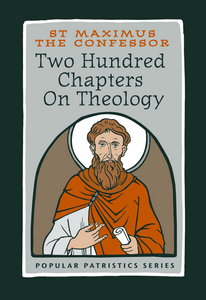
When my wife and I were perusing the humungous Oxford book store, Blackwells, I came across a Patristics section which took up most of my time that day. While there, I purchased SVS Press’s copy of Maximus’s Two Hundred Chapters on Theology. It is turning out, in only the first few pages, to be enormously rich and spiritually and theologically precious to me. There is much gold to be dug up, here.

Maximus begins his work by setting up a few guard rails about God’s absolute otherness, using terms I have only ever read Dionysius use (i.e., “super-substantial” and “absolutely above/beyond essence or substance”). He then goes on to describe the inner life of the one whose spiritual/thought life is continually disciplined to draw itself up to God:

1.13 He who has dazzled the intellect with divine thoughts, and has accustomed his rationality unceasingly to celebrate the creator with divine hymns, and has hallowed his sensory perception with unadulterated mental representations – such a one has added to the natural beauty in accordance with the image, the deliberate good in accordance with the likeness.”[1]

You can see here the patristic conception of image/likeness in Maximus, as well as a definition of deification as a mystical union or sharing, an unutterable love-relationship which God and Man continually keep up with one another (based on both God’s and Man’s dual initiative). Reading 1.13 reminded me of a similar statement of Maximus’s in his Ambiguum, where his explanation of mystical union revolves around something like the idea of being fully encompassed by the Other. To Maximus, our union with Christ is a full-encompassing, where, though we keep our essential humanity intact, we are known and are seeking to be more known only in line with those characteristics and particularities as filtered through God’s gifting of them. In other words, we refuse to be known or encompassed apart from our own total-identification and encompassing by Christ. Glorious.

Three “chapters” later, Maximus illustrates a provocative picture of salvation which further attempts an elucidation of deification. He writes,

“And he who has been purified, is illuminated; and he who has been illuminated is made worthy to lie with the bridegroom Word in the chamber of the mysteries.”[2]

Maximus chooses to relate our union with God to the sexual union which a husband and wife share on their wedding night. He caveats that image, though, with the “mysteries” as the place wherein that sexual union takes place. Now, by “mysteries” he means the sacraments of the Church: the Eucharist and Baptism. So, the sacramental mysteries are the means through which God unites himself, continually, to his people. Without a consistent participation on the part of the Bride (the Church) in the mysteries (the Eucharist), the Bride and Groom (the Word, Christ) are not in full union and their relationship is not initiated or brought to completion. Again, glorious.

In case you thought Maximus the Pelagian, however, he insists, later on in the first forty or so chapters, that:

1.31 Never can a soul reach out towards the knowledge of God if God himself does not, having condescended, lay hold of it and lead it up to himself. For a human mind is not strong enough to ascend such a distance – as if to seize for its part some divine illumination, if God himself did not draw it upward, as far as is possible for a human mind to be drawn upward, and enlighten it with divine radiances.”[3]

Such union, mediated to the Bride in the mysteries, is more rightly said to be initiated and brought to its end by the Groom, i.e., Christ. It is Christ who reaches toward the Christian and pulls him up to union with Himself. Christ gets the credit and the glory for the Triune work he completes in us, using the mysteries, to do such work.

Amen, amen, and amen!

For those who want a deep spiritual nourishment beyond the steady flow of contemporary, popular Christian literature (much of which misses the point), turn to the ancient fathers for the golden honey of biblical wisdom. Turn to the Tradition, and be satiated.


[1] St. Maximus the Confessor, Two Hundred Chapters on Theology (Yonkers, NY: SVS Press, 2015), 51.

[2] St. Maximus the Confessor, Two Hundred Chapters on Theology (Yonkers, NY: SVS Press, 2015), 53.

[3] St. Maximus the Confessor, Two Hundred Chapters on Theology (Yonkers, NY: SVS Press, 2015), 61.

Uncategorized

Maximus the Confessor on The Lord’s Prayer

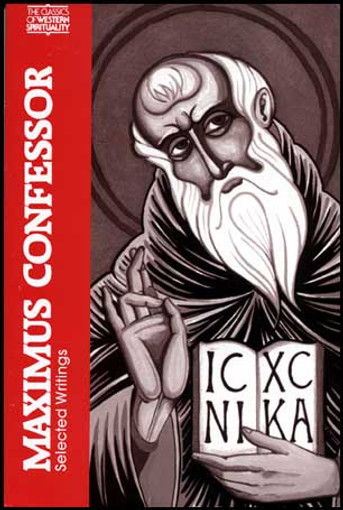
Maximus the Confessor’s commentary on the Lord’s Prayer is a short, edifying, worshipful read. The preeminent eastern theologian’s interaction with what is going on theo-logically in the words of The Lord’s Prayer is illuminating of the pre-Modern outlook concerning the Son’s salvific incarnation and our subsequent participation in the Trinity’s life. He writes,

“Indeed this prayer contains in outline, mysteriously hidden, or to speak more properly, openly proclaimed for those whose understanding is strong enough, the whole scope of what the words deal with. For the words of the prayer make request for whatever the Word of God himself wrought through the flesh in his self-abasement. It teaches us to strive for those goods of which only God the Father through the natural mediation of the Son in the Holy Spirit is in all truth the bestower, since according to the divine Apostle the Lord Jesus is ‘mediator between God and men’: Through his flesh he made manifest to men the Father whom they did not know, and through the Spirit he leads the men whom he reconciled in himself to the Father. For them and on their account, he became man without any change and he himself worked and taught many new mysteries whose number and dimension the mind can in no way grasp or measure.”[1]

Maximus’s insistence that “the words of the prayer make request for whatever the Word of God himself wrought through the flesh in his self-abasement” is the most profound statement in this small passage here, since it remarkably proclaims that the Lord’s Prayer’s telos goes beyond merely providing a structure for prayer but is itself a proclamation of the fulfillment of the Son’s economic workings. In other words, the Lord’s Prayer is itself a sort of gospel proclamation which tells of Jesus Christ’s working out within himself of the perfection of humanity through his own human life, death, and resurrection. Glory to God for such a wonderful insight.

Maximus continues, outlining the meet response to such reflection on God’s gracious salvation:

“He gives adoption by giving through the Spirit a supernatural birth from on high in grace, of which divine birth the guardian and preserver is the free will of those who are thus born. By a sincere disposition it cherishes the grace bestowed and by a careful observance of the commandments it adorns the beauty given by grace. By the humbling of the passions it takes on divinity in the same measure that the Word of God willed to empty himself in the incarnation of his own unmixed glory in becoming genuinely human.”[2]

Our response, fueled and given by the grace of God through the working of Jesus Christ and the Spirit, is one of worship and obedience. In worshipping and obeying, the human Christian ascends to greater levels of participated divinity in a reverse manner to how Christ condescends from the heights of his divinity down to his finite humanity. Thus is the whole Christian life: one of deifying ascent from one glory to the next, fulfilling our purpose as little Christs.

May we each individually become an εικον of our Lord: the divine and human God-Man.


[1] George C. Berthold, Trans., Maximus Confessor: Selected Writings (New York, NY: Paulist Press, 1985), 102.

[2] George C. Berthold, Trans., Maximus Confessor: Selected Writings (New York, NY: Paulist Press, 1985), 103.

Uncategorized

Eberhard Jüngel on Theology, Language, and God

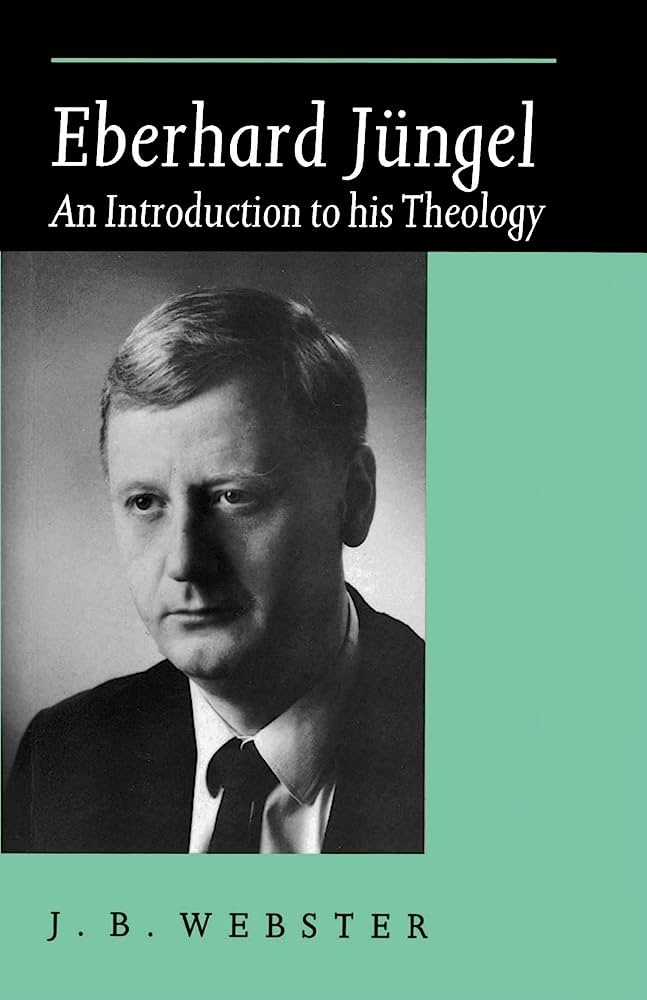
I recently purchased John Webster’s Eberhard Jüngel: An Introduction to his Theology, and have been wildly pleased with what I have found and read there. Amidst my daily perusing of the best anthology of Barth’s work in English today – The Essential Karl Barth by Keith Johnson – I find that reading Webster’s intro on Jüngel is a helpful supplement for illuminating certain points of Barth and for understanding how those after him built upon and developed his theology. Jüngel, in my opinion, functions as a sort of theological son to Barth: he builds upon his good points, elucidates emphases of Barth’s which aren’t totally clear in Barth’s writings, and critiques Barth when he thinks he is in error. I find many aspects of Jüngel’s life and work exciting, too. Both of Jüngel’s mentors, for example, Karl Barth and Martin Heidegger, have inspired much of my own life, language, and thought. Martin Heidegger’s Being and Time, though I have only read portions of it, has solidified certain convictions I was playing around with when meditating on the relationship between human subjectivity, hermeneutics, and theological method. Needless to say, too, Barth’s writings have had a similar yet greater effect on me.

I found much to appreciate in the opening chapters of the book. Webster writes, commenting on a few core ideas of Jüngels’,

“The essence of God is nothing other than the essence of the one who works and reveals… The history of the man Jesus constitutes nothing less than the inner life of God, the very place where God’s trinitarian relatedness is played out before the world… God’s way of being himself is by being God for us. It is this which lies behind the concept of ‘correspondence’ (Entsprechung) which Jüngel uses to describe the inseparability of God’s immanent life from his economic operations. For if God ‘corresponds with himself’ in the event of revelation, then his revealed being pro nobis is nothing other than his immanent being pro se.”[1]

Jüngel emphasizes, then, the same point put forward by Barth, Rahner, and the Nicene theologians, that who we receive by faith in the person of the Lord Jesus Christ is none other than the Eternal Son of the Trinity. If we want to say that the Lord Jesus is truly “in the form of God” (Phil. 2:6) as we meet him by faith, then who God is in His economy (i.e., in Jesus) is who He must be in His ontology (i.e., in His Triune life). If “Rahner’s Rule,” that who God is in His life (i.e., who He really and truly is within Himself) is who He is in His activity or workings towards us, is to be upholded and maintained then we must affirm Jüngel’s point here: “The history of the man Jesus constitutes… the very place where God’s trinitarian relatedness is played out before the world.” The theological implications of this simple formula are tremendous. Furthermore, the statement that “God’s way of being himself is by being God for us” finds deep soil in Barth’s same case: who God has chosen to be in His act of love by uniting Himself with humanity in Jesus Christ is “God-with-humanity.” In other words, God’s incarnation in Jesus is the point at which God chose to forever be united with humanity in intimate union. God will never again be Himself without being God-with-humanity.

Going on to illuminate more of Jüngel’s core ideas, Webster discusses Jüngel’s elucidation of revelation from a different yet similar angle. Jüngel seeks to answer the question, in a truly post-metaphysical vein (with heavy overtones of Heideggerian ontology language): How is it that humans can speak of God “as object”? Jüngel’s contention with “traditional,” metaphysical accounts of God are that they subject God to metaphysical categories foreign to the subject itself (i.e., God) and inevitably treat God as an object to be analyzed. As a theologian of the inductive vein, convinced that theology can only proceed and take its cues from the nature of the divine subject in question rather than from general principles applied to the subject, Jüngel proposes that the only way humans can speak of God’s being-as-object is through the utter and total subjection of theology’s speech about God to the ways in which God has already allowed Himself to be spoken of. Webster includes a quotation I think should be given here in full (from Jüngel’s seminal work God’s Being is in Becoming):

“God’s being-as-object is his being-revealed. God is thus the object of knowledge insofar as he has interpreted himself. And insofar as God has interpreted himself in his revelation and so made himself the object of knowledge of God, he has also made man into the subject of the knowledge of God… That means… that God’s being-as-object is not the result of human objectification of God… He is only objective as the one who has made himself objective.”[2]

Moving on to Jüngel’s position on theological language, which I thought was particularly illuminating, Webster lays out the centrality of the idea of metaphor in the theology of Jüngel. Following Heidegger, Jüngel argues that the literalistic boundaries which Western thought has placed on the conception of truth has stifled theological language and theologians’ understanding of just what can be rightly said concerning God. However, theological language is not therefore transcendent of human speech. Theological language is and can only be decidedly human. Webster comments,

“Jüngel insists that language about God must be authentically human language. Of course, he is firm in the conviction that language about God is only possible on the basis of God’s revelatory utterance, and that such language does not take its rise from within human language since it is demanded of man from beyond the horizons of worldly discourse. But he affirms with equal conviction that language about God is not the suspension of human language or its devaluation. Language about God is certainly not immanent within the structures of ordinary human speech. Yet it does not so transcend those structures as to lose its human character. Language about God is a demand which goes against the grain of man’s natural linguistic resources; yet it is not thereby less but more human than ‘ordinary’ discourse.”[3]

Theological language is human language in the highest and most true sense.

I highly recommend the works of Jüngel, and this small introduction, to you. Along with the rest of the dialectical theologians, Jüngel stands as a voice which points a way forward (albeit imperfectly) for future theological speaking in this post-metaphysical moment.


[1] John Webster, Eberhard Jüngel: An Introduction to his Theology (Cambridge, UK: Cambridge University Press), 17-18.

[2] Eberhard Jüngel, The Doctrine of the Trinity: God’s Being is in Becoming (Edinburgh: T&T Clark, 2014), 57.

[3] John Webster, Eberhard Jüngel: An Introduction to his Theology (Cambridge, UK: Cambridge University Press), 40.

Uncategorized

Paul Tillich, Faith, and Theological Reflection

The end of my last post includes a quotation from Paul Tillich’s Biblical Religion and the Search for Ultimate Reality which puts forth Tillich’s position on the compatibility between philosophy and theology. The central thesis of this little book is that philosophy and theology can, in fact, coexist, and are, even further, codependent on each other’s relevance and success as human thought projects. As a lay evangelical theologian, I went into reading his work with a cautious skepticism (which I was right to do), but nevertheless found some insights – about both philosophical investigation and theological speaking – which I thought would best be to throw out there and discuss.

A personal note: later this summer, I plan on flying up to Wisconsin to complete an audited class on the patristic doctrine of Participation at an Anglican seminary. My interest in the patristic vision, generally, stirred my interest in this, and so you can imagine that when I got to Tillich’s section on Participation (and our current age’s rejection of the participatory outlook) my interest piqued. He writes,

“In terms of the history of philosophy, it is a nominalistic ontology which has determined philosophical empiricism from the high Middle Ages to the present moment. Being, according to this vision of reality, is characterized by individualization and not by participation. All individual things, including men and their minds, stand alongside each other, looking at each other and at the whole of reality, trying to penetrate step by step from the periphery toward the center, but having no immediate approach to it, no direct participation in other individuals and in the universal power of being which makes for individualization… one thing must be emphasized. It is a view of reality as a whole.”[1]

Indeed, Tillich! While I have serious reservations about the attempts by many contemporary theologians (most of whom stem from high-church backgrounds) to revive the sort of participatory outlook so-long espoused by the Christian tradition, Tillich does a great job here of outlining the general philosophical air we breathe now: one which chokes us on our own scientistic individualism.

In the next chapter, Tillich displays his presuppositions concerning the nature of religion (Christianity including), but says some thought-provoking things that have real theological implications. He writes, concerning man’s tendency to anthropomorphize:

“There is no type of religion which does not personify the holy which is encountered by man in his religious experience… In the moment in which something took on this [sanctified] role, it also received a personal face. Even tools and stones and categories became personal in the religious encounter, the encounter with the holy. Persona, like the Greek prosopon, points to the individual and at the same time universally meaningful character of the actor on the stage. For person is more than individuality. ‘Person’ is individuality on the human level, with self-relatedness and world-relatedness and therefore with rationality, freedom, and responsibility. It is established in the encounter of an ego-self with another self, often called the ‘I-Thou’ relationship, and it exists only in community with other persons.”[2]

What struck me about this section of the reading is the utter truthfulness of his argument. As one who places himself (generally) within the Reformed theological camp, I place a high value on the proposition that humans, when left to their own devices, will 100% of the time fashion idols for themselves. Calvin’s whole “The heart is an idol factory” meets me with a hearty Amen. Humanity does not and cannot go on long without worshipping anything and everything as long as it is not the God revealed in Jesus Christ. We fashion ideological, material, and emotional gods for ourselves like hotcakes: it is our basic function as corrupted beings. Yet, the Eternal Son’s incarnation as Jesus Christ proclaims an insane and wonderful truth to us, that neither does God seek to be an impersonal God to us; in matter of fact, humanity cannot even come to know or understand a God who does not condescend to our human ways of knowing, thinking, speaking, and being. There is a double edged sword brought out by reflection on Paul Tillich’s assertions here: humanity both cannot understand a God who would require them to either transcend or escape their humanity (since there literally is no way for us to know or be known except in ways appropriate to our mode of being), yet humanity continually and doggedly insists on making created puppet-gods who conform to who we believe god should be (which ends, every time, in an anthropomorphized idol).

While there are numerous other sections of the book that I could comment on, I think his page-long discussion of the nature of faith presents some good, final theological-meat to chew on:

“Faith, in the biblical view, is an act of the whole personality. Will, knowledge, and emotion participate in it. It is an act of self-surrender, of obedience, of assent. Each of these elements must be present. Emotional surrender without assent and obedience would by-pass the personal center. It would be a compulsion and not a decision. Intellectual assent without emotional participation distorts religious existence into a nonpersonal, cognitive act. Obedience of the will without assent and emotion leads into a depersonalizing slavery. Faith unites and transcends the special functions of the human mind; it is the most personal act of the person… Biblical faith is the faith of a community, a nation, or a church. He who participates in this faith participates in its sumbolic and ritual expressions. The community unavoidably formulates its own foundations in statements which reveal its difference from other groups and protext it against distortions. He who joins the community of faith must accept the statements of faith, the creed of the community. He must assent before he can be received.”[3]

Perhaps this sort of definition of faith is at the heart of my insistence that the center of all theological language be Jesus Christ; it is why I am an avid reader of theologians like Karl Barth, Thomas F. Torrance, St. Athanasius, and the Cappadocian Fathers. Faith, says these figures, is real faith when it is a movement of the Christian’s being, when the intellectual assent which comes through prolonged theological reflection has a purpose and a mission. When simply joined to the ever-lethargic-and-hardly-ever-for-a-noble-purpose school of (in the end, anthropomorphizing) philosophy, theology becomes corrupted by the boundaries of the theologians’ study, the place which should be the locus of ministry and outreach. When evangelicals are lambasted by other sections of the Church on the grounds of some form of anti-intellectualism, I almost want to shout back “Because we have seen how y’all do it, hold’ up in your studies while the widows starve in your pews!” I will proudly wear the badge of anti-intellectual if it means my theologizing must always, always, always have practical ministry application, which is exactly what an absolute Christocentrism will accomplish for the ministry-minded theologian.

Ironically, Tillich realizes the problem that biblical (Christian) theologians have with philosophical speculation’s attempt to wed itself to the theological task. He writes,

“The Bible often criticizes philosophy, not because it uses reason, but because it uses unregenerated reason for the knowledge of God.”[4]


[1] Paul Tillich, Biblical Religion and the Search for Ultimate Reality (Chicago, IL: The University of Chicago Press, 1955), 17.

[2] Ibid., 22-23.

[3] Ibid., 53-54.

[4] Ibid., 56. 

Uncategorized

Barth on Theology

From Church Dogmatics II/2: here Barth gives a few preliminary remarks before expounding his unique (and revolutionary) take on the Reformed doctrine of Election.

“Theology must begin with Jesus Christ, and not with general principles, however better, or, at any rate, more relevant and illuminating, they may appear to be: as though He were a continuation of the knowledge and Word of God, and not its root and origin, not indeed the very Word of God itself. Theology must also end with Him, and not with supposedly self-evident general conclusions from what is particularly enclosed and disclosed in Him: as though the fruits could be shaken from this tree; as though in the things of God there were anything general which we could know and designate in addition to and even independently of this particular. The obscurities and ambiguities of our way were illuminated in the measure that we held fast to that name and in the measure that we let Him be the first and the last, according to the testimony of Holy Scripture. Against all the imaginations and errors in which we seem to be so hopelessly entangled when we try to speak of God, God will indeed maintain Himself if we will only allow the name of Jesus Christ to be maintained in our thinking as the beginning and the end of all our thoughts…”[1]

If Christological and Trinitarian Theology do not function as the central paradigms through which all other Christian doctrines are seen and interpreted, Barth says, the Christian theological project is doomed from the start. Since, for Barth, Jesus Christ is the unique and perfect and fully-revealing event of God’s-revealing-of-Self, to speak and presuppose (as the rest of the Western theological tradition does) that there can be true, substantial, or good things said about God apart from what is revealed in Jesus Christ – like what is propounded in so called “natural revelation” – is to take the wheels off the theological vehicle at the very beginning of the race. While Barth definitely aligns himself more with the Eastern Christian spirit of theologizing in this regard, his relegation of God’s-revealing exclusively to the Logos of God (Jesus Christ) even further separates him from the wider Christian tradition. Nevertheless, Barth is correct (albeit with a few caveats as to the locus of where Christ is to be found and subsequently interpreted).

The way Barth distinguishes himself from most all other theological methodologies is by refusing to subject his theological reflection to the “general principles” of philosophy and the analytic tradition’s conceptual structures, generally. Theologians would do well to see that the general direction of theological reflection today – a decidedly “post-metaphysical” direction – is not (surprise!) the spawn of Satan, but in fact should be seen as the heart of the task of the first-millennium-Church’s enterprise. Post-metaphysical theology, though it is admittedly being interpreted and applied in harmful and unbiblical ways, presents a better and more promising direction for the theologians who would uphold the absolute validity and infallibility of the Scriptures (all of which speak of Jesus Christ). Karl Barth points us towards where theology should be heading all the time: Christ, Christ, Christ! Any conceptual or philosophical shackles that would keep Christ caged should be done away with, destroyed, and left to the ashes of history.


[1] Karl Barth, Church Dogmatics II/2 (Edinburgh: T&T Clark, 1957), 4-11.

Uncategorized

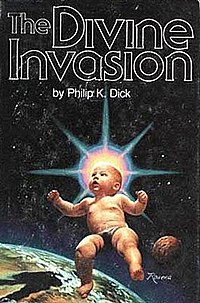
BOOK REVIEW: The Divine Invasion by Philip K. Dick

The Divine Invasion is Philip K. Dick’s second book in the VALIS trilogy. Written near the very end of his life, the book is an interweaving of Dick’s final meditations on metaphysics, spirituality, and theology with some of his earlier narrative motifs.

This is how the goat-creature sees God’s total artifact, the world that God pronounced as good. It is the pessimism of evil itself. The nature of evil is to see in this fashion, to pronounce this verdict of negation. Thus, he thought, it unmakes creation; it undoes what the Creator has brought into being. This also is a form of unreality, this verdict, this dreary aspect. Creation is not like this and Linda Fox is not like this. But the goat-creature would tell me that… Gray truth, the goat-creature continued, is better than what you have imagined. You wanted to wake up. Now you are awake; I show you things as they are pitilessly; but that is how it should be. How do you suppose I defeated Yahweh in times past? By revealing his creation for what it is, a wretched thing to be despised. This is his defeat, what you see – see through my mind and eyes, my vision of the world: my correct vision (Dick, The Divine Invasion, pgs 227-228).

The Divine Invasion includes much of what I loved about Do Androids Dream of Electric Sheep?, and reminded me why I started reading PKD. The way he introduces one or two primary male characters who drudge through the inescapably terrible world, simultaneously harboring an impure thought life while wrestling to become purer and be at one with the ordering principle of the universe. While in Do Androids Dream Dick’s usually-singular male character is split into two in Rick Deckard and John Isidore (Deckard acting out the immoral or impure role and Isidore the somewhat naive but still heroic trope), The Divine Invasion acts out two parallel stories of similar veins, one at the localized human level and the other at the archetypal, divine level. God himself becomes the split personality, while the human Herb Asher has to deal with the changing tides of the god’s inter-dimensional actions and wrestle with his own choice to act valiantly despite his perceivably unforutunate circumstances (typified, by him, by his endlessly sick wife, Rybys).

Side Note: I couldn’t shake the impression that the characters Emmanuel and Zina were inspired by Leto II and Ghanima Atreides from Children of Dune by Frank Herbert. The way the two children’s dialogue sounds more like philosophy-filled embodiments of the author’s own thoughts in narrative form, and the generally gnostic and meta-human impression they give to the reader point to this comparison. As much as the divine-child narrative trope is worthily used to act out certain incredible aspects of the Divine Son’s Incarnation, I can see how much some of these author’s misunderstand the essence of the Christian doctrine itself; especially as it relates to the humanity of Christ. What I mean is, one of the most incredible markers of authenticity of Jesus’s humanity is his growing up into maturity clearly argued for in the biblical texts. When authors like Herbert and PKD leave out that aspect of their God-Man characters, the divine side, so to speak, overtakes the human side and therefore places the character beyond relatability. It is not a big negative of the story, but an aspect of theology worth considering.

Dick has a great ability to show forth the inherent potency of the divine archetypes. Dick’s knowledge of what people respond to archetypally acts as his primary navigation in his storytelling. The way he makes the character Linda Fox function, for example, is a perfect demonstration of how Dick can intersect the themes of sexuality, femininity, desire, and emotional consolation in a character to evoke in the reader a sort of foundational, wordless understanding. Dick’s characters are embodiments of humanity’s universal feeling towards archetypes like the Great, Consoling Mother, the Harsh, Judgmental Father, the Tempter, the Wise Desert Sage, etc. Something about these character types speak to us, and Dick knew it. Any reader, for example, can empathize with Herb Asher’s morning meditation on Linda Fox (who, in this scene, is the fleshly incarnation of the tender aspect of the divine Being, the feminine side of God named Zina):

Has anyone loved another human as much as I love her? he asked himself, and then he thought, She is my Advocate and my Beside-Helper. She told me Hebrew words that I have forgotten that describe her. She is my tutelary spirit, and the goat-thing came all the way here, three thousand miles, to perish when she put her fingers against its flank… she consoled me, she consoles millions; she defends; she gives solace. And she is there in time; she does not arrive late (Dick, The Divine Invasion, pg 233).

Needless to say, PKD knew what he was doing utilizing these sorts of figures.

It is a hard thing to review a book like this one, especially since PKD fundamentally eludes traditional categories of analysis. As any PKD fan can attest to, Dick’s stories aren’t so much about the details of the world he has “built” within them (in fact, its almost the point sometimes that the details are fluid); Dick’s primary interest is the relationship between the Mind of the protagonist/reader with the shifting reality of the literary world. That said, I think there exists certain strands of beauty and truth interwoven throughout the novel which merit a detailed and meditative read by fans of science fiction (and philosophy) generally. The questions PKD asks (but doesn’t necessarily answer) like What is reality?, What is truth?, What is God?, and What are humans? is enough for anyone to benefit from Dick’s takes. While I don’t think attributing a numerical rating to The Divine Invasion appropriate considering all these ways he eludes such a rating, I think anyone would benefit from reading the book, and think storytellers, in particular, would do well to utilize the sorts of embodied Forms Dick utilizes in this book.

One negative aspect of The Divine Invasion, I will say, which is really applicable to most of his novels (and something I have noted before) is Dick’s pretty terrible portrayal of women. Although the example I gave above (of Linda Fox) appears a positive portrayal of women, it really acts more as a sort of commentary on the “universal” of femininity, and less on women particularly. The sort of a priori-accepted sexual obsession Herb Asher shows to Linda Fox despite the immanent presence of his wife does not do anything to teach the reader, and frankly should disgust them. You would expect that negative trait of Asher’s to be deconstructed over the course of the story and Asher to realize how foolish and disrespectful he has been towards his wife (who you can only really feel pity for), but the final scenes try to portray Asher’s eventual hook-up with Linda Fox as a positive development. I think this really does show a concrete example of Dick’s analytic evasiveness, since the very person who functions the most like the Blessed Virgin (the Virgin Mother of Jesus) is the most unlike Her and the most unpleasant, while the person whose personality best resembles the Virgin is the one who, ultimately, plays the role of the seductress. While portraying specific woman characters negatively isn’t by default immoral (many great villains in stories have been women), the way Herb Asher completely and continually disregards the woman to whom he is married does not translate into any discernible lesson or embodiment of virtue. A question then comes to mind: What constitutes an effective use of archetype? This example would seem to point towards a traditional use of archetypal figures and narrative forms, yet it remains to be seen how they can be utilized in unique ways to teach the good ol’ truths of the universe.

So, what do you think? Have you read The Divine Invasion? Do you think PKD is a beneficial read?

*To read my review of VALIS, the first book in the VALIS trilogy, click here.

Dick, Philip K. The Divine Invasion. New York, NY: Timescape Books, 1981.

Uncategorized

Why Read Karl Barth?

*This is the most recent post from my former Wix blog, but I thought it would be a fitting first post for this blog considering what its purpose is. Enjoy!*

For Christmas this past year, I asked for two books: Incarnation by T.F. Torrance and Christiane Tietz’s new biography every theology nerd has been raving about, Karl Barth: A Life in Conflict. I can confidently say, even before I received the books, that the subjects of these two books have had more impact on my life and Christian walk than any other figure outside of the early church fathers. Further, my appreciation and passion for the writings of Torrance intimately stems from my appreciation for his spiritual and intellectual mentor, Karl Barth. Why should you read this towering, momentous figure Karl Barth? What is there to be gained by reading and meditating on Barth’s doctrinal and biblical expositions?

“There is no God behind the back of Jesus Christ.”

I first learned about Karl Barth after coming out of a Christian Theology class I took during my sophomore year in college. My theology professor kept saying this phrase in connection to natural theology (the assumption and study of the natural world in order to come to truths about who God is) and as time went on I was more and more captured by the phrase. My professor explained that many times theologians will speak as if what can be learned about God through nature is essential to truly understanding what Christians have in the biblical text. In other words, Christian theologians sometimes speak as if we needed the natural world in order to interpret the Bible. The more I kept thinking about that phrase, though, that “there is no God behind the back of Jesus Christ,” the more I came to see clearly the problems I was already perceiving in a theological system which allowed language about God to be bound by what we can see (or think we are seeing) in the natural world. My professor helped me realize that to concede that the natural world is a valid lens through which to interpret Divine Being is to refuse to take the revelation of God – which we most definitely have in Jesus Christ – as fully and authentically serious. Put simply: to look elsewhere other than where God has clearly said “Here I am!” is to not take God’s “Here I am!” seriously.

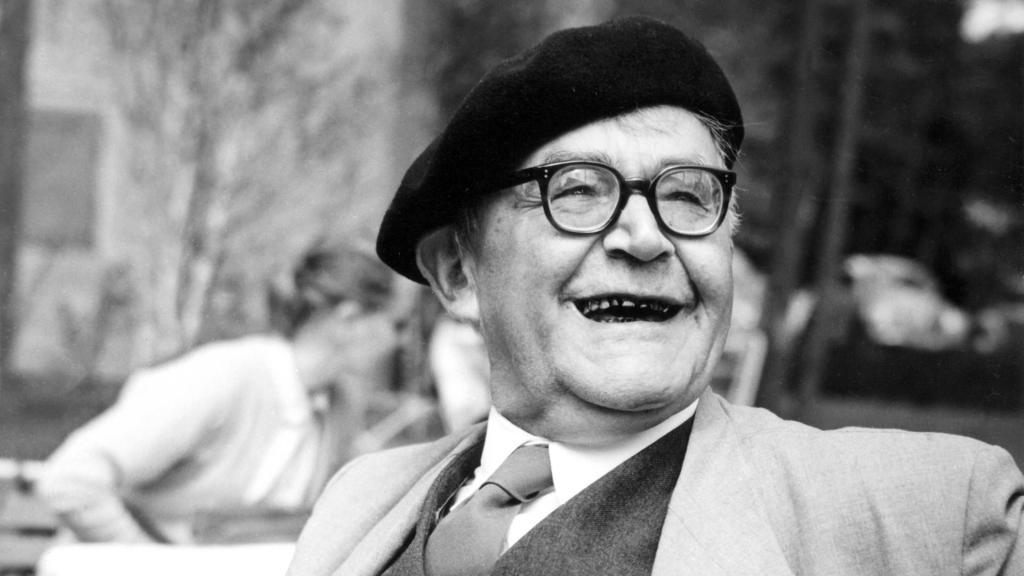
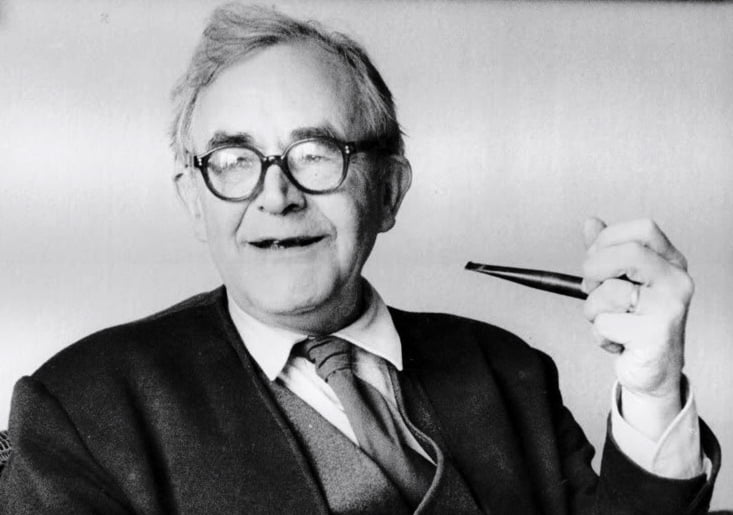
Where is God’s true and exclusive “Here I am!”? It is in Jesus Christ! Barth says. Barth’s famous quip demonstrates the absolute focus of the whole of his massive theological corpus: Christ, Christ, and only Christ! Now, my theology professor at the time would not have admitted that what he was espousing was what Barth taught – since evangelicals, generally, are not very friendly to Barth as they have considered his teachings on the Bible and the preaching moment – but, not being able to get the phrase out of my head I looked it up. And there, looking back, was Barth’s wrinkly, intelligent face. I immediately started devouring his more introductory works (like this one and this one), and was, simply, hooked!

Karl Barth is undoubtedly the most influential, provocative, and important theologian of the twentieth century. As the son of a well-respected academic himself, Barth grew up at the very beginning of the twentieth century, and through his political and theological disputations during the Second World War helped to cement his name and doctrine as internationally renown. Theologically, he is perhaps best known for his massive, unfinished set of theology books, the Church Dogmatics. Among the wider evangelical world, Barth is characterized by certain teachings of his which evangelicals perceive deviate from the norm of Christian orthodoxy (yet, considering the Protestant liberalism in which he grew as a theologian and thinker, he is a stark and healthy contrast). Perhaps one disclaimer could be made about Barth (this, keep in mind, coming from an evangelical myself): the way Barth is interpreted and appropriated today among those who are reasonably characterized as Progressive Christians may help you to see where Barth could have been clearer on the implications of what he wrote. This is not to say that how he is appropriated among Progressive Christianity today is the right way of interpreting Barth, but keep in mind that Barth has been used to espouse and set the cornerstone for contemporary Christian Progressivism (as seen in most of the mainline denominations). Nevertheless, he will undoubtedly go down as a flawed theologian who still helped the Church worldwide use language which benefitted Christians’ understanding of their own doctrines, like revelation, who God is in Christ, and, most of all, the nature of the Triune God’s relationship with humanity.

So, to return to the question: Why should you read Karl Barth?

Well, in my experience, to learn from Barth that the locus (the exclusive place) of God’s revelation is Jesus Christ (and, I would add, Jesus Christ as put forth by the whole biblical text) was to revolutionize my understanding of what the task of theology, and the Christian life, in turn, is all about. Some interesting implications, too, opened up concerning theology’s relationship with philosophy, and my understanding of what it means for “all truth to be God’s truth,” a favorite saying of many natural or analytic theologians. Karl Barth, as an expositor of God’s Word and as a Christian theologian in harmony with the voice of the Christian past, will help you to see the centrality, beauty, and exclusivity of the Lord Jesus Christ and the Triune God which he reveals to all people. Amid all of Barth’s heady and complicated theological musings is a beautiful, central focus on God as revealed in Christ, and can be a helpful, useful way of understanding anew the task that Christians have in continually reforming, re-using, and rethinking their employment of theological language.

Some works on Barth’s writings/life:

Newest Barth Anthology: https://www.amazon.com/Essential-Karl-Barth-Reader-Commentary/dp/1540960730.

Older Barth Anthology (written by one of his students): https://www.amazon.com/Barths-Church-Dogmatics-Helmut-Gollwitzer/dp/0567290514/ref=sr_1_2?crid=1ZPAMQKH40VOT&keywords=helmut+gollwitzer+barth&qid=1686231204&s=books&sprefix=helmut+gollwitzer+barth%2Cstripbooks%2C156&sr=1-2.

Classic Barth biography: https://www.amazon.com/Karl-Barth-Letters-Autobiographical-English/dp/0800604857/ref=sr_1_1?crid=1DN8514SX3KJO&keywords=eberhard+busch&qid=1686231272&s=books&sprefix=eberhard+busch%2Cstripbooks%2C154&sr=1-1#customerReviews.

Newest Barth biography (expands more on his relationship with student/partner Charlotte Von Kirschbaum): https://www.amazon.com/Barth-Professor-Systematic-Theology-Christiane/dp/0198852460/ref=sr_1_1?crid=2YLANCC2PPXFM&keywords=karl+barth+a+life+in+conflict&qid=1686231320&s=books&sprefix=karl+barth+a+life+in+conflic%2Cstripbooks%2C159&sr=1-1.

Barth’s massive Church Dogmatics (only for the truly O.G. Barth fans): https://www.abebooks.com/servlet/BookDetailsPL?bi=31521117842&ref_=ps_ggl_17730966692&cm_mmc=ggl-_-US_Shopp_Trade50up-_-product_id=COM9781598564426USED-_-keyword=&gclid=CjwKCAjw-IWkBhBTEiwA2exyOy5tvNBEYDxO7YWiHNjyGbuudJfveDY51VhbwcGSIhS8KVV-ObP9JRoCN-0QAvD_BwE.