–
In evangelical-theological literature right now, the idea that theologians are “church grammarians” is a hot one. The theologian, this literature says, is one who actively seeks to test, challenge, and refine the Christian church’s language about God so as to bring it in conformity with God’s being as revealed in Jesus Christ. Especially among those evangelical theologians open to the thought-world of figurehead theological thinkers like Barth, Torrance, Webster, et al., this idea holds a central prominence (for good reason). To me, this idea seems thoroughly helpful and downright correct.
See, after Karl Barth, the idea of the theologian as church grammarian has taken on a special role. What Barth did was bring this definition into clearer focus and consideration: to him, theologians of the past understood their task as something more akin to philosophical speculation, rather than as the construction and refinement of theological terminology that served the church’s mission to upbuild the saints and evangelize the world. At the end of the day, the theologian must not think either too little or too much of their task, since they are both 1) unable to speak univocally (i.e., completely in line with the reality) of God, and 2) commissioned by God with doing what point number one rightly claims is impossible: to speak rightly and truly (and humanly) about God as God has so revealed himself to humanity. For Barth, the theologian accomplishes his task when he so conforms Christian language to the God revealed in Jesus Christ that the church is able to rightly understand herself and her mission in light of God’s speech about her. In other words, the theologian is a good theologian when he conforms the church’s speech about God with God’s own speech about himself.
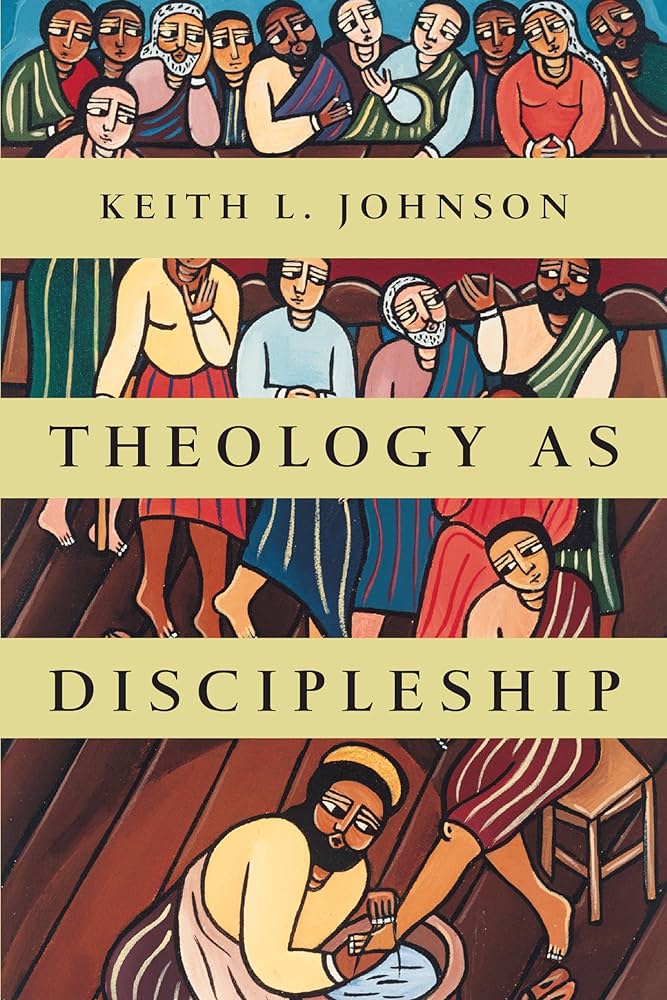
Keith L. Johnson, in his marvelous book about these very issues, writes:
“God himself must show us how to use [our theological language] rightly, and he does so in and through Jesus Christ…. Even as we know the truth about God, we always do so on God’s terms… We can rightly apply [our words about God] to God as long as we do so in line with the way God has done so in Christ. Our thinking and speaking about God will be true if our words correspond to who Christ is, what he has done and what he continues to do within created history. This means that our primary task as theologians is to bring the meaning of the words we use for God into conformity to Christ. We measure each one by his being, actions, teaching and promises… Our task as theologians is to apply the same treatment to every single word we use for God. Doing so is part of the way we ‘take every thought captive to obey Christ’ (2 Cor. 10:5)… As Barth puts it, by guiding our theological language, ‘Jesus Christ himself sees to it that in him and by him we are not outside by inside… He sees to it that what is true in him in the height is and remains true in our depth.’”[1]
Boom. The theologian is the one who takes the scrappily-taped-together wordage of the spiritual soldiers on the ministerial frontlines and fixes it, helping those same ministers see the benefit and coherence of Jesus Christ anew, in the words of scripture, tradition, and contemporary theological insights. May the theologian use herself for the glory of God and the upbuilding of her sisters and brothers.
Soli Deo Gloria
[1] Keith L. Johnson, Theology as Discipleship (Downer’s Grove, IL: InterVarsity Press, 2015), 80-83.

 Alex Renner's Blog