Uncategorized

The Theologian as Church Grammarian

In evangelical-theological literature right now, the idea that theologians are “church grammarians” is a hot one. The theologian, this literature says, is one who actively seeks to test, challenge, and refine the Christian church’s language about God so as to bring it in conformity with God’s being as revealed in Jesus Christ. Especially among those evangelical theologians open to the thought-world of figurehead theological thinkers like Barth, Torrance, Webster, et al., this idea holds a central prominence (for good reason). To me, this idea seems thoroughly helpful and downright correct.

See, after Karl Barth, the idea of the theologian as church grammarian has taken on a special role. What Barth did was bring this definition into clearer focus and consideration: to him, theologians of the past understood their task as something more akin to philosophical speculation, rather than as the construction and refinement of theological terminology that served the church’s mission to upbuild the saints and evangelize the world. At the end of the day, the theologian must not think either too little or too much of their task, since they are both 1) unable to speak univocally (i.e., completely in line with the reality) of God, and 2) commissioned by God with doing what point number one rightly claims is impossible: to speak rightly and truly (and humanly) about God as God has so revealed himself to humanity. For Barth, the theologian accomplishes his task when he so conforms Christian language to the God revealed in Jesus Christ that the church is able to rightly understand herself and her mission in light of God’s speech about her. In other words, the theologian is a good theologian when he conforms the church’s speech about God with God’s own speech about himself.

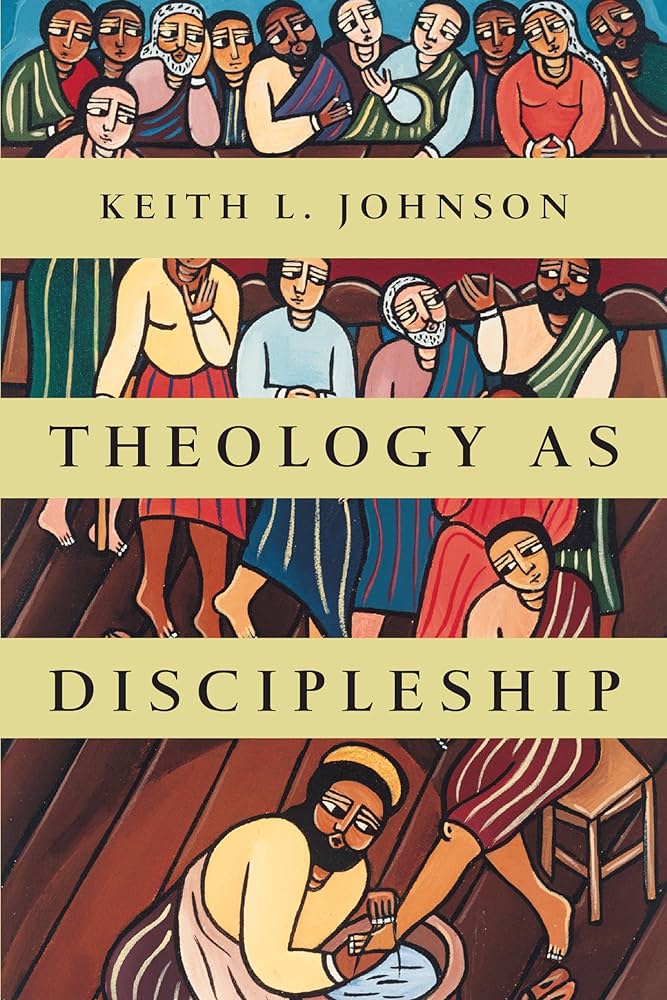
Keith L. Johnson, in his marvelous book about these very issues, writes:

“God himself must show us how to use [our theological language] rightly, and he does so in and through Jesus Christ…. Even as we know the truth about God, we always do so on God’s terms… We can rightly apply [our words about God] to God as long as we do so in line with the way God has done so in Christ. Our thinking and speaking about God will be true if our words correspond to who Christ is, what he has done and what he continues to do within created history. This means that our primary task as theologians is to bring the meaning of the words we use for God into conformity to Christ. We measure each one by his being, actions, teaching and promises… Our task as theologians is to apply the same treatment to every single word we use for God. Doing so is part of the way we ‘take every thought captive to obey Christ’ (2 Cor. 10:5)… As Barth puts it, by guiding our theological language, ‘Jesus Christ himself sees to it that in him and by him we are not outside by inside… He sees to it that what is true in him in the height is and remains true in our depth.’”[1]

Boom. The theologian is the one who takes the scrappily-taped-together wordage of the spiritual soldiers on the ministerial frontlines and fixes it, helping those same ministers see the benefit and coherence of Jesus Christ anew, in the words of scripture, tradition, and contemporary theological insights. May the theologian use herself for the glory of God and the upbuilding of her sisters and brothers.

Soli Deo Gloria


[1] Keith L. Johnson, Theology as Discipleship (Downer’s Grove, IL: InterVarsity Press, 2015), 80-83.

Uncategorized

Theological Knowledge as Originating in God’s Initiative in Karl Barth’s Dogmatics in Outline

Karl Barth’s Dogmatics in Outline is an imperfect summarizing of his more layered, theologically-structured work, the Church Dogmatics. The Outline, made up of 24 chapters each covering a portion of the Apostle’s Creed, is a formidable introduction for the Barth-curious. More than a simple introduction, however, Dogmatics in Outline is a rich theological-devotional meditation which Barth gave in the form of a series of lectures immediately following the end of the Second World War. Along with his Evangelical Theology (also a series of lectures he gave, but in America), the Outline is a shiny jewel in the myriad-ly colorful theological crown of Karl Barth. There are too many sizable nuggets of theological goodness to cover here, but chapters 5-10 are especially enriching.

At the beginning of chapter five, Barth begins an offensive against the unnamed specter of his theologically liberal forefather Friedrich Schleiermacher. He contrasts the faith found in the Apostles Creed with that espoused by the preeminent theological Romantic, who represents (still, sadly) much of modern hermeneutics and biblical theology of both “liberal” and “conservative” veins. He starts:

“In the sense of Christian faith, God is not to be found in the series of gods. He is not to be found in the pantheon of human piety and religious inventive skill. So it is not that there is in humanity something like a universal natural disposition, a general concept of the divine, which at some particular point involves the thing which we Christians call God and as such believe in and confess; so that Christian faith would be one among many, an instance within a general rule… The God of the Christian Confession is, in distinction from all gods, not a found or invented God or one at last and at the end discovered by man; He is not a fulfillment, perhaps the last, supreme and best fulfillment, of what man was in course of seeking and finding.”[1]

In other words, the classical method of “proving God’s existence,” of analyzing God just as one would analyze the theological pronouncements of any other deity originating in the sinful creativity of mankind, is a fools errand; it does not and cannot get you to the God revealed and disclosed in the Christian Scriptures. Further, God is not something which can be, has been, or will ever be “found out” by man, period. Man, in his lowly and corrupted estate, is incapable of finding his way to the God who is, and all attempts have ended up creating language structures and conceptions of a god which are in fundamental disagreement with who God tells us He is in such Scriptures (and the Tradition which interprets those Scriptures). The only way in which such a God-to-Man relationship can be established is if God breaks forth into our limited reality and establishes such a relationship. Theologically and existentially, we are in need of God’s help.

“What is involved [i.e., revealed in the Apostles Creed] is man’s meeting with the Reality which he has never of himself sought out or first of all discovered. ‘What no eye hath seen nor ear heard, what hath not entered into the heart of any man, God hath given to those who love Him’… God in the sense of the Christian Confession is and exists in a completely different way from that which is elsewhere called divine.”[2]

So. Barth has helped us establish that the “infinite qualitative distinction” which Christian history has affirmed of the ontological divide between God and creation is indeed true, and is the sword which splits in two every idea of divinity originating in Man’s mind. How, then, is theology established? How is it that humanity can speak of God (which is an ability Barth must believe we now have, however that works out, since he has written what he has written), if humanity cannot then “ascend” to true knowledge of God?

As he gives his answer about how theology is allowed, he also sets out to distinguish his theological project from most “systematic” theologians of the past five centuries or so. He writes:

“It is this God in the highest who has turned as such to man, given Himself to man, made Himself knowable to him… God in the highest, in the sense of the Christian Confession, means He who from on high has condescended to us, has come to us, has become ours… By this definition something fundamentally different is taking place from what would happen, if I should try and set before you conceptually arranged ideas of an infinite, supreme Being. In such a case I would be speculating. But I am not inviting you to speculate. I maintain that this is a radically wrong road which can never lead to God, but to a reality called so only in a false sense… When our talk is of Him and we speak of Him as about a familiar entity, who is more familiar and real than any other reality and who is nearer us than we are to ourselves, it is not because there may have been particularly pious people who were successful in investigating this Being, but because He who was hidden from us has disclosed Himself.”[3]

Theology can only be established on the foundation of God’s initiative to reveal Himself to Man. Without such a divine initiative, Man is doomed (but also revels in being doomed) to forever theorize and imagine a god who fits Man’s fancies and passions. Ten times out of ten, Man creates idols of the world he exists in, and without divine illumination is stuck in such a degrading, self-chosen pattern of destruction. Though his doctrine of the Word of God is be similar yet distinct from mine, Barth’s focus on Jesus Christ as the center of that divine initiative on the part of God to break through Man’s faulty thought-world is summed up well when Barth writes,

“The whole work of God lives and moves in this one Person. He who says God in the sense of Holy Scripture will necessarily have to say Jesus Christ over and over again… From this work we must make no abstractions, if we would know God’s nature and existence. Here, in this work, God is the Person who expounds Himself, and is thus the subject of this work.”[4]

Jesus Christ is the place where God breaks through to us and screams, smiling, “Here I am!”

Soli Deo Gloria


[1] Karl Barth, Dogmatics in Outline (New York, NY: Harper & Row Publishers, 1959), 36.

[2] Karl Barth, Dogmatics in Outline (New York, NY: Harper & Row Publishers, 1959), 36.

[3] Karl Barth, Dogmatics in Outline (New York, NY: Harper & Row Publishers, 1959), 37-38.

[4] Karl Barth, Dogmatics in Outline (New York, NY: Harper & Row Publishers, 1959), 39.

Uncategorized

The Incarnation of Christ as True Union with Fallen Humanity (and Some Mariological Sidebars) in T.F. Torrance

One of the few essential patristic principles which we receive from our older brothers and sisters in the historic Church catholic is the principle that “What has not been assumed [by Christ, in the incarnation] has not been healed.” Such was the implicit assumption of Sts. Athanasius and Cyril of Alexandria, and such was the explicit argument of St. Gregory of Nazianzen, against whom all of the myriad voices who would contradict and drown out the Chalcedonian, Nicene faith that had been handed down by the Apostles to the subsequent spiritual offspring of the One-Springing-Triad God were casting their stones. In a very real sense, an attack on the Christological principle of His assumption of all that is human is an attack on the core of the Christian faith, a fact the fathers rightly and consistently perceived (but one which unfortunately leaves many Christians today, particularly evangelicals, scratching their heads). What does such a principle say, and why is it central (“essential”) to the whole of the Divine Program?

The Apollarian heresy, named after its chief proponent – a common feature of historic heresies – Apollinaris, claimed that Jesus Christ’s incarnation consisted of God the Son taking on all of what was human, a body and a soul, except the mind of a human. In simpler words, Christ became physically a man, but retained his divine mind in such a way as to “leave out” the assumption of a human mind. To Apollinaris, Jesus wore the body of a man but left out the mind; i.e., Jesus was less than truly and fully human. After an examination of such a position, contemporaries of Apollinaris began to contend that such an incarnational formula was out of step with the Nicene faith. To many of the Nicene/orthodox bishops, Apollinaris was spreading lies about what Christ accomplished for humanity in His incarnation.

Queue the Christological principle mentioned before: What has not been assumed has not been healed. The reason why these orthodox bishops rejected Apollinaris’s argument was because if Christ had not truly and completely become all that we are in our humanity, Christ was not redeeming us by uniting himself to humanity, but only “part” of us (in this case the fleshly part), i.e., only a part of what we are is redeemed. You can start to see the problem here. Such a conception of the incarnation puts down a major roadblock against much of the theological language we inherit from the historic Church catholic; we can no longer say with St. John that “The Word became flesh and dwelt among us” if he did not truly “become flesh.”

Let’s turn to T.F. Torrance’s Incarnation: The Person and Life of Christ. Torrance writes:

“In becoming flesh the Word penetrated into hostile territory, into our human alienation and estrangement from God. When the Word became flesh, he became all that we are in our opposition to God in our bondage under law – that is the amazing act of gracious condescension in the incarnation, that God the Son should assume our flesh, should enter a human existence under divine judgment, enter into the situation where the psalmist cried Eli, Eli, lama sabachthani, so that the Word or Son of God himself gave out the same cry when overwhelmed with the divine judgment upon our flesh… He was made in the likeness of sinful flesh, and was even made a curse for us.”[1]

Here, Torrance expounds on just the same topic. However, his further claim that “he became all that we are in our opposition to God in our bondage under the law” deserves to be specially treated, since there are many whose main beef with Torrance on this point is that they don’t deem it appropriate to claim that Christ assumed “sinful flesh”; to them, for Christ to assume sinful flesh implicates a corrupting sinfulness on behalf of the Son of God who assumes that flesh. Although I won’t say these critics are outright heretics, it is interesting that in their attempt to safeguard some aspect of the Son’s holiness and uprightness (arguably the exact motivation of Apollinaris and many other heretics of the same vein) they put a limit on what Christ assumed in his assumption of our human nature.

Torrance goes on, meeting these critics’ claims:

“One thing should be abundantly clear, that if Jesus Christ did not assume our fallen flesh, our fallen humanity, then our fallen humanity is untouched by his work – for ‘the unassumed is the unredeemed’, as Gregory Nazianzen put it. Patristic theology, especially as we see it expounded by the great Athanasius, makes a great deal of the fact that he who knew no sin became sin for us, exchanging his riches for our poverty, his perfection for our imperfection, his incorruption for our corruption, his eternal life for our mortality.”[2]

And then:

“If the Word of God did not really come into our fallen existence, if the Son of God did not actually come where we are, and join himself to us and range himself with us where we are in sin and under judgment, how could it be said that Christ really took our place, took our cause upon himself in order to redeem us? What could we then have to do with him? We stand before God as flesh of sin under God’s judgment, and it is into this concrete form of our sin-laden, corruptible and mortal humanity in which we are damned and lost that Christ came, without ceasing to be the holy Son of God. He entered into complete solidarity with us in our sinful existence in order to save us, without becoming himself a sinner [emphasis added].”[3]

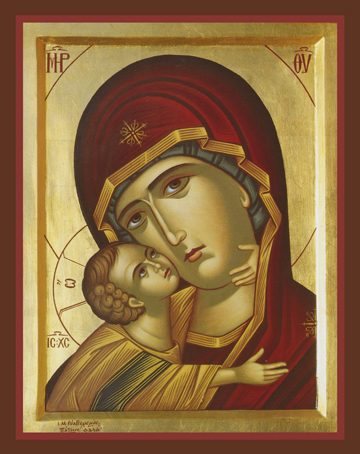
Torrance makes his point well. See, much of theological history in the past millennium has tended to argue that – although it is completely true that Christ assumed all that we are – Christ took on a humanity that in a very real sense was already healed, especially if such humanity was bestowed on him by being birthed from the Mother of God, the Theotokos, whom many theologians consider to have been conceived in an “immaculate” way as well. Well, if the Mother of God holds a humanity which is already cleansed, then what Christ assumes by being born of the Theotokos is a humanity which is foreign to the rest of us, right? This seems, to me, to be an impasse at which a Mariology or Christology which disallows any talk of Christ or Mary holding sinful flesh (not that they themselves are sinful or engage in any sort of sin) contradicts the patristic principle we receive from the historic Church catholic. What do we do about this?

Well, as someone who holds a high reverence for the Theotokos and who even affirms (with the fathers) that she very well can be said to be sinless, I think the way forward for all catholic Christians is to hold to a sort of dual affirmation: that, just as Torrance emphasizes, Christ (and Mary) are completely sinless and spotless but in order to be in step with the Christological principle that “all that is unashamed is unredeemed” we must also say that Christ (and Mary) had corrupted flesh, at least in their earthly, pre-ascension, salvific lives.

Such it seems to me. Torrance ends, saying:

“Christ the Word did not sin. He did not become flesh of our flesh in a sinful way, by sinning in the flesh. If God the Word became flesh, God the Word is the subject of the incarnation, and how could God sin? How could God deny God, be against himself, divest himself of his holiness and purity?… By remaining holy and sinless in our flesh, he condemned sin in the flesh he assumed and judged it by his very sinlessness.”[4]

Our Lord Jesus Christ assumed all that we are in order that we may be all that he is in his restored, redeemed, ascended humanity. We truly do not have a great high priest who is unable to sympathize with our weaknesses.

Soli Deo Gloria


[1] Thomas F. Torrance, Incarnation: The Person and Life of Christ (Downers Grove, IL: InterVarsity Press, 2008), 61.

[2] Thomas F. Torrance, Incarnation: The Person and Life of Christ (Downers Grove, IL: InterVarsity Press, 2008), 62.

[3] Thomas F. Torrance, Incarnation: The Person and Life of Christ (Downers Grove, IL: InterVarsity Press, 2008), 62.

[4] Thomas F. Torrance, Incarnation: The Person and Life of Christ (Downers Grove, IL: InterVarsity Press, 2008), 63.