–
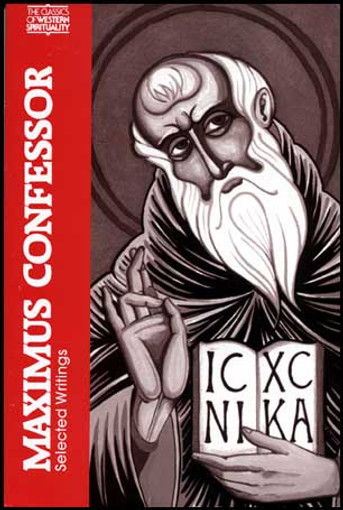
Maximus the Confessor’s commentary on the Lord’s Prayer is a short, edifying, worshipful read. The preeminent eastern theologian’s interaction with what is going on theo-logically in the words of The Lord’s Prayer is illuminating of the pre-Modern outlook concerning the Son’s salvific incarnation and our subsequent participation in the Trinity’s life. He writes,
“Indeed this prayer contains in outline, mysteriously hidden, or to speak more properly, openly proclaimed for those whose understanding is strong enough, the whole scope of what the words deal with. For the words of the prayer make request for whatever the Word of God himself wrought through the flesh in his self-abasement. It teaches us to strive for those goods of which only God the Father through the natural mediation of the Son in the Holy Spirit is in all truth the bestower, since according to the divine Apostle the Lord Jesus is ‘mediator between God and men’: Through his flesh he made manifest to men the Father whom they did not know, and through the Spirit he leads the men whom he reconciled in himself to the Father. For them and on their account, he became man without any change and he himself worked and taught many new mysteries whose number and dimension the mind can in no way grasp or measure.”[1]
Maximus’s insistence that “the words of the prayer make request for whatever the Word of God himself wrought through the flesh in his self-abasement” is the most profound statement in this small passage here, since it remarkably proclaims that the Lord’s Prayer’s telos goes beyond merely providing a structure for prayer but is itself a proclamation of the fulfillment of the Son’s economic workings. In other words, the Lord’s Prayer is itself a sort of gospel proclamation which tells of Jesus Christ’s working out within himself of the perfection of humanity through his own human life, death, and resurrection. Glory to God for such a wonderful insight.
Maximus continues, outlining the meet response to such reflection on God’s gracious salvation:
“He gives adoption by giving through the Spirit a supernatural birth from on high in grace, of which divine birth the guardian and preserver is the free will of those who are thus born. By a sincere disposition it cherishes the grace bestowed and by a careful observance of the commandments it adorns the beauty given by grace. By the humbling of the passions it takes on divinity in the same measure that the Word of God willed to empty himself in the incarnation of his own unmixed glory in becoming genuinely human.”[2]
Our response, fueled and given by the grace of God through the working of Jesus Christ and the Spirit, is one of worship and obedience. In worshipping and obeying, the human Christian ascends to greater levels of participated divinity in a reverse manner to how Christ condescends from the heights of his divinity down to his finite humanity. Thus is the whole Christian life: one of deifying ascent from one glory to the next, fulfilling our purpose as little Christs.
May we each individually become an εικον of our Lord: the divine and human God-Man.
[1] George C. Berthold, Trans., Maximus Confessor: Selected Writings (New York, NY: Paulist Press, 1985), 102.
[2] George C. Berthold, Trans., Maximus Confessor: Selected Writings (New York, NY: Paulist Press, 1985), 103.
 Alex Renner's Blog