Uncategorized

The Incarnation of Christ as True Union with Fallen Humanity (and Some Mariological Sidebars) in T.F. Torrance

One of the few essential patristic principles which we receive from our older brothers and sisters in the historic Church catholic is the principle that “What has not been assumed [by Christ, in the incarnation] has not been healed.” Such was the implicit assumption of Sts. Athanasius and Cyril of Alexandria, and such was the explicit argument of St. Gregory of Nazianzen, against whom all of the myriad voices who would contradict and drown out the Chalcedonian, Nicene faith that had been handed down by the Apostles to the subsequent spiritual offspring of the One-Springing-Triad God were casting their stones. In a very real sense, an attack on the Christological principle of His assumption of all that is human is an attack on the core of the Christian faith, a fact the fathers rightly and consistently perceived (but one which unfortunately leaves many Christians today, particularly evangelicals, scratching their heads). What does such a principle say, and why is it central (“essential”) to the whole of the Divine Program?

The Apollarian heresy, named after its chief proponent – a common feature of historic heresies – Apollinaris, claimed that Jesus Christ’s incarnation consisted of God the Son taking on all of what was human, a body and a soul, except the mind of a human. In simpler words, Christ became physically a man, but retained his divine mind in such a way as to “leave out” the assumption of a human mind. To Apollinaris, Jesus wore the body of a man but left out the mind; i.e., Jesus was less than truly and fully human. After an examination of such a position, contemporaries of Apollinaris began to contend that such an incarnational formula was out of step with the Nicene faith. To many of the Nicene/orthodox bishops, Apollinaris was spreading lies about what Christ accomplished for humanity in His incarnation.

Queue the Christological principle mentioned before: What has not been assumed has not been healed. The reason why these orthodox bishops rejected Apollinaris’s argument was because if Christ had not truly and completely become all that we are in our humanity, Christ was not redeeming us by uniting himself to humanity, but only “part” of us (in this case the fleshly part), i.e., only a part of what we are is redeemed. You can start to see the problem here. Such a conception of the incarnation puts down a major roadblock against much of the theological language we inherit from the historic Church catholic; we can no longer say with St. John that “The Word became flesh and dwelt among us” if he did not truly “become flesh.”

Let’s turn to T.F. Torrance’s Incarnation: The Person and Life of Christ. Torrance writes:

“In becoming flesh the Word penetrated into hostile territory, into our human alienation and estrangement from God. When the Word became flesh, he became all that we are in our opposition to God in our bondage under law – that is the amazing act of gracious condescension in the incarnation, that God the Son should assume our flesh, should enter a human existence under divine judgment, enter into the situation where the psalmist cried Eli, Eli, lama sabachthani, so that the Word or Son of God himself gave out the same cry when overwhelmed with the divine judgment upon our flesh… He was made in the likeness of sinful flesh, and was even made a curse for us.”[1]

Here, Torrance expounds on just the same topic. However, his further claim that “he became all that we are in our opposition to God in our bondage under the law” deserves to be specially treated, since there are many whose main beef with Torrance on this point is that they don’t deem it appropriate to claim that Christ assumed “sinful flesh”; to them, for Christ to assume sinful flesh implicates a corrupting sinfulness on behalf of the Son of God who assumes that flesh. Although I won’t say these critics are outright heretics, it is interesting that in their attempt to safeguard some aspect of the Son’s holiness and uprightness (arguably the exact motivation of Apollinaris and many other heretics of the same vein) they put a limit on what Christ assumed in his assumption of our human nature.

Torrance goes on, meeting these critics’ claims:

“One thing should be abundantly clear, that if Jesus Christ did not assume our fallen flesh, our fallen humanity, then our fallen humanity is untouched by his work – for ‘the unassumed is the unredeemed’, as Gregory Nazianzen put it. Patristic theology, especially as we see it expounded by the great Athanasius, makes a great deal of the fact that he who knew no sin became sin for us, exchanging his riches for our poverty, his perfection for our imperfection, his incorruption for our corruption, his eternal life for our mortality.”[2]

And then:

“If the Word of God did not really come into our fallen existence, if the Son of God did not actually come where we are, and join himself to us and range himself with us where we are in sin and under judgment, how could it be said that Christ really took our place, took our cause upon himself in order to redeem us? What could we then have to do with him? We stand before God as flesh of sin under God’s judgment, and it is into this concrete form of our sin-laden, corruptible and mortal humanity in which we are damned and lost that Christ came, without ceasing to be the holy Son of God. He entered into complete solidarity with us in our sinful existence in order to save us, without becoming himself a sinner [emphasis added].”[3]
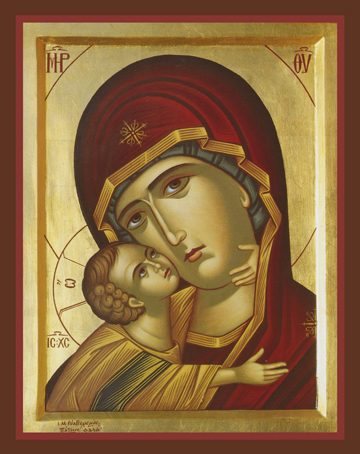
Torrance makes his point well. See, much of theological history in the past millennium has tended to argue that – although it is completely true that Christ assumed all that we are – Christ took on a humanity that in a very real sense was already healed, especially if such humanity was bestowed on him by being birthed from the Mother of God, the Theotokos, whom many theologians consider to have been conceived in an “immaculate” way as well. Well, if the Mother of God holds a humanity which is already cleansed, then what Christ assumes by being born of the Theotokos is a humanity which is foreign to the rest of us, right? This seems, to me, to be an impasse at which a Mariology or Christology which disallows any talk of Christ or Mary holding sinful flesh (not that they themselves are sinful or engage in any sort of sin) contradicts the patristic principle we receive from the historic Church catholic. What do we do about this?

Well, as someone who holds a high reverence for the Theotokos and who even affirms (with the fathers) that she very well can be said to be sinless, I think the way forward for all catholic Christians is to hold to a sort of dual affirmation: that, just as Torrance emphasizes, Christ (and Mary) are completely sinless and spotless but in order to be in step with the Christological principle that “all that is unashamed is unredeemed” we must also say that Christ (and Mary) had corrupted flesh, at least in their earthly, pre-ascension, salvific lives.

Such it seems to me. Torrance ends, saying:

“Christ the Word did not sin. He did not become flesh of our flesh in a sinful way, by sinning in the flesh. If God the Word became flesh, God the Word is the subject of the incarnation, and how could God sin? How could God deny God, be against himself, divest himself of his holiness and purity?… By remaining holy and sinless in our flesh, he condemned sin in the flesh he assumed and judged it by his very sinlessness.”[4]

Our Lord Jesus Christ assumed all that we are in order that we may be all that he is in his restored, redeemed, ascended humanity. We truly do not have a great high priest who is unable to sympathize with our weaknesses.

Soli Deo Gloria


[1] Thomas F. Torrance, Incarnation: The Person and Life of Christ (Downers Grove, IL: InterVarsity Press, 2008), 61.

[2] Thomas F. Torrance, Incarnation: The Person and Life of Christ (Downers Grove, IL: InterVarsity Press, 2008), 62.

[3] Thomas F. Torrance, Incarnation: The Person and Life of Christ (Downers Grove, IL: InterVarsity Press, 2008), 62.

[4] Thomas F. Torrance, Incarnation: The Person and Life of Christ (Downers Grove, IL: InterVarsity Press, 2008), 63.
Uncategorized

Maximus the Confessor on Deification in His Two Hundred Chapters on Theology

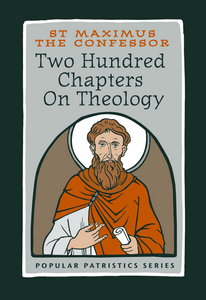
Maximus the Confessor is quickly becoming one of my favorite historical theologians. His characteristic Christocentrism, his healthy balance of apophatic and kataphatic theology, and his descriptions of the Christian life all lift up the soul to heights of love and peace which few contemporary Christian paperbacks have the ability to do. I am reminded of C.S. Lewis’s insistence, in his famous preface to Athanasius’s On the Incarnation, that, nine times out of ten it is the time-tested, ancient theological treatises which offer more spiritual encouragement than anything coming out in print today (with a few exceptions). I find the same to be true when reading Maximus; you can tell the man loved God, loved people, and found much growth in the contemplation of divine things. I myself benefit by allowing my soul to be lifted up by his theological movements.

When my wife and I were perusing the humungous Oxford book store, Blackwells, I came across a Patristics section which took up most of my time that day. While there, I purchased SVS Press’s copy of Maximus’s Two Hundred Chapters on Theology. It is turning out, in only the first few pages, to be enormously rich and spiritually and theologically precious to me. There is much gold to be dug up, here.

Maximus begins his work by setting up a few guard rails about God’s absolute otherness, using terms I have only ever read Dionysius use (i.e., “super-substantial” and “absolutely above/beyond essence or substance”). He then goes on to describe the inner life of the one whose spiritual/thought life is continually disciplined to draw itself up to God:

1.13 He who has dazzled the intellect with divine thoughts, and has accustomed his rationality unceasingly to celebrate the creator with divine hymns, and has hallowed his sensory perception with unadulterated mental representations – such a one has added to the natural beauty in accordance with the image, the deliberate good in accordance with the likeness.”[1]

You can see here the patristic conception of image/likeness in Maximus, as well as a definition of deification as a mystical union or sharing, an unutterable love-relationship which God and Man continually keep up with one another (based on both God’s and Man’s dual initiative). Reading 1.13 reminded me of a similar statement of Maximus’s in his Ambiguum, where his explanation of mystical union revolves around something like the idea of being fully encompassed by the Other. To Maximus, our union with Christ is a full-encompassing, where, though we keep our essential humanity intact, we are known and are seeking to be more known only in line with those characteristics and particularities as filtered through God’s gifting of them. In other words, we refuse to be known or encompassed apart from our own total-identification and encompassing by Christ. Glorious.

Three “chapters” later, Maximus illustrates a provocative picture of salvation which further attempts an elucidation of deification. He writes,

“And he who has been purified, is illuminated; and he who has been illuminated is made worthy to lie with the bridegroom Word in the chamber of the mysteries.”[2]

Maximus chooses to relate our union with God to the sexual union which a husband and wife share on their wedding night. He caveats that image, though, with the “mysteries” as the place wherein that sexual union takes place. Now, by “mysteries” he means the sacraments of the Church: the Eucharist and Baptism. So, the sacramental mysteries are the means through which God unites himself, continually, to his people. Without a consistent participation on the part of the Bride (the Church) in the mysteries (the Eucharist), the Bride and Groom (the Word, Christ) are not in full union and their relationship is not initiated or brought to completion. Again, glorious.

In case you thought Maximus the Pelagian, however, he insists, later on in the first forty or so chapters, that:

1.31 Never can a soul reach out towards the knowledge of God if God himself does not, having condescended, lay hold of it and lead it up to himself. For a human mind is not strong enough to ascend such a distance – as if to seize for its part some divine illumination, if God himself did not draw it upward, as far as is possible for a human mind to be drawn upward, and enlighten it with divine radiances.”[3]

Such union, mediated to the Bride in the mysteries, is more rightly said to be initiated and brought to its end by the Groom, i.e., Christ. It is Christ who reaches toward the Christian and pulls him up to union with Himself. Christ gets the credit and the glory for the Triune work he completes in us, using the mysteries, to do such work.

Amen, amen, and amen!

For those who want a deep spiritual nourishment beyond the steady flow of contemporary, popular Christian literature (much of which misses the point), turn to the ancient fathers for the golden honey of biblical wisdom. Turn to the Tradition, and be satiated.


[1] St. Maximus the Confessor, Two Hundred Chapters on Theology (Yonkers, NY: SVS Press, 2015), 51.

[2] St. Maximus the Confessor, Two Hundred Chapters on Theology (Yonkers, NY: SVS Press, 2015), 53.

[3] St. Maximus the Confessor, Two Hundred Chapters on Theology (Yonkers, NY: SVS Press, 2015), 61.

Uncategorized

Dionysius the Areopagite on the Most Holy Trinity

St. Dionysius the Areopagite, also known as “Pseudo-Dionysius” in more scholarly circles due to the fact that he was almost definitely not the Dionysius mentioned in Scripture as the disciple of the Apostle Paul, is a Christian theologian who garnered massive subsequent theological influence in both Western and Eastern theology. His treatise On the Divine Names is a meditative Trinitarian exposition on the central doctrine of the Christian faith, the Trinity. While the language Dionysius uses to describe human participation in the Triune God can be, at times, oddly-phrased, his theologizing stands as a cornerstone of later theological thinking and by itself serves to bring the reading Christian into further contemplative union with his God, who is Father, Son, and Spirit.

The second chapter, subtitled “Letter to Titus: Concerning common and distinctive theology, and what is the Divine Union and distinction” is uniquely worshipful, and offers us some theological meat to chew on. A feature of Dionysius’s theological vocabulary here which most excites reverence for his project in me is the frequent use he makes of what I call “super” terms. Since, for Dionysius (and the rest of the Christian Tradition), God is “beyond being” – i.e., beyond existence and non-existence, being and non-being – God can therefore rightly be called “superessential” or “supersubstantial.” God is “super essential,” then, because he is “above essence” or “substance-above-substance.” Substances or essences for Dionysius constitutes all that exists in the creaturely realm, i.e., everything that is not God; since God is not a creature and therefore not a part of the “substantial” or “essential realm,” he is therefore “super substantial.” I have yet to hear a contemporary theologian use such a term, but I believe terms like these – which make quick work of the Creator-creature distinction once its meaning is explicated – can help explain in concise ways God’s wholly otherness.

Before beginning his explication of the Trinitarian-ontological relations, he prefaces in section II,

“By taking thence the Divine revelations, as a most excellent canon of truth, we strive the guard the things lying there, in their native simplicity and integrity and identity – being ourselves guarded in our guard of the Oracles [Scriptures], and from these receiving strength to guard those who guard them.”[1]

By thus beginning, Dionysius tells his readers that the Trinitarian dogma he will then go on to describe has their foundation and source in the “Oracles” themselves. The Trinity and the Bible are inseparable.

In case anyone thought he only relied on an individualistic reading of the Oracles, he begins his explication in section IV by writing that his chronicles function within the Tradition which he inherited, stating,

“The sacred instructors of our theological tradition call the ‘Divine Unions’ the hidden and unrevealed sublimities of the super-unutterable and super-unknown Isolation; but the ‘distinctions,’ the goodly progressions and manifestations of the Godhead; and, following the sacred Oracles, they mention also properties of the aforesaid ‘Union’; and again of the distinction, that there are certain specific unions and distinctions… there is kindred and common to the One-springing Triad… the Oneness above source of one.”[2]

There is such richness packed into this portion I couldn’t possibly cover it all, but his theological vocabulary continues to arrest me. The Triune being, he argues from the Tradition, is “constituted” by a “super-unknown Isolation” and also by “goodly progressions and manifestations of the Godhead.” Translated into later Trinitarian parlance, God is Father who generates forth the Son and spirates the Spirit. The monarchy of God, i.e., the Father, is the “One” who is “springing” within that life of the “Triad”; but that springing forth is a “Oneness above source of one,” i.e., in unutterable and unspeakable (apophatic) generation within God’s ontology.

He clarifies in section V:

“But there is a distinction in the superessential nomenclature of God, not only that which I have mentioned, namely, that each of the One-springing Persons is fixed in the union itself, unmingled and unconfused; but also that the properties of the superessential Divine Production are not convertible in regard to one another. The Father is sole Fountain of the superessential Deity, since the Father is not Son, nor the Son, Father; since the hymns reverently guard their own characteristics for each of the supremely Divine Persons.”[3]

Let us not forget the distinctions within the Godhead, Dionysius reminds us. The Father does not stand alone as a unitary monad without inner distinction, but is eternally the Father-issuing-forth-both-Son-and-Spirit; neither the divine ontology nor any of the Christian theological pronouncements makes any sense without such inner-life distinctions between Father, Son, and Spirit. The Christian faith rests on such distinctions. “How these things are,” though, Dionysius says, “is neither possible to say, nor to conceive.”[4] Don’t think about it; shut up and worship the God who is Father, Son, and Spirit!

Dionysius finishes his second chapter by clarifying one final point: that though the Names of God exclusively apply to each “distinct” – a word I hesitate to use – Divine Person, the attributes of divinity can be rightly said to apply to each: Father, Son, and Spirit. He writes,

“These, the mutual and common distinctions, or rather the goodly progressions of the whole Deity, we will endeavor to the best of our ability to celebrate from the Names of God, which make them known in the Oracles;-first, having laid down, as we have said, that every beneficent Name of God, to whichever of the supremely Divine Persons it may be applied, is to be understood with reference to the whole Supremely Divine wholeness unreservedly.”[5]

Glory be to our Triune, unity-in-diversity God for all His manifold graces.


[1] Dionysius the Areopagite, The Collective Works: St. Dionysius the Areopagite, Trans. Rev. John Parker (Neptic Fathers Publications, 2023), 12.

[2] Dionysius the Areopagite, The Collective Works: St. Dionysius the Areopagite, Trans. Rev. John Parker (Neptic Fathers Publications, 2023), 13. 

[3] Dionysius the Areopagite, The Collective Works: St. Dionysius the Areopagite, Trans. Rev. John Parker (Neptic Fathers Publications, 2023), 14. 

[4] Dionysius the Areopagite, The Collective Works: St. Dionysius the Areopagite, Trans. Rev. John Parker (Neptic Fathers Publications, 2023), 16.

[5] Dionysius the Areopagite, The Collective Works: St. Dionysius the Areopagite, Trans. Rev. John Parker (Neptic Fathers Publications, 2023), 19.