–
–
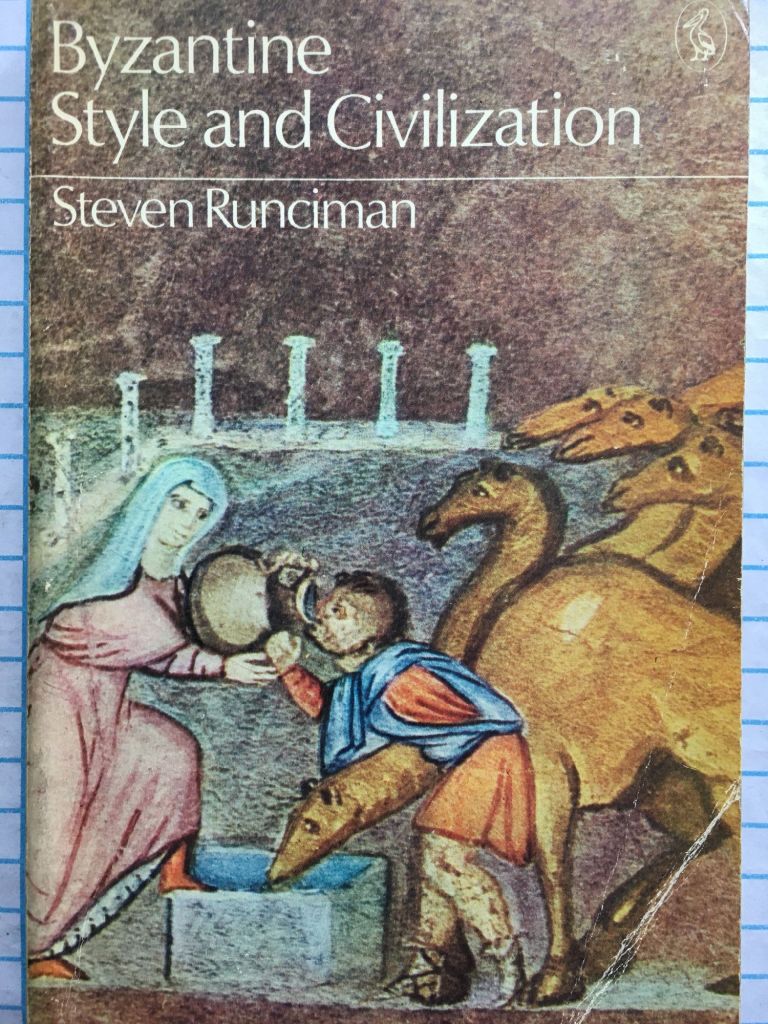
Runciman, Steve. Byzantine Style and Civilization. London, UK: Penguin Books, 1990.
Byzantine Style and Civilization by the late Steve Runciman is hailed as a classic introduction to the field of Byzantine studies. It is a short, fascinating read, which includes in summarized form the various political, theological, and above all artistic flavors of the now-perished Eastern Roman Empire. The value in this book is its ability to plunge the Western reader into the Eastern Christian mind, with its thick decorative ritualism, its steadfast self-understanding as the bearer of the true Christian Tradition, and its enchanting iconography. What I loved most about this book was what it taught me about the Eastern Empire’s function as a sort of partner to and extension of the Church which was housed there. The author spends most of his time focused on the happenings and development of New Rome, Constantinople, and as the pages press on moves through topics like Neoplatonism, the Nicene Empire, and the Ottoman Turks’ slow creep towards domination.
The Theology of the Icon
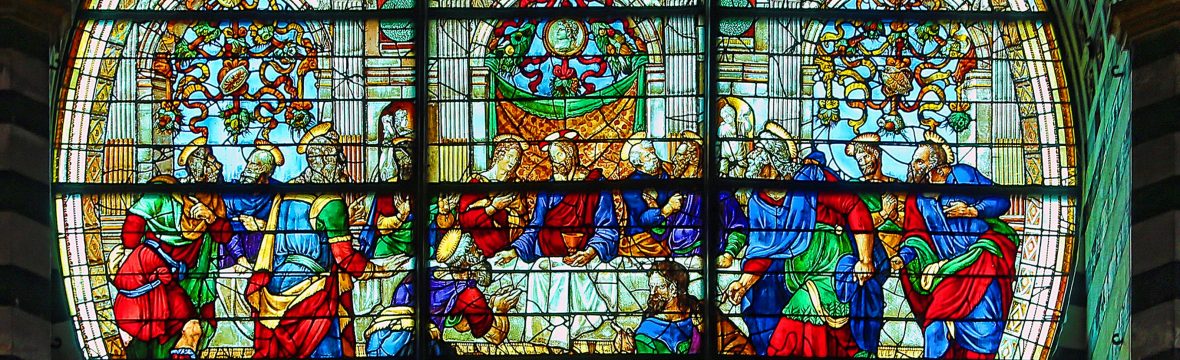
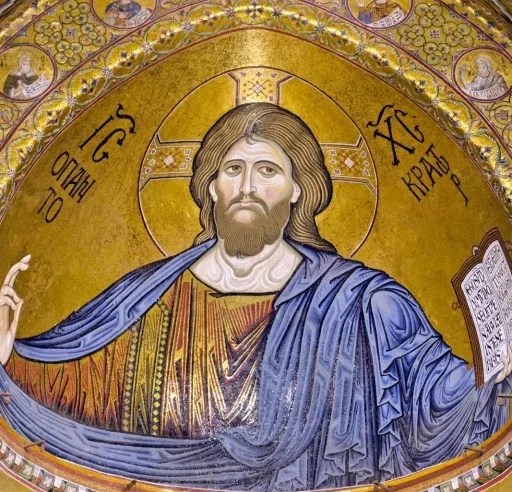
I have long been a sucker for Byzantine iconography. In the churches, basilicas, and public buildings of Byzantium, images of Christ, Mary, the saints, and biblical scenes lined virtually every wall. Runciman writes, “The new status of Christianity enabled the subject-matter of Christian art to be broadened… Not only did portraits of Christ and the Mother of God multiply, but also pictorial scenes of episodes in the Bible story… [and] each of them contained a deeper significance on which the initiate could ponder.”[1] Everywhere the Byzantine looked, he was reminded of the world of the Scriptures; better yet, the places and art the Empire created incarnated the Scriptural world itself. It was as if the Bible were still being written.
The Byzantines’ artistic ethos did not appear out of a vacuum. Starting around the seventh century, art theory was informed by the Neoplatonic notion of the hierarchy of being as expressed by St. Dionysius the Areopagite. Runciman writes, “According to [Dionysius] the world of the senses mirrors the world of the spirit. ‘The essences and orders which are above us are incorporeal… Our human hierarchy, on the other hand, is filled with the multiplicity of visible symbols, through which we are led up hierarchically and according to our ability to the unity of God.'”[2] In line with the Byzantines’ use of Dionysius’s hierarchical vision, John of Damascus’ iconographic logic also helped undergird how the Romans understood their artistic world: “He based his argument on the Neoplatonist doctrine that the appreciation of visible beauty is a necessary though transitory path towards the appreciation of absolute beauty, which is apprehended only by the soul… The Incarnation provides the necessary path along which human souls reach the true knowledge of God.”[3] The Roman government sought to remind their subjects at every turn of the street or public gathering that they were faced with Beauty, the Beauty which illuminates and structures the world, the Church, and the Empire itself.
What this means is the Byzantines understood reality itself to be liturgical.
Problems
The two problems I have with the book is that the author does not understand the supposed heresy of monophysitism described on page 82, and the pictures – which don around half of the book – do not include color. He writes that monophysites believe that “Christ’s nature was purely divine.” The first problem is very minor though and it is really more of a passing remark he makes, but the second problem is unfortunate considering most of the book’s content includes commentary on Byzantine artistic style (with its high emphasis on color), which would be further enhanced if the readers did not have to look online at the pictures referenced for the full experience of the pieces. Interested in Byzantium but don’t know where to start? This is the place.
Soli Deo Gloria
[1] Steven Runciman, Byzantine Style and Civilization (London, UK: Penguin Books, 1990), 33.
[2] Steven Runciman, Byzantine Style and Civilization (London, UK: Penguin Books, 1990), 81.
[3] Steven Runciman, Byzantine Style and Civilization (London, UK: Penguin Books, 1990), 83.
 Alex Renner's Blog