Doctrine

The Transfiguration of Jesus

The transfiguration is one of those odd episodes in the Gospels which seem disjointed as far as its place in the flow of the narratives go. Immediately before each of the Transfiguration accounts – found only in the Synoptics – Jesus proclaims that he will die, and that those who must follow after Him must follow Him in His treatment at the hands of the religious authorities and the world: that whoever wants to gain their lives must lose them. After the episode, it seems as if Jesus picks up where He left off: healing, traveling, preaching. The story comes as a weird break in an otherwise mostly coherent narrative stream.

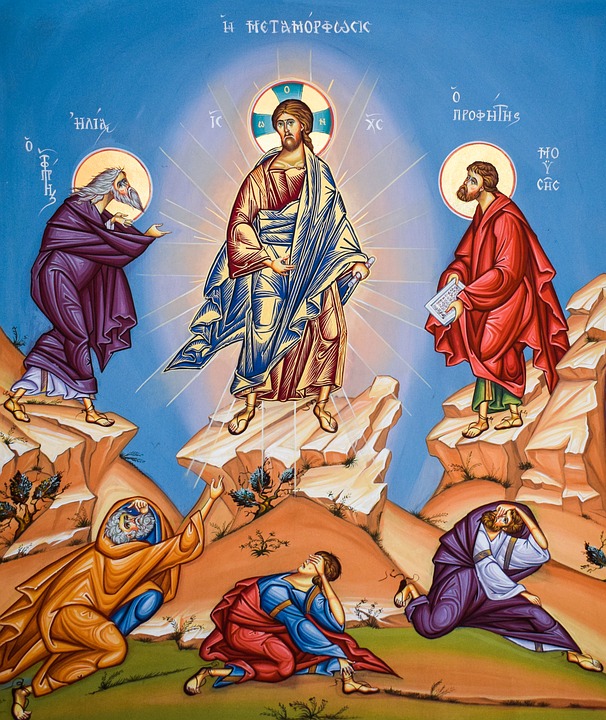
An icon of the Transfiguration.

The Lukan account reads, “About eight days after Jesus said this, he took Peter, John and James with him and went up onto a mountain to pray. As he was praying, the appearance of his face changed, and his clothes became as bright as a flash of lightning. Two men, Moses and Elijah, appeared in glorious splendor, talking with Jesus. They spoke about his departure, which he was about to bring to fulfillment at Jerusalem. Peter and his companions were very sleepy, but when they became fully awake, they saw his glory and the two men standing with him. As the men were leaving Jesus, Peter said to him, ‘Master, it is good for us to be here. Let us put up three shelters—one for you, one for Moses and one for Elijah.’ (He did not know what he was saying.) While he was speaking, a cloud appeared and covered them, and they were afraid as they entered the cloud. A voice came from the cloud, saying, ‘This is my Son, whom I have chosen; listen to him.’ When the voice had spoken, they found that Jesus was alone. The disciples kept this to themselves and did not tell anyone at that time what they had seen.”

Parallels with Mosaic Narrative

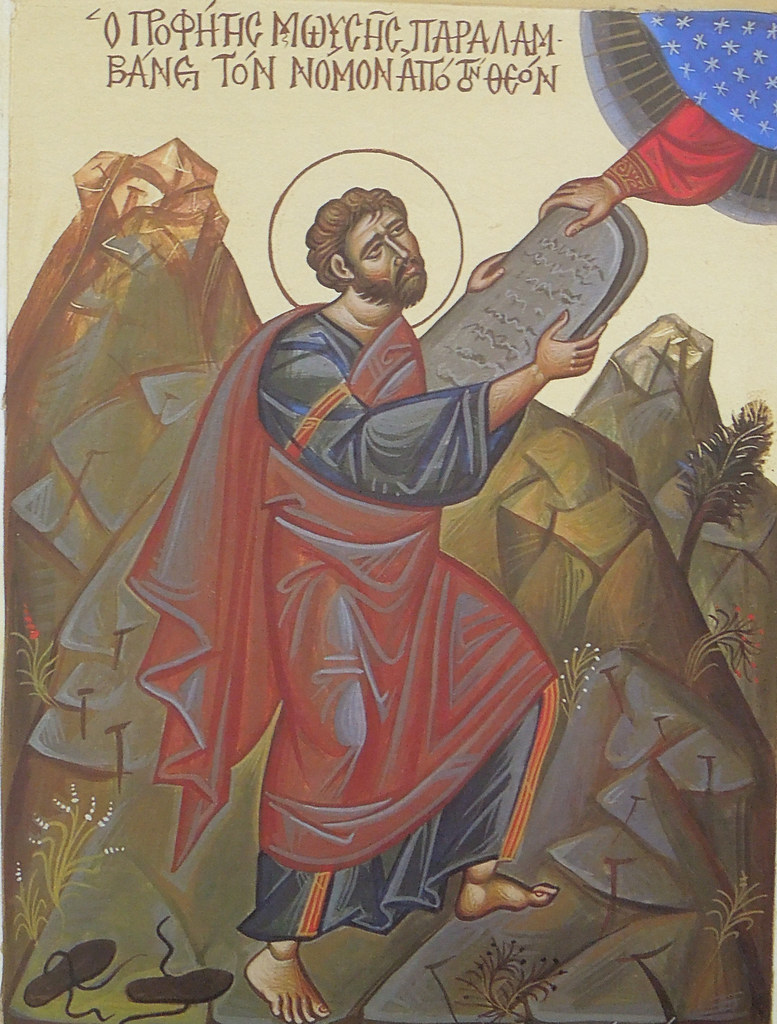
Following this, after Jesus and the disciples descend from this (literal) mountaintop experience, Jesus becomes disgruntled at “this generation” for their lack of faith. What is striking is to note is the parallel movement between this story and the story of Moses’s reception of the Ten Commandments. Both figures ascend to the top of the mountain, where the Word of God and the presence of God are present, surrounded by light and cloud. Then, descending the mountain, they criticize the lack of faith of the people (Moses and the Israelites who have just been worshipping the golden calf and Jesus with the Israelites who are suffering under the weight of their own faithlessness). The presence of Moses alongside Elijah in the transfiguration narrative is striking, too, because he is no longer the protagonist of the story; he is off to the side speaking with the central character Jesus. Jesus is somehow, therefore, a true and better Moses, who is listened to by Moses and Elijah, signaling their inferiority compared to the Christ, to Christ’s mission as central to the fulfillment of the purposes of God.

An icon of Moses receiving the Ten Commandments.

It has been noted by other interpreters that one difference between the Decalogue narrative and the Transfiguration narrative is the Light that shines from Christ’s face. When Moses is in the presence of God, his face shines, and it continues to radiate as he descends the mountain to rejoin the people. Notice, however, that with Jesus, the light shining from His face is not a refracted light. It is not reflected from some other source, but radiates from Jesus Himself. It is as if the text were saying, “the Source of the light reflecting from Moses’ face in the Old Testament; here is its source!” The voice of the Father – “This is my Son, listen to Him!” – confirms this as well. Jesus truly is “Light from Light,” receiving all He has from the Father, His glory, infinitude, holiness, and righteousness.

Trinity and Spiritual Blindness

The blindness of the apostles never ceases to give me a disheartening sigh. Nowhere is the inability of man – his utter and total deafness to the Word of God – on clearer display than this scene. The text is clear on what was happening with them: “He did not know what he was saying.” Even during the moment of revelation, the very moment Jesus was shown for who he really was, the apostles did not understand. It is telling, too, that later on, immediately before Christ begins to suffer at the hands of the elders and Romans, Peter – of all people! – attempts to dissuade Jesus from his mission. Peter should have been the first one to have seen that Jesus’s mission culminated and was completed in the suffering he would undergo. It isn’t only that he did not “get it” in the moment of transfiguring on the mountain, its that he misinterpreted who Jesus was after the fact, as well. The text also hints that, just like the Israelites at the foot of Sinai were afraid at the Spirit-cloud (the text says they saw it “as a consuming fire”), so Peter and the disciples were afraid of the cloud and the light: “While he was speaking, a cloud appeared and covered them, and they were afraid as they entered the cloud.”

Notice, too, the similarities to the baptism narrative. Here, again, is the Trinity on full display. The Son, the main character of the story, joined by Elijah (i.e., John the Baptist); the Father’s voice, which, again, points the surrounding listeners to Jesus, displaying His love for and approval of His Only-Begotten; and the Spirit, not in the form of a dove but surrounding the top of the mountain in the form of a cloud, reminiscent of the Spirit-cloud which dwelt on the top of Sinai and which led the Israelites through the wilderness. Here is the Trinity, the fullness of God’s presence. What is man’s response, symbolized by the apostles? Misunderstanding, blindness, and an inability to stay in the presence of God. Adam still cannot stay garden without having to leave it.

We should not be too harsh on the apostles, though. The Bible tells us over and over again that if the Spirit of the Lord does not build the house, the people labor in vain. In other words: no Spirit, no understanding, all the way down. Are we not in the same position as the apostles? Would we have seen – or will we continue to see – Jesus for who He truly is without the intervention of the Spirit, without the Spirit coming to us to open our eyes, to give us the rebirth Jesus says is necessary to enter the kingdom of God? Jesus Himself says, “It is better that I go away, for I am sending to you the One who will call to mind everything I have taught.” Last year I taught theology and church history to groups of ninth and tenth graders. One thing you cannot conclude without surveying the history of the Church is that the Spirit abandoned the Church after Pentecost. There is no activity of the Church – which actually does what is intended, to preach the gospel, to live for others, to see people’s lives changed by Jesus – without the Holy Spirit, because no one can interpret Jesus correctly without the Spirit. Jesus and the Spirit are two peas in a pod; the Spirit’s continual purpose is to point people to Jesus. This then helps us to see this mountain top scene correctly; the apostles do not understand because the Spirit has not given them the eyes to see. Where the Spirit is, there is understanding. If there is no understanding, there is no Spirit.

Revelation of the Son of God

It is not simply the case that the Spirit must flip the switch. We ourselves must also respond. There is still a way in which we are in the position of the apostles. We, like them, can choose to see Him according to the Spirit, or we can choose to see Him according to the flesh. See, the elders, the chief priests, the Romans: they refused to see Jesus according to this picture: the exalted King of Kings who mediates the presence of God and dwells with humanity on the mountain. They could accept that He was a teacher, but they could not accept His claims to be the Son of the Father. They refused to see Him how the Spirit told them to see Him. We are presented with a similar choice.

You see, there are many Jesuses which roam this earth. There is the political Jesus, the profound moral teacher Jesus, the comfortable diet hippie Jesus, the hard-nosed masculine Jesus, and innumerable other Jesuses which are very much worshipped and very much followed. None of these Jesuses are the Jesus to whom the Spirit points. Then, there is the Scriptural Jesus. The Jesus that the Church claims to worship; the One who the Nicene Creed says is “God from God, Light from Light, true God from true God,” the Only-begotten Son of the Father, full of grace and truth. He is the only Way of Life, the Truth, the Bread of Heaven, the Light of the World, the Lamb Who was Slain before the Foundation of the World, the Alpha and the Omega, and the One who claims our allegiance. This is the One the Spirit wants us to see, know, and love. This is the Jesus of the Kingdom of God. This is the Christ on display in the light of the Transfiguration, the self-interpretation that the Scripture is giving us. Karl Barth writes, “The miracles of Jesus are to be taken as ‘signs’ in the sense that they point to what He already was, to the hidden presence of the kingdom of God which would later be unveiled during the forty days in an abiding manifestation, in a tabernacling of the Lord in the midst of His disciples—a disclosure which will become definitive and universal at the end of all time in His coming again.” The Scripture is so smart, it is always communicating more than we think it is. The Scripture is actually amazing in what it is always doing. The Scripture says here, “That guy, in the Old Testament, who was constantly referred to throughout the pentateuch, the psalms, the prophets, the king who proclaims the word of God on the holy hill of Zion, who is the promised Messiah who will come to liberate Israel and through Israel the rest of the world, who embodies the presence of God to people? Oh yeah, this is that guy. And by the way, this guy – who shines forth the light only God can shine – He will suffer and die as a criminal.” This is why Christ says, right before He goes up the mountain with the apostles, that He would die at the hands of men before then saying, “Some of you will not taste death before [you] see the kingdom of God,” pointing directly to what would immediately happen. It is as if He were telling us, “What you will just hear about – my transfiguration on the mountain – you must understand it in light of what will happen later, i.e., my suffering, my passion, my cross.” Barth confirms this interpretation: “The transfiguration is the supreme prefigurement of the resurrection, and its real meaning will not be perceived until the resurrection has taken place.” This is why the Risen Christ who visits the apostles still bears the marks of His cross in His hands, His side, and His feet. Could He not have chosen to rise again with a fully restored body, without His scars from the cross? Of course! But He is telling us something: He does not want us to know Him as the glorious King apart from knowing Him as the Suffering Servant. He is not king without being servant. In fact, they are one role in Him. He bears the truth he taught His disciples – “Whoever wants to be great in the kingdom of God must be the least of all, must be the servant to all” – in His own Person.

This is the Revelation of the kingdom of God. This is the presence of Jesus: self-emptying love, what Phillipians 2 calls “kenosis.” This is the eternal image of God: this self-emptying, outgoing, reconciling love at work from the creation of the world to the establishment of the New Jerusalem, coming out of heaven for man. And this is the charge for us: will we find ourselves in service to the other? Will we empty ourselves so that love can become actual, visceral even, for those in our lives?

Eschatological Element

Throughout the Scriptures, divine glory always invokes the end of days, in that it always calls people to respond with longing for the Day when God and Man will be perfectly reconciled, when Adam and Eve can once again dwell in the garden forever with God on the mountain. In that sense, the transfiguration is a picture of the new creation; what do we see? We see God in His fullness, shining forth with His glory which tells of His benevolence, love, holiness, and righteousness. And we see Man, perfectly reconciled to the will of God and rejoicing in giving Himself out for God. Jesus is both of these in His own Person, what one theologian calls the “Godward movement of Man and the Manward movement of God.” All of it happens on the top of the mountain, reminiscent of the “holy city” of Zion referenced in Revelation: “And he carried me away in the Spirit to a mountain great and high, and showed me the Holy City, Jerusalem, coming down out of heaven from God. It shone with the glory of God, and its brilliance was like that of a very precious jewel, like a jasper, clear as crystal” (Revelation 21: 10-11). The transfiguration reminds us of our final destination: to be in perfect unity with God and people in the New Land He Himself has prepared for us. One commentator writes that “those with attentive ears and eyes can and must see it also—hidden glory—in the earthy ministry of Jesus, in the world of human need and gracious liberation that already exists, beginning right now at the foot of the mountain. Forget the booths, Peter; the Messiah has work to do.”

Indeed. The Messiah has work to do.

Kyrie Eleison

Happy thanksgiving!

Carroll, John T.. Luke : A Commentary, Westminster John Knox Press, 2012. ProQuest Ebook Central, http://ebookcentral.proquest.com/lib/bham/detail.action?docID=3416788.

Barth, Karl. Aids for the Preacher. 1886-1968; edited by Geoffrey William Bromiley, 1915-2009 and Thomas Forsyth Torrance, 1913-2007, in Church Dogmatics (Edinburgh, Scotland: T & T Clark, 1977), 314 page(s).

Doctrine

Humanae Vitae as (an) Outcome of Trinitarian Theology

The Encyclical

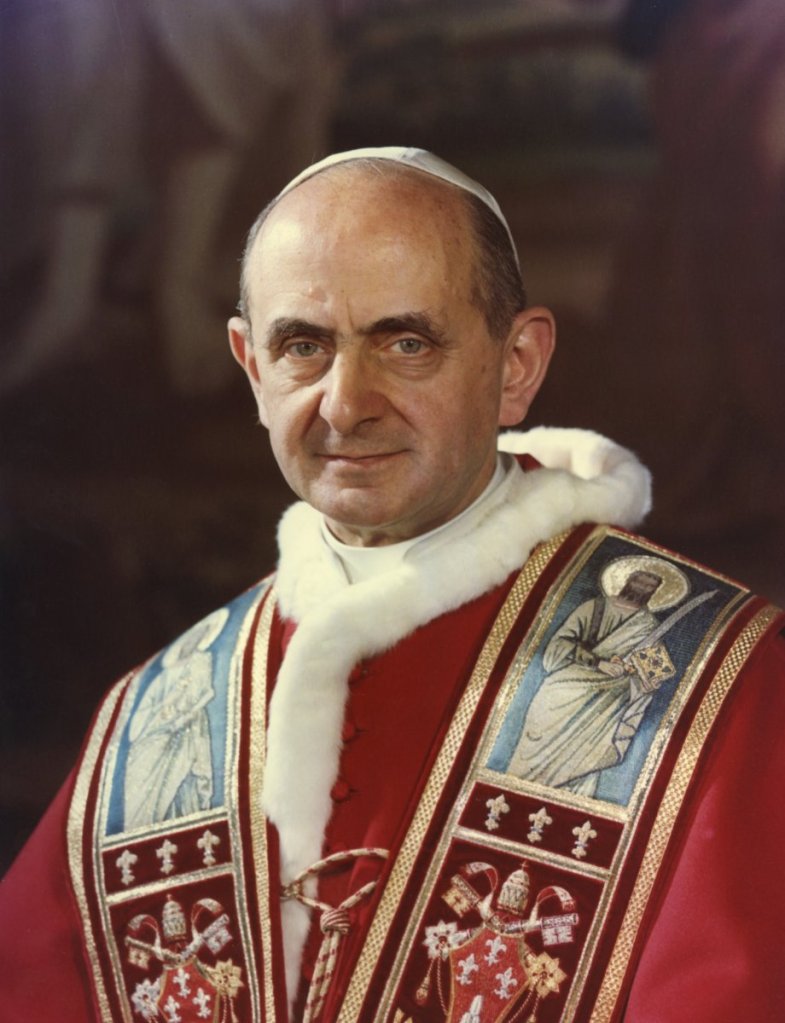
Humanae Vitae is the name of the papal encyclical written by Pope Paul VI in 1968 which addresses issues of the family and birth control. It was written before large amounts of the world decided to make artificial birth control a legalized medical reality, and the heart behind the letter was to call the nations of the world to moral account, to resist the “technical expedients” being made available to people. Technology was expanding its reach into most all areas of human life, and nations were heeding its call with an eery obedience. The technological attitude was spreading its worldwide campaign and the Pope sought to stand against it (or, at the very least, to temper its lust). In many ways Humanae Vitae is an artifact of the titanic theological war that has been waging for centuries between what popular theologians call the “disenchanted world” and the “enchanted world.” Or, antiquity and modernity. Platonism and materialism.

Masterfully, Paul VI calls into question technology’s function within the life of man. Behind all of his theologizing there lurks these palpable questions: What world-concept informs the urge to relegate all of man’s natural faculties to non-human entities? Further, what frame of mind must man hold in order to conclude that he is master of life itself, the belief implicated in the use of artificial birth control? Most importantly, what philosophical worldview is at work in the push to disallow the natural function of reproduction to “follow through” in producing children?

Paul VI’s letter reiterates the Roman Catholic Church’s teaching that artificial birth control runs contrary to the natural shape of Man as designed by God. He writes, “To experience the gift of married love while respecting the laws of conception is to acknowledge that one is not the master of the sources of life but rather the minister of the design established by the Creator.”[1] Further, by its very nature artificial birth control seeks to hijack and suppress the natural workings of the person, holistically conceived. Paul VI writes, “We must accept that there are certain limits, beyond which it is wrong to go, to the power of man over his own body and its natural functions – limits, let it be said, which no one, whether as a private individual or as a public authority, can lawfully exceed. These limits are expressly imposed because of the reverence due to the whole human organism.”[2] Crucially and theologically, for Christians, ABC contradicts the principle by which and through which those who have been baptized into Christ – the Selfless One – are to function: according to life, the divine life of the self-giving Trinity.

To that subject we turn.

The Principle of Livingness

It is the principle of what I call “livingness” which is at work in the Triune Life. We can see this in the simple Christian grammar which affirms – out of the relations of Sonship and Fatherhood – that the Holy Spirit is the Spirit “of Father and Son.” In other words, the Spirit is the Spirit “who is that relation of mutual love” between the two Persons. This “livingness” is the love which is essentially generative. It is productive of something, and, in this case, Someone.

The thing about love’s generativity is that you cannot have the former without the latter. Love, by its nature, is generative, productive of blessing, abundance, goodness. St. John’s famous dictum, “God is love” (1 John 4:8), a statement not simply attributive of the character of “being loving” but descriptive of the very Triune nature of God, gets at this idea. Paul VI describes love thus: “This love is above all fully human, a compound of sense and spirit… It is also, and above all, an act of the free will, whose trust is such that it is meant… to grow, so that husband and wife become in a way one heart and one soul, and together attain their human fulfillment… Whoever really loves his partner loves not only for what he receives, but loves that partner for the partner’s own sake, content to be able to enrich the other with the gift of himself.”[3] Generativity is at the very heart of the Triune Life, seen in the self-giftedness of the Son to the Father, and the Holy Spirit to the Father and the Son. Who God is, at His very base, is productive-loving-livingness. As a corollary to this love-logic, Paul VI concludes, “Marriage and conjugal love are by their nature ordained toward the procreation and education of children. Children are really the supreme gift of marriage and contribute in the highest degree to their parents’ welfare.”[4] Similarly, commenting on the “conjugal act” itself, he writes, “The Church… teaches that each and every marital act must of necessity retain its intrinsic relationship to the proceation of human life [emphasis mine].”[5]

When Christians are baptized into this God of livingness, they share in His life, taking on the contours of their newly given Father, Brother, and Comforter. They become more like the God into whose being they have been initiated, and become “partakers of the divine nature” (2 Peter 1:4). They take on this same livingness, this same generative, productive love-life, and start to mimetically model forth their love-God’s God-love.

Now Paul VI does not explicitly mention the connection between the Triunity of God and the generativity of the marriage relationship in Humanae Vitae. But I’m convinced it is why, at base, Paul VI had to say no to artificial birth control, because its sole purpose is the stifling of life and therefore of love, that love which only the Triune God can truly be. ABC may be comfortable; it may give a certain material stability; but it disallows the springing forth of new life, and therefore cannot be loving. This is because the soil has been poisoned, so to speak; life is not given the freedom to come forth, and life – being always good, always beneficial, always holy – comes directly from God who is life. In the same way Paul can say of the Father, that it is from Him “that every family in heaven and on earth derives its name” (Ephesians 3:15), so life, ζωη, is identified with the Person who is the Generated One (John 14:6), the One who gives His life to the world (John 3).

***Notice the difference here between what I am arguing and what stood at the center of the evangelical controversy surrounding “Eternal Functional Subordination.” The argument is not that the relationship of father-mother-child can be neatly mapped onto the Father-Son-Spirit relations, but that the same generativity that constitutes the dynamic of the God revealed in Christ is at work in the marriage relationship, as well. Of course, not univocally, but by participation and imitation.***

Conclusion

The Pope ends his letter with a series of charges given to the myriad groups affected and affecting the promulgation or use of ABC. Before he turns his attention to the married couple themselves, he describes their mission: “For the Lord has entrusted to them the task of making visible to men and women the holiness and joy of the law which united inseparably their love for one another and the cooperation they give to God’s love, God who is the Author of human life.”[6] Paul VI makes clear here that his mission is not to curmudgingly stifle the fun of married couples, but to uphold the Tradition’s definition of love as it has always been understood: as self-gift, all the way down.

Soli Deo Gloria


[1] Pope Paul VI, Humanae Vitae (Vatican City: Libreria Editrice Vaticana, 1968), 23.

[2] Pope Paul VI, Humanae Vitae (Vatican City: Libreria Editrice Vaticana, 1968), 28-29.

[3] Pope Paul VI, Humanae Vitae (Vatican City: Libreria Editrice Vaticana, 1968), 18-19.

[4] Pope Paul VI, Humanae Vitae (Vatican City: Libreria Editrice Vaticana, 1968), 19.

[5] Pope Paul VI, Humanae Vitae (Vatican City: Libreria Editrice Vaticana, 1968), 21-22.

[6] Pope Paul VI, Humanae Vitae (Vatican City: Libreria Editrice Vaticana, 1968), 36. 

Doctrine

Robert Jenson and the Logos Asarkos

Bruce McCormack’s landmark study on Christology, The Humility of the Eternal Son, leans heavily on the work of Robert Jenson to disprove the tradition’s positing of a bifurcated “Christological Subject.” He claims that this idea argues that there are two identities in God the Son: the “Eternal Son,” conceived as an identity of the Son abstracted from space and time, and Jesus Christ the human man. Jenson’s entire proposal is to reconceptualize the ontological framework within which claims about Christ’s identity can be made, and within that new framework to prove that Jesus Christ, the Jewish rabbi of the first century, “just is” the Eternal Son of the Trinity. He means, above all, to unify the Subject of the Gospels. How all of this can work out ontologically, you will have to read more of Jenson for.

I would like to share, however, some thoughts of Jenson’s written in his essay “Once More on the Logos asarkos,” where he explicates this very problem.

But before I start doing that, I would like to make one observation on Jenson reception, especially among who McCormack calls “evangelical Catholics.”

Reading Robert Jenson requires you to exercise intellectual empathy on an intense level. Frequently, evangelical readers of Jenson decide they want to read him, and, when they start doing so, quickly throw him away, labelling him a heretic of the worst kind. This is because those same evangelical readers come to his work with a preconceived understanding of the authority of ecclesiastical pronouncements, and, when they see that authority challenged – without asking about the epistemological framework that led to Jenson’s constructions – they react antagonistically. What I am convinced readers of Jenson do not understand, however – or do not try to understand – is that Jenson’s entire project is to do justice to the biblical witness concerning Jesus, God, and the God-world relation. His subsequent positions concerning how those two overlap and intertwine – God and the world, I mean – cannot (I repeat, cannot!) be understood apart from the first principles he begins with: the metaphysics he is convinced is posited by the Scriptures themselves. Jenson’s famous “Reply” essay, included in the same collection as the essay I will dig into here in a moment (Theology as Revisionary Metaphysics), strikes at this problem, too. There, Jenson in effect claims, “If you will not seek to understand the language I am attempting to speak – in accordance with the Scriptures and the Tradition – you will of course see me as a crazy heretic. So instead of labelling me as such, engage with my first principles. Then we can have a conversation.”[1]

Jenson is one of the most creative, insightful, brilliant, ballsy, and fun theologians I have ever read, and I say this for two reasons: one, he takes the Scriptures seriously enough as to take them “on their own terms,” i.e., as positing a metaphysic that makes sense of its inherent structures and symbolical world (a metaphysic, however, not totally equated with a Hebraic ontology); and two, he seeks to allow that metaphysic to determine everything about the Christian reality. All theological language he uses proceeds from and comes back to this metaphysical, scriptural basis. If for nothing else, these make him commendable to any scripturally-minded theologian (which is redundant term).

Now on to the essay.

Logos Asarkos

Jenson outlines four theses at the beginning of the essay, the first two of which are relevant for what I would like to highlight. The first thesis is:

“The very earliest christologians had it right. Jesus is the Son/Logos of God by his relation to the Father, not by a relation to a coordinated reality, ‘the Son/Logos.’ The Apologists’ creation of the ‘Logos Christology,’ which presumes the Logos as a religious/metaphysical entity and then asserts its union with Jesus, was an historic mistake, if perhaps an inevitable one. Great genius has subsequently been devoted to the task of conceptually pasting together God the Son/Logos and Jesus the Son/Logos of God, and we may be thankful for many of the ideas posted along the way. But the task itself is wrongly set and finally hopeless.”[2]

Right. From the beginning one can see the contours of Jenson’s penultimate concern: to bathe doctrinal reflection in his scripturally-derived matrix of relationality. It is Jesus’s relation to the Father that constitutes Jesus as the Son; further, it is not theologically permissible to posit – “behind the back of Jesus Christ,” we could say – some other than the one Jesus Christ is in revelation. This latter move is what locked in theological discourse to an alien metaphysical structure that would determine its terminology for all subsequent history; a discourse grounded in a system extrinsic to the Scriptural world (i.e., an imposed one).

His second thesis, intertwined with the first, runs thus:

“In whatever way the Son may antecede his conception by Mary, we must not posit the Son’s antecedent subsistence in such fashion as to make the incarnation the addition of the human Jesus to a Son who was himself without him. By the dogma, Mary is the mother of God the Son, she is Theotokos, and not of a man who is united with God the Son, however firmly. Thus the Church confesses that God the Son was himself conceived when Mary became pregnant – even if theology often labors to evade this confession’s more alarming entailments. That Mary is Theotokos indeed disrupts the linear time-line or pseudo time-line on which we Westerners automatically – and usually subliminally – locate every event, even the birth of God the Son; but that disruption is all to the theological good.”[3]

What is the thought that inevitable runs through the evangelical mind when a section like this is pondered? “This sounds like adoptionism, Patrick!” And indeed it would be, Patrick, if it was read with a Platonic metaphysic built in from the beginning. But assuming the Scriptural world is the world being engaged here – from within the Bible itself – then one cannot escape the reality that there is only One whom it calls the Son. Jenson here attempts to be radically consistent with the Scripture’s claim to Christ’s unity: to posit two persons from which one person can then be established is to perform some other maneuver than the maneuver taken by the scriptural narrative. Radically, Jenson says there is only one Jesus Christ, one Christological subject.

One cannot understand Jenson without taking into account his first principles mentioned earlier, one aspect of which I have not mentioned until now: Time. Time for God is not mere “negation of time,” as Jenson would say. But neither is it simple dependence on or boundedness “by” Time. Jenson says that God’s relationship with Time is that, in His freedom, He is able to be both free from Time and bound by Time. But this does not entail a relationship where God is “timeless,” as countless theologians have claimed. Rather, it is a real relation to Time; God is free towards Time in that He can choose to be both in it and out of it. But it is a mistake to read Jenson as totally beholden to a sort of Hegelian process-constitution, where God is totally bound by Time and Space.

One final note: I consider myself a Protestant. Particularly, I consider myself a Protestant concerned to do theology with and within – but not always in lock-step with – the Great Tradition. I am not convinced of all that Jenson has to say, and I find Jenson’s final conclusion to the problem of the unity of the Christological subject wanting in numerous ways. Yet, like McCormack, I praise Jenson’s efforts as those of a theologian seeking to construct appropriate theological language for this moment. In other words, I love reading Jenson because, as Lincoln Harvey has said elsewhere, Jenson is (or might be) wrong for all the right reasons.

Soli Deo Gloria


[1] Robert Jenson, “Reply,” in Theology as Revisionary Metaphysics (Eugene, OR: Cascade Books, 2014), 3.

[2] Robert Jenson, “Once More on the Logos asarkos,” in Theology as Revisionary Metaphysics (Eugene, OR: Cascade books, 2014), 119.

[3] Robert Jenson, “Once More on the Logos asarkos,” in Theology as Revisionary Metaphysics (Eugene, OR: Cascade books, 2014), 119-120.

Doctrine

The Son of the Father: T.F. Torrance on the Divinity of Jesus

T.F. Torrance is one of those theologians you can confidently say is a pretty homogenous writer when his whole corpus is considered. If you have read one of his books on theology – unless it is a highly specific monograph or journal article or something of the sort – you have read them all. This is not to be disparaging of Torrance’s work; he is one of my favorite theologians to learn and glean from. In fact, his sort of repetitive, lets-circle-back writing style fits in with his own theory of language and human understanding. For those who have read a good bit of his output, however, the thought can very well cross your mind when you approach a section you have read two or three times over elsewhere that, “He’s saying this again? Well alright…” Regardless of this aspect, his ideas are meaty and worth wrestling with.

Currently I am reading (for the first time) his Mediation of Christ, the book many veterans of Torrance commend to the newly-interested as the ideal starting place. Torrance has already mentioned Israel’s place in salvation history, Einstein, “onto-relations,” and the conceptual revolution he is convinced is taking hold in the Western world – all topics that fall into the “over-and-over” category – and is making his way to a treatment of Christology proper.

The Christology never gets old, though. Ask any regular reader of Torrance and they will tell you that coming away from sustained attention to his Christological and Trinitarian reflections makes you want to run to Church and perform a praise break. He writes in such a way as to lead his readers to a greater love and affection for the Lord Who has loved them in His own Person. He wants people to praise Jesus, and so he writes to fan the flames of his readers’ hearts.

Let us take his chapter, “The Person of the Mediator,” as an example. Here he lays out the importance of the Christian affirmation that Jesus Christ is “God of God, Light from Light,” i.e., just as much God as the Father is God. He says,

“The Sonship embodied in Jesus Christ belongs to the inner relations of God’s own eternal Being, so that when Jesus Christ reveals God the Father to us through himself the only begotten Son, he gives us access to knowledge of God in some measure as he is in himself… Jesus Christ is Son of God in a unique sense, for he is Son of God within God, so that what he is and does as Son of the Father falls within the eternal Being of the Godhead… Jesus Christ is to be acknowledged as God in the same sense as the Father is acknowledged as God, for it is in virtue of his Deity that his saving work as man has its validity.”[1]

Pretty solid, yet standard, Christian language concerning the Divinity of Jesus. So far, so good. Torrance is never content to simply state the official doctrinal language established by the historic Church, however; he is always looking to drive home the pastoral import of these traditional ways of speaking of God and Christ. So, of course, he continues:

“He [Jesus] does not mediate a revelation or a reconciliation that is other than what he is, as though he were only the agent or instrument of that mediation to mankind. He embodies what He mediates in himself, for what he mediates and what he is are one and the same. He constitutes in his own incarnate Person the content and the reality of what he mediates in both revelation and reconciliation.”[2]

Alrighty! So now Torrance is speaking to a question that the average, everyday Christian very well comes in contact with: Who (or what) does Jesus reveal? Himself! Torrance says. There is no reality or God apart from whom Jesus means to point us, since Jesus Himself “constitutes” that God we would look for elsewhere. It is God, in other words, who is on display in Jesus. It is God who heals the blind and cleanses the lepers; it is God who lifts up the poor from the dirt and gives them dignity as persons; it is the Holy One of Israel who condescends as a baby to unite us with Himself. Jesus is Himself the content of His own revelation. Jesus is Himself our salvation, and not simply the one Who points to it, as if it was something other than His very Person.

It gets even deeper, though. What are the consequences of holding a different opinion other than the one just expressed? What if Jesus really does point away from Himself to another reality, another thing called “salvation”? What if Jesus is not Himself God?

“If you cut the bond of being between Jesus Christ and God, then you relegate Jesus Christ entirely to the sphere of creaturely being, in which case his word of forgiveness is merely the word of one creature to another which may express a kindly sentiment but actually does nothing… To claim that Jesus Christ is not God himself become man for us and our salvation, is equivalent to saying that God does not love us to the uttermost, that he does not love us to the extent of committing himself to becoming man and uniting himself with us in the Incarnation… If there is not unbreakable bond of being between Jesus Christ and God, then we are left with a dark inscrutable Deity behind the back of Jesus Christ of whom we can only be terrified. If there is no relation of mutual knowing and being and loving between the incarnate Son and the Father, then Jesus Christ does not go bail, as it were, for God, nor does he provide for us any guarantee in what he was or said or did as to what God is like in himself.”[3]

If Jesus Christ is not the Holy One of Israel, if He is not Himself God, then he is just a creature sending peace and blessing to us, ourselves creatures like him. We might could find a certain moralistic lesson in this, something close to an exemplarist religion where each person is trying his best to correspond himself to the good life, but we would still be in the dark about God. That is what Arius believed, and what current-day proponents of his thought still believe about God. If Jesus is not God, we would still have to guess at the character of the God who he supposedly represents. We would still have to guess whether, at the end of the day and regardless of the many assurances to the contrary, God is not actually just a sky-tyrant whose sole desire is to see humanity suffer and die. There would be no way of knowing this isn’t the case if Jesus is not Himself God.

And why is this? Why does Jesus have to be God for us to know the character of God? Because what Christians claim – what Jesus claimed about Himself – is that Jesus is God come to us as man. He is God, crossed over the divide of being onto our side of things. He is the God stepped from behind the curtain. He has said, “Here I am.”

Furthermore, the Bible’s portrayal of Jesus is one whose delight is in the restoration of people. Everywhere he goes, the Bible tells us, Jesus seeks to heal, restore, and bring to life that which has been destroyed by sin and death. God is good, life-giving, and holy, we know, because Jesus is good, life-giving, and holy.

And thank the Lord that that is true. Thank Jesus (!) that we do not have to guess about who He truly is, but we can rest in His blessed character shown not only among the poor and the widowed and the sick, but upon the cross, where the depths of divine love are on absolute full display.

Soli Deo Gloria


[1] T.F. Torrance, The Mediation of Christ (Grand Rapids, MI: Eerdmans Publishing Company, 1983), 64.

[2] T.F. Torrance, The Mediation of Christ (Grand Rapids, MI: Eerdmans Publishing Company, 1983), 67.

[3] T.F. Torrance, The Mediation of Christ (Grand Rapids, MI: Eerdmans Publishing Company, 1983), 68-70.

Doctrine

The Scriptural Christ is the True Christ

There are many Jesus Christs that roam this world. There is the Muslim Christ – the one who did not die on the cross, who paved the way for Muhammad, who taught profoundly of a god; there is the Buddhist Christ, the person whose teachings pointed to the self-negation at the heart of true wisdom; there is the Republican Christ, the Christ whose sole passion is for the rights of individuals to forge their own path in life, who looks with favor on the American capitalist state and its democratic structures; there is the Liberal Christ, whose definition of love is something like self-actualization, self-care, self-liberation. There is even the Modernist Christ, the first-century Jewish man whose perfect God-consciousness helped the rest of humanity cultivate their own God-consciousnesses. This one even changed the face of the political, social, and economic state of the ancient world, and was a great moral teacher.

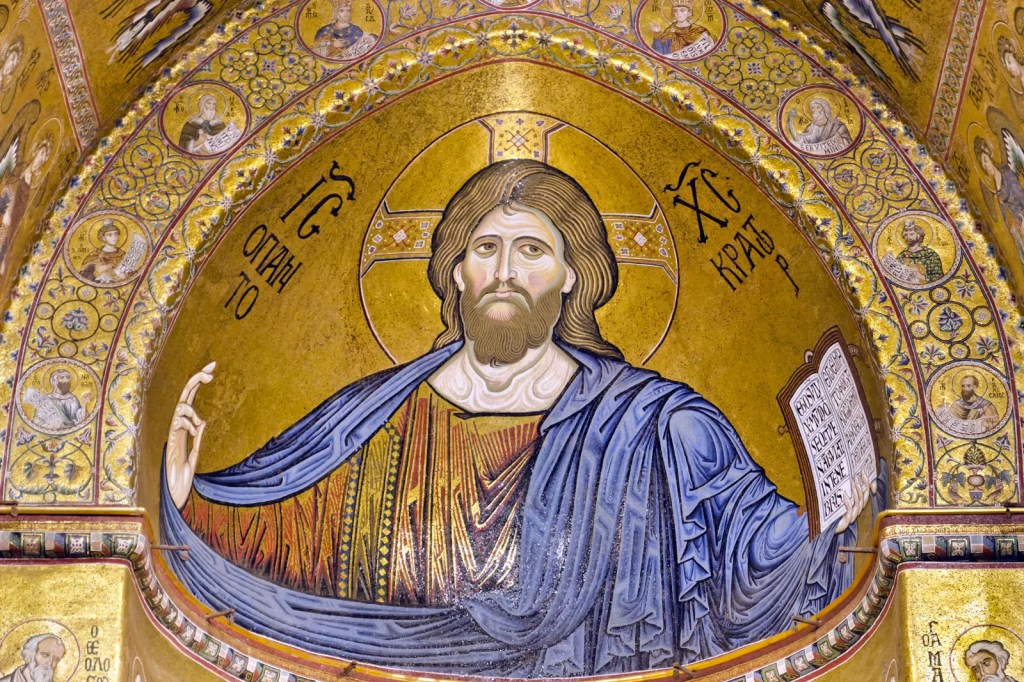
And then there is the Scriptural Christ. Or, in other words, the biblical Christ, the one whom the Christian Church worships. This Christ is the one for whom and through whom all exists (Col. 1), the Word made flesh who dwelt among us, who was God and was with God in the beginning (John 1), the one whose Spirit cries out “Abba, Father” within the hearts of Christians and groans with groans too deep for words (Rom. 8), the one whose sorrowful Passion propitiated the sins of the entire world (Isa. 53), the one who fulfills his own teachings about Blessedness with perfect consistency (Matt. 5), the one whose righteousness justifies and unites us with Himself by faith (Rom. 5-6), the one who is love (1 John), the one whose flesh and blood men and women must eat in order to have eternal life (John 6), the one who chose to empty himself and take on the form of a servant, forfeiting his privilege as the Son of God (Phil. 2), the one who entered the world alongside the Spirit to form the world from the waters of chaos (Gen. 1), and the one who has made peace by the blood of his cross (Col. 1).

The Scriptural Christ is the Person at the heart of the Old and New Testaments, the hermeneutical key to unlock its infinitely-deep structures. He is the one Christians meet when, in faith and in the Church, they read the Scriptures with the eyes the Scriptures themselves bestow. The logic the Bible invites its readers to inhabit and live within is a Christ-logic. There is no thinking about or with the Bible or its many sayings – across the wide variety of its genres and metaphors and imageries – without an inhabiting of this Christ-logic. The Scriptures will always be read in error when this Christ-logic is forsook for the latest philosophical or hermeneutical lens (which, to be fair, are many of the times interesting, well-thought-out lenses, but just not Christian lenses). To read the Bible correctly, says the history of the Church, you have to both start with and end with the Scriptural Christ.

Theologian John Behr teaches us this when he writes, in The Way to Nicaea, “Read in the light of what God has wrought in Christ, the Scriptures provided the terms and images, the context, within which the apostles made sense of what happened, and with which they explained it and preached it, so justifying the claim that Christ died and rose ‘according to the Scriptures.’ It is important to note that it is Christ who is being explained through the medium of Scripture, not Scripture itself that is being exegeted; the object is not to understand the ‘original meaning’ of an ancient text, as in modern historical-critical scholarship, but to understand Christ, who, by being explained ‘according to the Scriptures,’ becomes the sole subject of Scripture throughout… Christ, the Word of God, is often said to be the key to Scripture.”[1]

May the Church’s reading of Scripture not fall prey to the kind of scriptural interpretation that would approach its Book like any other ancient text, but may she read and interpret it as the locus of revelation, the place wherein her Lord may be seen, kissed, and loved.

Soli Deo Gloria


[1] John Behr, The Way to Nicaea: Formation of Christian Theology Vol. 1 (Crestwood, NY: St. Vladimir’s Seminary Press, 2001), 27-29.