Close Reading

Karl Barth on “Blessed are the Pure in Heart”

Karl Barth was the son of a pastor. As such, from a very young age he was intimately involved in the life of the church. When he came of age, he decided he wanted to study theology academically, and perhaps then to go into the pastorate like his father. Eventually, this is what he did. His first post, in the small industrial Swiss town of Safenwil, saw many of his most deeply transformative experiences happen to him. After his academic career came to a close he spent much of his time in a pastoral mode once again, visiting the prison nearest the town in which he resided to preach and teach the Gospel.

During his academic teaching career, being granted numerous professorships – throughout Germany and Switzerland – Barth never got rid of his pastor’s heart. In fact, he always wanted his theology (hence the name “Church” Dogmatics) to serve pastors in their attempts to preach the Word of God, administer the Sacraments, and tend the hurting hearts of their congregations. It is in this mode he delivered his sermon, “Make Me Pure of Heart,” an exegesis of the Matthean Beatitudes.

Herr Karl, looking dapper.

Like a true pastor, Barth wants his hearers to understand that, in the end, help comes only from God. Our best attempts, motives, social programs, and ministries, fall utterly short of true spiritual healing.

“Many high-minded persons with pure motives and champions of all that is good and true, venture into the darkness of the times; so many flaming outbreaks of new spirit, perchance, among the youth of a city or region; but the fire does not keep on burning, it does not break through, it does not spread farther. One feels more and more as if a mysterious barrier were thrust before us, as if we stood before a locked door which must first of all be opened from within if our endeavors to help are not to remain idle and meaningless gestures.”[1]

The enthusiasms of many young people have gone into the sorts of movements to which he refers. There are no shortages of them today. Barth then clarifies the purpose of this repeated, hopeless feeling; this proverbial beating of the head against the wall. What does God desire, in the midst of this seemingly endless striving? What is his purpose in it? To bring to a head the salvation of humanity, not from the spiritual heights, but from the depths of darkness.

“Perhaps all the many and wearisome exertions and efforts which we put forth are the last sure proof of our illness; as for example, in severe sickness the fever rises before the crisis; perhaps in the very distress of all these struggles and efforts something very simple, great, and healing for us must, and finally will, break through; a deep, clear, all-embracing knowledge of that which alone helps… The Bible at all events sees things in this light. ‘Immediately after the afflication of those days,’ so Jesus begins the passage in which He speaks of the everlasting help which shall make an end of all the sorrow of time and of the world; help, salvation, and deliverance really are the final end; but days full of affliction, days full of fear will precede this last end. Such was the experience of Jesus. Before the light of Easter stood the cross and the journey to Jerusalem. The place where all things change is not a height, not even a plain, but an abyss. And the greater the changes the greater the depth from which they arise.”[2]

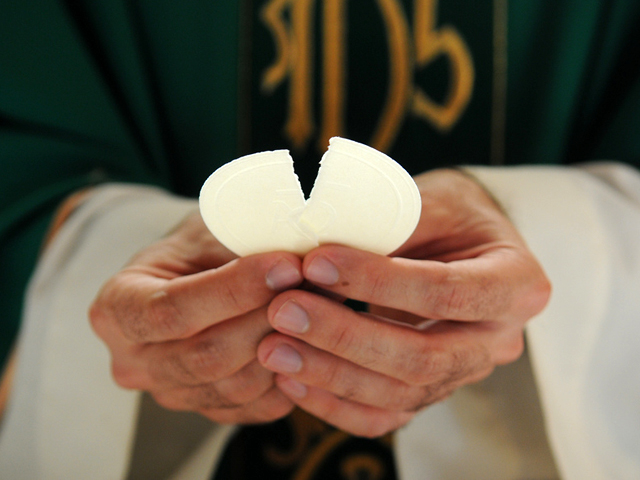
I think of the moment during the eucharistic liturgy where, immediately following the fraction (the “breaking” of Christ’s body), the priest declares, “Christ our passover has been sacrificed for us! Therefore let us keep the feast!” In this moment, the priest lowers the host, breaks it loudly for all to hear, and raises it up again, giving his declaration. Here, the life of God is poured out to the world through the broken body of the Lord. Glory and life is found, not in a pacified trinitarianism, a social program of loveliness, but in the broken body of the God-man. Those who would gain their life must lose it for His sake. Life comes through death. We must commend ourselves to God – we who live in the deep darkness – to be healed.

The fraction

He continues:

“It seems to us to be too simple; and we are still too much distracted, too little gripped and penetrated by the seriousness of our condition to commend ourselves wholly to God as the only efficient helper of our lives. We are still too spiritually rich, too wise, too gifted, not to desire any other knowledge than that God helps. We are still not poor enough, not humble enough to permit this assurance to enrich and exalt us… Gladly would we permit ourselves to be helped in all our suffering and need, but again helped only by something human, by help which we can understand, which comes from us, and which is in accord with us. But just this cannot be.”[3]

We do not realize our condition. We must be brought low to be lifted up again. We must be destroyed to be recreated.

We will finish where Barth does: “He says it and what He says must be true, namely, that at the very place where we see only our affliction and our sins, only misery and death, there and just there we shall see God. This assurance can only hear, we can only believe, we can only wonder at, when it is told us again and again.”[4]

Blessed are the pure in heart, for they shall see God.

Kyrie Eleison


[1] Karl Barth, “Make Me Pure of Heart” (Sermon), in Karl Barth: Spiritual Writings, ed. by Ashley Cocksworth and W. Travis McCracken (New York, NY: Paulist Press, 2022), 202.

[2] Karl Barth, “Make Me Pure of Heart” (Sermon), in Karl Barth: Spiritual Writings, ed. by Ashley Cocksworth and W. Travis McCracken (New York, NY: Paulist Press, 2022), 203. 

[3] Karl Barth, “Make Me Pure of Heart” (Sermon), in Karl Barth: Spiritual Writings, ed. by Ashley Cocksworth and W. Travis McCracken (New York, NY: Paulist Press, 2022), 204-5.

[4] Karl Barth, “Make Me Pure of Heart” (Sermon), in Karl Barth: Spiritual Writings, ed. by Ashley Cocksworth and W. Travis McCracken (New York, NY: Paulist Press, 2022), 207.
Close Reading

Josef Pieper’s What is a Feast?

Josef Pieper was a philosopher who sought to recover the classical Christian tradition’s theological and philosophical foci. In conversation (or perhaps debate) with the form of mainstream existentialist thought that arose after the end of World War II – the form of thought that sought to completely flip the script on the West’s self-understanding – Pieper sought to underscore the intellectual credibility of pre-modern Christendom, specifically in relation to the four cardinal virtues (prudence, fortitude, temperance, justice) and the three theological virtues (faith, hope, love). During a time when Modernity’s fractious encroachment and domination was acute, Pieper wanted to recast a wholistic vision of the world with the Incarnation and the Trinity at its center.

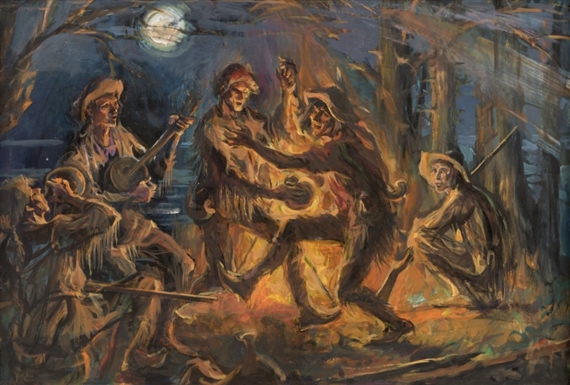
One of the ways Pieper sought to restore this vision was through the restoration of the idea of festivity. By festivity he meant something like “affirmation of the existence of the world and everything in it.” Festivity, to Pieper, meant the spiritual rehearsal of God’s protological “It is good” towards the world and its being. It is a sort of ontological positivity. And it was pervasive in the West until Modernity came on the scene.

Pieper explores this in the chapter of his Anthology called “What is a Feast?”

Pieper says that the fundamental affirmation of the universe allows the rest of a person’s life to flower; all true celebrations, but also all contemplations and activities, cannot truly be undertaken meaningfully without saying, first and fundamentally, “It is good that this world exists, that this exists”; the existence of our realm is not ontologically neutral or formless, but is in fact imbued with essential dignity. It is from this foundation that we can go on to celebrate life, love, marriage, food, harvests, and births.

Pieper writes, “Underlying all festive joy kindled by a specific circumstance there has to be an absolutely universal affirmation extending to the world as a whole, to the reality of things and the existence of man himself… For man cannot have the experience of receiving what is loved, unless the world and existence as a whole represent something good and therefore beloved to him.”[1]

Pieper does good on his Catholic heritage here. One can almost hear in the background of his study some humdrum theologian softly repeating, “Grace perfects nature, not destroys it… Grace perfects nature, not destroys it…”

I would say amen to Pieper’s thought here. The world, though sin-filled and fallen, must be given its “Yes” to function rightly in our theological minds. Jesus Christ’s being and action tell us that despite our wicked state and glitching souls, He stands by His word in the beginning that it is good that we exist. He stands with us against the threat of nonbeing, and, further, bids us celebrate its enemy: being.

He then is sure, alongside this thought, to make clear that this affirmation of being is not just incidental or secondary to the purpose of festivity. We do not affirm the goodness of being because it suits our pleasurable ends, but because festivity is existential affirmation. He writes, “Strictly speaking, however, it is insufficient to call affirmation of the world a mere prerequisite and premise for festivity. In fact it is far more; it is the substance of festivity. Festivity, in its essential core, is nothing but the living out of this affirmation. To celebrate a festival means: to live out, for some special occasion and in an uncommon manner, the universal assent to the world as a whole…”[2]

I suspect Pieper would agree that the Modern world’s obsessive enchantment with work as a sort of divine source of meaning is, in a way, a logical outflow of its own ontological vacuity. In other words, the reason moderns view life as “total work” – Pieper’s term for life as an endless striving which has no metaphysical telos, in contrast to a life of contemplative leisure – is because of their previous negation of being. It is from a center in nonbeing’s hold on moderns that causes them to reconceptualize the world in line with their conviction that being is not good. Modernity does not believe God when He says the creation is good, and that is why we live the way we do today, ceaselessly engaged in one big utilitarian project of “productive” self-improvement.

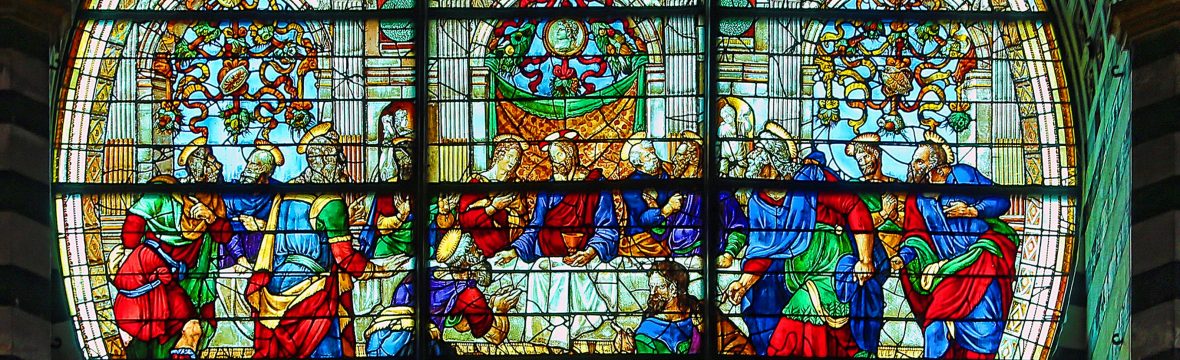
Ever the Christian, Pieper ends his essay by mentioning the pinnacle of festivity. The highest form of affirmation of existence is divine worship (of the Christian variety). He says, “There can be no more radical assent to the world than the praise of God, the lauding of the Creator of this same world. One cannot conceive a more intense, more unconditional affirmation of being. If the heart of festivity consists in men’s physically expressing their agreement with everything that is, then – secondly – the ritual festival is the most festive form that festivity can possibly take. The other side of this coin is that – thirdly – there can be no deadlier, more ruthless destruction of festivity than refusal of ritual praise. Any such Nay tramples out the spark from which the flickering flame of festivity might have been kindled anew.”[3]

Would not it be better to take a festive approach to life, one that sees existence itself as an inherent good? Would it not be better to worship the Creator rather than the creation, and in so doing join with Him as He sings over us, “It is good that you exist!”

Soli Deo Gloria


[1] Josef Pieper, “What is a Feast?” in Josef Pieper: An Anthology (San Francisco, CA: Ignatius Press, 1989), 154-5.

[2] Josef Pieper, “What is a Feast?” in Josef Pieper: An Anthology (San Francisco, CA: Ignatius Press, 1989), 156.

[3] Josef Pieper, “What is a Feast?” in Josef Pieper: An Anthology (San Francisco, CA: Ignatius Press, 1989), 156-7.

Close Reading

Robert Jenson’s Systematic Theology: The (New) Triune Relations

Robert Jenson is known for many things: his emphasis on the sacraments, his theological creativity, his reliance on Hegel, his reliance on Barth, his ability to speak theology concisely, and the list goes on. One aspect of his theology I have not seen touched on as much, however, are the new relations he posits the Church should consider as helpful descriptors for how to conceptualize the Triune Life. He affirms quite joyfully the traditional relations – generation, spiration, origination, procession – but proposes that not-before-seen reciprocal relations be recognized as constituting the Spirit’s dynamic contribution to God’s ontology.

ST: The Spirit as Liberator and Reconciler

Jenson introduces the new relation of liberation into the life of the Trinity. He does this so as to heed Hegel’s (and Buber’s) thoughts concerning what constitutes a healthy I-Thou relation. For Jenson and these thinkers, within the isolated person-to-person relationship there can only be a form of obsessive relational domination. If there are only two partners of relation, there can only be a subject-object and hence a master-slave dynamic as the only possible dynamic. This can be plainly seen in the obsession with which abusive partners find others – all others, friends of the beloved perhaps primarily – as threats to the lover’s enjoyment and satisfaction of the beloved. Inversely, the lover whose enjoyment of the beloved because of or alongside of the friends and companions surrounding the beloved is said to be a healthy, relationally-balanced individual. Jenson and Hegel would wholeheartedly agree. The only way the two partners can be freed for their love and enjoyment of one another, they argue, is if a third party opens up the two partners for their mutual love for one another. The Holy Spirit fulfills this function for the Father and the Son, and in so doing is rightly characterized, like Augustine said, as the love-bond of the Trinity.

Jenson writes: “If you and I are to be free for one another, each of us must be both subject and object in our converse. If I am present in our converse as myself, I am a subject who have you as my object. But if I am not also an object for you as subject, if I in some way or degree evade reciprocal availability to you as one whom you in your turn can locate and deal with, I enslave you, no matter with what otherwise good disposition I intend you.”[1]

In other words, if Father and Son are not reciprocally available for each-other as Father and as Son in the bond of their Spirit-love, there is no Triune God like the Tradition says. Without the Spirit, there is no true bond or relational openness as constitutive of God’s being, and therefore no true bond between the Son – who simply is the Lord Jesus Christ – and the Father He has been sent from. Jenson is convinced that previous theological missteps were taken in the history of doctrine because of a pre-existing blindness to this relational dynamic of the Spirit. To name a recent example, Jenson thinks that most of what should be criticized in his theological grandfather, Karl Barth, has to do with Barth’s malnourished (and possibly nonexistent) doctrine of the Holy Spirit. He goes so far as to say that, when it comes to the Church Dogmatics, Barth proposes what looks much more like a “binity” than a Trinity.

He further elaborates: “So we must learn to think: the Spirit is indeed the love between two personal lovers, the Father and the Son, but he can be this just in that he is antecedently himself. He is another who in his own intention liberates Father and Son to love each other. The Father begets the Son, but it is the Spirit who presents this Son to his Father as an object of the love that begot him, that is, to be actively loved. The Son adores the Father, but it is the Spirit who shows the Father to the Son not merely as ineffable Source but as the available and lovable Father.”[2]

It is in being the glue of the Father and Son that the Holy Spirit exists as the Tradition’s third hypostasis. “The Spirit is himself the one who intends love, who thus liberates and glorifies those on whom he ‘rests’; and therefore the immediate objects of his intention, the Father and the Son, love each other, with a love that is identical with the Spirit’s gift of himself to each of them.”[3] This sort of change to Augustine’s initial thesis does what Augustine arguably did not do, which was to recognize the personal element in the Holy Spirit’s procession from the Father and the Son. It is not simply as some thing called “the love between Father and Son” that the Spirit acts; such a conception is what led to the plumb line of the West’s depersonalization of the Spirit. It is as the one who, in proceeding from Father and Son, acts to blossom the generation and paternity of Father and Son for each other that the Spirit is a subsisting relation, i.e., as the subsisting relation of openness and freedom.

To conclude:

“The Father begets the Son and freely breathes his Spirit; the Spirit liberates the Father for the Son and the Son from and for the Father; the Son is begotten and liberated, and so reconciles the Father with the future his Spirit is. Neat geometry is lost, but life is not geometrical.”[4]

Soli Deo Gloria


[1] Robert Jenson, Systematic Theology, Vol. I: The Triune God (Oxford, UK: Oxford University Press, 1997), 155.

[2] Robert Jenson, Systematic Theology, Vol. I: The Triune God (Oxford, UK: Oxford University Press, 1997), 156.

[3] Robert Jenson, Systematic Theology, Vol. I: The Triune God (Oxford, UK: Oxford University Press, 1997), 158.

[4] Robert Jenson, Systematic Theology, Vol. I: The Triune God (Oxford, UK: Oxford University Press, 1997), 161.

Close Reading

Robert Jenson’s Systematic Theology: Eschatology as the Triune Unity

Robert Jenson was a masterful theologian who sought to think within the bounds of theologia and, within those bounds, to receive the Christian tradition in fresh if unorthodox ways. He writes this awesome statement: “This is sometimes the way of theology: to take a plain phenomenon of the gospel’s narrative that causes difficulty in certain conceptual connections and remove the difficulties by adjusting not the narrative but the connections.”[1] That was Jenson’s tendency: to adjust the form, not the content, of the Christian gospel, and so make it intelligible to contemporary ears.

My last post on Robert Jenson went over Jenson’s problems with the ancient ontological foundations of classical Christian doctrine. In his writings, he sought to overturn these foundations by substituting their Aristotelian or platonic makeup with that of Hegel. This substitution led him to criticize the ancient way of understanding divinity as simple, timeless and changeless, and to uphold a doctrine of divinity where God’s being is nothing other than event. The function of God’s being-as-event is to disallow any speech about God where God can be identified with anyone other than the God revealed and acted out as Jesus Christ, His Father, and His Spirit. For something or someone to be God means that He is this event: this biblical, Triune God-event.

For God’s being-as-event to be the interplay of Jesus, the Father, and the Spirit is for ontology itself to be constituted by eventfulness, and not by the prior abstracted reality of “being.” This poses obvious problems for the classical doctrine of simplicity. If God is not simple, and ontology is eventfulness, then how can the three – Father, Son, Spirit – be said to be “one God”? This is where my claim that Jenson’s explications nevertheless retain the content, if not the form, of Christian doctrine is proved true.

ST: The Oneness of the Three

Jenson writes, “Since the Lord’s self-identity is constituted in dramatic coherence, it is established not from the beginning but from the end, not at birth but at death, not in persistence but in anticipation. The biblical God is not eternally himself in that he persistently instantiates a beginning in which he already is all he ever will be; he is eternally himself in that he unrestrictedly anticipates an end in which he will be all he ever could be.”[2]

Here, Jenson is functioning on a definition of eternity as a time-bound reality. Eternity is not, as the classical thinkers say, a separate realm in which God lives in his essence. Eternity is rather that happening, that “dramatic coherence” Jenson calls it, where all that is theologically united lives, moves, and has its being. Eternity is that time where God and man live in harmonious ekstasis. In other words, eternity is that time where Father, Son, and Holy Spirit live as one God. How Jenson grounds these concepts, like I said, is not in some “before-ness,” some realm that is prior to the actual happening of God’s-being-one, but in “after-ness,” in the eternal realm of “anticipation,” where Father, Son, and Holy Spirit will be fully and completely the Triune God of Scripture in the unity of the Eschaton. It is the Eschaton that provides the glue that holds the whole scriptural reality – including the God at the center of that reality – together.

Jenson continues, “The triune God’s eternity is precisely the infinity of the life that the Son, who is Jesus the Christ, lives with his Father in their Spirit… About how God could as the same God have been other than Jesus the Son and his Father and their Spirit, or about what that would have been like, we can know or guess nothing whatsoever.”[3]

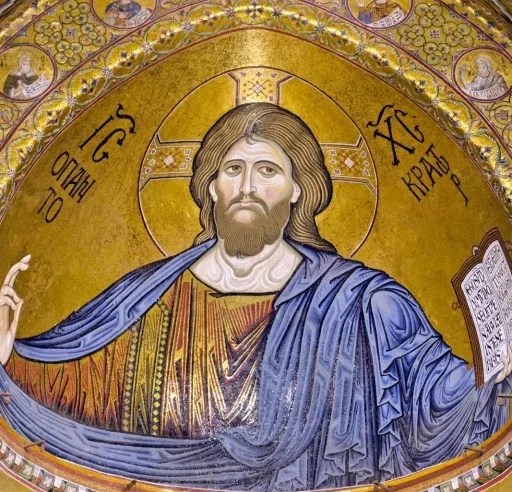
The Christian is not to think of eternity as a timeless void separated from the goings-on of this world, but as the flesh-and-blood life of Jesus Christ, the Hebrew preacher of first century Palestine, who, in calling the God of Israel his Father, was the Son spoken about in the Spirit-inspired Scriptures. This is what it means for God to be Trinity.

ST: The Spirit of the Future

For the Eschaton to be the place of God’s unity is for the Holy Spirit to so make it. The eschatological glue that holds things in God together, according to Jenson, can really be posited as a function of the Holy Spirit’s economia. It is the Spirit’s function to make true the reality that Jesus Christ and His Father are the one God of Scripture. It is the Spirit’s role to make true that which is believed by faith, that the Father, Son, and Spirit are one God.

Here is Jenson again: “The Spirit is the Liveliness of the divine life because he is the Power of the divine future. He is the one who, when he in time gives a ‘down payment’ on the Kingdom, gives precisely himself.”[4] The Spirit and the Eschaton, to Jenson, are never to be thought about as separated from each other precisely because as the agent of the future, the Spirit is. It is when the Church participates in the Eschaton – which, to Jenson probably amounts to what happens during the Sunday liturgy – that the Spirit is truly and fully present as the Spirit of the Lord Jesus Christ and His Father.

We will end this post with one last quote:

“The biblical God’s eternity is his temporal infinity… What he transcends is not the having of beginnings and goals and reconciliations, but any personal limitation in having form… The true God is not eternal because he lacks time, but because he takes time… God is not eternal in that he adamantly remains as he began, but in that he always creatively opens to what he will be; not in that he hands on, but in that he gives and receives; not in that he perfectly persists, but in that he perfectly anticipates… The dominating theological enterprise of the century, Karl Barth’s Kirkliche Dogmatik, has thus at its heart the drastic proposition with which we began: ‘God’s deity, into its furthest depths, consists therein… that it is event… The fundamental statement of God’s being is therefore: God is what happens between Jesus and his Father in their Spirit.”[5]

Soli Deo Gloria


[1] Robert Jenson, Systematic Theology, Vol. I: The Triune God (Oxford, UK: Oxford University Press, 1997), 124.

[2] Robert Jenson, Systematic Theology, Vol. I: The Triune God (Oxford, UK: Oxford University Press, 1997), 66.

[3] Robert Jenson, Systematic Theology, Vol. I: The Triune God (Oxford, UK: Oxford University Press, 1997), 141.

[4] Robert Jenson, Systematic Theology, Vol. I: The Triune God (Oxford, UK: Oxford University Press, 1997), 157.

[5] Robert Jenson, Systematic Theology, Vol. I: The Triune God (Oxford, UK: Oxford University Press, 1997), 217-221.

Close Reading

Robert Jenson’s Systematic Theology: First Few Big Ideas

I just finished reading Robert Jenson’s magisterial Systematic Theology. It was a frustrating, beautiful, doxological, and blessed read. More than many books I have read over the last few years, this one has stirred my affections for (and questions about) Christ all over again. 

Having read over the summer the logic-laden The Humility of the Eternal Son by Bruce McCormack, who gives the highest praises to Jenson, I was on the lookout for a doctrinal study that encouraged a praise break or two in the midst of its theologizing. Jenson was the perfect for this.

Although in relation to the typical Protestant systematic it is rather tiny, Jenson’s Systematic Theology is deserving of a step-by-step series of blogs on some of its main ideas.

ST: Prolegomena

Jenson’s big idea, developed from Barth, is that God’s being as event disallows any sort of otherworldliness on the part of God. For God to be Himself as Jesus Christ, the Father, and the Spirit, is to be no more and no less than exactly what we receive in the biblical testimony. In other words, to play on a maxim coined by Torrance concerning Barth, there is no God behind the back of the Father, Son, and Holy Spirit as reported about in the Bible. For Jenson, this makes moot any point of ontological speculation concerning God’s being as separated from the narrated events of the life of Jesus Christ. To Jenson, the question What is God? can only be answered by appeal to the specificity of the Lord’s life, growth, crucifixion, resurrection, and ascension. God’s being is nothing other than the event of Christ’s life.

With this, of course, comes a total reversal (and rejection) of classical categories of divine and human being. Jenson writes, “Were God identified by Israel’s Exodus or Jesus’s Resurrection, without being identified with them, the identification would be a revelation ontologically other than God himself. The revealing events would be our clues to God, but would not be God. And this, of course, is the normal pattern of religion: where deity reveals itself is not where it is. At Delphi, one hears Apollo’s voice but does not meet him; indeed, the very notion of meeting Apollo in his own guise would have been oxymoronic.”[1] Jenson is even more of an actualist than Barth. For Jenson, the only true sort of being is actualized, eventful, specific being. The entire tradition’s tendency to posit a God otherwise in existence then how he is specifically existent in Christ, the Father, and the Spirit, and also as precisely that God recorded in Scripture, has been a false trajectory to Jenson. Actualism secures the certainty of God’s identification, and disallows any God-talk separated from his living activity as this biblical God. The Post-Barthians are very adamant on this point. God does not exist except as this event.

He continues, “God is not only identified by Exodus and Resurrection; he is identified with them… For the doctrine of Trinity is but a conceptually developed and sustained insistence that God himself is identified by and with the particular plotted sequence of events that make the narrative of Israel and her Christ… For if a systematically developed discourse about God precedes the exposition of Trinity, there is danger that a nontrinitarian identification of God may be hidden in that discourse, to confuse all that follows. Western theology’s late-medieval and modern tradition has tended to treat first of God simply as he is God and only thereafter of his Trinity.”[2]

Jenson undoubtedly takes Barth a step further from where he himself was willing to go. There is debate on this point, but Barth does still speak about there being room for God to be Himself apart and without a creation. For Jenson, to even entertain the question of what God would be apart from His life with us in Christ is a moot point: God’s being is being-with-us. Period. There is no place to speak about God other than as actual in Christ. Here Jenson follows Barth in another way: by positing the doctrine of the Trinity as not simply the metaphysical makeup of the specific God Christians worship, but as the entire doctrinal matrix within which the whole body of Christian belief finds its intelligibility. Without the organizing principle of the Trinity to bestow meaning on each part of the Christian faith’s interconnected system, the faith becomes exactly what many (Christians and non-Christians alike) are convinced it is: an outdated, intellectually-stagnant group of mythological beliefs about a world and a God that no longer exists.

ST: The Being of God

Jenson’s entire project is geared towards dismantling the Ancient Ontology upon which the doctrines of Christianity have always been based. Jenson sees the reception of Christian doctrine – and centrally the doctrine of the Trinity – as unnecessarily tied to ancient Platonic and Aristotelian ways of philosophizing about the world. In a way, Jenson is completely orthodox: he maintains all of the traditional Christian doctrines “intact” in respect to their intellectual content. Yet, their metaphysical foundation has completely shifted. Now, it is not the ontological picture given by Plato or Aristotle that determines what can or cannot be said about Christ and his being true God from true God, but Hegel and Heidegger. The entire Systematic Theology is devoted to explicating Jenson’s new picture, where God’s being is event.

In support of this, he writes, “The analyses and formulas usually thought of as ‘the’ doctrine of Trinity – for example, ‘three persons of one divine nature’ – were devised during a particular if decisive part of the effort’s historical course: when the gospel’s identification of God had directly to interpret and be interpreted by the antecedent theology of Mediterranean antiquity. Had the mission’s initial history led through a culture other than that schooled by the Greeks, analogous but differently directed enforcements of God’s biblical identity would have had to appear, and the mission continues to require trinitarian reflection that derives from that then carried out more by analogy than by implication.”[3]

And: “‘Being’ is not a biblical concept, or one with which Christian theology must necessarily have been involved, had the gospel’s history been different than it is. If we could abstract from the actual history, we could, of the biblical God, say ‘God is good’ and ‘God is just’ and continue with such propositions at need, without making an issue of the ‘is.’ And the teaching that God is one could remain the simple denial that anyone but JHWH is God. But ‘being’ was a central concept of the theology with which the gospel came into essential conversation in Mediterranean antiquity. Thus the concept has become an inextricable determinant of the actual Christian doctrine of God.”[4]

I am convinced that Jenson proposes what can best be described as a missionary theory of theological language, one I was introduced to in college and which has stuck with me ever since. Jenson sees theological language as necessarily subject to change depending on the people to whom it is directed. The Church stays stagnant when it thinks its task is something other than to contextualize doctrinal statements to fit in to the social, political, and philosophical imaginations of those to whom it speaks the Gospel. This Gospel may and does offend those imaginations, but at the very least it must be comprehensible to the people it seeks to reach, even if, as is often the case, in reaching them it is despised and rejected.

This is probably the benefit I see in Jenson, overall. Although he rejects the philosophical undergirding of the ways Christian doctrine has been taught and understood in the past, he does so not out of a petty hatred for antiquity (that much is out of the question) but out of a concern to reach the people of the modern world. The content stays the same: the God revealed in Jesus Christ is still very much the Triune God of Scripture. It is the dressing in which he is presented that is changed. Yet, is not that exactly what missionaries do, change their language and forms of expression to show forth their God as beautiful to the people to whom they are called to witness?


[1] Robert Jenson, Systematic Theology, Vol. I: The Triune God (Oxford, UK: Oxford University Press, 1997), 59.

[2] Robert Jenson, Systematic Theology, Vol. I: The Triune God (Oxford, UK: Oxford University Press, 1997), 60.

[3] Robert Jenson, Systematic Theology, Vol. I: The Triune God (Oxford, UK: Oxford University Press, 1997), 90.

[4] Robert Jenson, Systematic Theology, Vol. I: The Triune God (Oxford, UK: Oxford University Press, 1997), 207.