Quotation

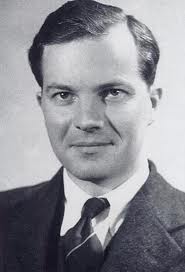
Embodiment, Presence, Modernity: A Selection from Robert Jenson’s “Visible Words”

I don’t think I have read a more prophetic, life-giving, convicting, or true set of sentences in the past year than these written by Robert Jenson in 1978:

“Personal life occurs only in community. Just so, it can fail, according to either of its aspects, spirit or body.

            Were I a fundamentally self-contained entity, I would not be spirit. I might perhaps still be a sort of abstract mind, perceiving reality beyond myself. But since I would not be drawn or shaken by that reality, I would not be drawn or shaken by what is beyond what I at any moment am. I would be changeless – which were I God, would be fine for me and disastrous for all else, and since I am not God, would be irrelevant to all else and disastrous for me. Were I a fundamentally self-contained entity, I would not be self-transcendent in time.

            Insofar as late-modern ambition is that each of us shall be sole subject in his ‘own’ life, the possibility of spirit is attacked, and must be fought for with increasing explicitness and tenacity. To the exact extent that marriage indeed becomes a revocable arrangement between permanently ‘independent’ individuals, religion becomes self-realization, politics retreat to the ‘privacy of the voting booth,’ and in short the consumer ethic generally triumphs, our life is in the most primitive sense dispirited. Simultaneous lethargy and frenzy is the dominant characteristic of all those persons and groups in which late-modern abstract individualism is most consistently achieved. It is our society’s trick to make egocentricity a virtue; but it will not work, for my alienation from you is my alienation also from myself. 

            Our reality as spirit for one another is not self-sustaining. It can fail, regularly has, and now often does. If there is spirit that will not fail, we call such spirit God. God’s presence is the coming of such spirit. 

            Were I a fundamentally self-contained entity, I would not be body. I would undoubtedly be an organism, and subject to Newton’s laws about masses in space. And we would impinge on each other, in the way of the celebrated billiard balls. But I would not be available to you, nor even to myself; there would just be this organic mass, fundamentally interchangeable with any other, and precisely as incomprehensibly and externally identified with a particular mind as Descartes found it. Were I a fundamentally self-contained entity, I would not be available through time. 

            Our reality as bodies also can fail. The progressive disembodiment of late-modern civilization is full or ironies – as that Christianity is routinely attacked for, of all things, enmity against the body, often by persons visibly at war even with the organic condition of their own embodiment. Who devalues the body? Those for whom its gestures make no commitments, or those for whom they can make irrevocable commitment? Those who find freedom in casual nakedness, or those who reserve this most visible word for those to whom they have something extraordinary to say? Our society’s frenzy for the body is precisely frenzy for what we lack. Those who refuse all decisive commitment and so withdraw from availability, who have no grasp on the past, who wear instant clothes and make instant love and eat instant food, who forever are seeking identity, flit as wraiths through time, hungering for embodiment. 

            Body and spirit fail together. Were you pure spirit in my life, you would be nobody in particular, but a nobody who yet gave me orders. That is, you would belong to one of those impersonal but ruling collectives – bureaucratized corporations, militarized government, or the ‘media’ – that do in fact now determine so much of life. Were all others pure spirit in my life, these collectivities would appear to and in me as one and absolute, the dream of totalitarians would be fulfilled – and freedom and spirit too would cease. 

            The obvious outcome of the last paragraph must be the proposition: if there is body that does not fail, we call such body God. Therewith we have the great offense of Christian discourse about God… For indeed, God is a person; and that means that he is Spirit and Body.”[1]


[1] Robert Jenson, Visible Words: The Interpretation and Practice of Christian Sacraments (Philadelphia, PA: Fortress Press, 1978), 23-25.

Doctrine

Robert Jenson and the Logos Asarkos

Bruce McCormack’s landmark study on Christology, The Humility of the Eternal Son, leans heavily on the work of Robert Jenson to disprove the tradition’s positing of a bifurcated “Christological Subject.” He claims that this idea argues that there are two identities in God the Son: the “Eternal Son,” conceived as an identity of the Son abstracted from space and time, and Jesus Christ the human man. Jenson’s entire proposal is to reconceptualize the ontological framework within which claims about Christ’s identity can be made, and within that new framework to prove that Jesus Christ, the Jewish rabbi of the first century, “just is” the Eternal Son of the Trinity. He means, above all, to unify the Subject of the Gospels. How all of this can work out ontologically, you will have to read more of Jenson for.

I would like to share, however, some thoughts of Jenson’s written in his essay “Once More on the Logos asarkos,” where he explicates this very problem.

But before I start doing that, I would like to make one observation on Jenson reception, especially among who McCormack calls “evangelical Catholics.”

Reading Robert Jenson requires you to exercise intellectual empathy on an intense level. Frequently, evangelical readers of Jenson decide they want to read him, and, when they start doing so, quickly throw him away, labelling him a heretic of the worst kind. This is because those same evangelical readers come to his work with a preconceived understanding of the authority of ecclesiastical pronouncements, and, when they see that authority challenged – without asking about the epistemological framework that led to Jenson’s constructions – they react antagonistically. What I am convinced readers of Jenson do not understand, however – or do not try to understand – is that Jenson’s entire project is to do justice to the biblical witness concerning Jesus, God, and the God-world relation. His subsequent positions concerning how those two overlap and intertwine – God and the world, I mean – cannot (I repeat, cannot!) be understood apart from the first principles he begins with: the metaphysics he is convinced is posited by the Scriptures themselves. Jenson’s famous “Reply” essay, included in the same collection as the essay I will dig into here in a moment (Theology as Revisionary Metaphysics), strikes at this problem, too. There, Jenson in effect claims, “If you will not seek to understand the language I am attempting to speak – in accordance with the Scriptures and the Tradition – you will of course see me as a crazy heretic. So instead of labelling me as such, engage with my first principles. Then we can have a conversation.”[1]

Jenson is one of the most creative, insightful, brilliant, ballsy, and fun theologians I have ever read, and I say this for two reasons: one, he takes the Scriptures seriously enough as to take them “on their own terms,” i.e., as positing a metaphysic that makes sense of its inherent structures and symbolical world (a metaphysic, however, not totally equated with a Hebraic ontology); and two, he seeks to allow that metaphysic to determine everything about the Christian reality. All theological language he uses proceeds from and comes back to this metaphysical, scriptural basis. If for nothing else, these make him commendable to any scripturally-minded theologian (which is redundant term).

Now on to the essay.

Logos Asarkos

Jenson outlines four theses at the beginning of the essay, the first two of which are relevant for what I would like to highlight. The first thesis is:

“The very earliest christologians had it right. Jesus is the Son/Logos of God by his relation to the Father, not by a relation to a coordinated reality, ‘the Son/Logos.’ The Apologists’ creation of the ‘Logos Christology,’ which presumes the Logos as a religious/metaphysical entity and then asserts its union with Jesus, was an historic mistake, if perhaps an inevitable one. Great genius has subsequently been devoted to the task of conceptually pasting together God the Son/Logos and Jesus the Son/Logos of God, and we may be thankful for many of the ideas posted along the way. But the task itself is wrongly set and finally hopeless.”[2]

Right. From the beginning one can see the contours of Jenson’s penultimate concern: to bathe doctrinal reflection in his scripturally-derived matrix of relationality. It is Jesus’s relation to the Father that constitutes Jesus as the Son; further, it is not theologically permissible to posit – “behind the back of Jesus Christ,” we could say – some other than the one Jesus Christ is in revelation. This latter move is what locked in theological discourse to an alien metaphysical structure that would determine its terminology for all subsequent history; a discourse grounded in a system extrinsic to the Scriptural world (i.e., an imposed one).

His second thesis, intertwined with the first, runs thus:

“In whatever way the Son may antecede his conception by Mary, we must not posit the Son’s antecedent subsistence in such fashion as to make the incarnation the addition of the human Jesus to a Son who was himself without him. By the dogma, Mary is the mother of God the Son, she is Theotokos, and not of a man who is united with God the Son, however firmly. Thus the Church confesses that God the Son was himself conceived when Mary became pregnant – even if theology often labors to evade this confession’s more alarming entailments. That Mary is Theotokos indeed disrupts the linear time-line or pseudo time-line on which we Westerners automatically – and usually subliminally – locate every event, even the birth of God the Son; but that disruption is all to the theological good.”[3]

What is the thought that inevitable runs through the evangelical mind when a section like this is pondered? “This sounds like adoptionism, Patrick!” And indeed it would be, Patrick, if it was read with a Platonic metaphysic built in from the beginning. But assuming the Scriptural world is the world being engaged here – from within the Bible itself – then one cannot escape the reality that there is only One whom it calls the Son. Jenson here attempts to be radically consistent with the Scripture’s claim to Christ’s unity: to posit two persons from which one person can then be established is to perform some other maneuver than the maneuver taken by the scriptural narrative. Radically, Jenson says there is only one Jesus Christ, one Christological subject.

One cannot understand Jenson without taking into account his first principles mentioned earlier, one aspect of which I have not mentioned until now: Time. Time for God is not mere “negation of time,” as Jenson would say. But neither is it simple dependence on or boundedness “by” Time. Jenson says that God’s relationship with Time is that, in His freedom, He is able to be both free from Time and bound by Time. But this does not entail a relationship where God is “timeless,” as countless theologians have claimed. Rather, it is a real relation to Time; God is free towards Time in that He can choose to be both in it and out of it. But it is a mistake to read Jenson as totally beholden to a sort of Hegelian process-constitution, where God is totally bound by Time and Space.

One final note: I consider myself a Protestant. Particularly, I consider myself a Protestant concerned to do theology with and within – but not always in lock-step with – the Great Tradition. I am not convinced of all that Jenson has to say, and I find Jenson’s final conclusion to the problem of the unity of the Christological subject wanting in numerous ways. Yet, like McCormack, I praise Jenson’s efforts as those of a theologian seeking to construct appropriate theological language for this moment. In other words, I love reading Jenson because, as Lincoln Harvey has said elsewhere, Jenson is (or might be) wrong for all the right reasons.

Soli Deo Gloria


[1] Robert Jenson, “Reply,” in Theology as Revisionary Metaphysics (Eugene, OR: Cascade Books, 2014), 3.

[2] Robert Jenson, “Once More on the Logos asarkos,” in Theology as Revisionary Metaphysics (Eugene, OR: Cascade books, 2014), 119.

[3] Robert Jenson, “Once More on the Logos asarkos,” in Theology as Revisionary Metaphysics (Eugene, OR: Cascade books, 2014), 119-120.

Quotation

Robert Jenson: The Church is the Presence of Christ

“Plainly, for Paul the concept of personal embodiment is not itself a biological concept. We may discover what sort of concept it then is, and simultaneously declare our own usage, by first recalling our general interpretation that for Paul a person’s embodiment is his or her availability to other persons and thereupon to her or himself and by then again introducing German idealism’s subject-object distinction. That the church is the body of Christ, in Paul’s and our sense, means that she is the object in the world as which the risen Christ is an object for the world, an available something as which Christ is there to be addressed and grasped. Where am I to aim my intention, to intend the risen Christ? The first answer must be: to the assembled church, and if I am in the assembly, to the gathering that surrounds me. Thus the primal posture of Christian prayer is not involution with closed eyes but an open posture, with eyes intent upon those speaking for the gathering. Yet we cannot rest with this first answer. In the New Testament, the church and risen Christ are one but can also be distinguished from each other; thus, for example, the church is the risen Christ’s ‘bride’ so that Christ and the church are joined as a couple. We may not so identify the risen Christ with the church as to be unable to refer distinctly to the one and then to the other. Protestants have for just this reason often feared such language as appears in the previous paragraphs. If we say only that the church is personally identical with Christ, it may seem that the church can never need reform or be open to it… Within the gathering we can intend Christ as the community we are, without self-deification, because we jointly intend the identical Christ as the sacramental elements in our midst, which are other than us. Yet again invoking the distinction between community and association, we may say that the church as community is the object-Christ for the world and her own members severally, in that the church as association is objectively confronted within herself by the same Christ… But now a question can no longer be repressed: Why must Christ be embodied for us at all? Why is not a ‘spirital’ – in the vulgar sense – communion enough? That is, why is it not enough privately to think and feel Christ’s presence and to know that others in their privacies do the same? Why do I need to live in the assembled church? Or indeed why is it not enough that the bread and cup move me to inward awareness of the risen Christ and to a deeper feeling of communion with him – as is the understanding of most Protestants and not a few Catholics, whatever the official teaching of their churches? Why must we say the bread and cup are his objective intrusion, his body? Few have probed this question with such passion as Martin Luther. Were Christ’s presence in the assembly disembodied, it would be his presence as God but not his presence as a human, for as a human he is a risen body. And to the posit of Christ’s presence as sheer God, abstracted from his embodied actuality as Jesus, Luther can react only with horror: ‘Don’t give me any of that God!’ It is God’s hiding in human embodiment that is our salvation: Christ’s naked deity – were there in actuality such a thing – would be ‘nothing to do with us’ and just so destruction for us. Our salvation is ‘God incarnate… in whom are all the [divine] treasures… but hidden [emphasis added]’… The church with her sacraments is truly Christ’s availability to us just because Christ takes her as his availability to himself. Where does the risen Christ turn to find himself? To the sacramental gathering of believers. To the question ‘Who am I?’ he answers, ‘I am this community’s head. I am the subject whose objectivity is this community. I am the one who died to gather them.’ And again: ‘I am the subject whose objectivity for this community is the bread and cup around which she gathers’… The metaphysics of Mediterranean antiquity, and for the most part those of subsequent Western tradition, of course do not allow for this simplicity. Therefore they are in error. The usual metaphysics suppose that what can be and what cannot be are determined by abstractly universal principles and never by a particular; thus the question of how the church with her sacraments can be the actual body of the individual human person Jesus can be settled only by argument that does not itself mention his particular personhood or the specific communion of the church. But this supposition of the Greek pagan thinkers is neither revealed nor an otherwise inevitable position. If the gospel is true, precisely the specific personhood of the individual human person Jesus is, by the initiative of the Father and in the freedom of the Spirit, the material determinant of what generally can be and cannot be.”[1]


[1] Robert Jenson, Systematic Theology Volume 2: The Works of God (Oxford, UK: Oxford University Press, 1999), 213-15.

Close Reading

Josef Pieper’s What is a Feast?

Josef Pieper was a philosopher who sought to recover the classical Christian tradition’s theological and philosophical foci. In conversation (or perhaps debate) with the form of mainstream existentialist thought that arose after the end of World War II – the form of thought that sought to completely flip the script on the West’s self-understanding – Pieper sought to underscore the intellectual credibility of pre-modern Christendom, specifically in relation to the four cardinal virtues (prudence, fortitude, temperance, justice) and the three theological virtues (faith, hope, love). During a time when Modernity’s fractious encroachment and domination was acute, Pieper wanted to recast a wholistic vision of the world with the Incarnation and the Trinity at its center.

One of the ways Pieper sought to restore this vision was through the restoration of the idea of festivity. By festivity he meant something like “affirmation of the existence of the world and everything in it.” Festivity, to Pieper, meant the spiritual rehearsal of God’s protological “It is good” towards the world and its being. It is a sort of ontological positivity. And it was pervasive in the West until Modernity came on the scene.

Pieper explores this in the chapter of his Anthology called “What is a Feast?”

Pieper says that the fundamental affirmation of the universe allows the rest of a person’s life to flower; all true celebrations, but also all contemplations and activities, cannot truly be undertaken meaningfully without saying, first and fundamentally, “It is good that this world exists, that this exists”; the existence of our realm is not ontologically neutral or formless, but is in fact imbued with essential dignity. It is from this foundation that we can go on to celebrate life, love, marriage, food, harvests, and births.

Pieper writes, “Underlying all festive joy kindled by a specific circumstance there has to be an absolutely universal affirmation extending to the world as a whole, to the reality of things and the existence of man himself… For man cannot have the experience of receiving what is loved, unless the world and existence as a whole represent something good and therefore beloved to him.”[1]

Pieper does good on his Catholic heritage here. One can almost hear in the background of his study some humdrum theologian softly repeating, “Grace perfects nature, not destroys it… Grace perfects nature, not destroys it…”

I would say amen to Pieper’s thought here. The world, though sin-filled and fallen, must be given its “Yes” to function rightly in our theological minds. Jesus Christ’s being and action tell us that despite our wicked state and glitching souls, He stands by His word in the beginning that it is good that we exist. He stands with us against the threat of nonbeing, and, further, bids us celebrate its enemy: being.

He then is sure, alongside this thought, to make clear that this affirmation of being is not just incidental or secondary to the purpose of festivity. We do not affirm the goodness of being because it suits our pleasurable ends, but because festivity is existential affirmation. He writes, “Strictly speaking, however, it is insufficient to call affirmation of the world a mere prerequisite and premise for festivity. In fact it is far more; it is the substance of festivity. Festivity, in its essential core, is nothing but the living out of this affirmation. To celebrate a festival means: to live out, for some special occasion and in an uncommon manner, the universal assent to the world as a whole…”[2]

I suspect Pieper would agree that the Modern world’s obsessive enchantment with work as a sort of divine source of meaning is, in a way, a logical outflow of its own ontological vacuity. In other words, the reason moderns view life as “total work” – Pieper’s term for life as an endless striving which has no metaphysical telos, in contrast to a life of contemplative leisure – is because of their previous negation of being. It is from a center in nonbeing’s hold on moderns that causes them to reconceptualize the world in line with their conviction that being is not good. Modernity does not believe God when He says the creation is good, and that is why we live the way we do today, ceaselessly engaged in one big utilitarian project of “productive” self-improvement.

Ever the Christian, Pieper ends his essay by mentioning the pinnacle of festivity. The highest form of affirmation of existence is divine worship (of the Christian variety). He says, “There can be no more radical assent to the world than the praise of God, the lauding of the Creator of this same world. One cannot conceive a more intense, more unconditional affirmation of being. If the heart of festivity consists in men’s physically expressing their agreement with everything that is, then – secondly – the ritual festival is the most festive form that festivity can possibly take. The other side of this coin is that – thirdly – there can be no deadlier, more ruthless destruction of festivity than refusal of ritual praise. Any such Nay tramples out the spark from which the flickering flame of festivity might have been kindled anew.”[3]

Would not it be better to take a festive approach to life, one that sees existence itself as an inherent good? Would it not be better to worship the Creator rather than the creation, and in so doing join with Him as He sings over us, “It is good that you exist!”

Soli Deo Gloria


[1] Josef Pieper, “What is a Feast?” in Josef Pieper: An Anthology (San Francisco, CA: Ignatius Press, 1989), 154-5.

[2] Josef Pieper, “What is a Feast?” in Josef Pieper: An Anthology (San Francisco, CA: Ignatius Press, 1989), 156.

[3] Josef Pieper, “What is a Feast?” in Josef Pieper: An Anthology (San Francisco, CA: Ignatius Press, 1989), 156-7.

Doctrine

The Son of the Father: T.F. Torrance on the Divinity of Jesus

T.F. Torrance is one of those theologians you can confidently say is a pretty homogenous writer when his whole corpus is considered. If you have read one of his books on theology – unless it is a highly specific monograph or journal article or something of the sort – you have read them all. This is not to be disparaging of Torrance’s work; he is one of my favorite theologians to learn and glean from. In fact, his sort of repetitive, lets-circle-back writing style fits in with his own theory of language and human understanding. For those who have read a good bit of his output, however, the thought can very well cross your mind when you approach a section you have read two or three times over elsewhere that, “He’s saying this again? Well alright…” Regardless of this aspect, his ideas are meaty and worth wrestling with.

Currently I am reading (for the first time) his Mediation of Christ, the book many veterans of Torrance commend to the newly-interested as the ideal starting place. Torrance has already mentioned Israel’s place in salvation history, Einstein, “onto-relations,” and the conceptual revolution he is convinced is taking hold in the Western world – all topics that fall into the “over-and-over” category – and is making his way to a treatment of Christology proper.

The Christology never gets old, though. Ask any regular reader of Torrance and they will tell you that coming away from sustained attention to his Christological and Trinitarian reflections makes you want to run to Church and perform a praise break. He writes in such a way as to lead his readers to a greater love and affection for the Lord Who has loved them in His own Person. He wants people to praise Jesus, and so he writes to fan the flames of his readers’ hearts.

Let us take his chapter, “The Person of the Mediator,” as an example. Here he lays out the importance of the Christian affirmation that Jesus Christ is “God of God, Light from Light,” i.e., just as much God as the Father is God. He says,

“The Sonship embodied in Jesus Christ belongs to the inner relations of God’s own eternal Being, so that when Jesus Christ reveals God the Father to us through himself the only begotten Son, he gives us access to knowledge of God in some measure as he is in himself… Jesus Christ is Son of God in a unique sense, for he is Son of God within God, so that what he is and does as Son of the Father falls within the eternal Being of the Godhead… Jesus Christ is to be acknowledged as God in the same sense as the Father is acknowledged as God, for it is in virtue of his Deity that his saving work as man has its validity.”[1]

Pretty solid, yet standard, Christian language concerning the Divinity of Jesus. So far, so good. Torrance is never content to simply state the official doctrinal language established by the historic Church, however; he is always looking to drive home the pastoral import of these traditional ways of speaking of God and Christ. So, of course, he continues:

“He [Jesus] does not mediate a revelation or a reconciliation that is other than what he is, as though he were only the agent or instrument of that mediation to mankind. He embodies what He mediates in himself, for what he mediates and what he is are one and the same. He constitutes in his own incarnate Person the content and the reality of what he mediates in both revelation and reconciliation.”[2]

Alrighty! So now Torrance is speaking to a question that the average, everyday Christian very well comes in contact with: Who (or what) does Jesus reveal? Himself! Torrance says. There is no reality or God apart from whom Jesus means to point us, since Jesus Himself “constitutes” that God we would look for elsewhere. It is God, in other words, who is on display in Jesus. It is God who heals the blind and cleanses the lepers; it is God who lifts up the poor from the dirt and gives them dignity as persons; it is the Holy One of Israel who condescends as a baby to unite us with Himself. Jesus is Himself the content of His own revelation. Jesus is Himself our salvation, and not simply the one Who points to it, as if it was something other than His very Person.

It gets even deeper, though. What are the consequences of holding a different opinion other than the one just expressed? What if Jesus really does point away from Himself to another reality, another thing called “salvation”? What if Jesus is not Himself God?

“If you cut the bond of being between Jesus Christ and God, then you relegate Jesus Christ entirely to the sphere of creaturely being, in which case his word of forgiveness is merely the word of one creature to another which may express a kindly sentiment but actually does nothing… To claim that Jesus Christ is not God himself become man for us and our salvation, is equivalent to saying that God does not love us to the uttermost, that he does not love us to the extent of committing himself to becoming man and uniting himself with us in the Incarnation… If there is not unbreakable bond of being between Jesus Christ and God, then we are left with a dark inscrutable Deity behind the back of Jesus Christ of whom we can only be terrified. If there is no relation of mutual knowing and being and loving between the incarnate Son and the Father, then Jesus Christ does not go bail, as it were, for God, nor does he provide for us any guarantee in what he was or said or did as to what God is like in himself.”[3]

If Jesus Christ is not the Holy One of Israel, if He is not Himself God, then he is just a creature sending peace and blessing to us, ourselves creatures like him. We might could find a certain moralistic lesson in this, something close to an exemplarist religion where each person is trying his best to correspond himself to the good life, but we would still be in the dark about God. That is what Arius believed, and what current-day proponents of his thought still believe about God. If Jesus is not God, we would still have to guess at the character of the God who he supposedly represents. We would still have to guess whether, at the end of the day and regardless of the many assurances to the contrary, God is not actually just a sky-tyrant whose sole desire is to see humanity suffer and die. There would be no way of knowing this isn’t the case if Jesus is not Himself God.

And why is this? Why does Jesus have to be God for us to know the character of God? Because what Christians claim – what Jesus claimed about Himself – is that Jesus is God come to us as man. He is God, crossed over the divide of being onto our side of things. He is the God stepped from behind the curtain. He has said, “Here I am.”

Furthermore, the Bible’s portrayal of Jesus is one whose delight is in the restoration of people. Everywhere he goes, the Bible tells us, Jesus seeks to heal, restore, and bring to life that which has been destroyed by sin and death. God is good, life-giving, and holy, we know, because Jesus is good, life-giving, and holy.

And thank the Lord that that is true. Thank Jesus (!) that we do not have to guess about who He truly is, but we can rest in His blessed character shown not only among the poor and the widowed and the sick, but upon the cross, where the depths of divine love are on absolute full display.

Soli Deo Gloria


[1] T.F. Torrance, The Mediation of Christ (Grand Rapids, MI: Eerdmans Publishing Company, 1983), 64.

[2] T.F. Torrance, The Mediation of Christ (Grand Rapids, MI: Eerdmans Publishing Company, 1983), 67.

[3] T.F. Torrance, The Mediation of Christ (Grand Rapids, MI: Eerdmans Publishing Company, 1983), 68-70.

Doctrine

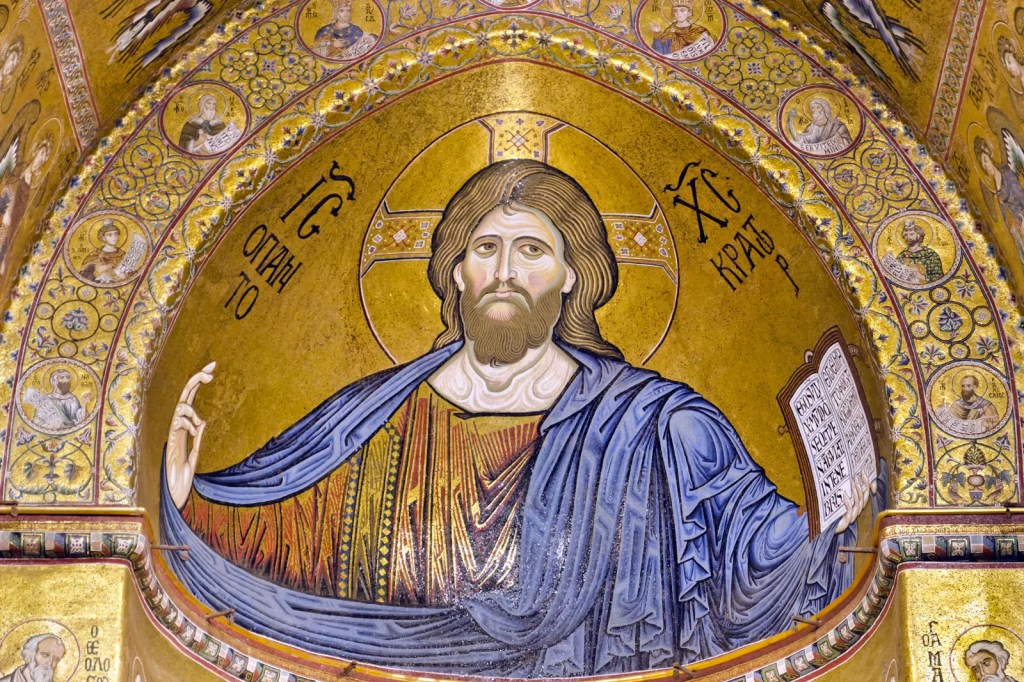
The Scriptural Christ is the True Christ

There are many Jesus Christs that roam this world. There is the Muslim Christ – the one who did not die on the cross, who paved the way for Muhammad, who taught profoundly of a god; there is the Buddhist Christ, the person whose teachings pointed to the self-negation at the heart of true wisdom; there is the Republican Christ, the Christ whose sole passion is for the rights of individuals to forge their own path in life, who looks with favor on the American capitalist state and its democratic structures; there is the Liberal Christ, whose definition of love is something like self-actualization, self-care, self-liberation. There is even the Modernist Christ, the first-century Jewish man whose perfect God-consciousness helped the rest of humanity cultivate their own God-consciousnesses. This one even changed the face of the political, social, and economic state of the ancient world, and was a great moral teacher.

And then there is the Scriptural Christ. Or, in other words, the biblical Christ, the one whom the Christian Church worships. This Christ is the one for whom and through whom all exists (Col. 1), the Word made flesh who dwelt among us, who was God and was with God in the beginning (John 1), the one whose Spirit cries out “Abba, Father” within the hearts of Christians and groans with groans too deep for words (Rom. 8), the one whose sorrowful Passion propitiated the sins of the entire world (Isa. 53), the one who fulfills his own teachings about Blessedness with perfect consistency (Matt. 5), the one whose righteousness justifies and unites us with Himself by faith (Rom. 5-6), the one who is love (1 John), the one whose flesh and blood men and women must eat in order to have eternal life (John 6), the one who chose to empty himself and take on the form of a servant, forfeiting his privilege as the Son of God (Phil. 2), the one who entered the world alongside the Spirit to form the world from the waters of chaos (Gen. 1), and the one who has made peace by the blood of his cross (Col. 1).

The Scriptural Christ is the Person at the heart of the Old and New Testaments, the hermeneutical key to unlock its infinitely-deep structures. He is the one Christians meet when, in faith and in the Church, they read the Scriptures with the eyes the Scriptures themselves bestow. The logic the Bible invites its readers to inhabit and live within is a Christ-logic. There is no thinking about or with the Bible or its many sayings – across the wide variety of its genres and metaphors and imageries – without an inhabiting of this Christ-logic. The Scriptures will always be read in error when this Christ-logic is forsook for the latest philosophical or hermeneutical lens (which, to be fair, are many of the times interesting, well-thought-out lenses, but just not Christian lenses). To read the Bible correctly, says the history of the Church, you have to both start with and end with the Scriptural Christ.

Theologian John Behr teaches us this when he writes, in The Way to Nicaea, “Read in the light of what God has wrought in Christ, the Scriptures provided the terms and images, the context, within which the apostles made sense of what happened, and with which they explained it and preached it, so justifying the claim that Christ died and rose ‘according to the Scriptures.’ It is important to note that it is Christ who is being explained through the medium of Scripture, not Scripture itself that is being exegeted; the object is not to understand the ‘original meaning’ of an ancient text, as in modern historical-critical scholarship, but to understand Christ, who, by being explained ‘according to the Scriptures,’ becomes the sole subject of Scripture throughout… Christ, the Word of God, is often said to be the key to Scripture.”[1]

May the Church’s reading of Scripture not fall prey to the kind of scriptural interpretation that would approach its Book like any other ancient text, but may she read and interpret it as the locus of revelation, the place wherein her Lord may be seen, kissed, and loved.

Soli Deo Gloria


[1] John Behr, The Way to Nicaea: Formation of Christian Theology Vol. 1 (Crestwood, NY: St. Vladimir’s Seminary Press, 2001), 27-29.

Quotation

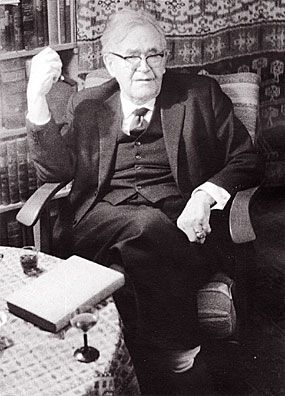
The Self-Understanding of the Theologian in Karl Barth’s The Christian Life

There is a blessed chapter in the Classics of Western Spirituality volume on Barth, called Karl Barth: Spiritual Writings, where Barth is talking about the concept of wonder in relation to the discipline of theology. After claiming that Jesus Christ is the event that causes continuous wonder in the theologian, he turns to speaking about how, in response to Christ-centered wonder, the theologian is then forced to understand himself. He writes:

“The astonishment of the individual carries with it the fact that no one can become and remain a theologian unless he is compelled again and again to be astonished at himself… Whatever, however, and whoever I may be in other respects, I have finally and profoundly become a man made to wonder at himself by this wonder of God… This confrontation occurs in even the most timid and untalented attempt to take seriously the subject in which I have become involved or to work theologically at all, whether in the field of exegesis, Church history, dogmatics, or ethics… In one way or another I am obliged to consider the question of the wonder of God. I may perhaps attempt to steal away from the confrontation and preoccupation with this wonder. But I can no longer be released from this confrontation. Theology undoubtedly gives the man who is concern with it something like a character indelebilis, an indelible quality. Whoever has eyes to see will recognize even at a distance the man who has been afflicted and irreparably wounded by theology and the Word of God. He will be recognizable by a certain earnestness and humor, whether genuine or spurious, real or only pretended. But the process and the way in which it was possible for him to become such a man will always be hidden, even from the theologian himself. This process will remain a deeply wondrous enigma and mystery. I no doubt know and recognize myself quite possibly in all my other opinions and inclinations, in all my other real or fancied or desired possibilities. By birth and nature we are indeed all rationalists, empiricists, or romanticists in some osrt of mixture, and we have no occasion to be astonished at ourselves in this respect. All that is simply a fact. But I become, am, and remain something unknown, a different person, a stranger, when I am counted worthy to be permitted and required to wonder with respect to the wonder of God. And this is what happens when I become concerned with theology. How could my existence with this permission and demand to wonder ever become an everyday, familiar, and trite fact? How could this attribute of my existence ever become transparent to me?”[1]

Soli Deo Gloria


[1] Barth, Karl. 2022. Karl Barth: Spiritual Writings. Edited by Ashley Cocksworth and W. Travis McMaken. Mahwah, NJ: Paulist Press. 199-200.

Quotation

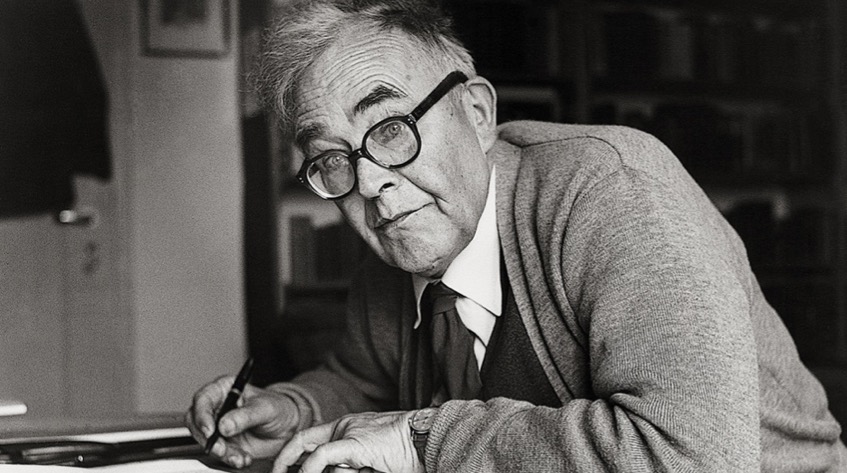
Karl Barth’s Pastoral Encouragements and Warnings in Two of His Later Letters

Recently I finished reading a compendium of letters written by Barth during the last seven years of his life. The collection is filled with insider information on Barth’s dealings and correspondences, and it gives the reader rather interesting access to all of his personal and theological preoccupations leading up to his death. For example, I did not know that he was virtually absorbed in the developments of the Second Vatican Council, which was transpiring in the mid-60s; the theologians who were a part of that council, furthermore, were highly influenced by – or at least aware of – Barth’s theology, and sent him an invitation to be an outside observer to the council’s proceedings.

For the purposes of this post, I saw fit to lay before you two letters, both pastoral in nature, which Barth sent to two troubled individuals who had reached out to him about two very different problems.

The first letter was written in late December of 1961, and is a response to a German prisoner whom Barth was fairly sure was contemplating taking his own life. The pastoral counsel Barth offers is a balm to the heart. It reads:

“Dear N.N.,
Your letter of the thirteenth reached me yesterday and moved me greatly. Partly because you refer to my good friend Gertrud Staewen but above all because Christmas is upon us, I hasten to make at least a short reply.
Since you obviously want something from me, you cannot be serious in expecting me to judge you harshly. But can I give you any supporting counsel?
You say you plunge deeply into the Bible in vain. You say you also pray in vain. You are clearly thinking of a ‘final step’ but you shrink back from it. Have I understood you correctly?
First regarding your prayers. How do you know they are in vain? God has His own time and He may well know the right moment to lift the double shadow that now lies over your life. Therefore, do not stop praying. 
It could also be that He will answer you in a very different way from what you have in mind in your prayers. Hold unshakably fast to one thing. He loves you even now as the one you now are… And listen closely: it might well be that He will not lift this shadow from you, possibly will never do so your whole life, just because from all eternity He has appointed you to be His friend as He is yours, just because He wants you as the man whose only option it is to love Him in return and give Him alone the glory there in the depths from which He will not raise you.
Get me right: I am not saying that this has to be so, that the shadows cannot disperse. But I see and know that there are shadows in the lives of all of us, not the same as those under which you sigh, but in their way oppressive ones too, which will not disperse, and which perhaps in God’s will must not disperse, so that we may be held in the place where, as those who are loved by God, we can only love Him back and praise Him.
Thus, even if this is His mind and will for you, in no case must you think of that final step. May your hope not be a tiny flame but a big and strong one, even then, I say, and perhaps precisely then; no, not perhaps but certainly, for what God chooses for us children of men is always the best.
Can you follow me? Perhaps you can if you read the Christmas story in Luke’s Gospel, not deeply but very simply, with the thought that every word there, and every word in the Twenty-Third Psalm too, is meant for you too, and especially for you.

With friendly greetings and all good wishes,

Yours,
KARL BARTH.”[1]

The second letter was written five years later, in early December, in response to a German pastor (who was also a former student) who was prompting Barth to be more responsive and appreciative of certain ecclesiastical-political goings-on. The shift changes in this one. Gentle, comforting Barth has been put away and, in his place, the reprimanding, disapproving, fatherly Barth now comes to the fore. It reads:

“Dear Pastor,

            Your urgent letter of 2 November still lies unanswered in front of me and so (for the last week) does your fiery poem ‘Germany’s Path,’ which points in the same direction. I thank you for them. Excuse me if I am brief. I am no longer able to draw up longer statements.

            This brings me at once to your wish, which you have even presented to me in the form of a citation to appear before the judgment seat of the Lord of the church. Amidst all the speaking and shouting in Germany, loud enough as it is, you want me to issue a kind of roar of the lion of Judah in the style of certain utterances at the beginning of the thirties. Dear pastor, you are not going to hear this roar. ‘For everything there is a season and a time.’ That I am not at one with Bultmann and his followers I have shown publicly and clearly not only in my booklet Ein Versuch, ihn zu verstehen but also in the whole C.D., especially the last volumes. And C.D. is in fact being read quietly much more, and more attentively, than you seem to realize. And since the good Lord, in spite of reports to the contrary, is not dead, I am not concerned, let alone do I feel constrained, to act as the defender of his cause in a confessional movement… For one thing I have other and more useful things to do. 
            This brings me to the second thing concerning yourself. As you tell me, you have just come from three months of persistent depression in the hospital, and you have already had other periods like it. After this ‘down’ you are not in an ‘up.’ Good, thank God for it, but see that worse does not befall you. It is not thanking God, nor is it good therapy, to use this ‘up’ to proclaim the status confessionis hodie, to imitate Luther at Worms or Luther against Erasmus, to compose thoughtlessly generalizing articles and paltry battle-songs, to write me (and assuredly not only me) such fiery letters, to pour suspicion on all who do not rant with you, indeed, to punish them in advance with your scorn, etc. Instead you should be watching and praying and working at the place where you have been called and set, you should be reading holy scripture and the hymn-book, you should be studying carefully with a pencil in your hand the theological growth springing up around you to see whether there might not be some good grain among the tares. Lighting your pipe and not letting it go out, but refilling and rekindling it, you should not constantly orient yourself only to the enemy – e.g., to seninely simplistic statements such as those recently made bt the great man of Marburg in the Spiegel – but to the matter in relation to which there seem to be friends and enemies. Then in the modesty in which is true power… you should preach good sermons in X, give good confirmation lessons, do good pastoral work – as good as God wills in giving you the Holy Spirit and as well as you yourself can achieve with heart and mind and mouth. Do you not see that this little stone is the one thing you are charged with, but it is a solid stone in the wall against which the waves or bubbles of the modern mode will break just as surely as in other forms in the history of theology and the church they have always broken sooner or later? Dear pastor, if you will not accept and practice this, then you yourself will become the preacher of another Gospel for which I can take no responsibility. You will accomplish nothing with it except to make martyrs of your anger those people who do not deserve to be taken seriously in this bloodthirsty fashion and whom you cannot help with your ‘Here I stand, I can do no other.’ With the modesty indicated, be there for these people instead of against them in this most unprofitable style and effort. In this way, and in this way alone, will you thank God for your healing. In this way, and in this way alone, can you help to prevent new depression overtaking you tomorrow or the day after. 

            This is what I want to say to you as your old teacher, who also has real knowledge of the ups and downs in the outer and inner life of man even to this very day, but who knows how to greet in friendly fashion the remedy which there is for them.

            With sincere greetings, which I ask you to convey also to your wife and sister-in-law,

                                                                                                Yours,

                                                                                                KARL BARTH.”[2]

This last one in particular struck me, as it sounds like something a former version of myself would have done well to listen to.

Soli Deo Gloria


[1] Karl Barth, “19: To a Prisoner in Germany,” in Karl Barth Letters: 1961-1968, ed. by Jürgen Fangmeier and Hinrich Stoevesandt, ed. and trans. by Geoffrey W. Bromiley (Grand Rapids, MI: Eerdmans Publishing Company, 1981), 27-28.

[2] Karl Barth, “237: To a Pastor in Germany,” in Karl Barth Letters: 1961-1968, ed. by Jürgen Fangmeier and Hinrich Stoevesandt, ed. and trans. by Geoffrey W. Bromiley (Grand Rapids, MI: Eerdmans Publishing Company, 1981), 229-231.

Close Reading

Robert Jenson’s Systematic Theology: The (New) Triune Relations

Robert Jenson is known for many things: his emphasis on the sacraments, his theological creativity, his reliance on Hegel, his reliance on Barth, his ability to speak theology concisely, and the list goes on. One aspect of his theology I have not seen touched on as much, however, are the new relations he posits the Church should consider as helpful descriptors for how to conceptualize the Triune Life. He affirms quite joyfully the traditional relations – generation, spiration, origination, procession – but proposes that not-before-seen reciprocal relations be recognized as constituting the Spirit’s dynamic contribution to God’s ontology.

ST: The Spirit as Liberator and Reconciler

Jenson introduces the new relation of liberation into the life of the Trinity. He does this so as to heed Hegel’s (and Buber’s) thoughts concerning what constitutes a healthy I-Thou relation. For Jenson and these thinkers, within the isolated person-to-person relationship there can only be a form of obsessive relational domination. If there are only two partners of relation, there can only be a subject-object and hence a master-slave dynamic as the only possible dynamic. This can be plainly seen in the obsession with which abusive partners find others – all others, friends of the beloved perhaps primarily – as threats to the lover’s enjoyment and satisfaction of the beloved. Inversely, the lover whose enjoyment of the beloved because of or alongside of the friends and companions surrounding the beloved is said to be a healthy, relationally-balanced individual. Jenson and Hegel would wholeheartedly agree. The only way the two partners can be freed for their love and enjoyment of one another, they argue, is if a third party opens up the two partners for their mutual love for one another. The Holy Spirit fulfills this function for the Father and the Son, and in so doing is rightly characterized, like Augustine said, as the love-bond of the Trinity.

Jenson writes: “If you and I are to be free for one another, each of us must be both subject and object in our converse. If I am present in our converse as myself, I am a subject who have you as my object. But if I am not also an object for you as subject, if I in some way or degree evade reciprocal availability to you as one whom you in your turn can locate and deal with, I enslave you, no matter with what otherwise good disposition I intend you.”[1]

In other words, if Father and Son are not reciprocally available for each-other as Father and as Son in the bond of their Spirit-love, there is no Triune God like the Tradition says. Without the Spirit, there is no true bond or relational openness as constitutive of God’s being, and therefore no true bond between the Son – who simply is the Lord Jesus Christ – and the Father He has been sent from. Jenson is convinced that previous theological missteps were taken in the history of doctrine because of a pre-existing blindness to this relational dynamic of the Spirit. To name a recent example, Jenson thinks that most of what should be criticized in his theological grandfather, Karl Barth, has to do with Barth’s malnourished (and possibly nonexistent) doctrine of the Holy Spirit. He goes so far as to say that, when it comes to the Church Dogmatics, Barth proposes what looks much more like a “binity” than a Trinity.

He further elaborates: “So we must learn to think: the Spirit is indeed the love between two personal lovers, the Father and the Son, but he can be this just in that he is antecedently himself. He is another who in his own intention liberates Father and Son to love each other. The Father begets the Son, but it is the Spirit who presents this Son to his Father as an object of the love that begot him, that is, to be actively loved. The Son adores the Father, but it is the Spirit who shows the Father to the Son not merely as ineffable Source but as the available and lovable Father.”[2]

It is in being the glue of the Father and Son that the Holy Spirit exists as the Tradition’s third hypostasis. “The Spirit is himself the one who intends love, who thus liberates and glorifies those on whom he ‘rests’; and therefore the immediate objects of his intention, the Father and the Son, love each other, with a love that is identical with the Spirit’s gift of himself to each of them.”[3] This sort of change to Augustine’s initial thesis does what Augustine arguably did not do, which was to recognize the personal element in the Holy Spirit’s procession from the Father and the Son. It is not simply as some thing called “the love between Father and Son” that the Spirit acts; such a conception is what led to the plumb line of the West’s depersonalization of the Spirit. It is as the one who, in proceeding from Father and Son, acts to blossom the generation and paternity of Father and Son for each other that the Spirit is a subsisting relation, i.e., as the subsisting relation of openness and freedom.

To conclude:

“The Father begets the Son and freely breathes his Spirit; the Spirit liberates the Father for the Son and the Son from and for the Father; the Son is begotten and liberated, and so reconciles the Father with the future his Spirit is. Neat geometry is lost, but life is not geometrical.”[4]

Soli Deo Gloria


[1] Robert Jenson, Systematic Theology, Vol. I: The Triune God (Oxford, UK: Oxford University Press, 1997), 155.

[2] Robert Jenson, Systematic Theology, Vol. I: The Triune God (Oxford, UK: Oxford University Press, 1997), 156.

[3] Robert Jenson, Systematic Theology, Vol. I: The Triune God (Oxford, UK: Oxford University Press, 1997), 158.

[4] Robert Jenson, Systematic Theology, Vol. I: The Triune God (Oxford, UK: Oxford University Press, 1997), 161.

Close Reading

Robert Jenson’s Systematic Theology: Eschatology as the Triune Unity

Robert Jenson was a masterful theologian who sought to think within the bounds of theologia and, within those bounds, to receive the Christian tradition in fresh if unorthodox ways. He writes this awesome statement: “This is sometimes the way of theology: to take a plain phenomenon of the gospel’s narrative that causes difficulty in certain conceptual connections and remove the difficulties by adjusting not the narrative but the connections.”[1] That was Jenson’s tendency: to adjust the form, not the content, of the Christian gospel, and so make it intelligible to contemporary ears.

My last post on Robert Jenson went over Jenson’s problems with the ancient ontological foundations of classical Christian doctrine. In his writings, he sought to overturn these foundations by substituting their Aristotelian or platonic makeup with that of Hegel. This substitution led him to criticize the ancient way of understanding divinity as simple, timeless and changeless, and to uphold a doctrine of divinity where God’s being is nothing other than event. The function of God’s being-as-event is to disallow any speech about God where God can be identified with anyone other than the God revealed and acted out as Jesus Christ, His Father, and His Spirit. For something or someone to be God means that He is this event: this biblical, Triune God-event.

For God’s being-as-event to be the interplay of Jesus, the Father, and the Spirit is for ontology itself to be constituted by eventfulness, and not by the prior abstracted reality of “being.” This poses obvious problems for the classical doctrine of simplicity. If God is not simple, and ontology is eventfulness, then how can the three – Father, Son, Spirit – be said to be “one God”? This is where my claim that Jenson’s explications nevertheless retain the content, if not the form, of Christian doctrine is proved true.

ST: The Oneness of the Three

Jenson writes, “Since the Lord’s self-identity is constituted in dramatic coherence, it is established not from the beginning but from the end, not at birth but at death, not in persistence but in anticipation. The biblical God is not eternally himself in that he persistently instantiates a beginning in which he already is all he ever will be; he is eternally himself in that he unrestrictedly anticipates an end in which he will be all he ever could be.”[2]

Here, Jenson is functioning on a definition of eternity as a time-bound reality. Eternity is not, as the classical thinkers say, a separate realm in which God lives in his essence. Eternity is rather that happening, that “dramatic coherence” Jenson calls it, where all that is theologically united lives, moves, and has its being. Eternity is that time where God and man live in harmonious ekstasis. In other words, eternity is that time where Father, Son, and Holy Spirit live as one God. How Jenson grounds these concepts, like I said, is not in some “before-ness,” some realm that is prior to the actual happening of God’s-being-one, but in “after-ness,” in the eternal realm of “anticipation,” where Father, Son, and Holy Spirit will be fully and completely the Triune God of Scripture in the unity of the Eschaton. It is the Eschaton that provides the glue that holds the whole scriptural reality – including the God at the center of that reality – together.

Jenson continues, “The triune God’s eternity is precisely the infinity of the life that the Son, who is Jesus the Christ, lives with his Father in their Spirit… About how God could as the same God have been other than Jesus the Son and his Father and their Spirit, or about what that would have been like, we can know or guess nothing whatsoever.”[3]

The Christian is not to think of eternity as a timeless void separated from the goings-on of this world, but as the flesh-and-blood life of Jesus Christ, the Hebrew preacher of first century Palestine, who, in calling the God of Israel his Father, was the Son spoken about in the Spirit-inspired Scriptures. This is what it means for God to be Trinity.

ST: The Spirit of the Future

For the Eschaton to be the place of God’s unity is for the Holy Spirit to so make it. The eschatological glue that holds things in God together, according to Jenson, can really be posited as a function of the Holy Spirit’s economia. It is the Spirit’s function to make true the reality that Jesus Christ and His Father are the one God of Scripture. It is the Spirit’s role to make true that which is believed by faith, that the Father, Son, and Spirit are one God.

Here is Jenson again: “The Spirit is the Liveliness of the divine life because he is the Power of the divine future. He is the one who, when he in time gives a ‘down payment’ on the Kingdom, gives precisely himself.”[4] The Spirit and the Eschaton, to Jenson, are never to be thought about as separated from each other precisely because as the agent of the future, the Spirit is. It is when the Church participates in the Eschaton – which, to Jenson probably amounts to what happens during the Sunday liturgy – that the Spirit is truly and fully present as the Spirit of the Lord Jesus Christ and His Father.

We will end this post with one last quote:

“The biblical God’s eternity is his temporal infinity… What he transcends is not the having of beginnings and goals and reconciliations, but any personal limitation in having form… The true God is not eternal because he lacks time, but because he takes time… God is not eternal in that he adamantly remains as he began, but in that he always creatively opens to what he will be; not in that he hands on, but in that he gives and receives; not in that he perfectly persists, but in that he perfectly anticipates… The dominating theological enterprise of the century, Karl Barth’s Kirkliche Dogmatik, has thus at its heart the drastic proposition with which we began: ‘God’s deity, into its furthest depths, consists therein… that it is event… The fundamental statement of God’s being is therefore: God is what happens between Jesus and his Father in their Spirit.”[5]

Soli Deo Gloria


[1] Robert Jenson, Systematic Theology, Vol. I: The Triune God (Oxford, UK: Oxford University Press, 1997), 124.

[2] Robert Jenson, Systematic Theology, Vol. I: The Triune God (Oxford, UK: Oxford University Press, 1997), 66.

[3] Robert Jenson, Systematic Theology, Vol. I: The Triune God (Oxford, UK: Oxford University Press, 1997), 141.

[4] Robert Jenson, Systematic Theology, Vol. I: The Triune God (Oxford, UK: Oxford University Press, 1997), 157.

[5] Robert Jenson, Systematic Theology, Vol. I: The Triune God (Oxford, UK: Oxford University Press, 1997), 217-221.