–
–
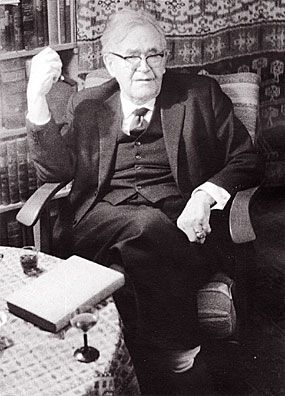
There is a blessed chapter in the Classics of Western Spirituality volume on Barth, called Karl Barth: Spiritual Writings, where Barth is talking about the concept of wonder in relation to the discipline of theology. After claiming that Jesus Christ is the event that causes continuous wonder in the theologian, he turns to speaking about how, in response to Christ-centered wonder, the theologian is then forced to understand himself. He writes:
“The astonishment of the individual carries with it the fact that no one can become and remain a theologian unless he is compelled again and again to be astonished at himself… Whatever, however, and whoever I may be in other respects, I have finally and profoundly become a man made to wonder at himself by this wonder of God… This confrontation occurs in even the most timid and untalented attempt to take seriously the subject in which I have become involved or to work theologically at all, whether in the field of exegesis, Church history, dogmatics, or ethics… In one way or another I am obliged to consider the question of the wonder of God. I may perhaps attempt to steal away from the confrontation and preoccupation with this wonder. But I can no longer be released from this confrontation. Theology undoubtedly gives the man who is concern with it something like a character indelebilis, an indelible quality. Whoever has eyes to see will recognize even at a distance the man who has been afflicted and irreparably wounded by theology and the Word of God. He will be recognizable by a certain earnestness and humor, whether genuine or spurious, real or only pretended. But the process and the way in which it was possible for him to become such a man will always be hidden, even from the theologian himself. This process will remain a deeply wondrous enigma and mystery. I no doubt know and recognize myself quite possibly in all my other opinions and inclinations, in all my other real or fancied or desired possibilities. By birth and nature we are indeed all rationalists, empiricists, or romanticists in some osrt of mixture, and we have no occasion to be astonished at ourselves in this respect. All that is simply a fact. But I become, am, and remain something unknown, a different person, a stranger, when I am counted worthy to be permitted and required to wonder with respect to the wonder of God. And this is what happens when I become concerned with theology. How could my existence with this permission and demand to wonder ever become an everyday, familiar, and trite fact? How could this attribute of my existence ever become transparent to me?”[1]
Soli Deo Gloria
[1] Barth, Karl. 2022. Karl Barth: Spiritual Writings. Edited by Ashley Cocksworth and W. Travis McMaken. Mahwah, NJ: Paulist Press. 199-200.

 Alex Renner's Blog