–
–
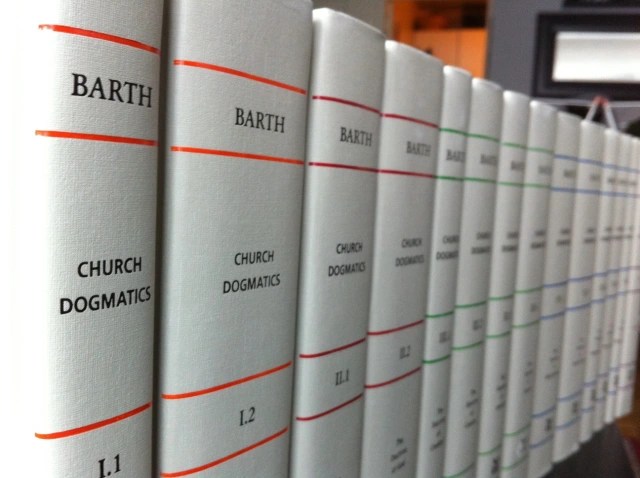
As I’ve written in one of my most recent blog posts, I recently began the long journey towards completing Barth’s Church Dogmatics. I finished reading the first volume, 1/I, a few months ago. Since then, I have tried to supplement my reading with various smaller theological, sociological, and creative works (like John Webster’s Holy Scripture book, the new How to Know A Person by convert David Brooks, and Lewis’s Narnia series), but felt the need to get back on the road I vowed to trek – even if it ends up being a dead one. Since I thought going immediately into 1/II a bore, I thought I would skip to 2/I: the one which supposedly houses Barth’s unique exposition on the Reformed doctrine of election. I have yet to reach that particular part in it yet.
Regardless, I am glad I came back to Barth. The more I think about his writing, the more I ask myself on a daily basis “What would Barth think about this?” Hence, the more I find my view of faith evolving, transforming, and improving, since, in the last analysis, Barth’s own primary question throughout his theological writings is “What would Christ think about this?”, or more accurately, “What gives God the most freedom to be the God He has revealed Himself to be, in Christ, in this?” Such a question is bound to reap good and positive spiritual results in the Christian’s life. Such has been the case with me.
That’s about it right now. No quotes in this one. On a personal note: the steady stream of Word, Sacrament, and Lenten practice taken up by me and my wife has been a satiating stream of spiritual goodness. Whenever I return to Barth – i.e., whenever I return to Barth’s writings on the goodness, glory, and exclusive revealing power of the God revealed in the Christ we have been hearing and partaking of – I am reminded, all over again, of the goodness of the Shepard who leads us.
Soli Deo Gloria

 Alex Renner's Blog